Quick Answer
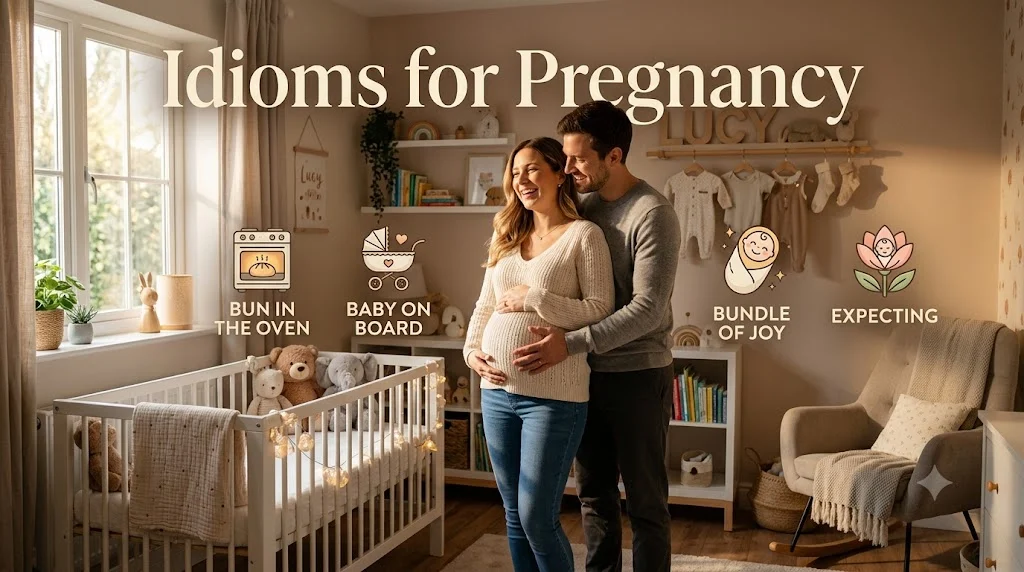
Idioms for pregnancy are figurative expressions people use to talk about expecting a baby, becoming a parent, or preparing for a new addition to the family. Popular examples include “have a bun in the oven,” “be expecting,” and “in the family way.” These expressions often add warmth, humor, or a gentle tone to conversations.
Pregnancy is one of life’s most joyful and transformative experiences, and naturally, language has developed many colorful expressions to describe it. Instead of always saying someone is pregnant, English speakers often use idioms and gentle phrases that sound warmer, friendlier, or even humorous.
You might hear friends say someone has “a bun in the oven” or that a couple is “expecting.” These expressions are common in conversations, social media posts, baby announcements, and even novels.
Understanding pregnancy-related idioms can help English learners sound more natural and better appreciate the emotional tone behind everyday communication. Some expressions are playful, while others are more traditional or formal.
Whether you’re expanding your vocabulary, writing creatively, or simply curious about figurative language, these idioms for pregnancy offer an interesting glimpse into how people celebrate one of life’s most special journeys.
Quick Summary Table
| Idiom | Meaning | Common Use |
|---|---|---|
| Have a bun in the oven | Be pregnant | Casual conversations |
| Be expecting | Be pregnant | Everyday and formal situations |
| In the family way | Pregnant | Traditional expression |
| Eating for two | Pregnant and needing extra nutrition | Humorous conversations |
| Baby on board | Expecting a baby | Family announcements |
| A little one on the way | A baby is coming | Friendly conversations |
| With child | Pregnant | Literary or formal contexts |
| Nesting instinct | Preparing for the baby | Family life |
| Glow like a mother-to-be | Looking radiant during pregnancy | Compliments |
| Bundle of joy | A newborn baby | Family celebrations |
| Stork is coming | A baby is expected | Humorous use |
| Counting down the days | Waiting for the birth | Excitement and anticipation |
| New addition to the family | A coming baby | Announcements |
| Baby fever | Strong desire to have a child | Personal conversations |
| Full of surprises | Unexpected pregnancy news | Storytelling |
| Growing a family tree | Expanding the family | Creative writing |
| Blessed with good news | Receiving pregnancy news | Celebrations |
| Waiting with open arms | Excited for the baby’s arrival | Family moments |
| Over the moon | Extremely happy | Sharing happy news |
| Preparing the nest | Getting ready for the baby | Parenting |
Have a Bun in the Oven
Meaning
To be pregnant.
When People Use It
Usually in casual and humorous conversations.
Alternative Expression
Be expecting.
Examples in Communication
Formal Example
The couple happily announced that they were expecting their first child.
Casual Example
Did you hear? Sarah has a bun in the oven!
Creative Example
Their little secret was growing quietly, like a warm bun in the oven.
Be Expecting
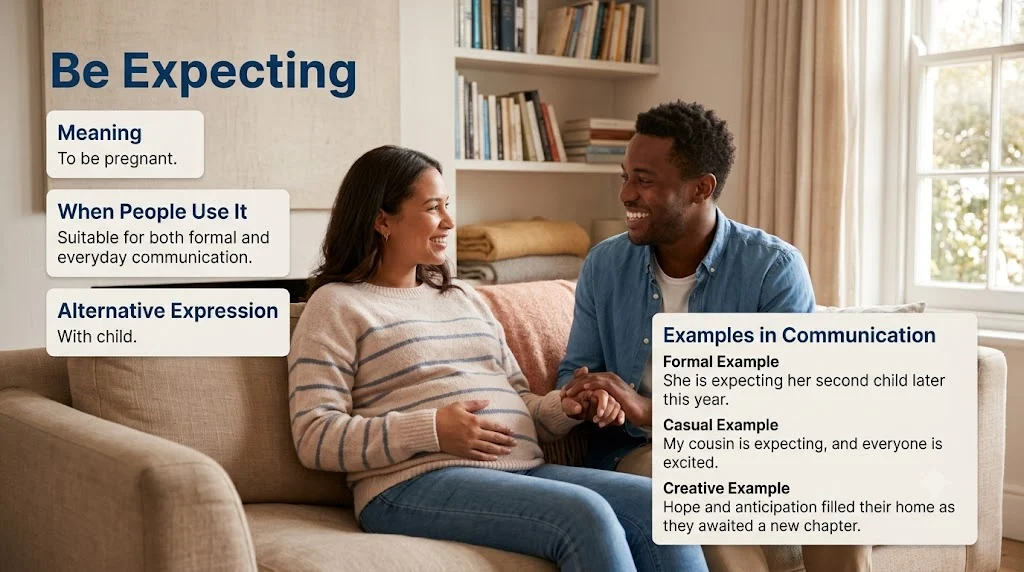
Meaning
To be pregnant.
When People Use It
Suitable for both formal and everyday communication.
Alternative Expression
With child.
Examples in Communication
Formal Example
She is expecting her second child later this year.
Casual Example
My cousin is expecting, and everyone is excited.
Creative Example
Hope and anticipation filled their home as they awaited a new chapter.
In the Family Way
Meaning
A traditional expression meaning pregnant.
When People Use It
Often found in older books or used humorously today.
Alternative Expression
Be expecting.
Examples in Communication
Formal Example
The novel describes the character as being in the family way.
Casual Example
Grandma still uses the phrase “in the family way.”
Creative Example
Whispers of happiness spread after the joyful news became known.
Eating for Two
Meaning
Refers humorously to pregnancy and increased nutritional needs.
When People Use It
Friendly and lighthearted conversations.
Alternative Expression
Expecting a baby.
Examples in Communication
Formal Example
Proper nutrition is especially important during pregnancy.
Casual Example
Don’t judge me—I’m eating for two!
Creative Example
Every bite carried the promise of nourishing two lives.
Baby on Board
Meaning
A baby is expected or present.
When People Use It
Announcements and playful expressions.
Alternative Expression
Little one on the way.
Examples in Communication
Formal Example
The family shared exciting news about their growing household.
Casual Example
Baby on board—due in December!
Creative Example
Their journey had a precious passenger waiting to arrive.
A Little One on the Way
Meaning
A baby will soon join the family.
When People Use It
Friendly and affectionate situations.
Alternative Expression
New addition to the family.
Examples in Communication
Formal Example
They announced that a little one was on the way.
Casual Example
We’ve got a little one on the way!
Creative Example
Tiny footsteps were already echoing in their dreams.
With Child
Meaning
Pregnant.
When People Use It
Literary, historical, or formal contexts.
Alternative Expression
Be expecting.
Examples in Communication
Formal Example
The historical account states that the queen was with child.
Casual Example
The phrase sounds old-fashioned, but it still appears in books.
Creative Example
She carried not only a child but endless hopes for the future.
Nesting Instinct
Meaning
The desire to organize and prepare before the baby’s arrival.
When People Use It
Discussing late pregnancy experiences.
Alternative Expression
Preparing the nest.
Examples in Communication
Formal Example
Many expectant parents experience nesting instincts.
Casual Example
She’s cleaning everything—the nesting instinct has kicked in.
Creative Example
Like birds preparing for spring, they carefully built a cozy home.
Bundle of Joy
Meaning
A loving expression for a newborn baby.
When People Use It
Birth announcements and celebrations.
Alternative Expression
Little miracle.
Examples in Communication
Formal Example
The family welcomed their bundle of joy last week.
Casual Example
I can’t wait to meet the new bundle of joy.
Creative Example
Wrapped in blankets and love, their bundle of joy changed everything.
The Stork Is Coming
Meaning
A humorous way to say a baby is expected.
When People Use It
Lighthearted conversations and greeting cards.
Alternative Expression
Baby on the way.
Examples in Communication
Formal Example
The family celebrated the happy news.
Casual Example
Looks like the stork is coming!
Creative Example
Joy flew in long before the baby arrived.
Over the Moon
Meaning
Extremely happy.
When People Use It
Sharing exciting pregnancy news.
Alternative Expression
On cloud nine.
Examples in Communication
Formal Example
The couple was over the moon after hearing the news.
Casual Example
We’re over the moon about becoming parents.
Creative Example
Their happiness seemed to shine brighter than the stars.
New Addition to the Family
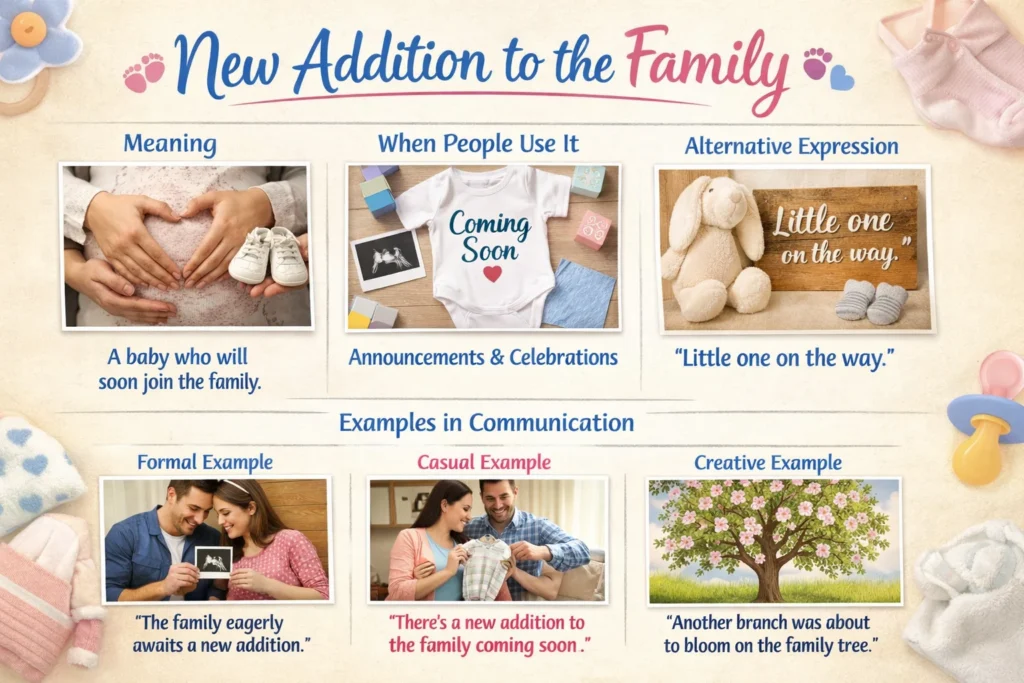
Meaning
A baby who will soon join the family.
When People Use It
Announcements and celebrations.
Alternative Expression
Little one on the way.
Examples in Communication
Formal Example
The family eagerly awaits a new addition.
Casual Example
There’s a new addition to the family coming soon.
Creative Example
Another branch was about to bloom on the family tree.
Baby Fever
Meaning
A strong desire to have children.
When People Use It
Personal or humorous discussions.
Alternative Expression
Parental longing.
Examples in Communication
Formal Example
Spending time with infants sometimes triggers baby fever.
Casual Example
After seeing my niece, I’ve got baby fever.
Creative Example
Every tiny smile made her dream of motherhood.
Glow Like a Mother-to-Be
Meaning
To appear radiant and happy during pregnancy.
When People Use It
Giving compliments.
Alternative Expression
Pregnancy glow.
Examples in Communication
Formal Example
Many people notice a healthy glow during pregnancy.
Casual Example
You’re absolutely glowing!
Creative Example
Her smile carried the warmth of new beginnings.
Real-Life Situations Where Pregnancy Idioms Are Used
Understanding idioms is easier when you see them in real communication. Pregnancy-related idioms often appear in conversations that are emotional, joyful, or even slightly humorous. Here’s how they naturally show up in everyday life:
In family announcements, people often avoid direct words at first and say things like “We’re expecting” or “There’s a little one on the way.” It softens the message and adds warmth.
In casual friendships, humor takes over. You might hear “She’s got a bun in the oven!” in a playful tone during a relaxed chat.
In social media captions, idioms like “baby on board” or “our bundle of joy is coming soon” are popular because they sound emotional and shareable.
In storytelling or writing, expressions like “with child” or “nesting instinct” help create a more descriptive, literary tone.
These small shifts in language make communication feel more human, emotional, and expressive.
Emotional Tone Behind Pregnancy Idioms
Pregnancy idioms are not just vocabulary—they carry emotion.
Some feel joyful and celebratory, like “over the moon” or “bundle of joy.”
Others feel gentle and respectful, like “be expecting” or “in the family way.”
And some add a light humorous touch, like “bun in the oven.”
Choosing the right idiom depends on your relationship with the listener and the situation. That emotional awareness is what makes your English sound natural instead of textbook-like.
Common Cultural Sensitivity Note
Not every idiom fits every situation. Pregnancy is a sensitive topic for many people. Expressions like “bun in the oven” should only be used in relaxed, friendly environments not formal, medical, or unfamiliar settings.
When in doubt, simple phrases like “expecting” are always the safest choice.
Practical Usage Guidance
How to Use Idioms Naturally
Pregnancy idioms are often warm, cheerful, and conversational. Expressions like “be expecting” and “a little one on the way” are widely accepted and suitable for many situations.
Humorous phrases such as “bun in the oven” are best used among family and close friends where the tone is comfortable and familiar.
Common Mistakes with Idioms
- Using humorous expressions in sensitive situations.
- Assuming everyone appreciates informal phrases.
- Overusing idioms in professional or medical discussions.
- Taking figurative expressions literally.
Idioms vs Literal Expressions
Literal
She is pregnant.
Idiomatic
She is expecting her first child.
The idiomatic expression often sounds softer and more conversational.
Tips for Sounding More Fluent
- Pay attention to the tone of the conversation.
- Use formal expressions in professional settings.
- Learn idioms through books, movies, and everyday conversations.
- Practice using one or two expressions naturally.
How to Remember Pregnancy Idioms Easily
Associate each idiom with family celebrations, baby showers, or happy announcements. Emotional memories often make figurative language easier to remember.
FAQs
What are common idioms for pregnancy?
Common idioms include “have a bun in the oven,” “be expecting,” “with child,” and “in the family way.”
Is “bun in the oven” formal?
No. It is an informal and humorous expression.
Which pregnancy idiom is suitable for formal writing?
“Be expecting” and “with child” are more suitable for formal or literary contexts.
Why do people use pregnancy idioms?
These expressions often sound warmer, gentler, and more expressive than direct statements.
Can pregnancy idioms be used in everyday conversation?
Yes. Many of these expressions are common in family conversations, social media posts, and friendly announcements.
Conclusion
Learning idioms for pregnancy offers more than just vocabulary expansion. These expressions reflect joy, anticipation, love, and the excitement that surrounds the arrival of a new life. From humorous phrases like “have a bun in the oven” to timeless expressions such as “with child,” pregnancy idioms bring warmth and personality to communication.
Whether you’re improving your spoken English, writing stories, or simply exploring figurative language, understanding these expressions can help you communicate more naturally and confidently. Like many idioms, they are best used with sensitivity and awareness of the situation.
As you continue building your vocabulary, these pregnancy-related idioms can add charm and emotion to your conversations and writing, making your English feel more authentic and expressive.
Discover More Related Articles:
- Idioms for Teamwork | Powerful Expressions for Collaboration In 2026
- Idioms About Fake Friends |Recognizing False Friendships Through Colorful Expressions In 2026