Quick Answer
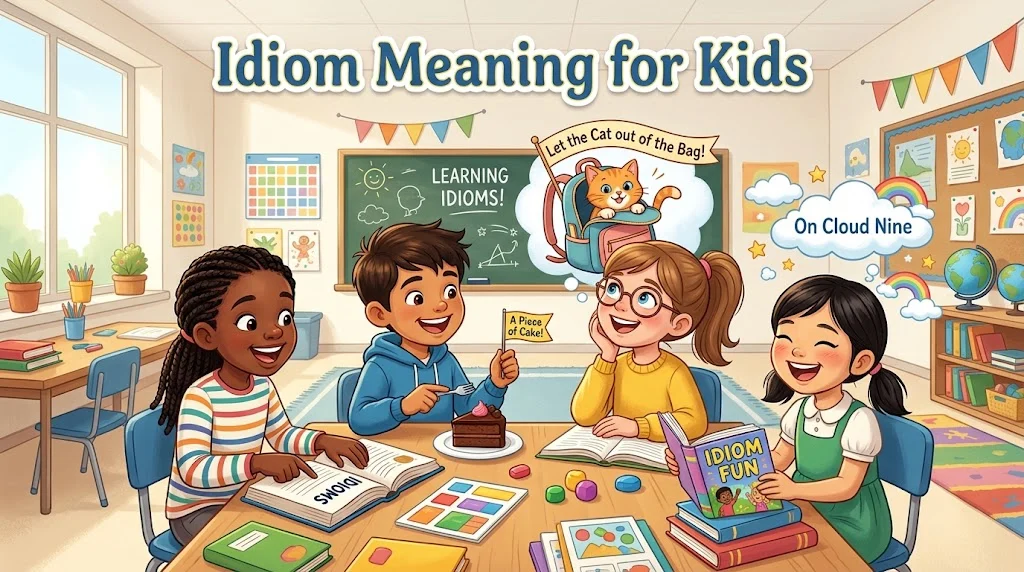
Idioms for kids are special phrases whose real meaning is different from the literal meaning of the individual words. For example, “break the ice” does not mean breaking actual ice. It means to make people feel more comfortable when they first meet.
An idiom is a phrase that has a special meaning that cannot always be understood by taking the words literally.
That might sound complicated, but the idea is actually simple.
Imagine someone says:
“This homework is a piece of cake.”
Are they talking about chocolate cake, vanilla cake, or a delicious slice of birthday cake?
No! They mean the homework is very easy.
That is what makes idioms interesting. They use familiar words in a creative way to express a different idea.
Kids encounter idioms everywhere in books, cartoons, classroom conversations, movies, stories, and conversations with family members. Understanding these expressions helps children understand what people really mean and makes reading and speaking English much easier.
Quick Summary
| Idiom | Simple Meaning | Example |
|---|---|---|
| Break the ice | Make people feel comfortable | A joke helped break the ice. |
| Piece of cake | Very easy | The quiz was a piece of cake. |
| Spill the beans | Tell a secret | Mia spilled the beans about the surprise. |
| Hit the books | Start studying | I need to hit the books tonight. |
| Under the weather | Feeling sick | Sam is under the weather today. |
Why Should Kids Learn Idioms?
Learning idioms is more than memorizing funny phrases.
Idioms help children understand figurative language, which is an important part of reading and writing. A child who understands figurative expressions can often understand stories, jokes, conversations, and characters more easily.
Idioms can also make children’s writing more colorful.
Instead of writing:
“Ella was very happy.”
A child might write:
“Ella was on cloud nine.”
The second sentence gives the reader a stronger image.
Idioms are also useful for language learners because everyday English contains many expressions that textbooks do not always explain directly.
Break the Ice
Meaning: To make people feel more comfortable when they first meet.
When Kids Use It: This idiom works well when a new class, group, or activity starts and people are feeling shy.
Alternative Expression: Help everyone relax.
Examples in Communication:
Formal Example:
“The teacher played a fun game to break the ice on the first day of class.”
Casual Example:
“I told a joke to break the ice.”
Creative Example:
“The silly guessing game broke the ice, and soon everyone was laughing.”
Piece of Cake
Meaning: Something that is very easy.
When Kids Use It: Children often use this expression when talking about homework, games, tests, chores, or activities that are not difficult.
Alternative Expression: Easy as pie.
Examples in Communication:
Formal Example:
“After practicing all week, the final exercise was a piece of cake.”
Casual Example:
“That math problem was a piece of cake!”
Creative Example:
“The spelling challenge looked scary at first, but it turned out to be a piece of cake.”
Spill the Beans
Meaning: To reveal a secret or tell information that was supposed to stay secret.
When Kids Use It: This is especially common when friends are planning surprises or keeping exciting news quiet.
Alternative Expression: Give away the secret.
Examples in Communication:
Formal Example:
“Tom accidentally spilled the beans about the surprise party.”
Casual Example:
“Come on, spill the beans! What happened?”
Creative Example:
“Lily tried to stay quiet, but one excited sentence spilled the beans.”
Hit the Books
Meaning: To start studying seriously.
When Kids Use It: This informal idiom is perfect for school, homework, quizzes, and exams.
Alternative Expression: Start studying.
Examples in Communication:
Formal Example:
“The students had to hit the books before their final examination.”
Casual Example:
“I can’t play yet. I have to hit the books.”
Creative Example:
“After dinner, Noah hit the books and prepared for tomorrow’s test.”
Under the Weather
Meaning: To feel sick or unwell.
When Kids Use It: Children can use this expression when talking about having a cold, feeling tired, or not feeling well.
Alternative Expression: Feel unwell.
Examples in Communication:
Formal Example:
“Emma stayed home from school because she was feeling under the weather.”
Casual Example:
“I can’t come outside today. I’m under the weather.”
Creative Example:
“Wrapped in a warm blanket, Ben spent the afternoon feeling under the weather.”
Once in a Blue Moon
Meaning: Something that happens very rarely.
When Kids Use It: Use this expression for activities that happen only occasionally.
Alternative Expression: Very rarely.
Examples in Communication:
Formal Example:
“The family eats dessert at the restaurant once in a blue moon.”
Casual Example:
“I only play that game once in a blue moon.”
Creative Example:
“Once in a blue moon, Grandpa would make his famous pancakes.”
Let the Cat Out of the Bag
Meaning: To accidentally or intentionally reveal a secret.
When Kids Use It: This works well when talking about surprises, gifts, parties, or secret plans.
Alternative Expression: Reveal the secret.
Examples in Communication:
Formal Example:
“Daniel let the cat out of the bag before the announcement was made.”
Casual Example:
“Oops! I let the cat out of the bag.”
Creative Example:
“One tiny hint was enough to let the cat out of the bag.”
Cost an Arm and a Leg
Meaning: To be very expensive.
When Kids Use It: This colorful expression can be used when talking about expensive toys, games, trips, or other purchases.
Alternative Expression: Cost a fortune.
Examples in Communication:
Formal Example:
“The new equipment costs an arm and a leg.”
Casual Example:
“That gaming chair costs an arm and a leg!”
Creative Example:
“The shiny new bicycle looked amazing, but it cost an arm and a leg.”
On Cloud Nine
Meaning: To be extremely happy.
When Kids Use It: This is a cheerful idiom that works especially well after good news, winning something, receiving a gift, or accomplishing a goal.
Alternative Expression: Overjoyed.
Examples in Communication:
Formal Example:
“The young athlete was on cloud nine after receiving the award.”
Casual Example:
“I was on cloud nine when I found out I made the team!”
Creative Example:
“With a medal around her neck, Maya felt like she was floating on cloud nine.”
Hold Your Horses
Meaning: Wait or slow down.
When Kids Use It: This playful expression is useful when someone is moving too quickly or getting too excited.
Alternative Expression: Wait a moment.
Examples in Communication:
Formal Example:
“Hold your horses; we need to check the instructions first.”
Casual Example:
“Hold your horses! I’m coming!”
Creative Example:
“Hold your horses, adventurer—the treasure map still needs to be read.”
A Dime a Dozen
Meaning: Something that is very common or easy to find.
When Kids Use It: It can describe objects or things that are available in large numbers.
Alternative Expression: Very common.
Examples in Communication:
Formal Example:
“Simple online games are a dime a dozen.”
Casual Example:
“Those little toys are a dime a dozen.”
Creative Example:
“In the colorful market, shiny stickers were a dime a dozen.”
This idiom can be confusing for children because it refers to an old expression about price. The important part to remember is “very common.”
When Pigs Fly
Meaning: Something will probably never happen.
When Kids Use It: This playful idiom is often used when someone makes an unlikely promise or prediction.
Alternative Expression: Probably never.
Examples in Communication:
Formal Example:
“He said he would finish all his chores before lunch—when pigs fly!”
Casual Example:
“You’ll clean your room when pigs fly!”
Creative Example:
“I’ll eat broccoli for breakfast when pigs fly,” Max joked.
Go the Extra Mile
Meaning: To make more effort than expected.
When Kids Use It: This is a great idiom for talking about kindness, teamwork, school projects, and helping others.
Alternative Expression: Make an extra effort.
Examples in Communication:
Formal Example:
“The student went the extra mile to help organize the school event.”
Casual Example:
“She really went the extra mile to help me.”
Creative Example:
“Lena went the extra mile, staying late to make sure everyone had a turn.”
In Hot Water
Meaning: To be in trouble.
When Kids Use It: This is often used when someone breaks a rule or gets into a difficult situation.
Alternative Expression: Be in trouble.
Examples in Communication:
Formal Example:
“The student was in hot water after ignoring the classroom rules.”
Casual Example:
“I’m going to be in hot water if I don’t finish this homework.”
Creative Example:
“Tom knew he was in hot water when he heard his name called from the hallway.”
Keep an Eye On
Meaning: To watch or look after something carefully.
When Kids Use It: This is extremely useful in everyday conversations about pets, bags, younger siblings, games, and belongings.
Alternative Expression: Watch carefully.
Examples in Communication:
Formal Example:
“Please keep an eye on the equipment while the teacher is away.”
Casual Example:
“Can you keep an eye on my backpack?”
Creative Example:
“Grandpa asked Maya to keep an eye on the tiny bird until it flew away.”
Raining Cats and Dogs
Meaning: Raining very heavily.
When Kids Use It: This fun idiom is especially popular in children’s stories and conversations about weather.
Alternative Expression: Pouring with rain.
Examples in Communication:
Formal Example:
“The outdoor event was canceled because it was raining heavily.”
Casual Example:
“Don’t go outside—it’s raining cats and dogs!”
Creative Example:
“Rain fell from the sky as if a whole parade of clouds had opened its doors.”
It does not mean that cats and dogs are actually falling from the sky.
The Best of Both Worlds
Meaning: To enjoy the advantages of two different choices or situations.
When Kids Use It: This expression is useful when children get two good things at the same time.
Alternative Expression: Enjoy both benefits.
Examples in Communication:
Formal Example:
“The new program gives students the best of both worlds by combining learning and outdoor activities.”
Casual Example:
“I get to play outside and finish my homework early—the best of both worlds!”
Creative Example:
“The summer camp offered the best of both worlds: adventure by day and storytelling at night.”
Bite the Bullet
Meaning: To face something difficult or unpleasant instead of avoiding it.
When Kids Use It: Children can use this idiom when they finally decide to complete a difficult task.
Alternative Expression: Face the challenge.
Examples in Communication:
Formal Example:
“After delaying the project, the students decided to bite the bullet and finish it.”
Casual Example:
“I don’t want to clean my room, but I guess I’ll bite the bullet.”
Creative Example:
“Leo took a deep breath, bit the bullet, and opened the difficult textbook.”
Give Someone a Hand
Meaning: To help someone.
When Kids Use It: This is a very common everyday expression and is easy for children to use.
Alternative Expression: Help someone.
Examples in Communication:
Formal Example:
“The students gave their teacher a hand with the classroom decorations.”
Casual Example:
“Can you give me a hand with this box?”
Creative Example:
“When the tower began to wobble, everyone gave each other a hand.”
The Ball Is in Your Court
Meaning: It is now your turn to make a decision or take action.
When Kids Use It: This expression is useful when one person has finished their part and is waiting for another person to respond.
Alternative Expression: It’s your turn.
Examples in Communication:
Formal Example:
“We have submitted our proposal, so the ball is now in the committee’s court.”
Casual Example:
“I’ve told you what I think. Now the ball is in your court.”
Creative Example:
“The challenge had been accepted; now the ball was in Maya’s court.”
A Breath of Fresh Air
Meaning: Something pleasantly new, different, or refreshing.
When Kids Use It: Children can use this expression when a new activity, idea, person, or experience feels exciting and different.
Alternative Expression: A refreshing change.
Examples in Communication:
Formal Example:
“The new art program was a breath of fresh air for the students.”
Casual Example:
“Your idea is a breath of fresh air!”
Creative Example:
“After weeks of the same routine, the surprise picnic was a breath of fresh air.”
Add Fuel to the Fire
Meaning: To make an already difficult situation worse.
When Kids Use It: This idiom is useful when talking about arguments, problems, or situations that become worse because someone adds more trouble.
Alternative Expression: Make things worse.
Examples in Communication:
Formal Example:
“The extra criticism only added fuel to the fire.”
Casual Example:
“Don’t argue with him now—you’ll just add fuel to the fire.”
Creative Example:
“One angry comment added fuel to the fire, and the small disagreement grew larger.”
Learn the Ropes
Meaning: To learn how to do something or understand how a new situation works.
When Kids Use It: This is helpful when children join a new class, club, sport, game, or activity.
Alternative Expression: Learn how things work.
Examples in Communication:
Formal Example:
“The new students spent their first week learning the ropes.”
Casual Example:
“I’m still learning the ropes at my new club.”
Creative Example:
“By the end of the week, Noah had learned the ropes of the school’s science club.”
Barking Up the Wrong Tree
Meaning: Looking in the wrong place or blaming the wrong person.
When Kids Use It: This playful idiom works well when someone has misunderstood a situation.
Alternative Expression: Looking in the wrong place.
Examples in Communication:
Formal Example:
“If you believe Sarah took the book, you may be barking up the wrong tree.”
Casual Example:
“You’re barking up the wrong tree—I didn’t eat the cookies!”
Creative Example:
“The detective searched the old shed, but he was barking up the wrong tree.”
Through Thick and Thin
Meaning: Staying loyal to someone during both good and difficult times.
When Kids Use It: This idiom is especially useful for talking about friendship, family, and loyalty.
Alternative Expression: Through good times and bad.
Examples in Communication:
Formal Example:
“True friends support each other through thick and thin.”
Casual Example:
“We’ve been friends through thick and thin.”
Creative Example:
“Through rainy days, lost games, and happy celebrations, the friends stayed together through thick and thin.”
How to Explain Idioms to Kids
The easiest way to teach an idiom is to explain the literal meaning first and then introduce the real meaning.
Take “spill the beans.”
A child might imagine someone dropping a bowl of beans onto the floor.
Then explain:
“That’s the literal picture, but the idiom means to reveal a secret.”
This little comparison makes the expression memorable.
Pictures, short stories, classroom games, and funny examples can also help. Kids usually remember an idiom better when they can imagine it.
Another helpful technique is to ask children to draw the literal version of an idiom. Imagine a child drawing someone standing on a cloud for “on cloud nine.” The funny picture can make the figurative meaning much easier to remember.
How Kids Can Practice Idioms
Children do not need complicated exercises to learn figurative language.
Try these simple activities:
- Pick one idiom each day and use it in a sentence.
- Draw the literal meaning of an idiom.
- Write a short story using three idioms.
- Ask a family member which idioms they use.
- Find idioms while reading children’s books.
- Create a classroom idiom guessing game.
- Replace a plain sentence with a suitable idiom.
For example:
Plain sentence:
“Ali was extremely happy.”
Idiom version:
“Ali was on cloud nine.”
The goal is not to use an idiom in every sentence. The goal is to recognize when an idiom makes the sentence more expressive.
Common Mistakes Kids Should Avoid
One of the biggest mistakes is taking an idiom literally.
If someone says:
“It’s raining cats and dogs,”
they are not saying that animals are falling from the sky.
Another mistake is using an idiom in the wrong situation. “Hit the books” makes sense when someone needs to study, but it would sound strange when talking about eating lunch.
Children should also avoid changing the words inside an idiom without understanding the expression. Established idioms usually have a particular form.
Finally, remember that simple English is still good English. Idioms are tools for communication, not decorations that must appear everywhere.
Idioms vs. Literal Expressions for Kids
Understanding the difference between literal and figurative language is an important reading skill.
Literal:
“The boy broke the ice on the pond.”
The ice was actually broken.
Idiomatic:
“The teacher told a joke to break the ice.”
No actual ice was broken. The teacher helped people feel comfortable.
Another example:
Literal:
“She ran home because it was raining.”
Idiomatic:
“She was on cloud nine after winning the competition.”
Learning to spot this difference helps children understand jokes, stories, poems, conversations, and classroom activities more confidently.
Why Idioms Make Children’s Writing Better
Idioms can help young writers move beyond simple sentences.
Instead of:
“Ben was very nervous before the competition.”
A child might write:
“Ben felt like he was on the edge of his seat before the competition.”
Or instead of:
“Everyone became comfortable after the game.”
A child might write:
“The game helped break the ice.”
These expressions can make stories feel more lively and give characters stronger voices.
Still, the best writing uses idioms selectively. One well-chosen expression can be memorable; five packed into one paragraph can make the writing confusing.
FAQs
What is an idiom in simple words for kids?
An idiom is a phrase that has a special meaning different from its literal words. For example, “piece of cake” means something is very easy, not that someone is actually eating cake.
Why are idioms important for children?
Idioms help children understand everyday English, stories, conversations, jokes, and figurative language. They can also make children’s own writing more interesting.
What is an easy idiom for kids to learn first?
“Piece of cake,” “break the ice,” “give someone a hand,” and “keep an eye on” are good starting points because their meanings are common and easy to demonstrate with examples.
How can teachers make idioms fun for kids?
Teachers can use pictures, short stories, acting games, drawing activities, matching games, and classroom conversations. Asking students to guess the figurative meaning can turn vocabulary practice into a fun activity.
Should kids use idioms in school writing?
Yes, when the idiom fits the assignment and the audience. Idioms can make creative writing and personal essays more expressive, but formal academic writing may require simpler and more precise language.
Conclusion
Learning idiom meaning for kids does not have to feel like memorizing a difficult vocabulary list. Idioms become much easier when children connect them with funny pictures, familiar situations, stories, and everyday conversations.
Expressions such as “piece of cake,” “break the ice,” “spill the beans,” “on cloud nine,” and “give someone a hand” can teach children that language is not always meant to be understood word for word. Sometimes a phrase paints a picture while communicating a completely different idea.
The best way to learn is to use idioms naturally. Read them, hear them, draw them, and create your own sentences. With regular practice, children can become more confident readers, writers, and speakers while discovering one of the most creative parts of the English language.
Discover More Related Articles:
- Idioms for Children | Fun & Easy Expressions Kids Can Learn In 2026
- Idioms for Running | Expressions to Make Your English More Fluent In 2026