Quick Answer
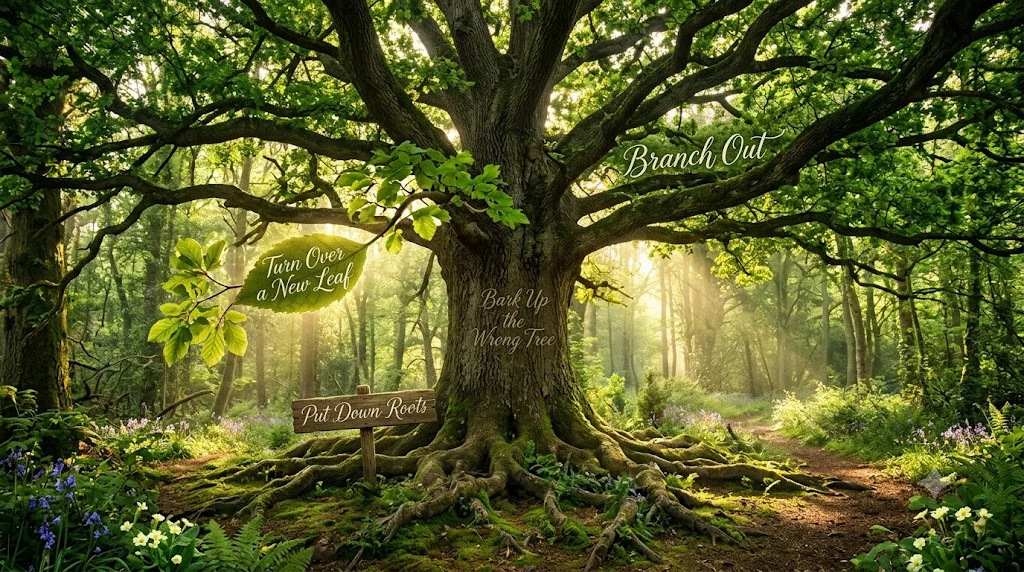
Idioms for trees are figurative expressions inspired by trees, forests, roots, branches, and growth. They are often used to describe family connections, personal development, stability, decision-making, strength, and life experiences.
Popular examples include “bark up the wrong tree,” “can’t see the forest for the trees,” and “put down roots.”
Trees have always held a special place in human language. They symbolize growth, wisdom, stability, resilience, and connection. It’s no surprise that many of the most memorable English idioms are rooted in images of trees, forests, branches, roots, and leaves.
Whether you’re writing a school essay, crafting a blog post, improving your spoken English, or adding depth to creative writing, tree-related idioms can make your language more vivid and expressive. A simple sentence becomes far more engaging when you replace a literal description with a meaningful idiom.
In everyday conversations, people often talk about putting down roots, branching out into new opportunities, or barking up the wrong tree. These expressions paint a picture in the listener’s mind, making communication more memorable and impactful.
This guide explores some of the most useful idioms for trees, explains what they mean, and shows how to use them naturally. By the end, you’ll have a stronger vocabulary and a collection of expressions that can help your English grow as steadily as a healthy tree.
Quick Summary Table
| Idiom | Meaning | Common Use |
|---|---|---|
| Bark up the wrong tree | Pursue the wrong idea or person | Mistakes and misunderstandings |
| Can’t see the forest for the trees | Focus too much on details | Problem-solving |
| Put down roots | Settle permanently | Family and community |
| Money doesn’t grow on trees | Money is limited | Financial discussions |
| Out on a limb | In a risky position | Opinions and decisions |
| Turn over a new leaf | Start fresh | Personal growth |
| Shake like a leaf | Tremble with fear | Emotional situations |
| Mighty oaks from little acorns grow | Great things start small | Motivation |
| Tree of knowledge | Source of wisdom | Education and learning |
| Branch out | Expand interests or activities | Career and business |
| Rooted in reality | Practical and realistic | Advice and leadership |
| Deep-rooted | Strongly established | Beliefs and traditions |
| Leaf by leaf | Gradual progress | Learning and achievement |
| The apple doesn’t fall far from the tree | Children resemble parents | Family conversations |
| Evergreen | Lasting relevance | Ideas and success |
| Forest of confusion | A confusing situation | Communication |
| Wood for the trees | Overall picture | Decision-making |
| Strong as an oak | Very strong | Character descriptions |
| Grow like a tree | Develop steadily | Personal growth |
| Branching paths | Different choices | Life decisions |
Bark Up the Wrong Tree
Meaning
To make a mistaken assumption or pursue the wrong course of action.
When People Use It
When someone accuses the wrong person or focuses on the wrong solution.
Alternative Expression
On the wrong track.
Examples in Communication
Formal Example:
The investigation revealed that the committee had been barking up the wrong tree.
Casual Example:
If you think I ate your sandwich, you’re barking up the wrong tree.
Creative Example:
He spent weeks chasing clues, only to discover he had been barking up the wrong tree all along.
Can’t See the Forest for the Trees
Meaning
To focus so much on details that you miss the bigger picture.
When People Use It
During projects, planning, and problem-solving discussions.
Alternative Expression
Miss the big picture.
Examples in Communication
Formal Example:
The report became overly detailed and failed to see the forest for the trees.
Casual Example:
You’re worrying about tiny issues and can’t see the forest for the trees.
Creative Example:
Lost among countless details, she forgot the dream that started everything.
Put Down Roots
Meaning
To establish a stable life in one place.
When People Use It
Talking about settling in a city, career, or community.
Alternative Expression
Settle down.
Examples in Communication
Formal Example:
After relocating, the family quickly put down roots in their new community.
Casual Example:
We’ve lived here long enough to put down roots.
Creative Example:
Like a young sapling, he finally found a place where he could grow.
Money Doesn’t Grow on Trees
Meaning
Money is limited and should be spent wisely.
When People Use It
Discussing budgets, spending, or financial responsibility.
Alternative Expression
Watch your spending.
Examples in Communication
Formal Example:
Organizations must remember that money doesn’t grow on trees.
Casual Example:
Turn off the lights—money doesn’t grow on trees!
Creative Example:
She spent every dollar as if forests were made of cash.
Out on a Limb
Meaning
Taking a risk or expressing an uncertain opinion.
When People Use It
In business decisions, predictions, or debates.
Alternative Expression
Take a chance.
Examples in Communication
Formal Example:
The analyst went out on a limb with an unexpected forecast.
Casual Example:
I’m going out on a limb here, but I think we’ll win.
Creative Example:
Balanced on uncertainty, he stepped out onto the thinnest branch.
Turn Over a New Leaf
Meaning
To begin behaving better or start fresh.
When People Use It
Personal improvement and life changes.
Alternative Expression
Make a fresh start.
Examples in Communication
Formal Example:
The company turned over a new leaf after restructuring.
Casual Example:
I’m turning over a new leaf this year.
Creative Example:
Autumn arrived, and with it came a chance to become someone new.
Shake Like a Leaf
Meaning
To tremble from fear, nervousness, or excitement.
When People Use It
Describing strong emotions.
Alternative Expression
Be extremely nervous.
Examples in Communication
Formal Example:
The witness was shaking like a leaf before testifying.
Casual Example:
I was shaking like a leaf before the interview.
Creative Example:
His hands fluttered like leaves in a storm.
Mighty Oaks from Little Acorns Grow
Meaning
Great achievements often begin with small beginnings.
When People Use It
Encouragement, education, and goal setting.
Alternative Expression
Every journey starts with a single step.
Examples in Communication
Formal Example:
The startup’s success proves that mighty oaks from little acorns grow.
Casual Example:
Keep practicing—mighty oaks from little acorns grow.
Creative Example:
A tiny seed carried the promise of a future forest.
The Apple Doesn’t Fall Far from the Tree
Meaning
Children often resemble their parents in behavior or character.
When People Use It
Family discussions and observations.
Alternative Expression
Like parent, like child.
Examples in Communication
Formal Example:
Her leadership skills show that the apple doesn’t fall far from the tree.
Casual Example:
He’s just like his dad—the apple doesn’t fall far from the tree.
Creative Example:
The same spark seemed to pass through generations.
Branch Out
Meaning
To try new activities or expand interests.
When People Use It
Career growth, hobbies, and business expansion.
Alternative Expression
Expand horizons.
Examples in Communication
Formal Example:
The company plans to branch out into international markets.
Casual Example:
I’m branching out and trying photography.
Creative Example:
Her ambitions stretched in every direction like growing branches.
Deep-Rooted
Meaning
Firmly established and difficult to change.
When People Use It
Beliefs, traditions, and habits.
Alternative Expression
Strongly established.
Examples in Communication
Formal Example:
The issue stems from deep-rooted cultural factors.
Casual Example:
That’s a deep-rooted habit.
Creative Example:
The tradition stood firm through generations.
Rooted in Reality
Meaning
Practical and realistic.
When People Use It
Advice, planning, and leadership.
Alternative Expression
Down to earth.
Examples in Communication
Formal Example:
Their strategy remained rooted in reality.
Casual Example:
I like her ideas because they’re rooted in reality.
Creative Example:
His dreams soared high, but his feet stayed planted firmly.
Leaf by Leaf
Meaning
Progress happens gradually over time.
When People Use It
Learning, improvement, and personal growth.
Alternative Expression
Step by step.
Examples in Communication
Formal Example:
The project advanced leaf by leaf through careful planning.
Casual Example:
You’ll learn it leaf by leaf.
Creative Example:
The masterpiece appeared one careful stroke at a time.
Evergreen
Meaning
Something that remains relevant, valuable, or popular.
When People Use It
Content creation, marketing, and education.
Alternative Expression
Timeless.
Examples in Communication
Formal Example:
The book remains an evergreen resource.
Casual Example:
That movie is evergreen.
Creative Example:
Some stories never lose their color.
Strong as an Oak
Meaning
Exceptionally strong and dependable.
When People Use It
Describing character or physical strength.
Alternative Expression
Solid as a rock.
Examples in Communication
Formal Example:
She remained strong as an oak during difficult times.
Casual Example:
My grandfather is still strong as an oak.
Creative Example:
He stood firm against every storm.
Grow Like a Tree
Meaning
Develop steadily and naturally.
When People Use It
Personal growth and long-term success.
Alternative Expression
Grow steadily.
Examples in Communication
Formal Example:
Leadership skills grow like a tree through experience.
Casual Example:
Give yourself time to grow like a tree.
Creative Example:
Each season added another ring of wisdom.
Branching Paths
Meaning
Different choices or directions in life.
When People Use It
Career planning and life decisions.
Alternative Expression
Crossroads.
Examples in Communication
Formal Example:
Graduation often presents branching paths.
Casual Example:
I’ve got several branching paths to choose from.
Creative Example:
Every decision opened another trail through the forest.
Forest of Confusion
Meaning
A situation filled with uncertainty or complexity.
When People Use It
Complicated discussions and difficult problems.
Alternative Expression
A maze of confusion.
Examples in Communication
Formal Example:
The regulations created a forest of confusion.
Casual Example:
I’m stuck in a forest of confusion right now.
Creative Example:
Questions surrounded him like towering trees.
Wood for the Trees
Meaning
Seeing the overall situation instead of focusing on details.
When People Use It
Problem-solving and strategic thinking.
Alternative Expression
See the bigger picture.
Examples in Communication
Formal Example:
Leaders must see the wood for the trees.
Casual Example:
Try looking at the whole situation.
Creative Example:
From the hilltop, the pattern finally became clear.
Tree of Knowledge
Meaning
A symbol of wisdom, learning, and understanding.
When People Use It
Education and intellectual discussions.
Alternative Expression
Source of wisdom.
Examples in Communication
Formal Example:
Education is often described as a tree of knowledge.
Casual Example:
My grandfather is our family’s tree of knowledge.
Creative Example:
Every book became another branch of understanding.
Practical Usage Guidance
How to Use Idioms Naturally
The best way to use idioms is to match them to the situation. Avoid forcing them into sentences simply because they sound interesting. Native speakers use idioms when they fit naturally within a conversation or piece of writing.
For example, saying someone is “barking up the wrong tree” feels more natural than directly calling them mistaken.
Common Mistakes with Idioms
- Using idioms literally instead of figuratively.
- Mixing two idioms together accidentally.
- Choosing highly informal idioms in formal academic writing.
- Overusing idioms until writing feels unnatural.
Idioms vs Literal Expressions
Literal language explains exactly what happens.
Literal: He made the wrong assumption.
Idiomatic: He was barking up the wrong tree.
The idiomatic version is often more vivid and memorable.
Tips for Sounding More Fluent
- Learn idioms in context rather than memorizing definitions.
- Read books, blogs, and articles that use figurative language.
- Practice one or two idioms each week.
- Use idioms in conversations before adding them to formal writing.
- Notice emotional tone and audience expectations.
How to Remember Tree Idioms Easily
Visual imagery helps enormously. Imagine roots, branches, forests, leaves, and acorns whenever you learn a new expression. The stronger the mental picture, the easier the idiom becomes to remember and use naturally.
FAQs
What are idioms for trees?
Idioms for trees are expressions that use tree-related imagery to communicate ideas about growth, stability, wisdom, family, mistakes, and life experiences.
Why are tree idioms common in English?
Trees symbolize strength, growth, and connection, making them powerful metaphors for human experiences and communication.
Can I use tree idioms in essays?
Yes. Many tree idioms work well in essays and creative writing, though it’s important to choose expressions that suit the tone and context.
Which tree idiom is most commonly used?
“Bark up the wrong tree,” “put down roots,” and “the apple doesn’t fall far from the tree” are among the most frequently used.
How can I learn idioms faster?
Practice them in real conversations, read widely, and connect each idiom with a memorable image or personal experience.
Conclusion
Learning idioms for trees is about much more than expanding your vocabulary. These expressions help you communicate ideas with greater color, emotion, and precision. A well-chosen idiom can transform an ordinary sentence into something memorable and engaging.
Tree-related idioms are especially valuable because they reflect universal experiences—growth, resilience, family, change, wisdom, and perseverance. Whether you’re writing an essay, creating blog content, telling a story, or simply having a conversation, these expressions can add depth and personality to your language.
The key is to use them naturally. Start with a few favorites, practice them in everyday communication, and pay attention to how native speakers use them in context. Over time, these idioms will become a natural part of your vocabulary.
Like a healthy tree that grows stronger with each season, your language skills will continue to develop one expression at a time.
Discover More Related Articles:
- Idioms About the Sky | Expressions That Soar Above the Rest In 2026
- Idioms About Storms | Expressions for Life’s Turbulent Moments In 2026