Quick Answer
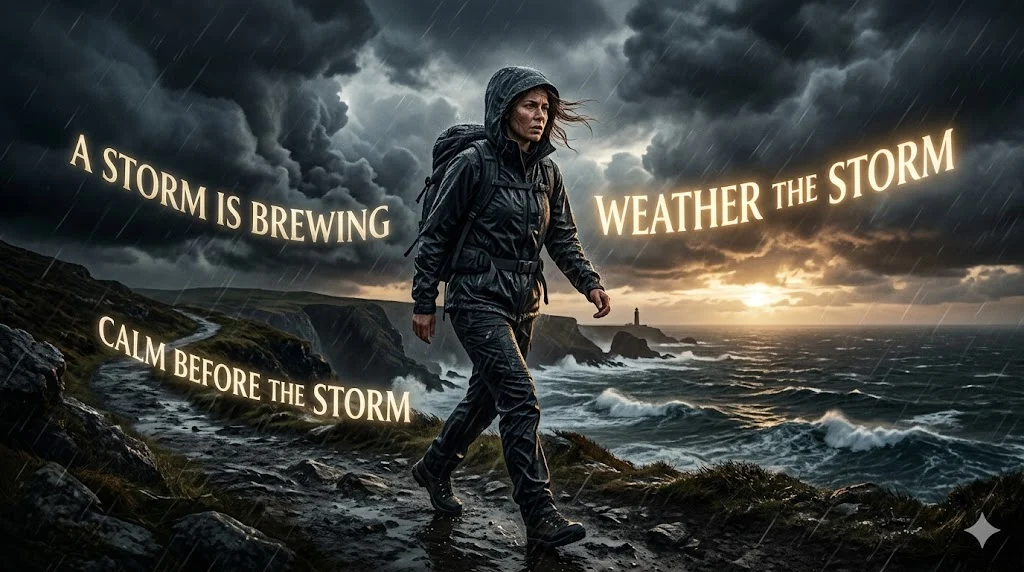
Idioms about storms are figurative expressions that use storm-related imagery to describe challenges, emotional struggles, conflict, uncertainty, resilience, and recovery. Phrases like “weather the storm,” “a storm is brewing,” and “calm before the storm” help speakers and writers communicate difficult situations in a vivid and memorable way.
Storms have fascinated people for centuries. They can be beautiful, frightening, unpredictable, and powerful all at once. Because storms create such strong imagery, English speakers often use storm-related idioms to describe life’s emotional highs and lows.
Whether you’re facing a difficult project at work, navigating personal challenges, writing a compelling story, or simply having a conversation with friends, storm idioms help communicate complex feelings in a vivid and relatable way.
You’ll hear these expressions in everyday conversations, novels, news articles, movies, and professional discussions. Understanding them not only improves your vocabulary but also helps you recognize emotional tone and hidden meaning in communication.
For writers, storm idioms add atmosphere and depth. For language learners, they provide a natural way to sound more fluent and expressive. In this guide, you’ll discover some of the most useful idioms about storms, learn when people use them, and see practical examples that bring each expression to life.
Quick Summary Table
| Idiom | Simple Meaning | Common Usage |
|---|---|---|
| Weather the storm | Survive a difficult situation | Challenges and setbacks |
| A storm is brewing | Trouble is developing | Conflict or tension |
| Calm before the storm | Quiet period before trouble | Warning of difficulties |
| Ride out the storm | Endure hardship patiently | Tough situations |
| Take by storm | Achieve rapid success | Business or popularity |
| Stormy relationship | Difficult relationship | Personal connections |
| Perfect storm | Multiple problems occurring together | Business or life challenges |
| Any port in a storm | Accept available help | Emergencies |
| Rain on someone’s parade | Spoil someone’s happiness | Social situations |
| Come rain or shine | No matter what happens | Commitment and loyalty |
Weather the Storm
Meaning
To survive a difficult situation without being defeated.
When People Use It
People use this idiom when discussing challenges, crises, setbacks, or difficult periods.
Alternative Expression
Get through tough times
Examples in Communication
Formal Example
The company managed to weather the storm despite economic uncertainty.
Casual Example
We’ve had a rough year, but we’ll weather the storm.
Creative Example
Like an old lighthouse facing endless waves, she weathered the storm with quiet strength.
Usage Insight
This is one of the most common and versatile storm idioms in English.
A Storm Is Brewing
Meaning
Trouble, conflict, or difficulty is beginning to develop.
When People Use It
Used when tension is growing and problems seem likely.
Alternative Expression
Trouble is coming
Examples in Communication
Formal Example
Managers sensed a storm was brewing among team members.
Casual Example
I think a storm is brewing between those two friends.
Creative Example
The silence around the dinner table felt like a storm brewing beyond the horizon.
Usage Insight
This idiom often creates suspense in both speech and storytelling.
Calm Before the Storm
Meaning
A peaceful period that occurs just before difficulties begin.
When People Use It
Used when people anticipate upcoming challenges.
Alternative Expression
Temporary peace
Examples in Communication
Formal Example
The quiet market conditions proved to be the calm before the storm.
Casual Example
Everyone’s unusually relaxed today. It feels like the calm before the storm.
Creative Example
The playground sat silent beneath gray clouds, the calm before the storm.
Ride Out the Storm
Meaning
To patiently endure a difficult period until it passes.
When People Use It
Common in discussions about financial, emotional, or personal struggles.
Alternative Expression
Hang in there
Examples in Communication
Formal Example
The organization chose to ride out the storm rather than make drastic changes.
Casual Example
Just ride out the storm. Things will get better soon.
Creative Example
Wrapped in hope and determination, they rode out the storm together.
Take by Storm
Meaning
To become successful or popular very quickly.
When People Use It
Used for trends, businesses, entertainers, or ideas.
Alternative Expression
Become an instant hit
Examples in Communication
Formal Example
The new product took the market by storm.
Casual Example
That singer has taken social media by storm.
Creative Example
Her first novel swept across bookstores and took the literary world by storm.
Stormy Relationship
Meaning
A relationship filled with arguments and emotional ups and downs.
When People Use It
Used to describe romantic, family, or professional relationships.
Alternative Expression
Rocky relationship
Examples in Communication
Formal Example
They experienced a stormy partnership throughout the project.
Casual Example
They care about each other, but it’s definitely a stormy relationship.
Creative Example
Their love was a stormy sea, beautiful one day and turbulent the next.
Perfect Storm
Meaning
A combination of several problems happening at the same time.
When People Use It
Frequently used in business, economics, and life challenges.
Alternative Expression
Worst-case scenario
Examples in Communication
Formal Example
The industry faced a perfect storm of rising costs and declining demand.
Casual Example
Missing the bus, losing my wallet, and forgetting my phone created a perfect storm.
Creative Example
The perfect storm arrived without warning, turning a normal day into complete chaos.
Any Port in a Storm
Meaning
In difficult situations, any available help or solution is acceptable.
When People Use It
Used during emergencies or urgent circumstances.
Alternative Expression
Take what help you can get
Examples in Communication
Formal Example
During the crisis, any port in a storm became the team’s guiding principle.
Casual Example
I don’t love this option, but any port in a storm.
Creative Example
Lost in uncertainty, he welcomed any port in a storm.
Rain on Someone’s Parade
Meaning
To spoil someone else’s happiness or excitement.
When People Use It
Common in social conversations.
Alternative Expression
Burst someone’s bubble
Examples in Communication
Formal Example
The announcement unfortunately rained on the team’s parade.
Casual Example
I don’t want to rain on your parade, but there’s a problem.
Creative Example
Her criticism rained on his parade just as he began celebrating.
Come Rain or Shine
Meaning
No matter what happens.
When People Use It
Used to express commitment, reliability, or determination.
Alternative Expression
No matter the circumstances
Examples in Communication
Formal Example
The event will proceed come rain or shine.
Casual Example
I’ll be there tomorrow, come rain or shine.
Creative Example
Their friendship endured come rain or shine, year after year.
Under a Cloud
Meaning
Being under suspicion or facing criticism.
When People Use It
Used in professional and social contexts.
Alternative Expression
Facing doubt
Examples in Communication
Formal Example
The executive resigned while still under a cloud.
Casual Example
He’s been under a cloud since the argument.
Creative Example
She walked through the office under a cloud of uncertainty.
Chasing Rainbows
Meaning
Pursuing unrealistic goals or dreams.
When People Use It
Used when ambitions seem unlikely to succeed.
Alternative Expression
Pursuing the impossible
Examples in Communication
Formal Example
Critics argued the project was merely chasing rainbows.
Casual Example
Stop chasing rainbows and focus on something practical.
Creative Example
He spent years chasing rainbows across distant horizons.
Save for a Rainy Day
Meaning
To save money or resources for future difficulties.
When People Use It
Often used in financial discussions.
Alternative Expression
Prepare for hard times
Examples in Communication
Formal Example
Financial advisors recommend saving for a rainy day.
Casual Example
I’m putting some money aside for a rainy day.
Creative Example
Each coin she saved became a small shield against future storms.
Into Every Life a Little Rain Must Fall
Meaning
Everyone experiences difficulties at some point.
When People Use It
Used to comfort people facing setbacks.
Alternative Expression
Hard times happen to everyone
Examples in Communication
Formal Example
The mentor reminded his students that into every life a little rain must fall.
Casual Example
Don’t worry too much. A little rain falls in everyone’s life.
Creative Example
She accepted the setback knowing that a little rain eventually visits every life.
Eye of the Storm
Meaning
A calm or stable period found in the middle of a difficult or chaotic situation.
When People Use It
People use this idiom when describing temporary relief during stressful circumstances.
Alternative Expression
Moment of calm
Examples in Communication
Formal Example
The negotiations provided an eye of the storm amid months of uncertainty.
Casual Example
This weekend feels like the eye of the storm before exams start again.
Creative Example
For a brief afternoon, laughter became the eye of the storm surrounding their lives.
Usage Insight
This idiom often appears in storytelling because it creates a strong contrast between chaos and peace.
Storm Out
Meaning
To leave a place suddenly because of anger, frustration, or disappointment.
When People Use It
Commonly used during arguments, disagreements, or emotional situations.
Alternative Expression
Walk out angrily
Examples in Communication
Formal Example
The employee stormed out of the meeting after the disagreement escalated.
Casual Example
She stormed out when nobody listened to her opinion.
Creative Example
Without another word, he stormed out, leaving only silence behind him.
A Tempest in a Teapot
Meaning
A situation that seems important but is actually minor or insignificant.
When People Use It
Used when people are overreacting to a small issue.
Alternative Expression
Making a mountain out of a molehill
Examples in Communication
Formal Example
The controversy turned out to be little more than a tempest in a teapot.
Casual Example
Everyone’s arguing about something tiny. It’s a tempest in a teapot.
Creative Example
The neighborhood debate over flower colors became a tempest in a teapot.
Usage Insight
This idiom is particularly useful in workplace discussions and opinion writing.
Gather Clouds
Meaning
Signs of trouble or difficulty are beginning to appear.
When People Use It
Used when people notice warning signs before a problem develops.
Alternative Expression
Warning signs appear
Examples in Communication
Formal Example
Economic clouds were beginning to gather across the industry.
Casual Example
I can see clouds gathering around this situation already.
Creative Example
Dark clouds gathered over their plans long before anyone noticed.
Be Snowed Under
Meaning
To have too much work or too many responsibilities.
When People Use It
Common in workplace and academic conversations.
Alternative Expression
Overwhelmed with work
Examples in Communication
Formal Example
The accounting department is currently snowed under with reports.
Casual Example
Sorry I haven’t replied. I’ve been snowed under all week.
Creative Example
Between deadlines and responsibilities, she felt completely snowed under.
Rain Check
Meaning
To postpone an invitation or activity until another time.
When People Use It
Frequently used in friendly conversations.
Alternative Expression
Maybe another time
Examples in Communication
Formal Example
Unfortunately, I must take a rain check on tomorrow’s meeting.
Casual Example
Can I take a rain check on dinner tonight?
Creative Example
The café date would have to wait, so they exchanged a hopeful rain check instead.
Be on Clouds and Sunshine
Meaning
To be cheerful, optimistic, and happy.
When People Use It
Used to describe someone in a very positive mood.
Alternative Expression
Feeling wonderful
Examples in Communication
Formal Example
She remained on clouds and sunshine throughout the successful project.
Casual Example
You’ve been all clouds and sunshine lately.
Creative Example
His smile carried enough clouds and sunshine to brighten the entire room.
Practical Observations About Storm Idioms
One reason storm idioms remain popular is that nearly everyone understands what a storm feels like. Even if people live in different countries or cultures, storms symbolize challenge, uncertainty, disruption, and eventually recovery.
In professional communication, expressions like weather the storm, perfect storm, and ride out the storm are especially common because they sound polished while still being vivid.
In creative writing, idioms such as calm before the storm and eye of the storm can instantly build atmosphere and emotional tension.
For everyday conversation, simpler expressions like rain on someone’s parade and come rain or shine tend to sound the most natural.
Practical Usage Guidance
How to Use Storm Idioms Naturally
The best way to use storm idioms is to match them with situations involving challenge, uncertainty, resilience, or emotional intensity.
For example:
- Use weather the storm during difficult times.
- Use calm before the storm when tension is building.
- Use take by storm when discussing rapid success.
Natural context makes idioms feel authentic rather than forced.
Common Mistakes with Storm Idioms
Mixing Meanings
Some learners confuse positive and negative storm expressions.
For example:
- Take by storm is positive.
- A storm is brewing is usually negative.
Using Too Many Idioms Together
Using multiple idioms in one sentence can sound unnatural.
Taking Them Literally
Remember that storm idioms usually describe emotions, situations, or events rather than actual weather.
Idioms vs Literal Expressions
Literal:
“The project faced several problems.”
Idiomatic:
“The project faced a perfect storm of problems.”
The second version feels more vivid and memorable.
Tips for Sounding More Fluent
- Learn idioms through stories.
- Notice how native speakers use them.
- Practice one idiom at a time.
- Use them in conversations and journal entries.
- Focus on understanding context rather than memorizing definitions.
FAQs
What are idioms about storms?
Idioms about storms are figurative expressions that use weather-related imagery to describe emotions, challenges, conflicts, success, or life situations.
What is the most common storm idiom?
“Weather the storm” is one of the most commonly used storm idioms and means surviving a difficult situation.
Can storm idioms be used in professional writing?
Yes. Idioms like “perfect storm” and “weather the storm” are frequently used in business and professional communication.
Why are storm idioms popular in English?
Storms create powerful imagery that helps people describe emotional and real-life experiences more vividly.
How can I learn idioms faster?
Practice them in context, read stories and articles, listen to native speakers, and use them regularly in your own writing and conversations.
Conclusion
Idioms about storms capture some of life’s most challenging, emotional, and transformative experiences. They help speakers and writers communicate tension, uncertainty, resilience, success, and recovery through powerful imagery that people instantly understand.
Whether you’re trying to improve your spoken English, strengthen your writing, or better understand figurative language, storm idioms offer valuable tools for expression. They bring color and emotion to communication while helping complex situations feel easier to describe.
The next time you hear someone talk about weathering the storm, riding out difficulties, or sensing a storm brewing, you’ll recognize the deeper meaning behind the words. With regular practice, these expressions can become a natural part of your vocabulary, making your communication more engaging, expressive, and memorable.
Discover More Related Articles: