Quick Answer
Idioms for excitement are expressive phrases people use to describe strong feelings of anticipation, enthusiasm, thrill, or nervous energy. Expressions like “buzzing with excitement,” “like a kid in a candy store,” and “can’t wait” help conversations feel more emotional, vivid, and naturally fluent.
Excitement changes the way people speak. When someone is thrilled about a concert, nervous before a competition, or eagerly waiting for life-changing news, ordinary words often feel too small for the emotion. That’s exactly why idioms for excitement are so useful. They add energy, personality, and vivid emotion to conversations in ways simple phrases cannot.
Instead of saying “I’m very excited,” English speakers often say they’re “buzzing with excitement” or “like a kid in a candy store.” These expressions instantly create imagery and make communication feel more alive. They appear naturally in movies, storytelling, workplace conversations, social media captions, and everyday dialogue.
For language learners, understanding these idioms can dramatically improve fluency and listening comprehension. Writers also use excitement idioms to create emotional scenes that readers can actually feel.
In this guide, you’ll explore some of the most natural idioms for excitement, learn where they fit best, and discover practical ways to use them confidently in both speaking and writing.
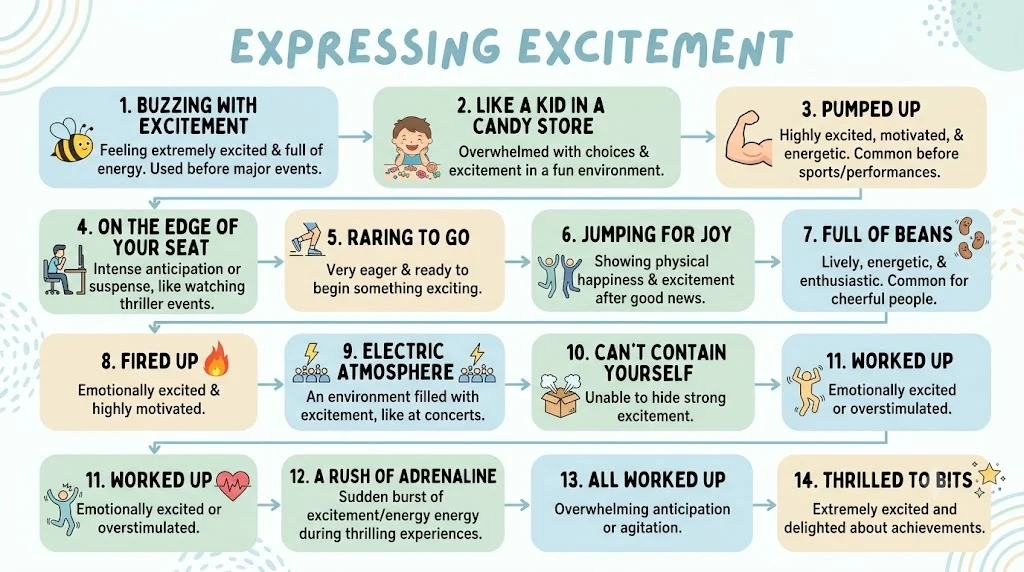
Quick Summary Table
| Idiom | Simple Meaning | Common Usage |
|---|---|---|
| Buzzing with excitement | Extremely excited | Big events or news |
| Like a kid in a candy store | Overly excited and curious | Shopping or fun experiences |
| Pumped up | Full of energy and enthusiasm | Sports or motivation |
| On the edge of your seat | Feeling intense anticipation | Movies or suspense |
| Raring to go | Eager to start | New projects or adventures |
| Jumping for joy | Showing visible excitement | Good news |
| Full of beans | Energetic and lively | Cheerful moods |
| Fired up | Highly motivated and excited | Competitions or speeches |
| Electric atmosphere | Filled with excitement | Concerts or crowds |
| Can’t contain yourself | Unable to hide excitement | Special moments |
Idioms for Excitement
Buzzing with Excitement
Meaning
Feeling extremely excited and full of energy.
When People Use It
Commonly used before major events, celebrations, or important announcements.
Alternative Expression
Thrilled to bits
Examples in Communication
Formal Example
The students were buzzing with excitement before the science exhibition began.
Casual Example
I’m buzzing with excitement for the trip tomorrow.
Creative Example
The whole neighborhood buzzed with excitement as fireworks painted the evening sky.
Usage Insight
This idiom creates a lively emotional tone and works especially well in conversational English.
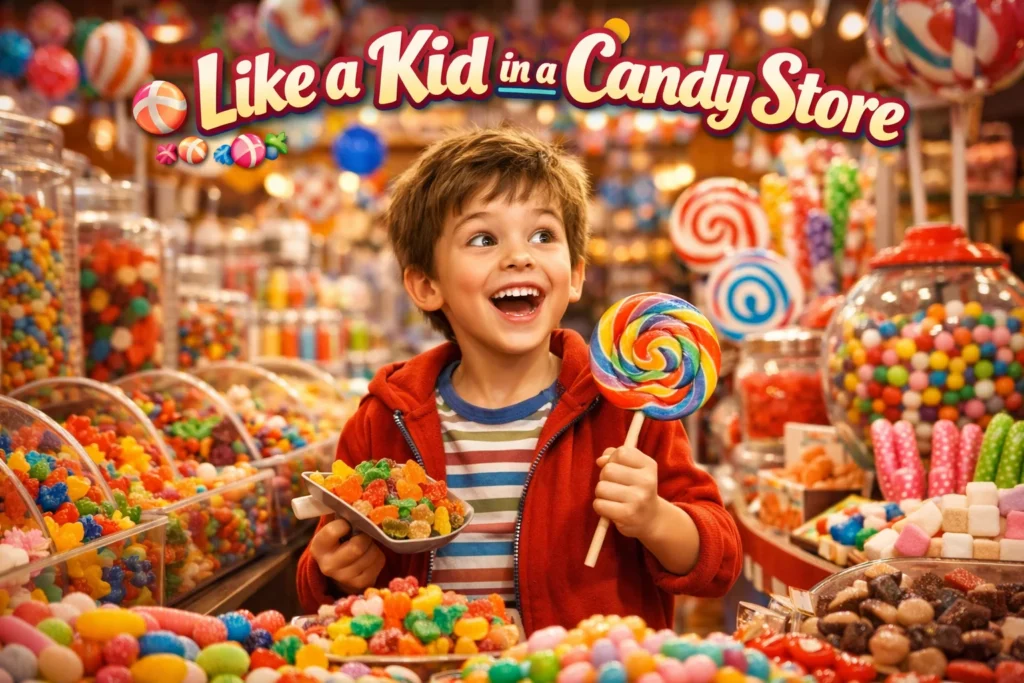
Like a Kid in a Candy Store
Meaning
Feeling excited and fascinated by many choices or experiences.
When People Use It
Used when someone is overwhelmed with excitement in a fun environment.
Alternative Expression
Wide-eyed with excitement
Examples in Communication
Formal Example
The interns looked like kids in a candy store during the technology showcase.
Casual Example
I felt like a kid in a candy store at the gaming convention.
Creative Example
She wandered through the bookstore like a kid in a candy store, touching every colorful cover.
Usage Insight
This idiom is informal but extremely popular in storytelling and casual speech.
Pumped Up
Meaning
Very excited, motivated, and energetic.
When People Use It
Often used before sports events, performances, or exciting activities.
Alternative Expression
Fired up
Examples in Communication
Formal Example
The team felt pumped up before the championship match.
Casual Example
I’m so pumped up for the concert tonight.
Creative Example
Music thundered through the room as everyone got pumped up for the final round.
On the Edge of Your Seat
Meaning
Feeling intense anticipation or suspense.
When People Use It
Usually used while watching thrilling events, films, or competitions.
Alternative Expression
Holding your breath
Examples in Communication
Formal Example
The audience remained on the edge of their seats throughout the performance.
Casual Example
That football match had me on the edge of my seat.
Creative Example
Rain tapped against the windows while the family sat on the edge of their seats waiting for the results.
Raring to Go
Meaning
Very eager and ready to begin something exciting.
When People Use It
Used before starting trips, projects, games, or adventures.
Alternative Expression
Ready and excited
Examples in Communication
Formal Example
The volunteers were raring to go before the charity event started.
Casual Example
We’re packed and raring to go for vacation.
Creative Example
The hikers stood beneath the sunrise, raring to go into the mountain trails.
Jumping for Joy

Meaning
Showing happiness and excitement physically.
When People Use It
Used after exciting achievements or unexpected good news.
Alternative Expression
Over the moon
Examples in Communication
Formal Example
The children were jumping for joy after hearing the announcement.
Casual Example
I was literally jumping for joy when I got accepted.
Creative Example
She ran through the hallway jumping for joy with tears of excitement in her eyes.
Full of Beans
Meaning
Very energetic, lively, and enthusiastic.
When People Use It
Commonly used for cheerful and energetic people.
Alternative Expression
Bursting with energy
Examples in Communication
Formal Example
The younger participants arrived full of beans despite the early schedule.
Casual Example
Why are you so full of beans today?
Creative Example
The puppy raced around the garden full of beans after the rain stopped.
Usage Insight
This idiom sounds playful and is more common in informal English.
Fired Up
Meaning
Highly motivated and emotionally excited.
When People Use It
Often used before speeches, competitions, or important moments.
Alternative Expression
Pumped up
Examples in Communication
Formal Example
The coach’s speech left the players fired up for the final game.
Casual Example
I’m really fired up about starting this project.
Creative Example
The crowd grew louder, and suddenly the entire stadium felt fired up with energy.
Electric Atmosphere
Meaning
An environment filled with excitement and energy.
When People Use It
Usually describes concerts, festivals, sports events, or celebrations.
Alternative Expression
Charged with excitement
Examples in Communication
Formal Example
The conference hall had an electric atmosphere before the keynote speech.
Casual Example
The party last night had such an electric atmosphere.
Creative Example
Music echoed through the streets as the electric atmosphere carried everyone into celebration.
Can’t Contain Yourself
Meaning
Unable to hide your excitement.
When People Use It
Used when emotions become visibly obvious.
Alternative Expression
Bursting with excitement
Examples in Communication
Formal Example
The children could hardly contain themselves before opening the gifts.
Casual Example
I can’t contain myself — I finally got the tickets!
Creative Example
She tried to stay calm, but her sparkling eyes showed she couldn’t contain herself any longer.
Worked Up
Meaning
Emotionally excited or overstimulated.
When People Use It
Can describe both positive excitement and nervous anticipation.
Alternative Expression
Overexcited
Examples in Communication
Formal Example
The audience became worked up as the countdown began.
Casual Example
You’re getting way too worked up about this movie release.
Creative Example
The room grew louder as everyone became worked up over the surprise announcement.
A Rush of Adrenaline
Meaning
A sudden burst of excitement and energy.
When People Use It
Used during thrilling, adventurous, or emotional experiences.
Alternative Expression
Adrenaline kick
Examples in Communication
Formal Example
The athletes described the competition as a rush of adrenaline.
Casual Example
That roller coaster gave me such a rush of adrenaline.
Creative Example
As the stage lights flashed on, a rush of adrenaline surged through her entire body.
All Worked Up
Meaning
Very emotionally excited or agitated.
When People Use It
Often used when anticipation becomes overwhelming.
Alternative Expression
Overstimulated
Examples in Communication
Formal Example
The fans were all worked up before the celebrity appearance.
Casual Example
I’m too worked up to sleep tonight.
Creative Example
The city felt all worked up as midnight celebrations approached.
Thrilled to Bits
Meaning
Extremely excited and delighted.
When People Use It
Common in personal achievements or happy surprises.
Alternative Expression
Over the moon
Examples in Communication
Formal Example
The author was thrilled to bits by the award nomination.
Casual Example
I’m thrilled to bits about the new phone.
Creative Example
He sat by the window thrilled to bits as snow began falling for the first time that winter.
Through the Roof
Meaning
Reaching an extremely high level of excitement or emotion.
When People Use It
Often used when excitement suddenly increases because of major news or events.
Alternative Expression
Sky-high excitement
Examples in Communication
Formal Example
Ticket demand went through the roof after the announcement.
Casual Example
My excitement is through the roof right now.
Creative Example
As the countdown reached ten, the energy in the arena shot through the roof.
Usage Insight
This idiom is common in conversational English and works well for describing intense reactions.
Champing at the Bit
Meaning
Feeling impatiently excited to begin something.
When People Use It
Used when someone eagerly wants action to start immediately.
Alternative Expression
Eagerly waiting
Examples in Communication
Formal Example
The athletes were champing at the bit before the race began.
Casual Example
I’m champing at the bit to watch the new season tonight.
Creative Example
The children stood at the gate champing at the bit for the carnival to open.
Hyped Up
Meaning
Very excited because of anticipation or promotion.
When People Use It
Common before concerts, games, product launches, or events.
Alternative Expression
Worked into excitement
Examples in Communication
Formal Example
The audience was hyped up before the guest speaker arrived.
Casual Example
Everyone’s so hyped up for the tournament.
Creative Example
Music blasted through the speakers while the crowd grew increasingly hyped up under flashing lights.
Get a Kick Out of Something
Meaning
To feel excitement or enjoyment from something.
When People Use It
Used when people find something entertaining or thrilling.
Alternative Expression
Really enjoy
Examples in Communication
Formal Example
Many readers get a kick out of suspense novels.
Casual Example
I get such a kick out of surprise road trips.
Creative Example
He got a kick out of watching tiny reactions turn into huge laughter.
A Bundle of Energy
Meaning
Someone extremely energetic and excited.
When People Use It
Usually used for lively people, especially children or enthusiastic personalities.
Alternative Expression
Full of life
Examples in Communication
Formal Example
The new trainee arrived as a bundle of energy and enthusiasm.
Casual Example
My little brother is always a bundle of energy.
Creative Example
She bounced through the studio like a bundle of energy wrapped in sunshine.
Sparks Are Flying
Meaning
Excitement or strong emotional energy is building rapidly.
When People Use It
Used during thrilling moments, creative discussions, or exciting interactions.
Alternative Expression
Energy is building
Examples in Communication
Formal Example
Creative sparks were flying during the brainstorming session.
Casual Example
The moment the music started, sparks were flying.
Creative Example
The festival square came alive as sparks of excitement flew through the crowd.
Can Hardly Wait
Meaning
Feeling so excited that waiting feels difficult.
When People Use It
Very common before vacations, celebrations, or important events.
Alternative Expression
Counting down the days
Examples in Communication
Formal Example
The team could hardly wait to present their project.
Casual Example
I can hardly wait for summer break.
Creative Example
She stared at the packed suitcase, hardly able to wait for tomorrow’s adventure.
Revved Up
Meaning
Emotionally energized and excited.
When People Use It
Common before competitions, performances, or active events.
Alternative Expression
Amped up
Examples in Communication
Formal Example
The crowd became revved up before the final performance.
Casual Example
I’m completely revved up for tonight’s game.
Creative Example
Engines roared while the racers stood revved up beneath the bright stadium lights.
Caught Up in the Moment
Meaning
Becoming emotionally excited by an experience happening right now.
When People Use It
Used during emotional celebrations or unforgettable events.
Alternative Expression
Swept away by excitement
Examples in Communication
Formal Example
Many fans became caught up in the moment during the live performance.
Casual Example
I got so caught up in the moment that I forgot to record anything.
Creative Example
Under flashing fireworks, everyone became caught up in the moment together.
Practical Tip: How Native Speakers Use Excitement Idioms
One interesting thing about excitement idioms is that native speakers often combine them with body language and vocal tone. Someone saying “I’m pumped up!” usually sounds energetic, speaks faster, or smiles while talking. That emotional delivery matters just as much as the words themselves.
You’ll also notice that excitement idioms appear heavily in:
- Sports commentary
- Movie reviews
- Social media captions
- YouTube reactions
- Casual storytelling
- Group conversations
Learning where idioms naturally appear helps you use them more confidently and avoid sounding overly rehearsed.
Mini Practice Exercise
Try completing these naturally:
- “I was on the edge of my seat when ________.”
- “She was buzzing with excitement after ________.”
- “The crowd became hyped up as soon as ________.”
- “I can hardly wait for ________.”
Small exercises like these help idioms become part of your active vocabulary instead of passive memory.
Practical Ways to Use Idioms Naturally
Pay Attention to Emotional Tone
Excitement idioms often carry different emotional energy. Some sound playful while others feel intense or dramatic.
For example:
- “Full of beans” sounds cheerful and light.
- “Fired up” feels powerful and motivational.
- “On the edge of your seat” creates suspense.
Choosing the right tone makes your English sound more natural.
Use Idioms in Real Situations
The best way to remember idioms is to connect them with actual experiences.
Examples:
- Before a trip: “I’m buzzing with excitement.”
- Watching a final match: “I’m on the edge of my seat.”
Avoid Overloading Sentences
Using too many idioms together can sound forced. One strong idiom often has more impact than several crowded into one paragraph.
Listen to Native Speakers
Movies, interviews, YouTube videos, and podcasts are excellent places to hear how excitement idioms are naturally spoken.
Common Mistakes with Excitement Idioms
Using Informal Idioms in Formal Reports
Expressions like “full of beans” sound too casual for academic or professional reports.
Confusing Similar Idioms
“On cloud nine” means happiness, while “on the edge of your seat” means suspense or anticipation.
Translating Literally
Idioms are figurative expressions. “Electric atmosphere” does not mean actual electricity — it describes emotional energy.
Ignoring Context
Some idioms fit fun situations better than serious ones. Always consider the mood of the conversation.
How to Remember Excitement Idioms Easily
Visualize the Expression
Imagine someone literally bouncing with energy or sitting nervously on the edge of a chair.
Group Idioms by Emotion
Learning idioms in categories such as excitement, happiness, fear, or confidence improves memory retention.
Use Them in Daily Writing
Try adding idioms naturally to social media captions, journal entries, or classroom assignments.
Learn Through Storytelling
Stories make idioms easier to understand because emotions and situations provide context naturally.
FAQs
What are idioms for excitement?
Idioms for excitement are figurative expressions used to describe strong enthusiasm, anticipation, thrill, or emotional energy.
Why should I learn excitement idioms?
They help your English sound more natural, expressive, and emotionally engaging in conversations and writing.
Are excitement idioms formal or informal?
Most are informal or conversational, though some can work in storytelling, presentations, or descriptive writing.
What is a common idiom for excitement?
“Buzzing with excitement” is one of the most common expressions for strong enthusiasm.
How can I practice using excitement idioms?
Use them in conversations, journal writing, captions, storytelling, and by listening to native English speakers regularly.
Conclusion
Idioms for excitement make communication feel vivid, emotional, and memorable. Instead of repeating simple phrases like “very excited,” these expressions help speakers and writers add personality, imagery, and emotional depth to their language.
Whether you’re improving spoken English, writing creatively, preparing for school, or simply expanding your vocabulary, excitement idioms can make your communication sound more natural and engaging. The key is not memorizing hundreds of phrases at once, but learning a few useful expressions and practicing them in real situations.
Over time, these idioms begin to feel less like vocabulary exercises and more like part of your natural voice. That’s when language becomes expressive instead of mechanical.
The more emotionally connected your language sounds, the more memorable your communication becomes.
Discover More Related Articles:
- Idioms About Songs | Musical Expressions That Add Rhythm to Your English In 2026
- Idioms About Age | Timeless Expressions That Add Wisdom to Your English In 2026