Quick Answer
Idioms for scared are expressive phrases used to describe fear, anxiety, nervousness, or feeling startled in a more vivid and natural way. Instead of simply saying “I’m scared,” English speakers use idioms like “scared stiff,” “heart in your mouth,” or “frozen with fear” to show stronger emotion and create imagery in communication.
Fear is a universal emotion — everyone experiences it at some point, whether it’s before an exam, during a scary movie, or in an uncertain situation. But in English, instead of just saying “I’m scared,” people often use vivid idioms that make the emotion feel more real and expressive.
Idioms for scared help bring language to life. They turn simple fear into something visual and emotional — like a heart jumping into the throat or legs shaking like leaves in the wind. These expressions are widely used in storytelling, casual conversations, movies, and even professional writing when describing tension or suspense.
For students, writers, and English learners, mastering these idioms can significantly improve fluency. They help you sound more natural, understand native speakers better, and add emotional depth to your communication.
In this guide, you’ll explore powerful fear-related idioms, understand when to use them, and learn how to naturally include them in real conversations and writing.
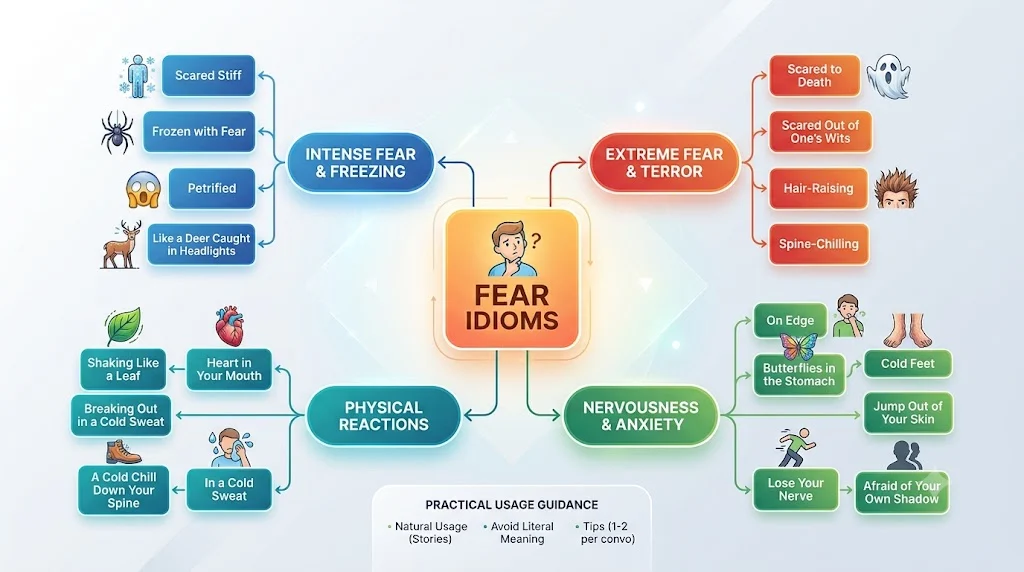
Quick Summary Table
| Idiom | Simple Meaning | Common Usage |
|---|---|---|
| Scared stiff | Extremely frightened | Sudden fear moments |
| Heart in your mouth | Very nervous or afraid | Risky situations |
| Frozen with fear | Unable to move due to fear | Shock or danger |
| Scared to death | Extremely scared | Intense emotional fear |
| Shaking like a leaf | Physically trembling from fear | Anxiety or panic |
| On edge | Nervous and alert | Waiting for something scary |
| Jump out of one’s skin | Sudden fright | Loud surprises |
| Hair-raising | Terrifying experience | Horror or danger |
| Spine-chilling | Extremely frightening | Horror stories |
| Cold feet | Sudden fear before action | Decisions or commitments |
Idioms for Scared
Scared Stiff
Meaning
Extremely frightened, unable to move or react.
When People Use It
Used when fear is so strong that a person feels physically frozen.
Alternative Expression
Frozen with fear
Examples in Communication
Formal Example
The witness was scared stiff during the intense courtroom questioning.
Casual Example
I was scared stiff walking alone in the dark street.
Creative Example
He stood scared stiff as the shadow slowly moved closer.
Heart in Your Mouth
Meaning
Feeling extreme nervousness or fear, especially in suspenseful moments.
When People Use It
During risky situations, waiting for results, or near-accidents.
Alternative Expression
On edge
Examples in Communication
Formal Example
The audience watched with their heart in their mouth during the final scene.
Casual Example
I had my heart in my mouth when the car almost slipped on the wet road.
Creative Example
She opened the envelope with her heart in her mouth, not daring to breathe.
Frozen with Fear
Meaning
Unable to move or react due to intense fear.
When People Use It
When someone is shocked or overwhelmed by danger.
Alternative Expression
Paralyzed with fear
Examples in Communication
Formal Example
The security guard was frozen with fear during the unexpected alarm.
Casual Example
I was frozen with fear when I saw the spider on my bed.
Creative Example
Time slowed as he stood frozen with fear under the flickering streetlight.
Scared to Death
Meaning
Extremely frightened.
When People Use It
Used in dramatic or emotional situations.
Alternative Expression
Terrified beyond limits
Examples in Communication
Formal Example
The hikers were scared to death during the sudden storm.
Casual Example
I was scared to death watching that horror movie alone.
Creative Example
She was scared to death as footsteps echoed behind her in the empty hall.
Shaking Like a Leaf
Meaning
Trembling due to fear or nervousness.
When People Use It
When someone is visibly anxious or frightened.
Alternative Expression
Trembling with fear
Examples in Communication
Formal Example
The suspect was shaking like a leaf during the interrogation.
Casual Example
I was shaking like a leaf before my presentation.
Creative Example
He stood shaking like a leaf as thunder cracked above the mountains.
On Edge
Meaning
Feeling nervous, alert, and uneasy.
When People Use It
During uncertain or tense situations.
Alternative Expression
Highly alert
Examples in Communication
Formal Example
The entire team was on edge before the announcement.
Casual Example
I’ve been on edge all day waiting for the result.
Creative Example
The silence kept her on edge, like something unseen was watching.
Jump Out of Your Skin
Meaning
To be suddenly frightened by surprise.
When People Use It
When something unexpected startles someone.
Alternative Expression
Startled badly
Examples in Communication
Formal Example
The loud explosion made everyone jump out of their skin.
Casual Example
You made me jump out of my skin by sneaking up like that!
Creative Example
The sudden knock made her jump out of her skin in the quiet night.
Hair-Raising
Meaning
Extremely frightening or shocking.
When People Use It
Used for scary experiences or stories.
Alternative Expression
Terrifying experience
Examples in Communication
Formal Example
The documentary shared hair-raising accounts of survival.
Casual Example
That roller coaster ride was hair-raising!
Creative Example
The wind carried hair-raising whispers through the abandoned house.
Spine-Chilling
Meaning
Deeply frightening or eerie.
When People Use It
In horror stories or suspenseful situations.
Alternative Expression
Creepy and terrifying
Examples in Communication
Formal Example
The novel is filled with spine-chilling scenes.
Casual Example
That story was spine-chilling!
Creative Example
A spine-chilling silence filled the forest as night fell.
Cold Feet
Meaning
Sudden fear or hesitation before doing something.
When People Use It
Before big decisions like weddings, exams, or commitments.
Alternative Expression
Last-minute hesitation
Examples in Communication
Formal Example
He got cold feet before signing the contract.
Casual Example
I got cold feet before my driving test.
Creative Example
She almost ran away, struck by cold feet at the altar.
Scared Out of One’s Wits
Meaning
Extremely frightened.
When People Use It
Used in intense fear situations.
Alternative Expression
Scared beyond control
Examples in Communication
Formal Example
The travelers were scared out of their wits during the earthquake.
Casual Example
That noise scared me out of my wits!
Creative Example
The howl in the distance scared him out of his wits.
Like a Deer Caught in Headlights
Meaning
Frozen and unable to react due to fear or shock.
When People Use It
When someone is suddenly startled or overwhelmed.
Alternative Expression
Frozen in shock
Examples in Communication
Formal Example
He stood like a deer caught in headlights during the unexpected question.
Casual Example
I was like a deer caught in headlights when the teacher called my name.
Creative Example
She froze like a deer caught in headlights as the truth unfolded.
Butterflies in the Stomach
Meaning
Feeling nervous or anxious (mild fear).
When People Use It
Before performances, interviews, or important events.
Alternative Expression
Nervous excitement
Examples in Communication
Formal Example
He had butterflies in his stomach before the interview.
Casual Example
I always get butterflies in my stomach before exams.
Creative Example
Her stomach filled with butterflies as the stage lights turned on.
Breaking Out in a Cold Sweat
Meaning
Sudden fear causing physical reaction like sweating.
When People Use It
During intense stress or fear.
Alternative Expression
Panic reaction
Examples in Communication
Formal Example
He broke out in a cold sweat during the emergency drill.
Casual Example
I broke out in a cold sweat when I saw the bill.
Creative Example
A cold sweat covered her skin as the phone rang at midnight.
Quaking in Your Boots
Meaning
Shaking with fear.
When People Use It
When someone is extremely scared of a situation or person.
Alternative Expression
Trembling in fear
Examples in Communication
Formal Example
The employees were quaking in their boots before the audit.
Casual Example
I was quaking in my boots before talking to the principal.
Creative Example
He stood quaking in his boots as the storm grew louder.
Petrified
Meaning
So scared that you cannot move or think.
When People Use It
In sudden frightening situations.
Alternative Expression
Frozen with terror
Examples in Communication
Formal Example
The child was petrified during the evacuation.
Casual Example
I was petrified when I saw the shadow move.
Creative Example
She stood petrified as the door slowly creaked open.
Practical Usage Guidance
How to Use Idioms Naturally
Use idioms when describing emotions, stories, or experiences instead of formal reports. They work best in storytelling, speaking, and informal writing.
Common Mistakes with Idioms
Avoid mixing idioms or using them too literally. Saying “frozen like a leaf” instead of “shaking like a leaf” sounds unnatural.
Idioms vs Literal Expressions
Idioms are figurative — they express emotion, not physical truth. “Heart in your mouth” doesn’t mean actual movement, but intense fear.
Tips for Sounding Fluent
Use 1–2 idioms per conversation or paragraph. Overusing them can make writing feel forced.
How to Remember Idioms Easily
Group them by emotion (fear, happiness, sadness) and practice them in real-life sentences.
A Cold Chill Down Your Spine
Meaning
A sudden feeling of fear or uneasiness.
When People Use It
Used when something feels creepy, eerie, or emotionally disturbing.
Alternative Expression
Shiver with fear
Examples in Communication
Formal Example
The witness felt a cold chill down his spine while recalling the incident.
Casual Example
That sound gave me a cold chill down my spine.
Creative Example
A cold chill ran down her spine as the lights flickered in the empty corridor.
Lose Your Nerve
Meaning
To suddenly lose courage due to fear.
When People Use It
Before taking action in a risky or intimidating situation.
Alternative Expression
Back out due to fear
Examples in Communication
Formal Example
He lost his nerve before presenting the final proposal.
Casual Example
I almost called them, but I lost my nerve.
Creative Example
She reached the door, then lost her nerve and stepped back into the shadows.
Afraid of Your Own Shadow
Meaning
Extremely fearful or easily scared.
When People Use It
To describe someone who is overly anxious or timid.
Alternative Expression
Overly fearful
Examples in Communication
Formal Example
After the incident, he became afraid of his own shadow.
Casual Example
Stop being afraid of your own shadow—it’s just a movie!
Creative Example
The old house had made him afraid of his own shadow.
In a Cold Sweat
Meaning
Feeling intense fear or anxiety that causes physical sweating.
When People Use It
During panic, stress, or frightening thoughts.
Alternative Expression
Panicking physically
Examples in Communication
Formal Example
She woke up in a cold sweat after the nightmare.
Casual Example
I was in a cold sweat before the results came out.
Creative Example
He sat in a cold sweat as the silence stretched endlessly.
Practical Usage Boost
Use Fear Idioms for Emotional Writing
If you’re writing stories, essays, or blogs, fear idioms help build atmosphere quickly. Instead of describing fear in long sentences, one idiom can create instant mood.
Example:
- Weak: He was very scared in the dark house.
- Strong: He stood frozen with fear in the dark house.
Mix Mild and Strong Idioms
Balance is important:
- Mild fear: butterflies in stomach, on edge
- Strong fear: scared stiff, petrified
This makes storytelling feel realistic instead of exaggerated.
Use Idioms for Dialogue
Idioms sound very natural in conversations:
Example:
- “I was scared stiff!”
- “My heart was in my mouth the whole time!”
They make characters or speech feel real and relatable.
FAQs
What are idioms for scared?
Idioms for scared are expressions used to describe fear or anxiety in a more vivid and emotional way.
Why do we use scared idioms?
They make communication more expressive, natural, and engaging in both speaking and writing.
What is the most common idiom for fear?
“Scared stiff” and “heart in your mouth” are among the most commonly used idioms.
Are idioms for scared formal or informal?
Most are informal, but some can be used in storytelling or descriptive writing.
How can I learn fear idioms easily?
Practice them in sentences, read stories, and group them by emotional categories.
Conclusion
Idioms for scared add depth, emotion, and vivid imagery to everyday communication. Instead of plain expressions of fear, they help you describe feelings in a way that feels alive and relatable. Whether you’re writing stories, speaking English, or improving your vocabulary, these idioms make your language more natural and expressive.
The key is practice not memorization alone. Use these phrases in conversations, writing exercises, or storytelling until they become part of your natural speech. Over time, you’ll notice how much more confidently and fluently you express emotions like fear and nervousness.
Language becomes powerful when it feels human, and idioms are one of the simplest ways to bring that humanity into your words.
Discover More Related Articles: