Quick Answer
Idioms for snow are figurative expressions that use snow, winter weather, or icy imagery to describe emotions, situations, behavior, or experiences.
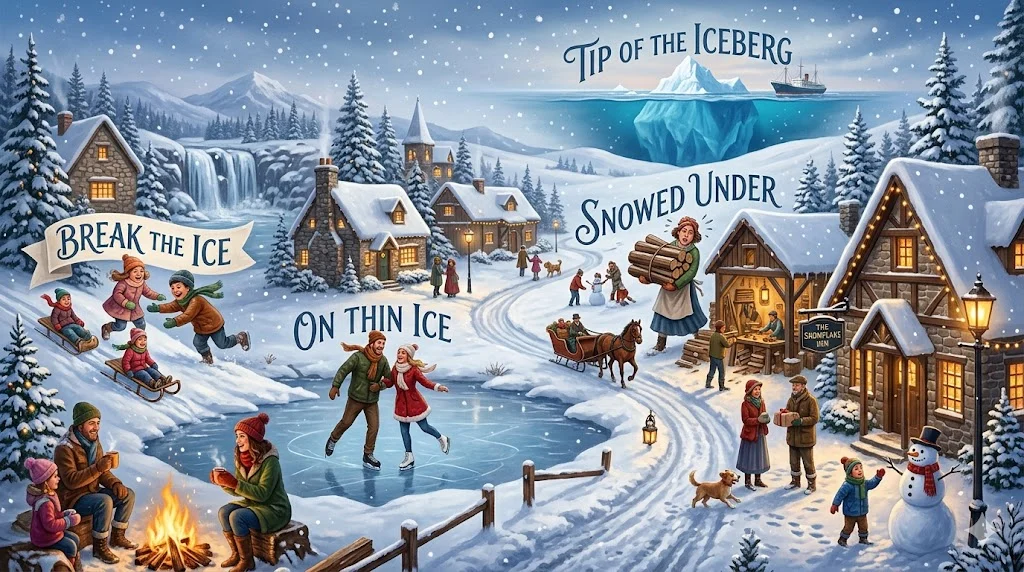
These expressions add color and creativity to conversations, storytelling, essays, and everyday communication. Common examples include “snowed under,” “pure as the driven snow,” and “break the ice.”
Snow has a unique way of capturing the imagination. Whether it’s a quiet winter morning, a powerful snowstorm, or the first snowfall of the season, snow often symbolizes beauty, challenge, mystery, and change. It’s no surprise that the English language contains many colorful expressions inspired by snow and icy weather.
Idioms for snow are especially useful because they often describe situations that have little to do with actual winter weather. Someone can be “snowed under” with paperwork in the middle of summer, or a friend may need to “break the ice” during an awkward conversation. These expressions allow speakers and writers to communicate ideas more vividly and memorably.
For students, writers, bloggers, and language learners, understanding snow-related idioms can make English feel more natural and expressive. They frequently appear in books, movies, workplace conversations, and everyday speech.
In this guide, you’ll discover some of the most useful idioms for snow, learn their meanings, and see how they can be used naturally in real-life communication.
Quick Summary Table
| Idiom | Simple Meaning | Common Usage |
|---|---|---|
| Snowed Under | Extremely busy | Work and studies |
| Pure as the Driven Snow | Completely innocent | Character descriptions |
| Break the Ice | Start conversation comfortably | Social situations |
| Snowball Effect | Situation grows larger | Business and life events |
| Put Something on Ice | Postpone something | Projects and plans |
| Walking on Thin Ice | Taking risks | Warnings and decisions |
| Tip of the Iceberg | Small visible part of a bigger issue | Problems and investigations |
| Cold Shoulder | Deliberately ignore someone | Relationships |
| Left Out in the Cold | Excluded or ignored | Social and workplace situations |
| Freeze Someone Out | Intentionally exclude someone | Groups and relationships |
Snowed Under
Meaning
Extremely busy or overwhelmed with responsibilities.
When People Use It
Used when work, assignments, or obligations become difficult to manage.
Alternative Expression
Buried in work
Examples in Communication
Formal Example
The accounting department has been snowed under with year-end reports.
Casual Example
Sorry I haven’t called—I’ve been snowed under all week.
Creative Example
By Friday afternoon, she was snowed under by emails piling up like a winter storm.
Usage Insight
This is one of the most common snow-related idioms in professional communication.
Pure as the Driven Snow
Meaning
Completely innocent or morally pure.
When People Use It
Used when describing someone’s honesty or innocence.
Alternative Expression
Spotless reputation
Examples in Communication
Formal Example
The investigation confirmed that she was as pure as the driven snow.
Casual Example
He’s acting like he’s pure as the driven snow.
Creative Example
Her conscience remained as pure as the driven snow despite the accusations around her.
Usage Insight
Often appears in literature and storytelling.
Break the Ice
Meaning
To make people feel comfortable and start conversation.
When People Use It
Common during introductions, meetings, and social gatherings.
Alternative Expression
Start the conversation
Examples in Communication
Formal Example
The manager used a simple activity to break the ice during orientation.
Casual Example
I told a joke to break the ice.
Creative Example
One smile was enough to break the ice between two strangers waiting at the station.
Usage Insight
One of the most frequently used English idioms overall.
Snowball Effect
Meaning
A situation that grows larger over time.
When People Use It
Used for both positive and negative developments.
Alternative Expression
Chain reaction
Examples in Communication
Formal Example
Customer referrals created a snowball effect that increased sales.
Casual Example
One small mistake caused a snowball effect.
Creative Example
A single act of kindness started a snowball effect that spread through the entire community.
Usage Insight
Widely used in business, education, and personal development discussions.
Put Something on Ice
Meaning
To postpone or delay something.
When People Use It
Used when plans or projects are temporarily paused.
Alternative Expression
Put on hold
Examples in Communication
Formal Example
The company decided to put the expansion project on ice.
Casual Example
Let’s put that idea on ice for now.
Creative Example
Their travel dreams were placed on ice until better days arrived.
Walking on Thin Ice
Meaning
Taking a dangerous risk or being in a vulnerable situation.
When People Use It
Used when someone’s actions could lead to trouble.
Alternative Expression
Taking a risk
Examples in Communication
Formal Example
The employee was walking on thin ice after repeatedly missing deadlines.
Casual Example
You’re walking on thin ice with your parents.
Creative Example
Every decision felt like walking on thin ice above uncertain waters.
Usage Insight
Creates strong imagery and is highly effective in storytelling.
Tip of the Iceberg
Meaning
A small visible part of a much larger issue.
When People Use It
Common in investigations, research, and discussions of complex problems.
Alternative Expression
Only the beginning
Examples in Communication
Formal Example
The reported losses were only the tip of the iceberg.
Casual Example
That’s just the tip of the iceberg.
Creative Example
What they discovered was merely the tip of the iceberg hidden beneath years of secrets.
Cold Shoulder
Meaning
To intentionally ignore someone.
When People Use It
Used in social and relationship contexts.
Alternative Expression
Give someone the silent treatment
Examples in Communication
Formal Example
The proposal received the cold shoulder from investors.
Casual Example
Why is she giving me the cold shoulder?
Creative Example
His apology met the cold shoulder of a disappointed friend.
Left Out in the Cold
Meaning
Excluded, ignored, or abandoned.
When People Use It
Used when someone feels overlooked.
Alternative Expression
Left behind
Examples in Communication
Formal Example
Several employees felt left out in the cold during the restructuring.
Casual Example
I felt left out in the cold when everyone made plans without me.
Creative Example
As the celebration continued, he stood quietly, feeling left out in the cold.
Freeze Someone Out
Meaning
To deliberately exclude someone from a group or activity.
When People Use It
Common in workplace, school, and social situations.
Alternative Expression
Shut someone out
Examples in Communication
Formal Example
The team was accused of freezing out new members.
Casual Example
They’re trying to freeze me out.
Creative Example
The newcomer felt frozen out before she even had a chance to speak.
Snow Job
Meaning
A deceptive attempt to persuade or mislead someone.
When People Use It
Used when someone exaggerates or manipulates facts.
Alternative Expression
Misleading pitch
Examples in Communication
Formal Example
The committee refused to accept the sales team’s snow job.
Casual Example
That sounds like a snow job to me.
Creative Example
His polished speech felt more like a snow job than a genuine explanation.
In the Deep Freeze
Meaning
Inactive, stalled, or suspended.
When People Use It
Used for projects, relationships, or plans that have stopped progressing.
Alternative Expression
At a standstill
Examples in Communication
Formal Example
Negotiations remain in the deep freeze.
Casual Example
Our plans are in the deep freeze right now.
Creative Example
The dream sat in the deep freeze, waiting for the right moment to return.
Chill Out
Meaning
Relax and become less stressed.
When People Use It
Used in casual conversations.
Alternative Expression
Take it easy
Examples in Communication
Formal Example
Employees were encouraged to chill out during the wellness retreat.
Casual Example
Just chill out, everything will be fine.
Creative Example
The sound of falling snow helped her chill out after a hectic day.
Practical Usage Guidance
How to Use Snow Idioms Naturally
Snow idioms work best when they match the situation. Even though many contain winter imagery, their meanings are often metaphorical rather than literal.
For example:
- Use snowed under when discussing workload.
- Use break the ice during introductions.
- Use walking on thin ice when warning someone about risky behavior.
- Use tip of the iceberg when discussing larger hidden problems.
The key is to focus on the figurative meaning rather than the snow-related words.
Common Mistakes with Snow Idioms
Using Them Literally
Many learners assume snow idioms are only appropriate during winter. In reality, they are used year-round.
Mixing Similar Expressions
Avoid combining idioms incorrectly.
Incorrect:
“He was snowed under on thin ice.”
Correct:
“He was snowed under with work.”
Ignoring Tone
Some idioms are informal and better suited to conversation than academic writing.
Under the Weather
Meaning
Feeling slightly ill, tired, or unwell.
When People Use It
Used when someone isn’t feeling their best physically or emotionally.
Alternative Expression
Feeling run down
Examples in Communication
Formal Example
Several employees were under the weather and worked remotely.
Casual Example
I’m feeling a bit under the weather today.
Creative Example
The gray sky matched her mood as she spent the afternoon feeling under the weather.
Usage Insight
Although weather-related, this idiom often appears alongside winter and snow-themed expressions.
Ice in One’s Veins
Meaning
Remaining calm and composed in stressful situations.
When People Use It
Used to describe people who stay cool under pressure.
Alternative Expression
Cool under pressure
Examples in Communication
Formal Example
The surgeon displayed ice in her veins during the emergency procedure.
Casual Example
You must have ice in your veins to stay that calm.
Creative Example
While chaos filled the room, he stood there with ice in his veins and confidence in his eyes.
Snowed In
Meaning
Unable to leave a place because of heavy snowfall.
When People Use It
Can be used literally or metaphorically to describe being trapped or unable to move forward.
Alternative Expression
Stuck inside
Examples in Communication
Formal Example
Residents were snowed in for several days after the storm.
Casual Example
We got snowed in all weekend.
Creative Example
The cabin felt like another world as they sat snowed in beside the crackling fire.
Usage Insight
This idiom often appears in travel stories and winter narratives.
Ice-Cold Reception
Meaning
A very unfriendly or unwelcoming response.
When People Use It
Used when people react negatively or show little enthusiasm.
Alternative Expression
Unfriendly welcome
Examples in Communication
Formal Example
The proposal received an ice-cold reception from stakeholders.
Casual Example
My suggestion got an ice-cold reception.
Creative Example
His arrival was met with an ice-cold reception that chilled the room more than the winter wind.
Throw Cold Water On
Meaning
To discourage or reduce enthusiasm for an idea.
When People Use It
Used when someone dampens excitement or optimism.
Alternative Expression
Discourage
Examples in Communication
Formal Example
The board threw cold water on the proposal due to budget concerns.
Casual Example
Don’t throw cold water on my plans.
Creative Example
Her doubts threw cold water on the excitement that had filled the room moments earlier.
Skating on Thin Ice
Meaning
Acting in a risky situation where mistakes could cause trouble.
When People Use It
Used to warn someone that they are close to crossing a line.
Alternative Expression
Pushing your luck
Examples in Communication
Formal Example
The company is skating on thin ice by ignoring customer complaints.
Casual Example
You’re skating on thin ice with that attitude.
Creative Example
Every careless decision felt like skating on thin ice above a frozen lake of consequences.
Snowflake Generation
Meaning
A controversial expression used to describe people perceived as overly sensitive.
When People Use It
Often appears in social or cultural discussions.
Alternative Expression
Overly sensitive people
Examples in Communication
Formal Example
The phrase is frequently debated in modern social commentary.
Casual Example
Some people unfairly label others as the snowflake generation.
Creative Example
The discussion quickly shifted from facts to arguments about the so-called snowflake generation.
Usage Insight
Use this phrase carefully because it can sound critical or dismissive.
Not Out of the Woods Yet
Meaning
A difficult situation has not completely ended.
When People Use It
Often used after challenges, storms, or setbacks.
Alternative Expression
Still facing difficulties
Examples in Communication
Formal Example
Although conditions improved, the town was not out of the woods yet.
Casual Example
Things are better, but we’re not out of the woods yet.
Creative Example
The snowfall had stopped, but the village was not out of the woods yet.
A Snowball’s Chance in Hell
Meaning
Very little or no chance of success.
When People Use It
Used when something seems nearly impossible.
Alternative Expression
No chance whatsoever
Examples in Communication
Formal Example
The proposal had a snowball’s chance in hell of gaining approval.
Casual Example
I have a snowball’s chance in hell of winning that competition.
Creative Example
Against those odds, they believed they had only a snowball’s chance in hell—but they tried anyway.
Usage Insight
This idiom is informal and works best in conversations and creative writing.
Cold Comfort
Meaning
Small consolation that doesn’t really improve a situation.
When People Use It
Used when good news provides little actual relief.
Alternative Expression
Little consolation
Examples in Communication
Formal Example
The refund was cold comfort after the event was canceled.
Casual Example
That’s cold comfort after everything that happened.
Creative Example
The apology felt like cold comfort against months of disappointment.
More Snow & Winter Idioms Worth Knowing
| Idiom | Meaning |
|---|---|
| Freeze Up | Become nervous or unable to act |
| Cold Feet | Become afraid before an important event |
| Snowstorm of Questions | Large number of questions at once |
| Freeze the Competition | Outperform rivals |
| Winter of Discontent | Period of unhappiness or difficulty |
| Icebreaker | Something that helps start conversation |
| On Ice | Delayed or postponed |
| Deep Freeze | State of inactivity |
| Frosty Reception | Unfriendly welcome |
| Snowballing | Growing rapidly over time |
Why Writers Love Snow Idioms
Snow idioms are especially powerful because they create instant imagery. Readers can easily picture ice, snowstorms, frozen lakes, and winter landscapes. This imagery makes descriptions feel more vivid and memorable.
For example:
- “The project faced challenges” sounds ordinary.
- “The project was skating on thin ice” immediately creates tension.
Similarly:
- “She felt excluded” is clear.
- “She felt left out in the cold” creates a stronger emotional picture.
This is why novelists, bloggers, journalists, and public speakers often rely on seasonal idioms to make their language more engaging.
Tips for Sounding More Fluent
Learn Through Context
Read articles, novels, and dialogues where idioms appear naturally.
Practice One at a Time
Choose one idiom each week and use it in conversations or journal entries.
Create Personal Examples
Connecting idioms to your own experiences helps them become memorable.
Focus on Meaning
Understanding the situation behind the idiom is more useful than memorizing definitions alone.
FAQs
What are idioms for snow?
Idioms for snow are expressions that use snow, ice, or winter imagery to describe situations, emotions, behaviors, or experiences figuratively.
What is the most common snow-related idiom?
Break the ice” is one of the most widely used snow-related idioms in English.
Can snow idioms be used outside winter?
Yes. Most snow idioms are figurative and are commonly used throughout the year.
Why should language learners study snow idioms?
They help learners understand native-level conversations, improve fluency, and make communication more natural.
How can I remember snow idioms easily?
Use them in real-life examples, connect them to personal experiences, and read them in context through books and conversations.
Conclusion
Idioms for snow offer much more than winter-themed vocabulary. They provide vivid ways to describe challenges, emotions, relationships, and everyday experiences. Whether you’re trying to break the ice in a conversation, explain that you’re snowed under with work, or describe a problem that’s only the tip of the iceberg, these expressions add personality and depth to your communication.
For language learners and writers alike, snow idioms are valuable because they appear frequently in real conversations, books, articles, and media. The more you encounter them in context, the more natural they become.
Start by choosing a few favorites and using them in your own speaking and writing. With regular practice, these expressions will become a natural part of your vocabulary, helping you communicate more confidently, creatively, and fluently.
Discover More Related Articles: