Quick Answer
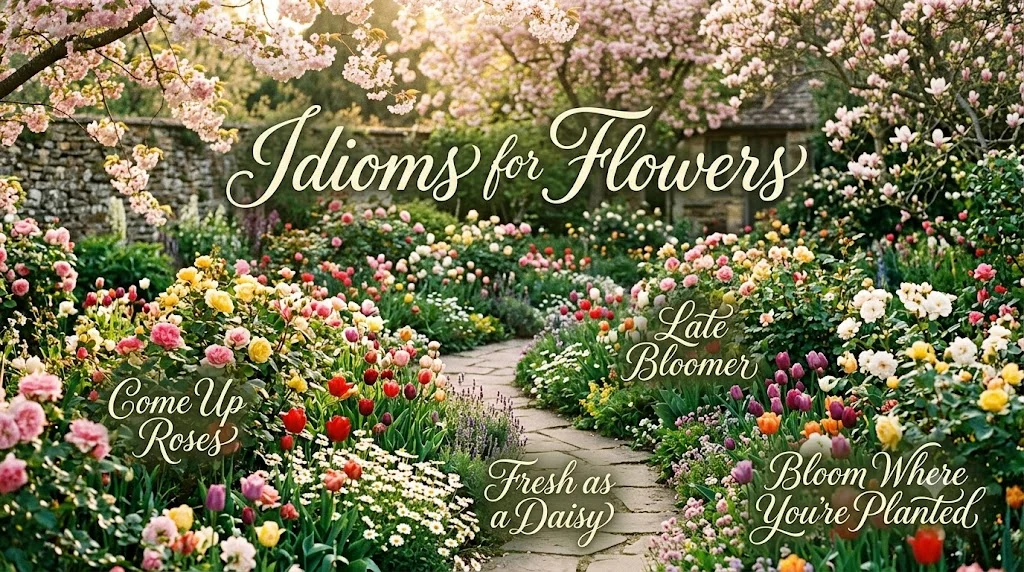
Flower idioms use the imagery of blossoms, gardens, growth, and beauty to express emotions, relationships, success, potential, and life’s changing seasons. Common examples include “come up roses,” “a late bloomer,” “gild the lily,” and “bed of roses.”
Flowers appear in some of the most beautiful expressions in the English language. Whether describing success, personal growth, optimism, or life’s challenges, flower-related idioms add color and emotion to communication in a way that ordinary vocabulary often cannot.
Think about how often flowers appear in important moments. They celebrate achievements, express sympathy, symbolize love, and mark new beginnings. It’s no surprise that English speakers have borrowed these images to create powerful figurative expressions that have lasted for generations.
For students, writers, bloggers, and language learners, flower idioms offer a wonderful opportunity to make language feel more vivid and engaging. They can transform a simple sentence into something memorable and emotionally rich.
In everyday conversations, professional writing, creative storytelling, and social interactions, these expressions help communicate ideas with elegance and personality. Understanding them also makes it easier to follow native speakers who use such phrases naturally.
Let’s explore some of the most useful idioms for flowers and learn how to use them confidently in real-life situations.
Quick Summary Table
| Idiom | Meaning | Common Usage |
|---|---|---|
| Come up roses | Turn out well | Success and positive outcomes |
| Bed of roses | Easy and comfortable life | Describing situations |
| Late bloomer | Someone who develops later | Personal growth |
| Gild the lily | Add unnecessary decoration | Criticism of excess |
| Nip in the bud | Stop something early | Problem prevention |
| Fresh as a daisy | Energetic and refreshed | Physical condition |
| Pushing up daisies | Dead and buried | Humorous reference |
| Rose-colored glasses | Unrealistically optimistic view | Perception |
| Bloom where you’re planted | Thrive in your circumstances | Personal development |
| No rose without a thorn | Good things have challenges | Life lessons |
| In full bloom | At peak beauty or success | Achievement |
| Wallflower | Shy or socially withdrawn person | Social situations |
| Gather rosebuds | Enjoy opportunities while young | Life advice |
| Bouquet of thanks | Expression of appreciation | Gratitude |
| Flower of youth | Prime years of life | Age and vitality |
Come Up Roses
Meaning
To turn out successfully or favorably.
When People Use It
When a situation ends much better than expected.
Alternative Expression
Turn out well
Examples in Communication
Formal Example:
Despite initial concerns, the project came up roses and exceeded expectations.
Casual Example:
I thought the interview went badly, but everything came up roses.
Creative Example:
After months of uncertainty, her plans finally came up roses beneath the spring sunshine.
Bed of Roses
Meaning
An easy, pleasant, or comfortable situation.
When People Use It
Often used negatively to say something is not easy.
Alternative Expression
Easy life
Examples in Communication
Formal Example:
Starting a business is rarely a bed of roses.
Casual Example:
College isn’t exactly a bed of roses.
Creative Example:
The journey looked like a bed of roses from afar, but hidden challenges waited ahead.
Late Bloomer
Meaning
Someone who develops skills, success, or maturity later than others.
When People Use It
When discussing personal growth and achievement.
Alternative Expression
Slow starter
Examples in Communication
Formal Example:
The award-winning author was a late bloomer who published her first novel at forty.
Casual Example:
Don’t worry if you’re behind others. Lots of successful people are late bloomers.
Creative Example:
Like a flower opening after a long winter, she proved herself a remarkable late bloomer.
Gild the Lily
Meaning
To add unnecessary decoration to something already beautiful.
When People Use It
When someone overcomplicates or over-improves something.
Alternative Expression
Overdo it
Examples in Communication
Formal Example:
The design was elegant enough already; additional effects would only gild the lily.
Casual Example:
The cake looks amazing. Don’t gild the lily with extra decorations.
Creative Example:
The artist knew one final brushstroke would only gild the lily.
Nip in the Bud
Meaning
To stop a problem before it grows larger.
When People Use It
In management, parenting, education, and conflict resolution.
Alternative Expression
Stop early
Examples in Communication
Formal Example:
Management addressed the issue quickly to nip it in the bud.
Casual Example:
Let’s nip this argument in the bud before it gets worse.
Creative Example:
They nipped the rumor in the bud before it spread across the village.
Fresh as a Daisy
Meaning
Feeling energetic, rested, and refreshed.
When People Use It
After good sleep, relaxation, or recovery.
Alternative Expression
Full of energy
Examples in Communication
Formal Example:
After a restful weekend, she arrived fresh as a daisy.
Casual Example:
I slept ten hours and feel fresh as a daisy.
Creative Example:
The morning air left him fresh as a daisy and ready for adventure.
Pushing Up Daisies
Meaning
Dead and buried.
When People Use It
Usually in humorous or lighthearted contexts.
Alternative Expression
Gone forever
Examples in Communication
Formal Example:
The phrase is often used humorously to refer to death.
Casual Example:
If I eat another slice of pizza, I’ll be pushing up daisies.
Creative Example:
The old pirate joked he’d be pushing up daisies before surrendering his treasure.
Rose-Colored Glasses
Meaning
Viewing situations too optimistically.
When People Use It
When someone ignores problems and sees only positives.
Alternative Expression
Overly optimistic
Examples in Communication
Formal Example:
Investors should avoid evaluating risks through rose-colored glasses.
Casual Example:
You’re seeing this relationship through rose-colored glasses.
Creative Example:
She wandered through life wearing rose-colored glasses that softened every storm.
Bloom Where You’re Planted
Meaning
Make the best of your circumstances.
When People Use It
During life transitions and personal growth.
Alternative Expression
Adapt and thrive
Examples in Communication
Formal Example:
The mentor encouraged graduates to bloom where they were planted.
Casual Example:
The move was difficult, but I’m learning to bloom where I’m planted.
Creative Example:
Even in rocky soil, she chose to bloom where she was planted.
No Rose Without a Thorn
Meaning
Every good thing has some difficulty attached.
When People Use It
To acknowledge challenges within positive situations.
Alternative Expression
Nothing is perfect
Examples in Communication
Formal Example:
Leadership brings rewards, but there is no rose without a thorn.
Casual Example:
The new job is great, but no rose without a thorn.
Creative Example:
Their dream journey proved that no rose comes without a thorn.
In Full Bloom
Meaning
At the peak of beauty, success, or development.
When People Use It
Describing growth and achievement.
Alternative Expression
At your best
Examples in Communication
Formal Example:
The company is currently in full bloom following years of growth.
Casual Example:
Her confidence is really in full bloom these days.
Creative Example:
The town stood in full bloom beneath the colors of spring.
Wallflower
Meaning
A shy person who avoids social interaction.
When People Use It
At parties, gatherings, or social events.
Alternative Expression
Reserved person
Examples in Communication
Formal Example:
She was once a wallflower but later became a confident speaker.
Casual Example:
I felt like a wallflower at the party.
Creative Example:
While others danced, the wallflower quietly observed the room.
Gather Rosebuds
Meaning
Enjoy opportunities while they are available.
When People Use It
To encourage living fully and appreciating the present.
Alternative Expression
Seize the day
Examples in Communication
Formal Example:
The speech encouraged graduates to gather rosebuds throughout life.
Casual Example:
Travel now and gather rosebuds while you can.
Creative Example:
She gathered rosebuds from every opportunity life offered.
Flower of Youth
Meaning
The prime years of life.
When People Use It
When discussing vitality, beauty, and youthfulness.
Alternative Expression
Prime of life
Examples in Communication
Formal Example:
Many achievements occurred during the flower of his youth.
Casual Example:
My grandparents love telling stories from the flower of their youth.
Creative Example:
Dreams blossomed brightly during the flower of her youth.
Bouquet of Thanks
Meaning
A heartfelt expression of gratitude or appreciation.
When People Use It
When thanking someone sincerely for help, kindness, or support.
Alternative Expression
A token of appreciation
Examples in Communication
Formal Example:
The organization presented a bouquet of thanks to its volunteers for their dedication.
Casual Example:
A huge bouquet of thanks for helping me move this weekend.
Creative Example:
She offered a bouquet of thanks woven from words more beautiful than flowers.
Every Rose Has Its Thorn
Meaning
Every positive situation has some difficulty or drawback.
When People Use It
To remind people that perfection rarely exists.
Alternative Expression
Nothing is perfect
Examples in Communication
Formal Example:
The promotion was rewarding, but every rose has its thorn.
Casual Example:
The vacation was amazing, though every rose has its thorn—we missed our flight home.
Creative Example:
Their love story sparkled brightly, yet every rose had its thorn.
A Rose by Any Other Name
Meaning
The essence of something remains the same even if its name changes.
When People Use It
When discussing labels, branding, or identity.
Alternative Expression
The substance remains unchanged
Examples in Communication
Formal Example:
A rose by any other name would still provide the same quality product.
Casual Example:
Call it what you want—a rose by any other name is still a rose.
Creative Example:
The old café changed its sign, but a rose by any other name still smelled sweet.
Practical Guidance for Using Flower Idioms Naturally
Flower idioms often carry positive, reflective, or emotional tones. They work especially well in storytelling, motivational writing, speeches, blogs, and personal conversations.
When using these expressions, pay attention to context. For example, “late bloomer” is encouraging and supportive, while “rose-colored glasses” can gently criticize unrealistic optimism.
Writers frequently use flower idioms because they create strong visual imagery. A phrase like “in full bloom” instantly helps readers picture growth and success.
The key is moderation. One well-chosen idiom often creates a stronger impact than several crowded together.
Common Mistakes with Flower Idioms
Using Them Literally
Most flower idioms are figurative and shouldn’t be interpreted word for word.
Ignoring Emotional Tone
Some expressions inspire hope, while others offer caution or criticism.
Using Formal and Informal Idioms Interchangeably
Certain idioms sound better in casual conversations than academic writing.
Overusing Floral Expressions
Too many flower idioms can make writing feel unnatural or overly decorative.
How to Remember Flower Idioms Easily
The easiest way to remember flower idioms is to connect them with visual images.
- Imagine a flower blooming late for “late bloomer.”
- Picture someone wearing pink-tinted glasses for “rose-colored glasses.”
- Visualize cutting a flower bud early for “nip it in the bud.”
Creating mental images helps the meaning stay in memory much longer than simple memorization.
FAQs
What are flower idioms?
Flower idioms are figurative expressions that use flowers, gardens, blossoms, or floral imagery to communicate ideas and emotions.
Why are flower idioms common in English?
Flowers symbolize beauty, growth, love, change, and hope, making them powerful sources of figurative language.
Can flower idioms be used in professional writing?
Many can, especially in speeches, articles, presentations, and creative professional communication.
What is the most common flower idiom?
“Nip it in the bud” is among the most widely used flower idioms in everyday English.
How can I learn flower idioms faster?
Practice them in sentences, connect them to visual imagery, and notice how native speakers use them in books and media.
Conclusion
Flower idioms bring beauty, depth, and personality to English communication. They transform ordinary language into something more vivid and memorable by connecting ideas with the universal symbolism of flowers and growth.
Whether you’re describing success that has “come up roses,” encouraging someone to “bloom where they’re planted,” or reminding yourself that there’s “no rose without a thorn,” these expressions add emotional richness to both speech and writing.
As you continue expanding your vocabulary, try incorporating a few flower idioms into conversations, journal entries, stories, or blog posts. The more naturally you use them, the more fluent and expressive your English will become.
Like flowers themselves, these idioms have blossomed through generations of language use—and they continue to brighten communication today.
Discover More Related Articles: