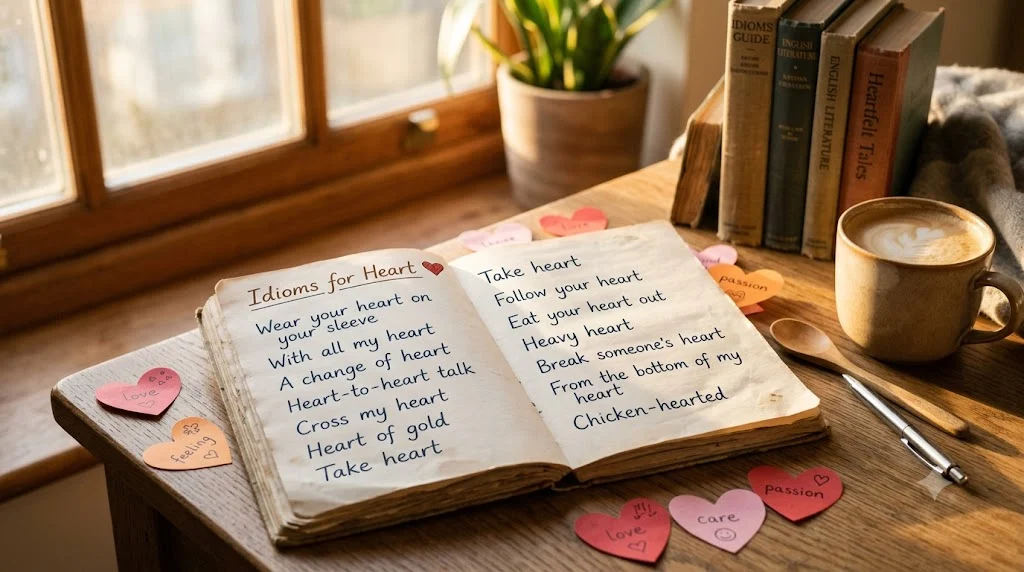
Quick Answer
Heart idioms are expressions that use the word “heart” to describe emotions, courage, kindness, honesty, love, and personal feelings. Popular examples include learn by heart, have a change of heart, take something to heart, and wear your heart on your sleeve. These expressions make everyday conversations and writing more expressive and natural.
Language becomes much more memorable when it reflects emotions, and few words carry as much emotional weight as “heart.” That is why so many English expressions use it to describe love, courage, kindness, disappointment, and hope.
If you have ever heard someone say, “Don’t take it to heart,” or “She has a heart of gold,” you have already encountered heart idioms in everyday communication. These expressions appear everywhere—from novels and speeches to workplace conversations and social media posts.
For students, writers, bloggers, and English learners, understanding idioms for heart is more than a vocabulary exercise. They add personality to writing, make conversations sound natural, and help express emotions in a way that literal language sometimes cannot.
In everyday life, native speakers often rely on these expressions without even thinking about it. Learning them can make your communication feel more fluent, engaging, and authentic.
Quick Summary Table
| Idiom | Meaning | Common Use |
|---|---|---|
| Learn by heart | Memorize completely | Study and education |
| Change of heart | Change one’s opinion | Decisions and relationships |
| Take to heart | Be emotionally affected | Advice and criticism |
| Wear your heart on your sleeve | Show emotions openly | Personal relationships |
| Heart of gold | Very kind person | Compliments |
| Lose heart | Become discouraged | Difficult situations |
| Cross my heart | Promise sincerely | Casual conversations |
| Have one’s heart set on | Strongly desire something | Goals and dreams |
| From the bottom of my heart | Sincerely | Gratitude and apologies |
| Follow your heart | Trust your feelings | Life decisions |
Idioms for Heart
Learn by Heart
Meaning
To memorize something completely.
When People Use It
Common in schools, speeches, and presentations.
Alternative Expression
Memorize.
Examples in Communication
Formal Example
Students were asked to learn the poem by heart before the competition.
Casual Example
I know the lyrics by heart.
Creative Example
She carried her grandmother’s advice by heart wherever life took her.
Have a Change of Heart
Meaning
To change your opinion or decision.
When People Use It
Used when someone reconsiders something.
Alternative Expression
Think twice.
Examples in Communication
Formal Example
The committee had a change of heart regarding the proposal.
Casual Example
I was going to stay home, but I had a change of heart.
Creative Example
At sunset, he had a change of heart and forgave his old friend.
Take Something to Heart
Meaning
To be deeply affected emotionally.
When People Use It
After receiving criticism or emotional comments.
Alternative Expression
Take personally.
Examples in Communication
Formal Example
She took the feedback to heart and improved her performance.
Casual Example
Don’t take his words to heart.
Creative Example
He carried those harsh remarks in his heart for years.
Wear Your Heart on Your Sleeve
Meaning
To openly show emotions.
When People Use It
When describing emotional or honest people.
Alternative Expression
Be open about feelings.
Examples in Communication
Formal Example
She wears her heart on her sleeve and communicates honestly.
Casual Example
Everyone knows when he’s upset because he wears his heart on his sleeve.
Creative Example
Like an open book, she wore her heart on her sleeve.
Heart of Gold
Meaning
A very kind and generous nature.
When People Use It
As a compliment.
Alternative Expression
Kind-hearted.
Examples in Communication
Formal Example
Despite his success, he remains a man with a heart of gold.
Casual Example
My grandmother has a heart of gold.
Creative Example
Behind his stern face lived a heart of gold.
Lose Heart
Meaning
To become discouraged.
When People Use It
During setbacks and challenges.
Alternative Expression
Give up hope.
Examples in Communication
Formal Example
Applicants should not lose heart after rejection.
Casual Example
Don’t lose heart; you’ll succeed eventually.
Creative Example
Though storms surrounded him, he refused to lose heart.
Cross My Heart
Meaning
To make a sincere promise.
When People Use It
Mostly informal conversations.
Alternative Expression
I promise.
Examples in Communication
Formal Example
Rarely used in formal writing.
Casual Example
Cross my heart, I’ll be there.
Creative Example
Cross my heart, your secret is safe with me.
Have Your Heart Set On Something
Meaning
To strongly desire something.
When People Use It
When discussing dreams and ambitions.
Alternative Expression
Be determined.
Examples in Communication
Formal Example
She had her heart set on studying abroad.
Casual Example
He’s got his heart set on that new car.
Creative Example
Ever since childhood, she had her heart set on becoming an artist.
From the Bottom of My Heart
Meaning
With complete sincerity.
When People Use It
Expressing gratitude or apologies.
Alternative Expression
Sincerely.
Examples in Communication
Formal Example
I thank everyone from the bottom of my heart.
Casual Example
Thanks from the bottom of my heart.
Creative Example
From the bottom of his heart, he wished them happiness.
Follow Your Heart
Meaning
To trust your feelings.
When People Use It
Life choices and relationships.
Alternative Expression
Trust your instincts.
Examples in Communication
Formal Example
Sometimes it is wise to follow your heart.
Casual Example
Just follow your heart.
Creative Example
She followed her heart and found unexpected happiness.
Speak from the Heart
Meaning
To speak honestly and sincerely.
Break Someone’s Heart
Meaning
To cause deep emotional pain.
Pour Your Heart Out
Meaning
To share feelings openly.
Set Your Heart On
Meaning
To desire something strongly.
Young at Heart
Meaning
To remain cheerful and youthful in attitude.
Have a Big Heart
Meaning
To be generous and compassionate.
Faint of Heart
Meaning
Lacking courage.
Heart and Soul
Meaning
With complete dedication.
In a Heartbeat
Meaning
Immediately and without hesitation.
Heavy Heart
Meaning
Feeling sadness or sorrow.
Have Your Heart in the Right Place
Meaning
To have good intentions.
Eat Your Heart Out
Meaning
To feel jealousy or envy.
Steal Someone’s Heart
Meaning
To win someone’s affection.
Open Your Heart
Meaning
To share feelings honestly.
Cold-Hearted
Meaning
Lacking sympathy or compassion.
Kind-Hearted
Meaning
Naturally caring and gentle.
A Heart in Your Mouth
Meaning
To feel extremely nervous or anxious.
When People Use It
Before exams, interviews, performances, or scary moments.
Alternative Expression
Very nervous.
Examples in Communication
Formal Example
He waited for the results with his heart in his mouth.
Casual Example
I had my heart in my mouth during the last over of the match.
Creative Example
Every step toward the stage felt like his heart was beating in his mouth.
After One’s Own Heart
Meaning
Someone who shares your tastes or preferences.
When People Use It
When describing similar interests or personality match.
Alternative Expression
Like-minded person.
Examples in Communication
Formal Example
The manager appointed someone after his own heart for the role.
Casual Example
That musician is totally after my own heart.
Creative Example
A traveler after her own heart, chasing sunsets and quiet roads.
Not Have the Heart
Meaning
To be unable to do something because it feels too harsh or emotional.
When People Use It
When avoiding hurting someone emotionally.
Alternative Expression
Feel too emotional to act.
Examples in Communication
Formal Example
I did not have the heart to reject his request directly.
Casual Example
I couldn’t tell her the truth—I just didn’t have the heart.
Creative Example
He stood silent, not having the heart to say goodbye.
Take Heart
Meaning
To feel encouraged or hopeful.
When People Use It
In motivational or supportive situations.
Alternative Expression
Be encouraged.
Examples in Communication
Formal Example
Applicants should take heart from the recent improvements in results.
Casual Example
Take heart, things will get better.
Creative Example
She took heart from the small signs of progress.
Heart in the Right Place
Meaning
Someone who means well, even if imperfect.
When People Use It
To excuse mistakes made with good intentions.
Alternative Expression
Good intentions.
Examples in Communication
Formal Example
Although inexperienced, he has his heart in the right place.
Casual Example
She messes up sometimes, but her heart is in the right place.
Creative Example
Even in failure, his heart stayed in the right place—kind and steady.
Practical Usage Guidance
How to Use Idioms Naturally
Heart idioms are most effective when they fit the emotional tone of a conversation. Expressions like heart of gold and speak from the heart work beautifully in storytelling and personal writing, while phrases such as learn by heart are common in educational contexts.
Common Mistakes with Idioms
Many learners try to interpret idioms literally. For example, “wear your heart on your sleeve” has nothing to do with clothing. It describes someone who openly shows emotions.
Another common mistake is using too many idioms in one paragraph. A few well-placed expressions sound natural, while excessive use can feel forced.
Idioms vs Literal Expressions
Literal language explains facts directly.
- She is kind. (Literal)
- She has a heart of gold. (Figurative)
The second sentence sounds warmer and more expressive.
Tips for Sounding More Fluent
- Listen to how native speakers use idioms.
- Use them naturally instead of forcing them.
- Practice with conversations and journal writing.
- Learn idioms together with example sentences.
- Pay attention to emotional context.
How to Remember Idioms Easily
Associating idioms with stories and real-life situations makes them easier to remember. Reading novels, watching movies, and keeping a vocabulary notebook can help these expressions become part of your everyday English.
FAQs
What are some common idioms for heart?
Popular examples include heart of gold, take something to heart, wear your heart on your sleeve, and follow your heart.
Are heart idioms used in everyday English?
Yes. Native speakers frequently use them in conversations, storytelling, and informal writing.
Which heart idiom means to memorize something?
Learn by heart means to memorize something completely.
Is “heart of gold” a compliment?
Yes. It describes someone who is exceptionally kind and generous.
Can heart idioms improve writing?
Absolutely. They make writing more vivid, emotional, and engaging when used naturally.
Conclusion
Idioms for heart reveal how closely language and emotions are connected. These expressions allow us to talk about kindness, love, courage, hope, and disappointment in ways that feel vivid and memorable.
Whether you’re writing an essay, creating blog content, telling stories, or simply trying to sound more fluent in everyday conversations, heart idioms can add warmth and personality to your communication.
The key is not to memorize dozens of expressions at once. Instead, focus on learning a few, understand their emotional meaning, and practice using them in realistic situations.
Over time, these phrases will become a natural part of your vocabulary, helping your English sound richer, more expressive, and more human.
Discover More Related Articles:
- Idioms for Home | Expressions About Comfort & Family In 2026
- Idioms for Pregnancy | From Bumps to Blessings In 2026