Quick Answer
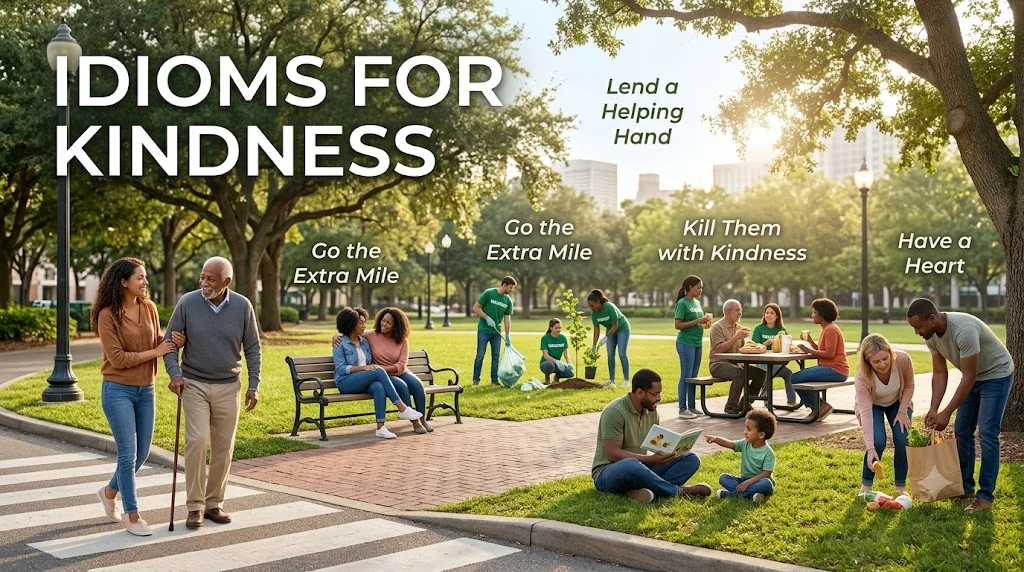
If you’re looking for idioms for kindness, some of the most common and meaningful expressions include Have a heart, Bend over backward, Go the extra mile, Kill them with kindness, Lend a helping hand, Wear your heart on your sleeve, Open your heart, Give someone the shirt off your back, Take someone under your wing, and Be all heart.
These idioms help you describe generosity, compassion, empathy, and thoughtful behavior in a way that sounds natural and expressive. Whether you’re writing an essay, telling a story, giving a speech, or simply chatting with friends, these expressions make your English warmer and more engaging.
Kindness is one of the simplest qualities that can leave the deepest impression. A thoughtful word, a helping hand, or a small act of generosity often says more than long speeches ever could. English reflects this beautifully through dozens of colorful idioms that capture compassion, empathy, and selflessness.
Learning idioms for kindness isn’t just about expanding your vocabulary. It’s about expressing emotions more naturally, making conversations sound authentic, and adding warmth to your writing. These expressions frequently appear in novels, speeches, workplace conversations, classrooms, movies, and everyday discussions, making them valuable for students, writers, bloggers, and English learners alike.
In real life, people rarely say, “She is very kind,” over and over again. Instead, they might describe someone as the person who would give you the shirt off their back or someone who always goes the extra mile. These phrases paint vivid pictures that readers and listeners instantly understand.
In this guide, you’ll discover meaningful idioms, practical examples, and useful tips to help you use these expressions naturally and confidently.
Quick Summary
| Idiom | Meaning | Best Used For |
|---|---|---|
| Have a Heart | Show compassion | Asking someone to be kinder |
| Kill Them with Kindness | Respond kindly to negativity | Handling conflicts |
| Bend Over Backward | Make a great effort to help | Helping others |
| Go the Extra Mile | Do more than expected | Workplace and teamwork |
| Lend a Helping Hand | Offer assistance | Everyday conversations |
| Open Your Heart | Become caring and compassionate | Emotional discussions |
| Give Someone the Shirt Off Your Back | Be extremely generous | Describing selfless people |
| Take Someone Under Your Wing | Guide and support someone | Mentorship |
| Be All Heart | Be naturally kind | Personality descriptions |
| Wear Your Heart on Your Sleeve | Show emotions openly | Relationships |
🌸 Kill Them with Kindness
Meaning
Respond to rude or unpleasant behavior with patience and kindness instead of anger.
When People Use It
Often used during disagreements, workplace conflicts, or difficult conversations.
Alternative Expression
Return good for evil.
Examples in Communication
Formal:
She chose to kill them with kindness rather than argue during the meeting.
Casual:
Just smile and kill them with kindness.
Creative:
Her kindness melted walls that anger never could.
Usage Tip: This idiom works well in both professional and casual conversations.
❤️ Have a Heart
Meaning
Show compassion or sympathy.
When People Use It
When asking someone to be more understanding.
Alternative Expression
Show some compassion.
Formal Example
Please have a heart when considering their difficult circumstances.
Casual Example
Come on, have a heart!
Creative Example
Even the coldest winter softens when someone has a heart.
🤝 Lend a Helping Hand
Meaning
Offer help or assistance.
When People Use It
Everyday situations where someone needs support.
Alternative Expression
Pitch in.
Formal Example
Employees volunteered to lend a helping hand after the storm.
Casual Example
Can you lend me a helping hand?
Creative Example
Sometimes one helping hand changes someone’s whole day.
🚶 Go the Extra Mile
Meaning
Do more than what is expected.
When People Use It
Workplaces, schools, customer service, and friendships.
Alternative Expression
Go above and beyond.
Formal Example
Our team always goes the extra mile for clients.
Casual Example
She always goes the extra mile for everyone.
Creative Example
Success often begins where ordinary effort ends.
💙 Bend Over Backward
Meaning
Make every possible effort to help someone.
When People Use It
Describing someone who works hard for others.
Alternative Expression
Do everything possible.
Formal Example
The volunteers bent over backward to support the community.
Casual Example
My parents bend over backward for us.
Creative Example
His kindness stretched farther than anyone expected.
🕊️ Open Your Heart
Meaning
Become more caring, understanding, or emotionally available.
When People Use It
Relationships, forgiveness, and emotional growth.
Alternative Expression
Show compassion.
Formal Example
Open your heart to different perspectives.
Casual Example
Just open your heart.
Creative Example
The smallest kindness begins with an open heart.
👕 Give Someone the Shirt Off Your Back
Meaning
Be incredibly generous.
When People Use It
Describing selfless people.
Alternative Expression
Be extremely generous.
Formal Example
He would give anyone the shirt off his back.
Casual Example
She’s the nicest person I know.
Creative Example
True generosity never counts the cost.
🐦 Take Someone Under Your Wing
Meaning
Guide or mentor someone kindly.
When People Use It
Schools, workplaces, sports, and family.
Alternative Expression
Mentor someone.
Formal Example
The senior teacher took the new employee under her wing.
Casual Example
He really helped me when I started.
Creative Example
Every confident flyer once needed someone’s wing.
💖 Be All Heart
Meaning
Be naturally kind and caring.
When People Use It
Describing someone’s personality.
Alternative Expression
Kind-hearted.
Formal Example
Everyone admired her because she was all heart.
Casual Example
He’s all heart.
Creative Example
Some people leave footprints; others leave kindness.
😊 Wear Your Heart on Your Sleeve
Meaning
To openly show your emotions instead of hiding how you feel.
When People Use It
People use this idiom when describing someone who is honest about their feelings, whether they’re happy, sad, excited, or disappointed.
Alternative Expression
Be emotionally open.
Examples in Communication
Formal Example
She wears her heart on her sleeve, which makes her an empathetic and trustworthy leader.
Casual Example
You always know how she’s feeling because she wears her heart on her sleeve.
Creative Example
Her heart never hid behind walls—it danced openly for the world to see.
Usage Tip: This idiom is common in both conversations and storytelling, especially when describing compassionate people.
🌟 Light Up Someone’s Day
Meaning
To make someone feel happier through a kind word, thoughtful gesture, or pleasant surprise.
When People Use It
Often used after small acts of kindness, compliments, gifts, or unexpected support.
Alternative Expression
Brighten someone’s day.
Examples in Communication
Formal Example
Your thoughtful feedback truly lit up the team’s day.
Casual Example
That little note really lit up my day.
Creative Example
Like sunshine after rain, her smile lit up everyone’s day.
Usage Tip: This expression is perfect for thank-you messages, appreciation posts, and everyday conversations.
🤲 Reach Out
Meaning
To offer help, support, advice, or comfort to someone.
When People Use It
Used when encouraging people to ask for help or when someone offers assistance during difficult times.
Alternative Expression
Offer support.
Examples in Communication
Formal Example
Please don’t hesitate to reach out if you require further assistance.
Casual Example
If you ever need anything, just reach out.
Creative Example
Sometimes healing begins the moment someone reaches out with kindness.
Usage Tip: Frequently used in workplaces, schools, healthcare, and supportive conversations.
💝 Give from the Heart
Meaning
To give sincerely without expecting recognition or anything in return.
When People Use It
Used when describing genuine generosity and heartfelt giving.
Alternative Expression
Give selflessly.
Examples in Communication
Formal Example
The charity encourages people to give from the heart rather than for recognition.
Casual Example
She always gives from the heart.
Creative Example
The greatest gifts are wrapped in sincerity rather than expensive paper.
Usage Tip: This phrase creates a warm and heartfelt emotional tone.
🌼 A Heart of Gold
Meaning
To describe someone who is exceptionally kind, caring, and generous.
When People Use It
Often used to praise someone’s personality and compassionate nature.
Alternative Expression
Kind-hearted.
Examples in Communication
Formal Example
Everyone appreciated her dedication because she truly has a heart of gold.
Casual Example
My grandmother has a heart of gold.
Creative Example
Some treasures aren’t buried underground—they beat inside people with hearts of gold.
Usage Tip: One of the most common compliments in English.
🌈 Make Someone Feel at Home
Meaning
To help someone feel comfortable, welcome, and accepted.
When People Use It
Used when hosting guests, welcoming new employees, or meeting new people.
Alternative Expression
Make someone feel welcome.
Examples in Communication
Formal Example
Our staff works hard to make every visitor feel at home.
Casual Example
Thanks for making me feel at home.
Creative Example
True hospitality begins long before the front door opens.
Usage Tip: Common in hospitality, friendships, and workplace onboarding.
🌺 Extend an Olive Branch
Meaning
To make peace after an argument or disagreement.
When People Use It
Used when someone wants to repair a relationship or end conflict.
Alternative Expression
Make peace.
Examples in Communication
Formal Example
The manager extended an olive branch to resolve the disagreement.
Casual Example
I think it’s time to extend an olive branch.
Creative Example
Sometimes the strongest people are the first to offer peace.
Usage Tip: This idiom has a slightly formal tone but is widely understood.
☀️ Warm Someone’s Heart
Meaning
To make someone feel loved, grateful, or emotionally comforted.
When People Use It
Often used after witnessing kindness, generosity, or touching moments.
Alternative Expression
Touch someone’s heart.
Examples in Communication
Formal Example
Your thoughtful gesture truly warmed everyone’s heart.
Casual Example
That message warmed my heart.
Creative Example
Kindness leaves warmth that lasts long after words fade away.
Usage Tip: Frequently used in thank-you notes and heartfelt storytelling.
🌹 Speak from the Heart
Meaning
To speak honestly and sincerely.
When People Use It
Used during emotional conversations, speeches, apologies, or personal messages.
Alternative Expression
Speak sincerely.
Examples in Communication
Formal Example
She spoke from the heart during her farewell speech.
Casual Example
Just speak from the heart.
Creative Example
The most unforgettable words are often the simplest and the most sincere.
Usage Tip: Perfect for speeches, wedding toasts, and personal writing.
🌻 Pour Your Heart Out
Meaning
To openly share your deepest feelings or emotions.
When People Use It
Used when someone tells another person everything that’s on their mind.
Alternative Expression
Open up emotionally.
Examples in Communication
Formal Example
She poured her heart out during the counseling session.
Casual Example
We stayed up all night pouring our hearts out.
Creative Example
Some conversations become unforgettable because hearts finally find their voice.
Usage Tip: Best suited for emotional conversations and storytelling.
🌷 Put Yourself in Someone’s Shoes
Meaning
To imagine how another person feels by seeing the situation from their perspective.
When People Use It
Common when encouraging empathy and understanding.
Alternative Expression
See things from another’s perspective.
Examples in Communication
Formal Example
Before making a judgment, try putting yourself in their shoes.
Casual Example
Imagine if you were in her shoes.
Creative Example
Empathy begins when we stop looking through our own eyes alone.
Usage Tip: One of the most valuable idioms for teaching kindness and emotional intelligence.
🌿 Leave No One Behind
Meaning
To ensure that everyone is supported, included, and cared for.
When People Use It
Frequently used in education, teamwork, community service, and leadership.
Alternative Expression
Support everyone.
Examples in Communication
Formal Example
Our organization believes in leaving no one behind.
Casual Example
Let’s make sure nobody gets left out.
Creative Example
A truly caring community walks forward together.
Usage Tip: Popular in education, volunteer work, and leadership discussions.
🌟 Practice Random Acts of Kindness
Meaning
To perform unexpected good deeds simply to make someone else’s life better.
When People Use It
Used when encouraging generosity without expecting rewards.
Alternative Expression
Do small acts of kindness.
Examples in Communication
Formal Example
The school organized a week dedicated to practicing random acts of kindness.
Casual Example
Buy someone a coffee today—it’s a random act of kindness.
Creative Example
The smallest unexpected kindness can become someone’s favorite memory.
Usage Tip: Often appears in schools, workplaces, and community campaigns.
💫 Spread Sunshine
Meaning
To bring happiness, optimism, and encouragement wherever you go.
When People Use It
Describing cheerful, uplifting, and positive people.
Alternative Expression
Spread positivity.
Examples in Communication
Formal Example
Her optimistic attitude spreads sunshine throughout the workplace.
Casual Example
You always spread sunshine wherever you go.
Creative Example
Some people carry umbrellas, while others carry sunshine.
Usage Tip: This expression creates a bright, encouraging tone in writing.
🤍 Give Credit Where Credit Is Due
Meaning
To acknowledge and appreciate someone’s efforts or achievements fairly.
When People Use It
Used in workplaces, schools, sports, and collaborative projects.
Alternative Expression
Recognize someone’s contribution.
Examples in Communication
Formal Example
The manager gave credit where credit was due by recognizing every team member.
Casual Example
Let’s give Sarah the credit she deserves.
Creative Example
Kind words of recognition often inspire even greater achievements.
Usage Tip: This idiom is especially effective in professional communication and leadership.
🌸 Pay It Forward
Meaning
To repay someone’s kindness by helping another person instead of paying the original person back.
When People Use It
Used to encourage generosity, volunteer work, and community spirit.
Alternative Expression
Pass kindness on.
Examples in Communication
Formal Example
The organization encourages volunteers to pay kindness forward within the community.
Casual Example
Someone helped me today, so I’ll pay it forward tomorrow.
Creative Example
Kindness travels farther when every grateful heart passes it on.
Usage Tip: This is one of the most inspiring idioms for kindness and is commonly used in motivational writing, community projects, and everyday conversations.
Practical Usage Guidance
How to Use Idioms Naturally
The best idioms fit naturally into the conversation. Instead of forcing one into every sentence, choose expressions that genuinely match the situation. For example, “go the extra mile” sounds perfect in professional writing, while “have a heart” works better in casual conversations.
Common Mistakes with Kindness Idioms
- Don’t translate idioms word for word into other languages.
- Avoid mixing two idioms together.
- Use them only when the context fits.
- Remember that some idioms are informal while others work well in professional settings.
Idioms vs Literal Expressions
Literal language simply says someone is kind.
Idioms create vivid images that readers remember.
Instead of:
“She is generous.”
You can say:
“She would give you the shirt off her back.”
The second version is more memorable and emotionally engaging.
Tips for Sounding More Fluent
- Learn idioms through stories instead of memorizing lists.
- Listen to podcasts and movies to hear them naturally.
- Practice writing one new idiom every day.
- Use idioms in conversations only when they feel appropriate.
- Review them regularly by creating your own example sentences.
FAQs
What are the most common idioms for kindness?
Some popular ones include Kill them with kindness, Go the extra mile, Lend a helping hand, and Have a heart.
Can kindness idioms be used in formal writing?
Yes. Expressions like Go the extra mile and Lend a helping hand are appropriate in many professional contexts.
Are kindness idioms useful for students?
Absolutely. They make essays, presentations, and creative writing more engaging and expressive.
How can I remember English idioms more easily?
Connect each idiom to a real-life situation, use it in your own sentences, and review it regularly.
What’s the difference between an idiom and a proverb?
An idiom has a figurative meaning that differs from its literal words, while a proverb expresses a general truth or piece of advice.
Conclusion
Kindness has a remarkable way of bringing people together and language gives us beautiful ways to express it. These idioms for kindness do more than decorate your vocabulary they help you communicate empathy, generosity, and understanding with greater depth and personality. Whether you’re writing a heartfelt story, preparing a school assignment, speaking in a meeting, or simply chatting with friends, the right idiom can make your message more memorable and emotionally meaningful.
Rather than trying to memorize every expression at once, focus on learning a few that naturally fit your everyday conversations. Use them in journal entries, emails, essays, or casual dialogue until they become second nature. Over time, you’ll notice that your English sounds more fluent, expressive, and authentic.
Language grows through practice, and kindness grows through action. As you continue exploring these idioms, you’ll not only strengthen your communication skills but also discover new ways to share warmth and compassion through the words you choose.
Discover More Related Articles:
Idioms for Short | Clever Expressions for Height, Time, Distance & More In 2026
Powerful Idioms for Strong| Expressions That Show Strength & Resilience In 2026