Quick Answer
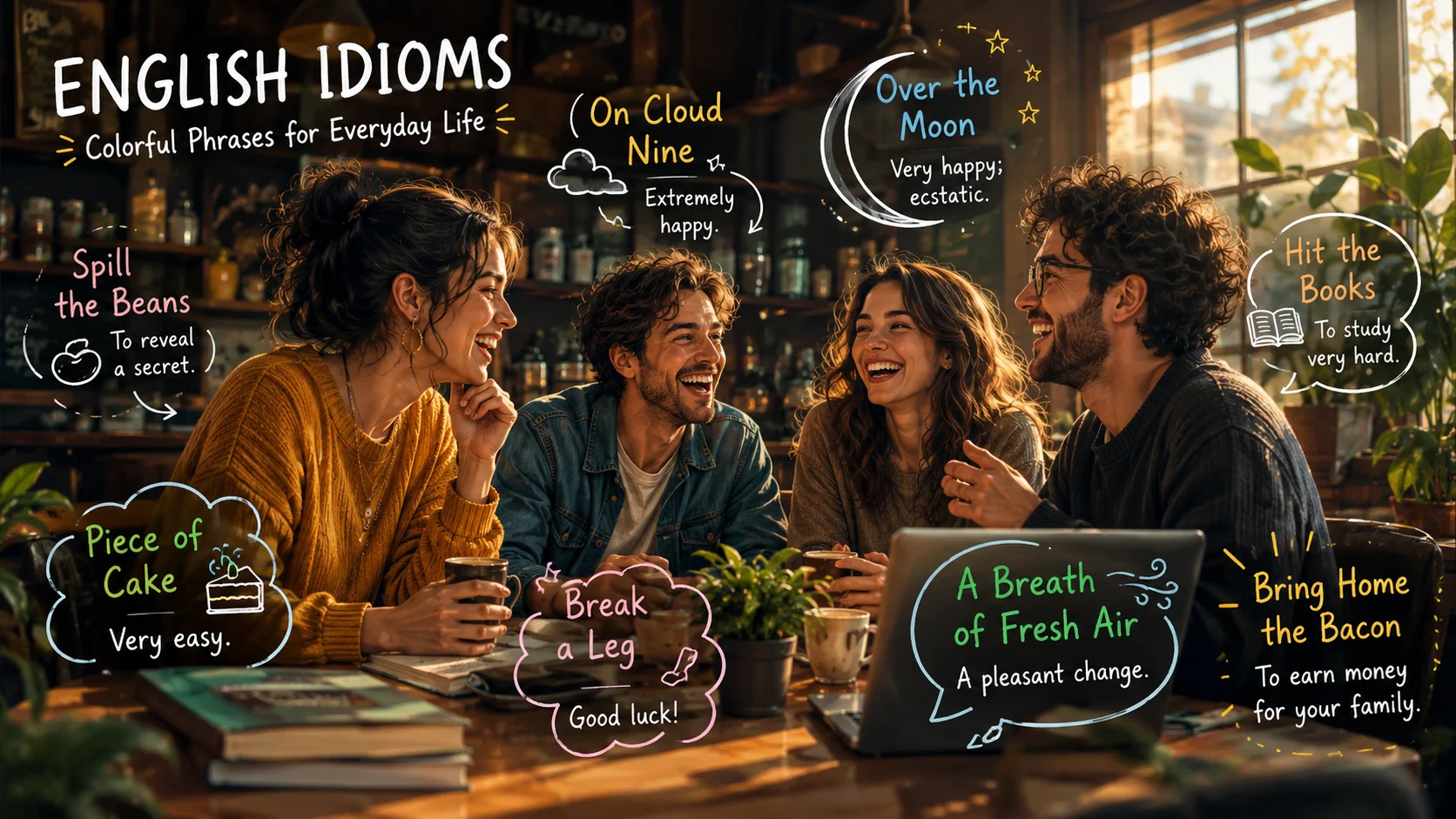
Idioms for happiness are colorful expressions people use to describe joy, excitement, satisfaction, and positive emotions in a more vivid and natural way.
Phrases like “on cloud nine,” “walking on air,” and “full of the joys of spring” make conversations sound more expressive, emotional, and fluent in both speaking and writing.
There’s something memorable about the way idioms bring emotions to life. Instead of simply saying “I’m happy,” English speakers often use vivid expressions that instantly create mood, personality, and imagery. Think about the difference between saying someone was “very excited” and saying they were “walking on air.” One sounds plain. The other feels alive.
Idioms for happiness appear everywhere in casual conversations, novels, movies, classroom essays, social media captions, and even workplace communication. They help people sound more natural, expressive, and emotionally connected. For language learners, understanding these phrases can make English feel far less robotic and much more human.
Writers also rely on happiness idioms to make storytelling more engaging. A single well-used idiom can add warmth, humor, or emotional depth to a sentence without needing a long explanation.
In this guide, you’ll explore some of the most useful idioms for happiness, learn when people actually use them, and discover practical ways to include them naturally in your own communication.
Quick Summary Table
| Idiom | Simple Meaning | Common Usage |
|---|---|---|
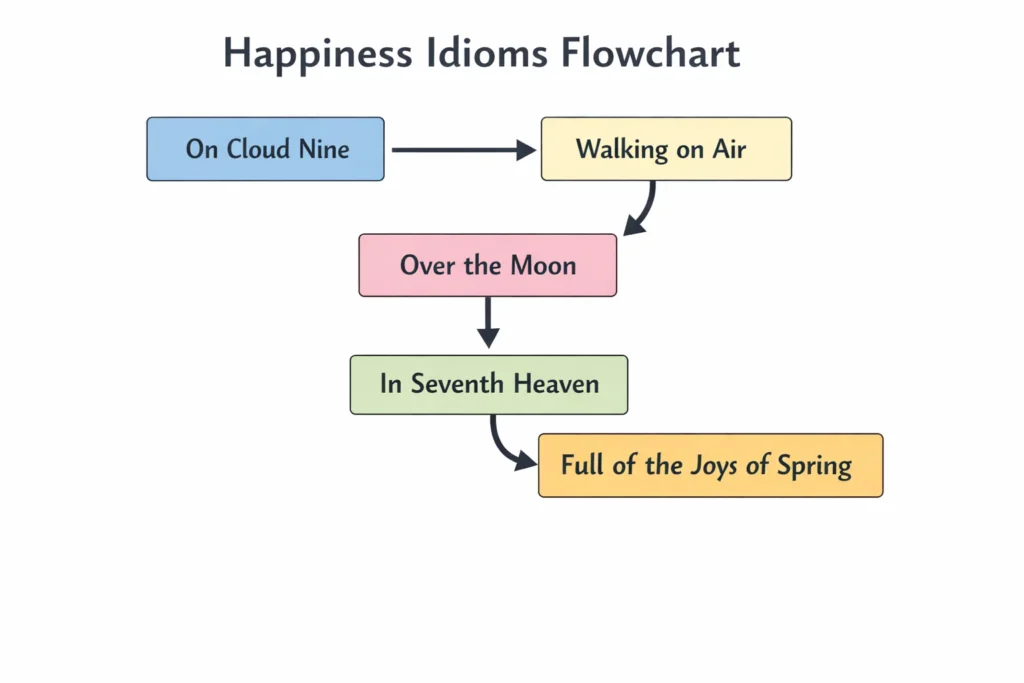
| On cloud nine | Extremely happy | Celebrating success |
| Walking on air | Feeling joyful and excited | After good news |
| Over the moon | Very delighted | Personal achievements |
| In seventh heaven | Deeply happy | Emotional moments |
| Full of the joys of spring | Cheerful and energetic | Positive mood |
| Happy as a clam | Completely content | Relaxed situations |
| Grinning from ear to ear | Smiling widely | Exciting experiences |
| Tickled pink | Pleasantly surprised | Compliments or gifts |
| Jump for joy | Show excitement openly | Big achievements |
| Having the time of your life | Enjoying yourself greatly | Trips and parties |
Idioms for Happines
On Cloud Nine
Meaning
Feeling extremely happy or thrilled.
When People Use It
People often use this idiom after exciting achievements, good news, or emotional moments.
Alternative Expression
Over the moon
Examples in Communication
Formal Example
She was on cloud nine after receiving the scholarship offer.
Casual Example
I’ve been on cloud nine ever since the concert tickets arrived.
Creative Example
The moment the plane lifted into the sky, he felt like he was floating on cloud nine with his dreams beside him.
Usage Insight
This is one of the most widely used idioms for happiness in both spoken and written English.
Walking on Air
Meaning
Feeling light, joyful, and emotionally uplifted.
When People Use It
Usually used after hearing wonderful news or experiencing something unforgettable.
Alternative Expression
Floating with happiness
Examples in Communication
Formal Example
After the successful presentation, the entire team seemed to be walking on air.
Casual Example
She’s been walking on air since her engagement announcement.
Creative Example
He wandered through the rainy streets walking on air, smiling at strangers for no reason at all.
Usage Insight
This idiom creates a softer, dreamy kind of happiness.
Over the Moon
Meaning
Extremely pleased or delighted.
When People Use It
Common in personal conversations and celebratory situations.
Alternative Expression
Thrilled to bits
Examples in Communication
Formal Example
The company was over the moon about the successful launch.
Casual Example
Mom was over the moon when I told her the news.
Creative Example
She danced through the kitchen over the moon after hearing her favorite author replied to her message.
In Seventh Heaven
Meaning
Experiencing complete happiness and satisfaction.
When People Use It
Often used when someone feels emotionally fulfilled.
Alternative Expression
In pure bliss
Examples in Communication
Formal Example
The children were in seventh heaven during the holiday celebration.
Casual Example
I’m in seventh heaven with this new gaming setup.
Creative Example
Wrapped in warm blankets and laughter, they sat in seventh heaven beside the fireplace.
Full of the Joys of Spring
Meaning
Very cheerful, energetic, and lively.
When People Use It
Usually describes someone in a bright, optimistic mood.
Alternative Expression
Bursting with happiness
Examples in Communication
Formal Example
She arrived at work full of the joys of spring after her vacation.
Casual Example
Why are you suddenly full of the joys of spring today?
Creative Example
The little café buzzed with people full of the joys of spring as sunlight spilled through the windows.
Happy as a Clam
Meaning
Completely content and peaceful.
When People Use It
Used when someone feels relaxed and satisfied with life.
Alternative Expression
Content as can be
Examples in Communication
Formal Example
He seemed happy as a clam living in the countryside.
Casual Example
Give me coffee and a good movie, and I’m happy as a clam.
Creative Example
Curled beneath the old tree with a paperback novel, she looked happy as a clam.
Grinning from Ear to Ear
Meaning
Smiling very widely because of happiness.
When People Use It
Often used when someone cannot hide their excitement.
Alternative Expression
Beaming with joy
Examples in Communication
Formal Example
The athlete was grinning from ear to ear after winning the championship.
Casual Example
You’ve been grinning from ear to ear all morning.
Creative Example
He walked into the room grinning from ear to ear like a kid on his birthday.
Tickled Pink
Meaning
Pleasantly surprised and delighted.
When People Use It
Usually used for smaller moments of joy or appreciation.
Alternative Expression
Pleasantly thrilled
Examples in Communication
Formal Example
The author was tickled pink by the positive reviews.
Casual Example
Dad was tickled pink when we surprised him with cake.
Creative Example
She was tickled pink by the handwritten note hidden inside the gift box.
Jump for Joy
Meaning
To express happiness very energetically.
When People Use It
Used after exciting achievements or unexpected good news.
Alternative Expression
Burst with excitement
Examples in Communication
Formal Example
The students jumped for joy after hearing school was closed for the holiday.
Casual Example
I literally jumped for joy when I passed the exam.
Creative Example
The puppy nearly jumped for joy the moment the front door opened.
Having the Time of Your Life
Meaning
Enjoying an experience immensely.
When People Use It
Often used for vacations, events, or memorable experiences.
Alternative Expression
Living your best life
Examples in Communication
Formal Example
The tourists appeared to be having the time of their lives during the festival.
Casual Example
We had the time of our lives at the beach yesterday.
Creative Example
Under the fireworks and loud music, they were having the time of their lives without checking their phones once.
On Top of the World
Meaning
Feeling extremely proud and happy.
When People Use It
Common after accomplishments or personal victories.
Alternative Expression
Feeling unbeatable
Examples in Communication
Formal Example
She felt on top of the world after completing her first marathon.
Casual Example
I’m on top of the world today.
Creative Example
Standing at the mountain peak, he felt on top of the world in every possible way.
Smiling from Ear to Ear
Meaning
Showing obvious happiness through a huge smile.
When People Use It
Used in both casual speech and storytelling.
Alternative Expression
Beaming brightly
Examples in Communication
Formal Example
The child was smiling from ear to ear after receiving the award.
Casual Example
Why are you smiling from ear to ear today?
Creative Example
She sat by the window smiling from ear to ear as the train carried her home.
Bright-Eyed and Bushy-Tailed
Meaning
Energetic, enthusiastic, and cheerful.
When People Use It
Often used in the morning or at the beginning of an activity.
Alternative Expression
Full of energy
Examples in Communication
Formal Example
Despite the early meeting, the interns arrived bright-eyed and bushy-tailed.
Casual Example
You’re surprisingly bright-eyed today.
Creative Example
The campers woke up bright-eyed and bushy-tailed before sunrise adventures.
Like a Dog with Two Tails
Meaning
Extremely delighted and excited.
When People Use It
Usually describes visible excitement.
Alternative Expression
Thrilled beyond words
Examples in Communication
Formal Example
He looked like a dog with two tails after receiving the promotion.
Casual Example
She’s been like a dog with two tails all week.
Creative Example
The boy ran through the hallway like a dog with two tails clutching his new skateboard.
Practical Ways to Use Idioms Naturally
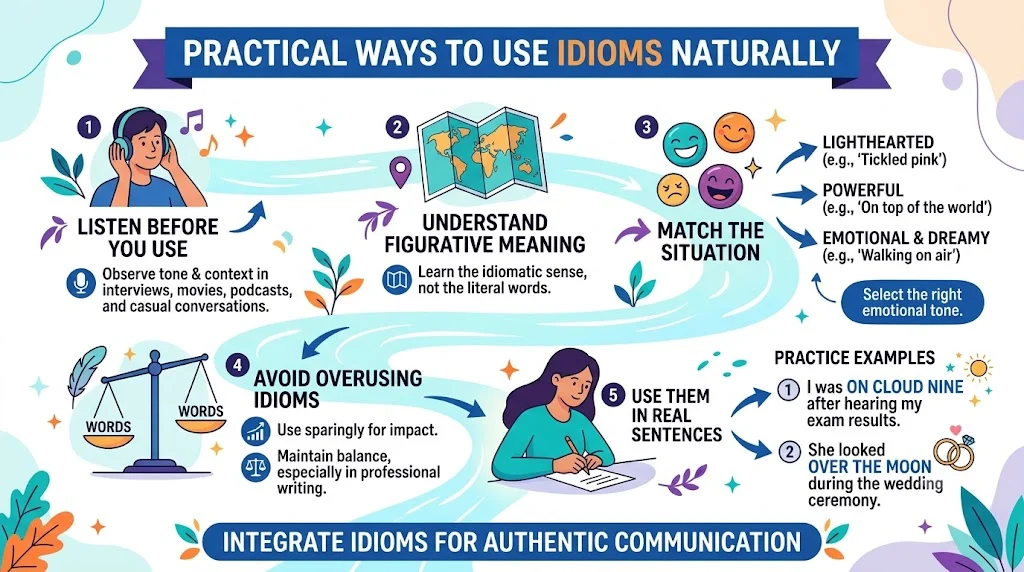
Listen Before You Use
Many learners try memorizing idioms without hearing how native speakers actually use them. Watching interviews, films, podcasts, or casual conversations helps you understand tone and timing naturally.
Match the Situation
Some happiness idioms sound playful while others feel emotional or poetic. For example:
- “Tickled pink” sounds lighthearted.
- “On top of the world” feels powerful.
- “Walking on air” feels emotional and dreamy.
Using the right emotional tone makes your communication sound more authentic.
Avoid Overusing Idioms
A few well-placed idioms can make writing engaging. Too many in one paragraph can feel unnatural. In professional writing especially, balance matters.
Use Them in Real Sentences
Instead of memorizing isolated phrases, practice writing short diary entries, captions, or conversations using idioms naturally.
Example:
- “I was on cloud nine after hearing my exam results.”
- “She looked over the moon during the wedding ceremony.”
Understand Figurative Meaning
Idioms are rarely literal. “Jump for joy” doesn’t always mean physically jumping. It simply expresses strong excitement. Understanding this difference improves both comprehension and fluency.
Common Mistakes People Make with Happiness Idioms
Mixing Idioms Incorrectly
People sometimes combine expressions accidentally.
Incorrect:
“He was walking on cloud nine.”
Correct:
“He was on cloud nine.”
or
“He was walking on air.”
Using Formal Idioms in Serious Situations
Some idioms sound too playful for formal reports or academic writing. In essays or workplace emails, use them carefully.
Translating Directly from Native Language
Not every language expresses happiness the same way. English idioms often rely on imagery that may not translate directly.
Forgetting Context
Idioms work best when they match the mood. Saying “tickled pink” during a serious business meeting may sound strange or overly casual.
How to Remember Idioms More Easily
Visualize the Expression
Picture someone literally floating on a cloud or walking on air. Visual imagery helps idioms stick in memory faster.
Group Idioms by Emotion
Learning idioms in emotional categories — happiness, sadness, anger, confidence — improves recall naturally.
Use Them in Daily Conversation
Even simple practice helps. Try adding one idiom to a text message, journal entry, or classroom discussion each day.
Read More Storytelling Content
Novels, blogs, and dialogue-heavy stories expose you to idioms in realistic settings, making them easier to understand and remember.
FAQs
What are idioms for happiness?
Idioms for happiness are figurative expressions people use to describe joy, excitement, satisfaction, or emotional positivity in a more colorful and natural way.
Why are happiness idioms important in English?
They help conversations sound more fluent, expressive, and emotionally engaging instead of overly plain or repetitive.
Can idioms be used in formal writing?
Yes, but carefully. Some idioms work well in storytelling and essays, while others are better suited for casual conversations.
What is the most common idiom for happiness?
“On cloud nine” is one of the most widely recognized idioms for extreme happiness.
How can I remember idioms more easily?
Practice them in daily conversation, visualize their meanings, and read stories or dialogues where they appear naturally.
Conclusion
Learning idioms for happiness is about more than expanding vocabulary. These expressions add emotion, personality, and warmth to communication in ways plain language often cannot. Whether you’re writing stories, improving spoken English, preparing school assignments, or simply trying to sound more natural in conversation, happiness idioms make language feel more alive and expressive.
The most effective way to learn them is through real usage. Notice how people use idioms in conversations, movies, articles, and social interactions. Then slowly begin using the ones that genuinely fit your own voice and style.
Over time, these phrases stop feeling like memorized expressions and start becoming part of natural communication. That’s when fluency truly begins to grow.
A single idiom used well can make a sentence memorable and sometimes even make a conversation feel more human.
Discover More Related Articles:
- Idioms About Songs | Musical Expressions That Add Rhythm to Your English In 2026
- Idioms About Age | Timeless Expressions That Add Wisdom to Your English In 2026