
Quick Answer
Idioms about surprise are figurative expressions used to describe shock, amazement, sudden reactions, unexpected events, or emotional disbelief in a colorful and natural way. Phrases like “out of the blue” and “caught off guard” help conversations feel more expressive, emotional, and fluent.
Surprise is one of the most human emotions we experience. Sometimes it arrives as wonderful news, and sometimes it appears in awkward, dramatic, or completely unpredictable moments. Because unexpected situations are such a huge part of life, English is filled with idioms that capture shock, amazement, confusion, and disbelief in vivid ways.
You hear these expressions everywhere. A friend suddenly announces big news and someone says they were “blown away.” A teacher gives an unexpected quiz and students feel “caught off guard.” A message arrives “out of the blue,” instantly changing the mood of the day.
For language learners, writers, bloggers, and students, understanding idioms about surprise can make communication sound much more natural and emotionally expressive. These phrases help add personality to conversations and bring storytelling to life. Instead of sounding overly literal or flat, idioms create imagery and emotional depth that people instantly connect with.
This guide explores meaningful and commonly used surprise idioms with practical explanations, emotional context, and realistic examples you can use naturally in daily communication and creative writing.
Out of the Blue
Meaning
Something happening unexpectedly without warning.
When People Use It
Used when surprising news, events, or messages appear suddenly.
Alternative Expression
Unexpectedly.
Examples in Communication
Formal Example
The company received a major investment offer out of the blue.
Casual Example
She texted me out of the blue after years.
Creative Example
Like rain in a clear sky, the invitation arrived out of the blue.
Usage Insight
This idiom is extremely common in both spoken and written English.
Caught Off Guard
Meaning
To be surprised and unprepared.
When People Use It
Used during unexpected questions, sudden changes, or emotional moments.
Alternative Expression
Taken by surprise.
Examples in Communication
Formal Example
The speaker was caught off guard by the difficult question.
Casual Example
I was totally caught off guard when they showed up.
Creative Example
The sudden applause caught the shy musician off guard.
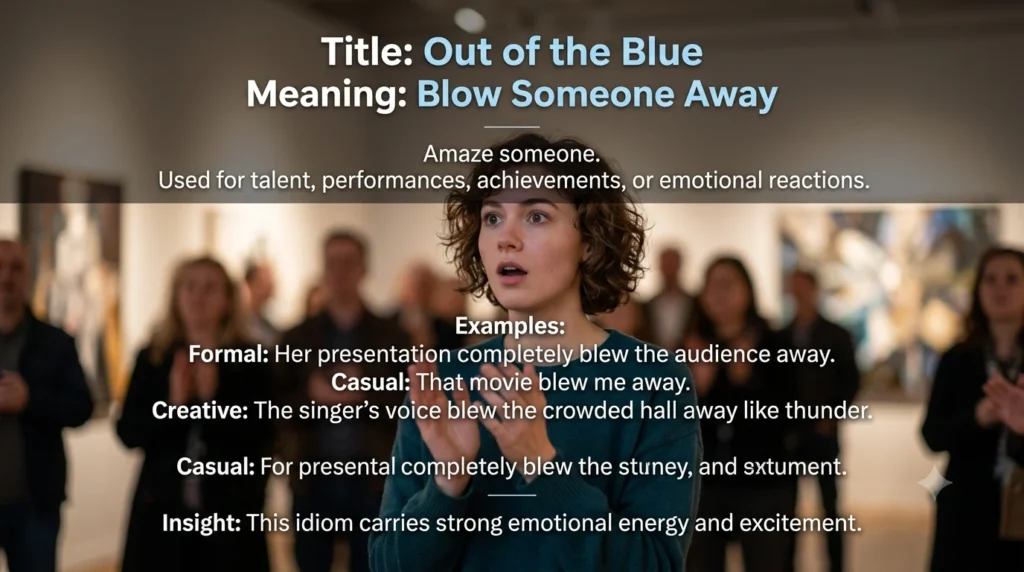
Blow Someone Away
Meaning
To impress or surprise someone greatly.
When People Use It
Used for talent, performances, achievements, or emotional reactions.
Alternative Expression
Amaze someone.
Examples in Communication
Formal Example
Her presentation completely blew the audience away.
Casual Example
That movie blew me away.
Creative Example
The singer’s voice blew the crowded hall away like thunder.
Usage Insight
This idiom carries strong emotional energy and excitement.
Take Someone by Surprise
Meaning
To happen unexpectedly.
When People Use It
Used in both formal and casual conversations.
Alternative Expression
Shock someone unexpectedly.
Examples in Communication
Formal Example
The sudden announcement took investors by surprise.
Casual Example
The party totally took me by surprise.
Creative Example
Winter rain took the travelers by surprise beneath the dim station lights.
Knock Someone’s Socks Off
Meaning
To amaze or impress someone deeply.
When People Use It
Often used for performances, food, fashion, or achievements.
Alternative Expression
Leave someone speechless.
Examples in Communication
Formal Example
The final design knocked the clients’ socks off.
Casual Example
That concert knocked my socks off.
Creative Example
The fireworks knocked everyone’s socks off beneath the midnight sky.
Like a Bolt from the Blue
Meaning
A sudden shocking event.
When People Use It
Used for emotional news or dramatic changes.
Alternative Expression
A sudden shock.
Examples in Communication
Formal Example
The resignation came like a bolt from the blue.
Casual Example
The breakup felt like a bolt from the blue.
Creative Example
Her confession struck the room like a bolt from the blue.
Raise Some Eyebrows
Meaning
To surprise people in a questionable or noticeable way.
When People Use It
Used for unusual behavior, decisions, or statements.
Alternative Expression
Cause surprise.
Examples in Communication
Formal Example
The celebrity’s comments raised some eyebrows online.
Casual Example
His outfit definitely raised eyebrows.
Creative Example
The unexpected painting raised eyebrows across the quiet gallery.
Left Speechless
Meaning
Too surprised or emotional to speak.
When People Use It
Used for shocking, emotional, or impressive situations.
Alternative Expression
Lost for words.
Examples in Communication
Formal Example
The award announcement left the actor speechless.
Casual Example
I was honestly left speechless.
Creative Example
The mountain sunrise left the exhausted hikers speechless.
Jaw Dropping
Meaning
Extremely surprising or impressive.
When People Use It
Common in entertainment, travel, and social media conversations.
Alternative Expression
Stunning.
Examples in Communication
Formal Example
The architecture was absolutely jaw dropping.
Casual Example
That goal was jaw dropping.
Creative Example
The crystal cave revealed a jaw dropping world beneath the earth.
Pull a Rabbit Out of a Hat
Meaning
To suddenly produce an unexpected solution or success.
When People Use It
Used in problem solving or last minute success stories.
Alternative Expression
Perform a miracle.
Examples in Communication
Formal Example
The engineer pulled a rabbit out of a hat before the deadline.
Casual Example
She somehow pulled a rabbit out of a hat again.
Creative Example
At the final second, the underdog team pulled a rabbit out of a hat.
Come as a Shock
Meaning
To be very surprising or upsetting.
When People Use It
Often used for emotional news or dramatic revelations.
Alternative Expression
Be shocking.
Examples in Communication
Formal Example
The sudden closure came as a shock to employees.
Casual Example
That news really came as a shock.
Creative Example
The empty stage came as a shock to the cheering crowd.
Stop Someone in Their Tracks
Meaning
To surprise someone so strongly they pause immediately.
When People Use It
Used in emotional, dramatic, or visually powerful moments.
Alternative Expression
Freeze someone in surprise.
Examples in Communication
Formal Example
The unexpected accusation stopped the meeting in its tracks.
Casual Example
That message stopped me in my tracks.
Creative Example
The haunting melody stopped strangers in their tracks.
Catch Someone Unaware
Meaning
To surprise someone who is unprepared.
When People Use It
Used in emotional discussions or sudden events.
Alternative Expression
Catch off guard.
Examples in Communication
Formal Example
The difficult question caught the candidate unaware.
Casual Example
The prank caught him unaware.
Creative Example
The thunder caught the campers unaware in the dark forest.
Turn Heads
Meaning
To attract attention and surprise people positively.
When People Use It
Often used for fashion, creativity, beauty, or performance.
Alternative Expression
Grab attention.
Examples in Communication
Formal Example
The innovative campaign turned heads across the industry.
Casual Example
Her new hairstyle really turned heads.
Creative Example
The glowing parade turned heads through the silent streets.
Spring Something on Someone
Meaning
To surprise someone suddenly with news or plans.
When People Use It
Common in relationships, workplaces, and social situations.
Alternative Expression
Drop unexpected news.
Examples in Communication
Formal Example
Management sprang the policy changes on employees without warning.
Casual Example
You can’t just spring that on me.
Creative Example
The traveler sprang the exciting news on the family during dinner.
Blow Hot and Cold
Meaning
To behave unpredictably or inconsistently.
When People Use It
Used in relationships and emotional situations.
Alternative Expression
Send mixed signals.
Examples in Communication
Formal Example
The client kept blowing hot and cold during negotiations.
Casual Example
She’s been blowing hot and cold lately.
Creative Example
His uncertain smile blew hot and cold across the crowded café.
Outdo Yourself
Meaning
To perform surprisingly better than before.
When People Use It
Used for achievements, cooking, creativity, or performances.
Alternative Expression
Surpass expectations.
Examples in Communication
Formal Example
The designer truly outdid herself with the latest collection.
Casual Example
Wow, you really outdid yourself this time.
Creative Example
The young baker outdid himself with a cake that amazed the town.
Drop a Bombshell
Meaning
To reveal shocking news unexpectedly.
When People Use It
Used in dramatic conversations or media stories.
Alternative Expression
Reveal shocking information.
Examples in Communication
Formal Example
The report dropped a political bombshell.
Casual Example
She dropped a bombshell at dinner.
Creative Example
His sudden confession dropped a bombshell into the peaceful evening.
Come Out of Nowhere
Meaning
To appear suddenly and unexpectedly.
When People Use It
Used for success, problems, or surprising events.
Alternative Expression
Appear unexpectedly.
Examples in Communication
Formal Example
The young athlete came out of nowhere to win the competition.
Casual Example
That storm came out of nowhere.
Creative Example
The mysterious music came out of nowhere in the quiet street.
Be in for a Surprise
Meaning
To soon experience something unexpected.
When People Use It
Often used teasingly or dramatically.
Alternative Expression
Unexpected outcome ahead.
Examples in Communication
Formal Example
Competitors are in for a surprise this season.
Casual Example
If you think that’s impressive, you’re in for a surprise.
Creative Example
The explorers were in for a surprise behind the hidden waterfall.
Take Someone’s Breath Away
Meaning
To surprise or impress someone so deeply that they momentarily cannot react.
When People Use It
Often used for beautiful scenery, emotional moments, performances, or unexpected kindness.
Alternative Expression
Amaze completely.
Examples in Communication
Formal Example
The mountain landscape took the visitors’ breath away.
Casual Example
Your artwork seriously took my breath away.
Creative Example
The glowing city skyline took her breath away beneath the winter stars.
Usage Insight
This idiom often carries admiration and emotional warmth.
Make Someone Jump
Meaning
To suddenly frighten or surprise someone.
When People Use It
Used for loud noises, sudden appearances, or unexpected actions.
Alternative Expression
Startle someone.
Examples in Communication
Formal Example
The unexpected alarm made everyone jump.
Casual Example
You made me jump!
Creative Example
The crashing thunder made the sleepy village jump awake.
A Real Eye-Opener
Meaning
A surprising experience that changes someone’s understanding.
When People Use It
Used after learning something unexpected or gaining a new perspective.
Alternative Expression
A revealing experience.
Examples in Communication
Formal Example
Traveling abroad was a real eye-opener for the students.
Casual Example
That documentary was such an eye-opener.
Creative Example
The crowded shelter became a painful eye-opener about city poverty.
Hit Like a Ton of Bricks
Meaning
To affect someone suddenly and powerfully.
When People Use It
Used for emotional realizations or shocking news.
Alternative Expression
Hit hard emotionally.
Examples in Communication
Formal Example
The reality of the crisis hit the community like a ton of bricks.
Casual Example
The breakup hit me like a ton of bricks.
Creative Example
Her final goodbye hit him like a ton of bricks in the silent airport.
Blindside Someone
Meaning
To surprise someone in a shocking or unfair way.
When People Use It
Common in relationships, business, and emotional situations.
Alternative Expression
Catch unexpectedly.
Examples in Communication
Formal Example
The sudden decision blindsided the entire team.
Casual Example
I was completely blindsided by the news.
Creative Example
The sudden storm blindsided the hikers halfway up the mountain.
Pull the Rug Out from Under Someone
Meaning
To suddenly remove support or stability unexpectedly.
When People Use It
Used in emotional, financial, or workplace situations.
Alternative Expression
Suddenly betray or disrupt.
Examples in Communication
Formal Example
The policy changes pulled the rug out from under small businesses.
Casual Example
They totally pulled the rug out from under us.
Creative Example
The canceled opportunity pulled the rug out from under her dreams.
Come as No Surprise
Meaning
Something expected rather than shocking.
When People Use It
Used when discussing predictable outcomes.
Alternative Expression
Completely expected.
Examples in Communication
Formal Example
The company’s success came as no surprise after years of innovation.
Casual Example
Honestly, that didn’t come as a surprise.
Creative Example
His victory came as no surprise to those who watched him struggle and grow.
Catch Someone Napping
Meaning
To surprise someone while they are unprepared or inattentive.
When People Use It
Often used in competition, business, or sports.
Alternative Expression
Take advantage of unpreparedness.
Examples in Communication
Formal Example
The rival company caught competitors napping with its sudden launch.
Casual Example
The teacher caught us napping with a surprise quiz.
Creative Example
The fast moving striker caught the defense napping under stadium lights.
Shake Someone Up
Meaning
To emotionally disturb or surprise someone deeply.
When People Use It
Used after upsetting or shocking experiences.
Alternative Expression
Deeply unsettle.
Examples in Communication
Formal Example
The accident shook the community up.
Casual Example
That movie really shook me up.
Creative Example
The midnight phone call shook her up for days.
Throw Someone for a Loop
Meaning
To confuse or surprise someone unexpectedly.
When People Use It
Common in emotional or stressful situations.
Alternative Expression
Completely confuse.
Examples in Communication
Formal Example
The sudden schedule change threw employees for a loop.
Casual Example
That question threw me for a loop.
Creative Example
The strange message threw the detective for a loop late at night.
Keep Someone on Their Toes
Meaning
To keep someone alert because things remain unpredictable.
When People Use It
Used for challenging jobs, relationships, or situations.
Alternative Expression
Keep alert.
Examples in Communication
Formal Example
The fast paced industry keeps professionals on their toes.
Casual Example
My little brother keeps everyone on their toes.
Creative Example
The unpredictable waves kept the sailors on their toes.
A Twist in the Tale
Meaning
An unexpected development in a story or situation.
When People Use It
Used in storytelling, movies, books, or real life surprises.
Alternative Expression
Unexpected turn.
Examples in Communication
Formal Example
The investigation ended with a surprising twist in the tale.
Creative Example
Just when peace returned, a final twist in the tale changed everything.
Pop Up Out of Nowhere
Meaning
To appear suddenly and unexpectedly.
When People Use It
Used for people, problems, or opportunities.
Alternative Expression
Appear suddenly.
Examples in Communication
Formal Example
New challenges continued to pop up out of nowhere.
Casual Example
He just popped up out of nowhere.
Creative Example
Street musicians popped up out of nowhere beneath glowing city lights.
Send Shockwaves Through
Meaning
To create widespread surprise or emotional reaction.
When People Use It
Common in news, politics, entertainment, and sports.
Alternative Expression
Cause major reaction.
Examples in Communication
Formal Example
The announcement sent shockwaves through the industry.
Casual Example
That rumor sent shockwaves through school.
Creative Example
The unexpected victory sent shockwaves through the crowded arena.
Blow Someone’s Mind
Meaning
To surprise or amaze someone extremely.
When People Use It
Used for creativity, discoveries, technology, or entertainment.
Alternative Expression
Astonish completely.
Examples in Communication
Formal Example
The scientist’s discovery blew the academic community’s mind.
Casual Example
That ending blew my mind.
Creative Example
The glowing underwater cave blew the explorers’ minds instantly.
Why Surprise Idioms Make Communication More Powerful
Surprise idioms do more than decorate language. They create emotional immediacy. Instead of simply saying someone felt shocked, expressions like “blindsided” or “left speechless” instantly help listeners imagine the feeling.
Writers also use these idioms to control emotional pacing in stories. A well placed expression can make dialogue feel believable and emotionally layered without lengthy explanation.
In everyday conversation, these phrases make reactions sound more authentic and natural.
How Native Speakers Use Surprise Idioms
Native speakers usually use surprise idioms casually and emotionally rather than formally. Many appear naturally during storytelling:
- “That came out of nowhere.”
- “You completely caught me off guard.”
- “Her performance blew everyone away.”
Notice how these expressions often appear during reactions. That emotional spontaneity is part of what makes them sound natural.
The more you listen to conversational English, the more instinctively these idioms start making sense.
Mini Practice Tip
A helpful way to practice surprise idioms is by rewriting ordinary sentences.
For example:
Literal sentence:
“I was very surprised by the news.”
More natural version:
“The news completely caught me off guard.”
Small changes like this can make spoken and written English sound far more fluent and expressive.
How to Use Surprise Idioms Naturally
The best way to use surprise idioms naturally is to match them with emotion and context. Expressions like “caught off guard” work well in serious or realistic situations, while phrases like “knock your socks off” sound more energetic and conversational.
In writing, these idioms can instantly create emotional reactions without long explanations. Instead of saying someone was “very surprised,” saying they were “left speechless” feels more vivid and human.
Listening to podcasts, interviews, and movies can also help learners notice how native speakers naturally use these expressions.
Common Mistakes with Surprise Idioms
One common mistake is overusing dramatic idioms for ordinary situations. Not every minor event is “jaw dropping” or “a bombshell.” Choosing expressions carefully makes communication sound more natural.
Another mistake is confusing emotional tone. Some idioms suggest positive surprise while others imply shock, confusion, or even discomfort.
It also helps to remember that idioms are figurative. “Pull a rabbit out of a hat” refers to an unexpected solution, not actual magic.
Tips for Remembering Idioms Easily
Surprise idioms are easier to remember when connected to strong mental imagery.
Helpful techniques include:
- Visualizing the scene behind the idiom
- Using idioms in personal stories
- Practicing through dialogue
- Watching English movies with subtitles
- Writing short creative paragraphs using expressions naturally
The more emotionally memorable the phrase becomes, the more naturally it stays in long term memory.
FAQs
What are idioms about surprise?
Idioms about surprise are figurative expressions used to describe unexpected events, shock, amazement, or sudden emotional reactions.
Why are surprise idioms important in English?
They make conversations and writing sound more natural, expressive, and emotionally engaging.
Are surprise idioms used in everyday conversations?
Yes. Many surprise idioms are extremely common in casual speech, storytelling, movies, and social interactions.
Can surprise idioms improve writing skills?
Absolutely. They help create vivid emotional scenes and make storytelling more engaging for readers.
What is the easiest way to remember idioms?
Using idioms in conversations, visualizing their imagery, and practicing them in real situations helps memory significantly.
Conclusion
Idioms about surprise make communication feel lively, emotional, and deeply human. They help speakers and writers express reactions in a more colorful and relatable way than literal language alone. Whether someone is shocked, amazed, impressed, confused, or unexpectedly delighted, these expressions capture those moments with personality and style.
For students, bloggers, storytellers, and English learners, learning surprise idioms can improve fluency and make conversations sound more natural. The key is to focus on real usage rather than memorizing definitions mechanically. Pay attention to emotional tone, context, and how native speakers naturally use these phrases.
Over time, these expressions become part of your instinctive communication style, helping your English sound smoother, warmer, and more expressive in everyday life.