Quick Answer
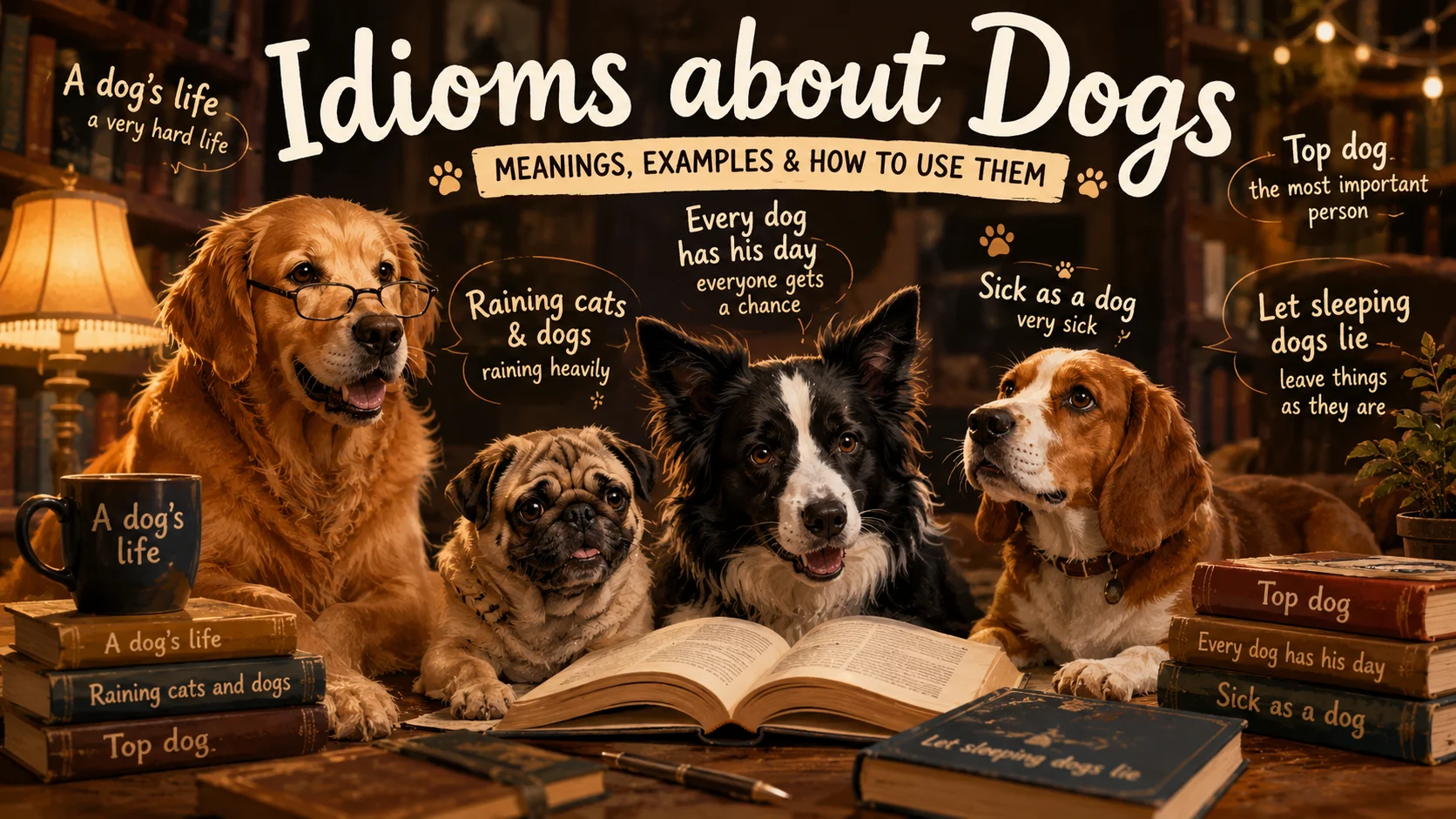
Idioms about dogs are popular English expressions that use dog related imagery to describe emotions, situations, personality traits, relationships, loyalty, trouble, luck, and human behavior in a figurative way.
Phrases like “every dog has its day” or “work like a dog” are commonly used in conversations, writing, storytelling, and daily communication to make language more vivid and expressive.
Dog related idioms have been part of everyday English for generations. Some sound playful, some sound sharp, and others carry surprisingly emotional meanings about loyalty, hardship, patience, or determination. Even people who are not dog lovers use these expressions constantly without realizing how deeply they are woven into conversation.
You hear them in movies, classrooms, offices, casual chats, novels, and even social media captions. Someone might say they are “sick as a dog” after a rough weekend or “work like a dog” during exam season. These phrases instantly create imagery, emotion, and personality in communication.
For students, writers, bloggers, and language learners, understanding idioms about dogs can make English feel far more natural and expressive. They help conversations sound less robotic and more human. They also improve storytelling because idioms often carry emotional tone that literal language cannot easily capture.
This guide explores useful idioms about dogs with meanings, examples, emotional context, and practical usage advice so you can start using them naturally in speech and writing.
Every Dog Has Its Day
Meaning
Everyone gets a chance to succeed or experience good fortune eventually.
When People Use It
People often say this to encourage someone who feels overlooked, unlucky, or discouraged.
Alternative Expression
Your time will come.
Examples in Communication
Formal Example
Despite years of rejection, the young writer finally published her novel because every dog has its day.
Casual Example
Don’t worry about losing today. Every dog has its day.
Creative Example
The quiet musician stood under the spotlight at last, proving every dog has its day.
Usage Insight
This idiom carries an encouraging and hopeful tone. It works especially well in motivational writing and supportive conversations.
Work Like a Dog
Meaning
To work extremely hard or tirelessly.
When People Use It
Common in workplace conversations, school discussions, and situations involving exhaustion.
Alternative Expression
Work around the clock.
Examples in Communication
Formal Example
The team worked like dogs to complete the project before the deadline.
Casual Example
I’ve been working like a dog all week.
Creative Example
Under the café lights, she worked like a dog while the city slept.
Usage Insight
This idiom is informal but widely accepted in daily English.
Sick as a Dog
Meaning
Very ill or physically unwell.
When People Use It
Used during conversations about health, exhaustion, or food poisoning.
Alternative Expression
Feeling terrible.
Examples in Communication
Formal Example
He stayed home from work because he was sick as a dog.
Casual Example
I ate too much street food and now I’m sick as a dog.
Creative Example
After the stormy boat ride, the tourists looked sick as dogs.
Let Sleeping Dogs Lie
Meaning
Avoid restarting old arguments or problems.
When People Use It
People use this when discussing sensitive topics, family conflicts, or workplace tension.
Alternative Expression
Leave the past alone.
Examples in Communication
Formal Example
The manager decided to let sleeping dogs lie rather than reopen the dispute.
Casual Example
Just forget it and let sleeping dogs lie.
Creative Example
The old letters stayed hidden in the drawer because some memories are sleeping dogs.
Usage Insight
This idiom is useful in emotional or conflict related discussions.
Dog-Eat-Dog World
Meaning
A highly competitive and ruthless environment.
When People Use It
Frequently used in business, politics, career discussions, and social commentary.
Alternative Expression
Cutthroat competition.
Examples in Communication
Formal Example
The fashion industry can feel like a dog-eat-dog world.
Casual Example
Corporate life is seriously dog-eat-dog sometimes.
Creative Example
The crowded city moved like a dog-eat-dog jungle of ambition.
Barking Up the Wrong Tree
Meaning
Blaming or accusing the wrong person.
When People Use It
Used during misunderstandings, investigations, or arguments.
Alternative Expression
Looking in the wrong place.
Examples in Communication
Formal Example
The critics were barking up the wrong tree with their assumptions.
Casual Example
You’re barking up the wrong tree if you think I broke it.
Creative Example
The detective chased shadows, barking up the wrong tree all night.
The Top Dog
Meaning
The person in charge or the most successful person.
When People Use It
Often used in leadership, sports, or workplace discussions.
Alternative Expression
The leader.
Examples in Communication
Formal Example
After years of effort, she became the top dog in the company.
Casual Example
Everyone knows Jake is the top dog around here.
Creative Example
The young athlete trained until he finally stood as the top dog.
Gone to the Dogs
Meaning
Something has badly declined in quality.
When People Use It
Used for neighborhoods, businesses, systems, or habits that have deteriorated.
Alternative Expression
Fallen apart.
Examples in Communication
Formal Example
The historic building has sadly gone to the dogs over the years.
Casual Example
This place has really gone to the dogs lately.
Creative Example
Once filled with music, the old theater had gone to the dogs.
Dog Days
Meaning
The hottest and most uncomfortable days of summer.
When People Use It
Often appears in weather discussions and descriptive writing.
Alternative Expression
Peak summer heat.
Examples in Communication
Formal Example
Tourism slows during the dog days of August.
Casual Example
These dog days are exhausting.
Creative Example
The dog days wrapped the city in heavy golden heat.
Like a Dog with a Bone
Meaning
Someone who refuses to stop focusing on something.
When People Use It
Used when describing persistence or obsession.
Alternative Expression
Relentlessly determined.
Examples in Communication
Formal Example
The journalist pursued the investigation like a dog with a bone.
Casual Example
She won’t drop the topic. She’s like a dog with a bone.
Creative Example
He chased the mystery like a dog guarding its last treasure.
In the Doghouse
Meaning
In trouble with someone, especially a partner or family member.
When People Use It
Common in relationships and family conversations.
Alternative Expression
In trouble.
Examples in Communication
Formal Example
He found himself in the doghouse after forgetting the anniversary.
Casual Example
I’m definitely in the doghouse now.
Creative Example
One careless sentence sent him straight into the doghouse.
Dog Tired
Meaning
Extremely exhausted.
When People Use It
Used after long workdays, travel, or stressful events.
Alternative Expression
Completely worn out.
Examples in Communication
Formal Example
After the conference, the staff were dog tired.
Casual Example
I’m dog tired after today.
Creative Example
She collapsed onto the couch, dog tired beneath the dim evening lights.
Call Off the Dogs
Meaning
To stop criticizing, attacking, or pursuing someone.
When People Use It
Used during arguments, investigations, or intense criticism.
Alternative Expression
Back off.
Examples in Communication
Formal Example
The company requested the media to call off the dogs until facts were confirmed.
Casual Example
Can you call off the dogs already?
Creative Example
The rumors finally faded when the crowd called off the dogs.
You Can’t Teach an Old Dog New Tricks
Meaning
Older people may resist change or new methods.
When People Use It
Used in discussions about habits, technology, or learning.
Alternative Expression
Old habits die hard.
Examples in Communication
Formal Example
Some employees struggled with the software because you can’t teach an old dog new tricks.
Casual Example
Dad still hates smartphones. Old dog, new tricks.
Creative Example
The retired captain clung to old maps like an old dog refusing new tricks.
Usage Insight
Be careful with this idiom because it can sound dismissive depending on tone.
Hair of the Dog
Meaning
A drink taken to reduce the effects of a hangover.
When People Use It
Mostly informal social conversations.
Alternative Expression
Hangover remedy.
Examples in Communication
Formal Example
The phrase “hair of the dog” appears frequently in informal cultural writing.
Casual Example
He had some hair of the dog after the party.
Creative Example
Morning regret met late-night laughter over a little hair of the dog.
Puppy Love
Meaning
Young or innocent romantic feelings.
When People Use It
Used while discussing teenage relationships or early crushes.
Alternative Expression
Young romance.
Examples in Communication
Formal Example
Their relationship began as simple puppy love.
Casual Example
It was just puppy love back then.
Creative Example
Their puppy love bloomed beneath school hallway whispers.
Meaner Than a Junkyard Dog
Meaning
Extremely aggressive or unpleasant.
When People Use It
Describing harsh personalities or intimidating behavior.
Alternative Expression
Very hostile.
Examples in Communication
Formal Example
The coach had a reputation for being meaner than a junkyard dog.
Casual Example
Don’t talk to him today. He’s meaner than a junkyard dog.
Creative Example
The guard’s stare was meaner than a junkyard dog behind rusted gates.
Dog Someone’s Steps
Meaning
To follow or pursue someone persistently.
When People Use It
Often used in storytelling or dramatic writing.
Alternative Expression
Follow closely.
Examples in Communication
Formal Example
Reporters dogged the celebrity’s steps for weeks.
Casual Example
The paparazzi keep dogging her steps.
Creative Example
Shadows dogged his steps through the rainy alleyways.
Throw Someone to the Dogs
Meaning
To sacrifice or abandon someone unfairly.
When People Use It
Used in workplace politics, betrayal, or emotional conflicts.
Alternative Expression
Betray someone.
Examples in Communication
Formal Example
The company threw the junior employee to the dogs during the scandal.
Casual Example
They totally threw him to the dogs.
Creative Example
The frightened apprentice was thrown to the dogs of public criticism.
A Dog’s Breakfast
Meaning
A complete mess or badly organized situation.
When People Use It
Common in British English.
Alternative Expression
A total disaster.
Examples in Communication
Formal Example
The presentation became a dog’s breakfast due to technical failures.
Casual Example
My room looks like a dog’s breakfast.
Creative Example
The rushed wedding decorations turned into a glittering dog’s breakfast.
Tail Wagging the Dog
Meaning
A small part controlling the whole situation improperly.
When People Use It
Used in politics, business, and leadership discussions.
Alternative Expression
Wrong priorities.
Examples in Communication
Formal Example
The committee allowed minor issues to become the tail wagging the dog.
Casual Example
Social media has become the tail wagging the dog sometimes.
Creative Example
In the noisy office, tiny complaints became the tail wagging the dog.
How to Use Idioms Naturally
Using idioms well is less about memorization and more about timing. Native speakers usually use idioms during emotional moments, storytelling, humor, frustration, or encouragement. If every sentence contains an idiom, conversations can sound unnatural.
A good approach is to notice how idioms appear in movies, podcasts, books, and casual conversations. Pay attention to tone. For example, “dog tired” sounds friendly and conversational, while “dog-eat-dog world” carries a sharper emotional edge.
Writers can also use idioms carefully to make scenes feel realistic. Dialogue often sounds more believable when characters use familiar figurative expressions naturally instead of overly formal wording.
Common Mistakes with Dog Idioms
One common mistake is using idioms too literally. “Barking up the wrong tree” has nothing to do with actual dogs or trees. The meaning comes from figurative imagery.
Another mistake is forcing idioms into formal academic writing where plain language might work better. While idioms improve personality in communication, overusing them in serious reports can reduce clarity.
Language learners also sometimes mix idioms together accidentally. For instance, combining two different expressions can confuse listeners.
The best method is simple: learn idioms through context instead of memorizing isolated definitions.
Tips for Remembering Idioms Easily
Many dog idioms are memorable because they create strong mental pictures. Visual imagination helps language stick naturally.
Try these methods:
- Connect the idiom to a real life memory
- Write short stories using the expression
- Practice with casual dialogue
- Watch movies or interviews and notice natural usage
- Keep a personal idiom journal
The more emotionally connected the phrase feels, the easier it becomes to remember.
FAQs
What are idioms about dogs?
Idioms about dogs are figurative expressions that use dog related imagery to describe situations, emotions, behaviors, or relationships in a non literal way.
Why are dog idioms so common in English?
Dogs have long been connected to human life, loyalty, work, and companionship, so they naturally appear in many traditional expressions and sayings.
Are dog idioms formal or informal?
Most dog idioms are informal or conversational, though some can appear naturally in storytelling, journalism, or creative writing.
How can I learn idioms faster?
Practice them in conversations, read stories that use figurative language, and connect each idiom with a memorable image or situation.
Can idioms improve writing skills?
Yes. Idioms can make writing more expressive, relatable, and emotionally engaging when used naturally and appropriately.
Conclusion
Idioms about dogs bring warmth, humor, personality, and emotional depth into English communication. They make conversations sound more natural and help writers create vivid imagery that readers instantly understand. Whether you are learning English for school, blogging, storytelling, or everyday conversation, these expressions can dramatically improve fluency and confidence.
The key is not to memorize hundreds of idioms at once. Instead, focus on understanding how people actually use them in real situations. Listen for tone, context, and emotional meaning. Over time, these expressions start feeling less like vocabulary lessons and more like part of your natural voice.
Language becomes more memorable when it feels alive, and dog idioms do exactly that. They add color to ordinary communication while helping ideas feel more human, relatable, and expressive.