Quick Answer
If you’re looking for idioms for personality, you’re searching for colorful expressions that describe someone’s character, behavior, habits, or attitude in a memorable way. Instead of simply saying someone is kind, stubborn, outgoing, or intelligent, idioms help paint a richer picture.
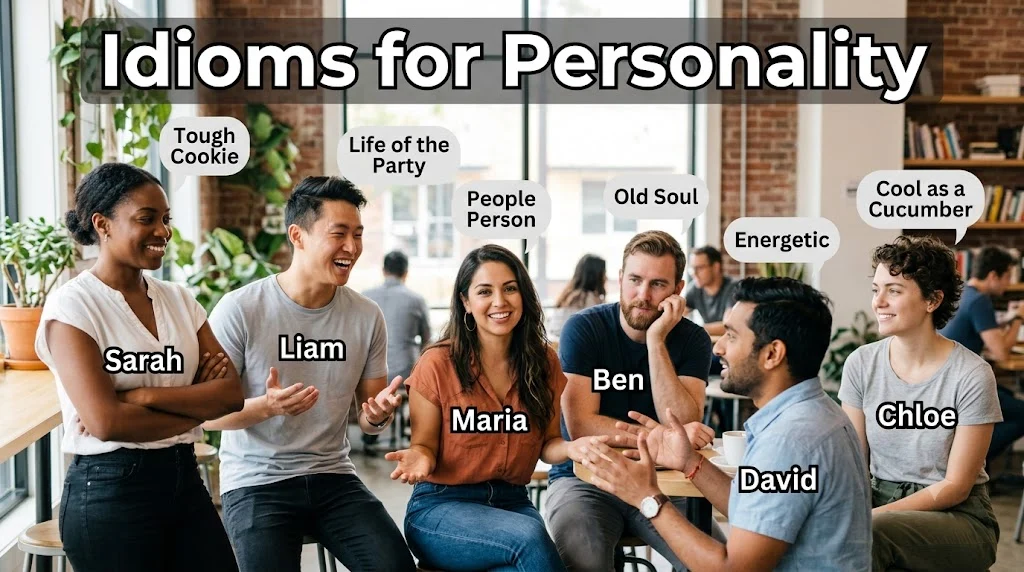
Popular examples include “a people person,” “an old soul,” “a tough cookie,” “the life of the party,” and “wear your heart on your sleeve.” Learning these expressions makes conversations sound more natural and your writing more engaging.
The way we describe people often shapes the way others imagine them. Saying someone is “friendly” or “serious” certainly works, but it doesn’t always capture the full picture. That’s where personality idioms become incredibly useful. They add color, emotion, and personality to your language while making conversations feel more authentic.
Think about the last time someone described a friend as “the life of the party” or said a colleague is “a tough cookie.” Those expressions instantly create vivid mental images that ordinary adjectives rarely achieve. They’re memorable because they communicate more than just a definition they tell a story.
Whether you’re writing an essay, improving your spoken English, crafting engaging blog posts, or simply expanding your vocabulary, learning idioms for personality can make a noticeable difference. These expressions appear naturally in books, movies, workplaces, and everyday conversations, helping you sound more fluent and confident.
In this guide, you’ll discover widely used personality idioms, complete with meanings, practical examples, and tips for using them naturally in real-life situations.
Quick Summary
| Topic | Details |
|---|---|
| Primary Keyword | Idioms for Personality |
| Total Idioms | 25 |
| Best For | English learners, students, bloggers, writers, professionals |
| Skill Level | Beginner to Advanced |
| Main Focus | Describing personality traits naturally |
| Common Uses | Conversations, essays, storytelling, workplace communication |
| Tone | Formal and Informal |
| Learning Benefit | Improves vocabulary, fluency, and expressive writing |
A People Person
Meaning
Someone who naturally enjoys meeting, helping, and interacting with others.
When People Use It
Often used to describe friendly coworkers, teachers, salespeople, or anyone with excellent social skills.
Alternative Expression
Social butterfly
Examples in Communication
Formal Example: Sarah is a real people person, making her an excellent customer service manager.
Casual Example: Jake can talk to anyone. He’s definitely a people person.
Creative Example: Within minutes of arriving, she had already learned everyone’s names a true people person.
Usage Tip: This idiom works well in both professional and casual settings.
The Life of the Party
Meaning
Someone who brings excitement, energy, and fun to social gatherings.
When People Use It
Perfect for describing outgoing and entertaining individuals.
Alternative Expression
Center of attention
Examples in Communication
Formal Example: His enthusiasm made him the life of the party during the company celebration.
Casual Example: Invite Mia she’s always the life of the party.
Creative Example: Wherever laughter echoed, you could be sure he wasn’t far away.
An Old Soul
Meaning
Someone who seems wiser or more mature than their age.
When People Use It
Often used for thoughtful children, teenagers, or young adults.
Alternative Expression
Wise beyond their years
Examples in Communication
Formal Example: Her calm decision-making reflects an old soul.
Casual Example: He’s only sixteen, but he’s such an old soul.
Creative Example: While others chased trends, she cherished timeless conversations.
A Tough Cookie
Meaning
A strong, resilient person who handles difficulties well.
When People Use It
During challenging situations where someone remains determined.
Alternative Expression
Strong as nails
Examples in Communication
Formal Example: Despite numerous setbacks, she proved to be a tough cookie.
Casual Example: Don’t worry about Emma she’s a tough cookie.
Creative Example: Storm after storm only made her roots stronger.
Wear Your Heart on Your Sleeve
Meaning
To openly express emotions.
When People Use It
Describing honest and emotionally transparent people.
Alternative Expression
Open book
Examples in Communication
Formal Example: He wears his heart on his sleeve, making him an honest leader.
Casual Example: You always know how she’s feeling because she wears her heart on her sleeve.
Creative Example: Every smile and every tear told the story she never tried to hide.
Thick-Skinned
Meaning
Not easily offended or hurt by criticism.
When People Use It
Useful in workplaces, sports, and leadership.
Alternative Expression
Take criticism well
Examples in Communication
Formal Example: Managers often need to be thick-skinned.
Casual Example: Online comments don’t bother him he’s thick-skinned.
Creative Example: Harsh words bounced away like raindrops on stone.
Thin-Skinned
Meaning
Easily hurt or offended.
When People Use It
Describing sensitive personalities.
Alternative Expression
Sensitive
Examples in Communication
Formal Example: Constructive feedback should be delivered gently to someone who is thin-skinned.
Casual Example: Don’t joke like that around him he’s thin-skinned.
Creative Example: Even small remarks left lasting echoes in her mind.
An Open Book
Meaning
Someone whose thoughts and emotions are easy to understand.
When People Use It
Friendly conversations and character descriptions.
Alternative Expression
Transparent
Examples in Communication
Formal Example: His honesty makes him an open book.
Casual Example: You never have to guess what she’s thinking.
Creative Example: Every expression revealed another chapter of her story.
Straight Shooter
Meaning
Someone who speaks honestly and directly.
When People Use It
Business meetings, interviews, friendships.
Alternative Expression
Blunt but honest
Examples in Communication
Formal Example: Employees appreciate a manager who is a straight shooter.
Casual Example: I like talking to Ben because he’s a straight shooter.
Creative Example: His words never wandered they always landed exactly where they belonged.
Go-Getter
Meaning
An ambitious and hardworking person.
When People Use It
Career discussions and motivational conversations.
Alternative Expression
Self-starter
Examples in Communication
Formal Example: Employers value go-getters.
Casual Example: She’s such a go-getter.
Creative Example: While others waited for opportunities, she created them.
Happy-Go-Lucky
Meaning
Relaxed and carefree.
When People Use It
Describing optimistic personalities.
Alternative Expression
Easygoing
Examples in Communication
Formal Example: His happy-go-lucky attitude reduces workplace stress.
Casual Example: She’s always smiling and never worries much.
Creative Example: He danced through life like every day was sunny.
Cool as a Cucumber
Meaning
Exceptionally calm under pressure.
When People Use It
Stressful situations.
Alternative Expression
Calm under pressure
Examples in Communication
Formal Example: She remained cool as a cucumber during negotiations.
Casual Example: I would’ve panicked, but he stayed cool as a cucumber.
Creative Example: Even in chaos, her voice remained steady.
Head in the Clouds
Meaning
Dreamy or distracted.
When People Use It
Creative thinkers and imaginative people.
Alternative Expression
Daydreamer
Examples in Communication
Formal Example: Innovative thinkers sometimes have their head in the clouds.
Casual Example: You’re daydreaming again.
Creative Example: His imagination always arrived before he did.
Stick in the Mud
Meaning
Someone resistant to change or fun.
When People Use It
Social situations.
Alternative Expression
Old-fashioned
Examples in Communication
Formal Example: His unwillingness to adapt made him seem like a stick in the mud.
Casual Example: Come on, don’t be such a stick in the mud.
Creative Example: While everyone explored new paths, he refused to leave the familiar road.
Jack of All Trades
Meaning
Someone skilled in many areas.
When People Use It
Career discussions.
Alternative Expression
Multi-talented
Examples in Communication
Formal Example: She became a valuable employee because she’s a jack of all trades.
Casual Example: He can fix almost anything.
Creative Example: Every challenge became another skill to master.
Black Sheep
Meaning
A family or group member who is different from everyone else.
When People Use It
Family discussions.
Alternative Expression
Outlier
Examples in Communication
Formal Example: He proudly embraced being the black sheep.
Casual Example: I’m the artist in a family of doctors.
Creative Example: Different wasn’t a weakness it became his greatest strength.
Lone Wolf
Meaning
Someone who prefers working alone.
When People Use It
Workplaces and personality descriptions.
Alternative Expression
Independent person
Examples in Communication
Formal Example: Although a lone wolf, he delivers exceptional results.
Casual Example: She likes doing everything herself.
Creative Example: Solitude fueled his creativity.
Butter Wouldn’t Melt in Their Mouth
Meaning
Someone who appears innocent but may not be.
When People Use It
Playful observations.
Alternative Expression
Looks innocent
Examples in Communication
Formal Example: He appeared innocent, but experience suggested otherwise.
Casual Example: She looks so sweet, but don’t be fooled.
Creative Example: Behind the gentle smile lived a clever strategist.
Big Softie
Meaning
Someone who appears tough but is actually kind.
When People Use It
Family and friendships.
Alternative Expression
Soft-hearted
Examples in Communication
Formal Example: Despite his strict image, he is a big softie.
Casual Example: Dad acts tough, but he’s a big softie.
Creative Example: Beneath the armor beat the gentlest heart.
Busy Bee
Meaning
Someone constantly active and productive.
When People Use It
School, work, home.
Alternative Expression
Hard worker
Examples in Communication
Formal Example: She is known as the office’s busy bee.
Casual Example: You’ve been cleaning all day.
Creative Example: Every hour found another purpose in her hands.
Smart Cookie
Meaning
An intelligent person.
When People Use It
School and workplace compliments.
Alternative Expression
Bright person
Examples in Communication
Formal Example: She’s a smart cookie with excellent analytical skills.
Casual Example: You’re a smart cookie.
Creative Example: Curiosity became her greatest teacher.
Gentle Giant
Meaning
A large or strong person with a kind personality.
When People Use It
Positive character descriptions.
Alternative Expression
Kind-hearted giant
Examples in Communication
Formal Example: Although physically imposing, he is a gentle giant.
Casual Example: My brother looks scary but he’s a gentle giant.
Creative Example: His strength comforted rather than intimidated.
Live Wire
Meaning
An energetic and exciting person.
When People Use It
Social gatherings and teamwork.
Alternative Expression
Bundle of energy
Examples in Communication
Formal Example: Her enthusiasm makes her a live wire.
Casual Example: That kid never slows down.
Creative Example: She carried enough energy to brighten an entire room.
Salt of the Earth
Meaning
A genuinely kind and honest person.
When People Use It
Respectful descriptions.
Alternative Expression
Good-hearted person
Examples in Communication
Formal Example: He is considered the salt of the earth by everyone who knows him.
Casual Example: They’re wonderful people.
Creative Example: Kindness quietly followed every step they took.
Creature of Habit
Meaning
Someone who prefers routines.
When People Use It
Daily life and workplace discussions.
Alternative Expression
Routine lover
Examples in Communication
Formal Example: He’s a creature of habit and values consistency.
Casual Example: I order the same coffee every day.
Creative Example: Familiar routines became the rhythm of her happiest days.
How to Use Idioms Naturally
Learning idioms is only the beginning. Using them naturally is what makes your English sound fluent and confident.
- Match the idiom to the person’s actual personality instead of forcing it into every conversation.
- Pay attention to tone. Some idioms are compliments, while others are playful or slightly critical.
- Listen to how native speakers use these expressions in podcasts, interviews, and movies.
- Mix idioms with regular vocabulary instead of using several in one sentence.
- Practice writing short stories or journal entries using one or two idioms at a time.
Common Mistakes with Personality Idioms
Many learners understand an idiom but struggle to use it correctly. Here are a few common mistakes to avoid:
- Interpreting idioms literally instead of figuratively.
- Using highly informal idioms in formal academic writing.
- Mixing two different idioms together.
- Overusing idioms until your writing sounds unnatural.
- Choosing an idiom without considering its emotional tone.
Idioms vs Literal Expressions
Literal descriptions explain personality directly.
- She is honest.
- He is shy.
- They are ambitious.
Idioms create stronger imagery.
- She’s a straight shooter.
- He’s an old soul.
- They’re go-getters.
A balanced mix of both styles makes your writing richer and more engaging.
Tips for Remembering Personality Idioms
Instead of memorizing long lists, connect each idiom with a real person you know.
Create flashcards with meanings and examples, write one idiom in your daily journal, or challenge yourself to use a new expression in conversation each week. Watching English TV shows and reading novels also helps you notice how these expressions naturally appear in context.
The more often you encounter an idiom in real situations, the easier it becomes to remember and use confidently.
FAQs
What are personality idioms?
Personality idioms are figurative expressions used to describe someone’s character, behavior, or attitude in a vivid and memorable way.
Why should I learn idioms for personality?
They make your English sound more natural, expressive, and engaging in conversations, writing, and storytelling.
Can personality idioms be used in formal writing?
Yes. Many idioms, such as straight shooter or people person, work well in professional writing, while others are better suited for casual conversations.
How can I remember idioms more easily?
Associate each idiom with a real person, practice using it in sentences, and review it regularly through reading and conversation.
Are these idioms commonly used by native English speakers?
Yes. Most of the idioms in this guide are widely recognized and frequently used in everyday English, workplaces, books, and media.
Conclusion
Mastering idioms for personality is about much more than expanding your vocabulary. These colorful expressions help you describe people with greater accuracy, emotion, and creativity, making both your speaking and writing more memorable. Whether you’re describing a dependable coworker, an energetic friend, or a thoughtful family member, the right idiom adds personality to your words in a way that simple adjectives often cannot.
Don’t try to memorize every expression at once. Instead, focus on learning a few idioms each week and use them naturally in conversations, essays, emails, or stories. Over time, they’ll become part of your everyday English.
As your confidence grows, you’ll notice that these expressions not only improve your fluency but also help you connect with others more naturally. Keep practicing, stay curious, and let these personality idioms become a powerful part of your communication toolkit.
Discover More Related Articles:
- Idioms for Thank You | For Friends, Family, Coworkers & Teachers In 2026
- Powerful Idioms for Silence | That Perfectly Describe Quiet Moments In 2026