Quick Answer
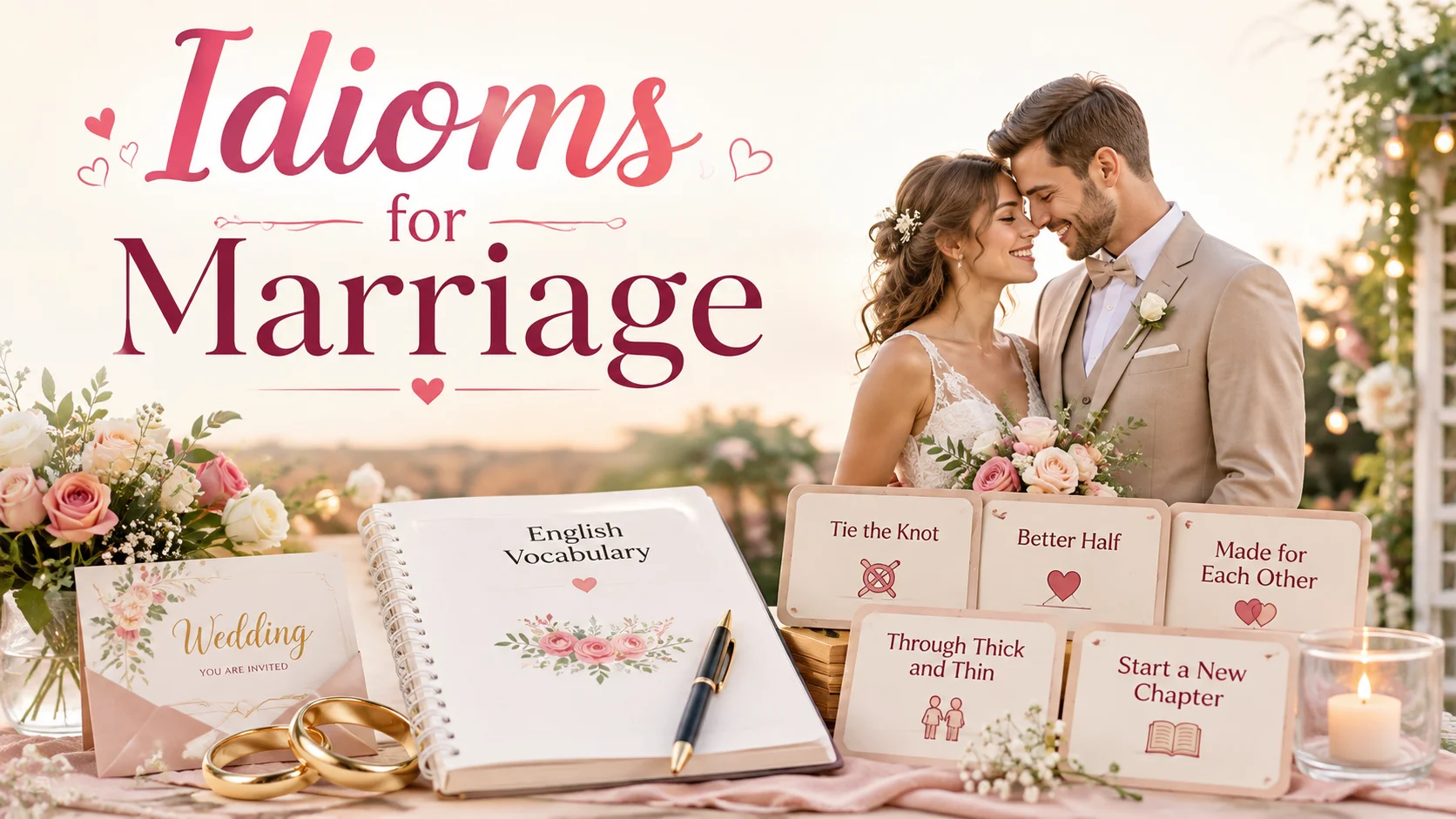
Idioms for marriage are colorful expressions used to talk about getting married, falling in love, building a life together, maintaining a relationship, and celebrating commitment. Some of the most useful marriage-related idioms include tie the knot, walk down the aisle, get hitched, say “I do,” better half, made for each other, a match made in heaven, take the plunge, settle down, start a new chapter, through thick and thin, grow old together, and weather the storm.
These expressions are useful in everyday conversations, wedding speeches, greeting cards, social media captions, creative writing, essays, and storytelling. They can help you describe marriage in a way that feels warmer and more natural than simply saying “get married” or “have a good relationship.”
Marriage is one of those subjects that English describes in remarkably colorful ways. People do not simply get married. They tie the knot, walk down the aisle, say “I do,” and sometimes take the plunge into a new chapter of life.
Once a couple is married, English has expressions for the relationship too. Someone may call their spouse their better half, describe a couple as made for each other, or talk about staying together through thick and thin.
These expressions add something ordinary vocabulary often cannot. Instead of saying, “They have a strong relationship,” you can say, “They have stood by each other through thick and thin.” The second version creates a much clearer emotional picture.
Whether you are a student learning figurative English, a writer looking for natural expressions, someone preparing a wedding speech, or simply trying to expand your vocabulary, marriage idioms can make your language warmer and more expressive.
Below, you will find practical expressions connected with marriage, commitment, partnership, love, wedding celebrations, and building a life together.
Quick Summary of Idioms for Marriage
| Idiom | Simple Meaning | Best Used For |
|---|---|---|
| Tie the knot | Get married | Weddings and marriage |
| Walk down the aisle | Get married | Wedding conversations |
| Get hitched | Get married | Casual conversations |
| Say “I do” | Get married and make wedding vows | Weddings |
| Take the plunge | Make an important commitment | Marriage and major decisions |
| Settle down | Begin a stable domestic life | Long-term relationships |
| Better half | One’s spouse or partner | Affectionate conversation |
| Made for each other | Very compatible | Romantic relationships |
| Match made in heaven | A wonderfully compatible couple | Romance and weddings |
| Through thick and thin | During good and bad times | Long-term commitment |
| Grow old together | Remain together throughout life | Marriage and romance |
| Weather the storm | Survive difficult periods together | Relationship challenges |
| Start a new chapter | Begin a new stage of life | Marriage and life changes |
| Take someone’s hand in marriage | Marry someone | Romantic/formal writing |
| Walk hand in hand | Move through life together | Romance and partnership |
| Have and to hold | A traditional marriage-vow phrase | Weddings |
| Lovebirds | A couple deeply in love | Casual and playful settings |
| Head over heels | Deeply in love | Romance |
| Sweep someone off their feet | Make someone fall deeply in love | Love stories |
| Fall head over heels | Fall deeply in love | Romantic storytelling |
| Keep the spark alive | Maintain romance and excitement | Long-term relationships |
| Two peas in a pod | Two people very similar or close | Couples and friendships |
| Share a life together | Build a life as partners | Marriage and commitment |
| Be in it for the long haul | Commit for the long term | Serious relationships |
| Build a life together | Create a shared future | Marriage and partnership |
Tie the Knot
Meaning: To get married.
Tie the knot is probably one of the best-known marriage idioms in English. It is informal, cheerful, and widely understood.
The expression is often used when talking about an upcoming wedding or announcing that two people have married.
Alternative Expression: Get married
Formal Example:
“After several years together, the couple decided to tie the knot in a small ceremony surrounded by family.”
Casual Example:
“Did you hear? Sarah and Daniel are finally tying the knot!”
Creative Example:
“After years of shared adventures, they decided it was time to tie the knot and begin their next chapter together.”
Usage Tip: This idiom is friendly and conversational. It works particularly well in wedding announcements, casual articles, and social media posts.
Walk Down the Aisle
Meaning: To get married, especially by referring to the traditional movement toward the wedding ceremony.
The phrase comes from the image of a bride or groom walking down the aisle during a wedding ceremony.
Alternative Expression: Get married
Formal Example:
“The couple will walk down the aisle next spring in a ceremony attended by their families.”
Casual Example:
“I can’t believe they’re walking down the aisle next month!”
Creative Example:
“She dreamed of walking down the aisle surrounded by the people who had supported her throughout her life.”
Usage Tip: The phrase is especially natural when discussing the wedding ceremony itself, rather than marriage in general.
Get Hitched
Meaning: To get married.
Get hitched is a playful, informal expression for marriage. It often sounds lighthearted rather than solemn.
Alternative Expression: Tie the knot
Formal Example:
“After a long engagement, the couple finally got hitched in a private ceremony.”
Casual Example:
“So, when are you two getting hitched?”
Creative Example:
“They had spent years laughing together, and now they were ready to get hitched and start a new adventure.”
Usage Tip: Because it is informal, get hitched is better suited to casual conversations, humorous writing, and friendly wedding messages than formal documents.
Say “I Do”
Meaning: To formally agree to marry someone during a wedding ceremony.
The phrase refers to the traditional response given when a couple accepts their marriage vows.
Alternative Expression: Exchange vows
Formal Example:
“The couple exchanged vows and said ‘I do’ in front of their closest family members.”
Casual Example:
“They’re saying ‘I do’ this Saturday!”
Creative Example:
“After all the planning, the flowers, music, and excitement eventually gave way to two simple words: ‘I do.’”
Usage Tip: This phrase is strongly connected with the wedding ceremony, rather than the entire experience of marriage.
Take the Plunge
Meaning: To make an important or sometimes intimidating decision, especially to marry or commit seriously.
Marriage can represent a major life decision, so take the plunge is often used playfully when someone decides to get married.
Alternative Expression: Take the big step
Formal Example:
“After years of careful consideration, they decided to take the plunge and begin married life.”
Casual Example:
“So, are you two finally ready to take the plunge?”
Creative Example:
“They knew the future would bring uncertainty, but they were ready to take the plunge together.”
Usage Tip: This idiom is not exclusively about marriage. It can describe many major decisions, so context is important.
Settle Down
Meaning: To begin living a more stable, permanent, or domestic lifestyle.
When someone decides they are ready for a long-term relationship, marriage, a home, or family life, people may say they are ready to settle down.
Alternative Expression: Build a stable life
Formal Example:
“After years of traveling for work, he decided it was time to settle down.”
Casual Example:
“They’ve been together for years and are finally ready to settle down.”
Creative Example:
“After searching for adventure everywhere, she discovered that settling down could be its own kind of adventure.”
Usage Tip: Settle down can refer to lifestyle changes generally, so it should not automatically be interpreted as meaning marriage.
Better Half
Meaning: An affectionate way to refer to one’s spouse or romantic partner.
Calling someone your better half is a warm and slightly playful way of describing a person you consider an important part of your life.
Alternative Expression: Spouse
Formal Example:
“He attended the event with his better half, who had supported his work for many years.”
Casual Example:
“I’m bringing my better half to the party.”
Creative Example:
“She smiled when she introduced him as her better half, because the phrase somehow captured both affection and friendship.”
Usage Tip: This is generally informal and affectionate. It is common in conversation, speeches, and lighthearted writing.
Made for Each Other
Meaning: Two people seem extremely compatible and well suited to one another.
This expression is often used for couples who share values, personalities, interests, or a strong emotional connection.
Alternative Expression: Perfectly suited to each other
Formal Example:
“Their shared values and mutual respect make them seem truly made for each other.”
Casual Example:
“They’re so different, but somehow they’re made for each other.”
Creative Example:
“They did not agree on everything, but in the ways that mattered most, they seemed made for each other.”
Usage Tip: This expression is positive and romantic, making it particularly suitable for wedding cards and relationship writing.
A Match Made in Heaven
Meaning: Two people who seem exceptionally well suited to each other.
The expression suggests that a relationship is so harmonious that it seems almost destined.
Alternative Expression: Perfect match
Formal Example:
“Their shared interests and complementary personalities make them a match made in heaven.”
Casual Example:
“Those two are a match made in heaven!”
Creative Example:
“Everyone who watched them together understood why friends called them a match made in heaven.”
Usage Tip: This is a warm, positive expression often used in romantic writing, wedding speeches, captions, and congratulations.
Through Thick and Thin
Meaning: To remain loyal and supportive during both good and difficult times.
Marriage is often described through the idea of standing together regardless of circumstances, and through thick and thin captures that commitment beautifully.
Alternative Expression: Through good times and bad
Formal Example:
“The couple supported one another through thick and thin throughout their decades together.”
Casual Example:
“She has been there for me through thick and thin.”
Creative Example:
“They promised to walk beside each other through thick and thin, not because life would always be easy, but because they would face it together.”
Usage Tip: This idiom can be used for friendships and family relationships as well as marriage.
Grow Old Together
Meaning: To remain together and share life as the years pass.
This phrase expresses long-term romantic commitment and is common in wedding messages, vows, cards, and sentimental writing.
Alternative Expression: Spend a lifetime together
Formal Example:
“Their greatest hope is to grow old together while continuing to support one another.”
Casual Example:
“I just want someone I can grow old with.”
Creative Example:
“They were not searching for a perfect life; they were hoping for a meaningful one they could grow old together in.”
Usage Tip: This is not a traditional idiom in the strictest linguistic sense, but it is a widely used figurative expression associated with marriage and lifelong partnership.
Weather the Storm
Meaning: To survive and endure a difficult period.
Relationships inevitably face challenges. Weather the storm emphasizes remaining steady while difficult circumstances pass.
Alternative Expression: Get through tough times
Formal Example:
“The couple learned to communicate openly and weather the storms that came with major life changes.”
Casual Example:
“We’ve had some difficult years, but we’ve weathered the storm together.”
Creative Example:
“They could not stop every storm from arriving, but they could choose to face each one side by side.”
Usage Tip: This expression is useful when describing resilience rather than romance alone.
Start a New Chapter
Meaning: To begin a new stage or period of life.
Marriage is often described as a new chapter because it can represent a major transition.
Alternative Expression: Begin a new phase
Formal Example:
“Their marriage marked the beginning of a new chapter in both their lives.”
Casual Example:
“We’re excited to start a new chapter together.”
Creative Example:
“The wedding was not an ending; it was the first page of a new chapter they would write together.”
Usage Tip: This expression is excellent for wedding speeches, cards, essays, and storytelling.
Take Someone’s Hand in Marriage
Meaning: To marry someone.
This is a more poetic and formal expression than simply saying get married.
Alternative Expression: Marry someone
Formal Example:
“She agreed to take his hand in marriage after years of friendship and shared experiences.”
Casual Example:
“He asked her to take his hand in marriage.”
Creative Example:
“She took his hand in marriage with the quiet confidence of someone choosing a future built on trust.”
Usage Tip: This phrase works particularly well in romantic, literary, or ceremonial writing.
Walk Hand in Hand
Meaning: To move through life together, usually suggesting cooperation, closeness, or partnership.
The expression can be literal, but in relationship writing it is often figurative.
Alternative Expression: Stand by each other
Formal Example:
“The partners have worked hand in hand to build a stable and supportive family life.”
Casual Example:
“I hope we can walk hand in hand through whatever comes next.”
Creative Example:
“Love was not always about having the same path; sometimes it meant walking hand in hand along it.”
Usage Tip: This expression can describe romance, teamwork, cooperation, and friendship, depending on context.
Have and to Hold
Meaning: A traditional phrase associated with marriage vows, expressing the promise to remain committed to one’s spouse.
The phrase is most familiar from traditional wedding language and is strongly associated with marriage ceremonies.
Alternative Expression: Remain committed
Formal Example:
“The traditional vows included language about having and holding one another throughout their married life.”
Casual Example:
“The ceremony included some beautiful traditional ‘have and to hold’ wording.”
Creative Example:
“The old words carried a simple promise: to have and to hold through the years ahead.”
Usage Tip: This expression is ceremonial and poetic rather than something people normally use in casual conversation.
Lovebirds
Meaning: A couple who are very affectionate and clearly in love.
Lovebirds is a playful expression for romantic partners.
Alternative Expression: Romantic couple
Formal Example:
“The newly married couple were warmly welcomed by their friends and family.”
Casual Example:
“Look at those two lovebirds!”
Creative Example:
“The two lovebirds could turn even an ordinary afternoon into something memorable.”
Usage Tip: This expression is informal and playful. It is particularly suitable for casual conversation and social media captions.
Head Over Heels
Meaning: Completely or deeply in love.
When someone is head over heels, they are strongly emotionally attracted to someone.
Alternative Expression: Deeply in love
Formal Example:
“The novel portrays two characters who become completely head over heels in love.”
Casual Example:
“She was head over heels for him.”
Creative Example:
“They were head over heels in love, discovering joy in all the ordinary moments they shared.”
Usage Tip: The phrase can also describe being extremely enthusiastic about something, so context determines whether it means romantic love.
Sweep Someone Off Their Feet
Meaning: To make someone fall deeply in love, often through charm, romance, or impressive behavior.
The image suggests someone being so overwhelmed by emotion that their feet almost leave the ground.
Alternative Expression: Captivate someone
Formal Example:
“The story follows a couple whose unexpected meeting swept them both off their feet.”
Casual Example:
“He really swept her off her feet.”
Creative Example:
“She had never expected a single conversation to sweep her off her feet.”
Usage Tip: This expression is strongly romantic and is especially common in stories and descriptions of new love.
Fall Head Over Heels
Meaning: To fall deeply and quickly in love with someone.
This expression focuses on the process of falling in love, while head over heels can describe the resulting emotional state.
Alternative Expression: Fall deeply in love
Formal Example:
“The characters gradually fall head over heels for each other despite their very different backgrounds.”
Casual Example:
“I didn’t expect it, but I fell head over heels.”
Creative Example:
“They met by chance and somehow fell head over heels before either of them realized what was happening.”
Usage Tip: This expression is informal and works especially well in storytelling.
Keep the Spark Alive
Meaning: To maintain romance, excitement, affection, or emotional closeness in a long-term relationship.
The spark represents the excitement and attraction associated with romantic connection.
Alternative Expression: Keep the romance alive
Formal Example:
“Open communication and shared experiences can help couples keep the spark alive over the years.”
Casual Example:
“They still find little ways to keep the spark alive.”
Creative Example:
“They discovered that keeping the spark alive was less about grand gestures and more about noticing one another every day.”
Usage Tip: This is especially useful when discussing long-term relationships and maintaining emotional connection.
Two Peas in a Pod
Meaning: Two people who are very similar, close, or naturally comfortable together.
The expression comes from two peas growing closely inside the same pod.
Alternative Expression: Very much alike
Formal Example:
“The couple’s similar interests and shared sense of humor make them seem like two peas in a pod.”
Casual Example:
“They’re like two peas in a pod.”
Creative Example:
“They laughed at the same jokes, finished each other’s thoughts, and seemed like two peas in a pod.”
Usage Tip: This idiom is not exclusively romantic. It can describe close friends, siblings, or other pairs.
Be in It for the Long Haul
Meaning: To be committed to something for a long time, especially through challenges.
In relationships, this expression communicates serious long-term commitment.
Alternative Expression: Commit for the long term
Formal Example:
“The couple demonstrated that they were in it for the long haul by supporting each other through major life changes.”
Casual Example:
“We’re in it for the long haul.”
Creative Example:
“They were not promising that every day would be easy; they were promising to be in it for the long haul.”
Usage Tip: This phrase can describe marriage, careers, projects, businesses, and many other long-term commitments.
Build a Life Together
Meaning: To create a shared future through a relationship, marriage, home, family, experiences, and mutual goals.
Alternative Expression: Create a future together
Formal Example:
“The couple hopes to build a life together based on trust, respect, and shared values.”
Casual Example:
“We’re excited to build a life together.”
Creative Example:
“They did not have every detail planned, but they knew they wanted to build a life together one decision at a time.”
Usage Tip: This is a natural and meaningful expression for describing marriage without sounding overly formal or overly romantic.
How to Use Marriage Idioms Naturally
Learning marriage idioms is useful, but using them well requires attention to context.
A wedding invitation, a wedding speech, a casual conversation, and a school essay do not all require the same vocabulary.
For example, get hitched sounds playful:
“They’re getting hitched next summer.”
A wedding speech might sound more graceful with:
“Today marks the beginning of a beautiful new chapter.”
And an academic essay might simply say:
“Marriage represents a significant social and personal commitment.”
All three can communicate related ideas, but the audience and purpose are different.
The goal is not to make every sentence sound romantic. The goal is to choose an expression that naturally fits what you are trying to communicate.
Common Mistakes with Marriage Idioms
One common mistake is treating every marriage idiom as interchangeable.
Tie the knot, get hitched, and say “I do” can all relate to getting married, but they emphasize slightly different things.
Tie the knot refers generally to getting married.
Get hitched is playful and informal.
Say “I do” focuses specifically on the wedding ceremony and vows.
Another mistake is using romantic idioms in situations where they do not fit.
For example, calling every married couple lovebirds may sound playful in a social media caption but inappropriate in a formal report.
Context matters just as much as meaning.
Idioms for Marriage vs Simple Expressions
Compare these sentences:
Simple:
“They got married last year.”
Idiomatic:
“They tied the knot last year.”
The second sentence is more colorful and conversational.
Another example:
Simple:
“They support each other during difficult times.”
Idiomatic:
“They stand by each other through thick and thin.”
The idiomatic version adds emotional depth and emphasizes loyalty.
But simple language is not inferior. In legal, academic, medical, or highly technical contexts, direct wording may actually be better.
Strong communication means knowing when figurative language helps and when clarity should come first.
Tips for Sounding More Natural
Match the Idiom to the Audience
Use playful expressions such as get hitched or lovebirds with friends and in casual content.
Use more thoughtful expressions such as through thick and thin, build a life together, or start a new chapter in wedding speeches, cards, and reflective writing.
Do Not Overload Your Writing
One or two well-placed idioms can make a paragraph memorable.
Using ten marriage idioms in three sentences usually makes the writing feel forced.
For example:
“They tied the knot, took the plunge, started a new chapter, walked hand in hand, kept the spark alive, and were a match made in heaven.”
Every expression may be understandable, but together they sound unnatural.
A stronger version would choose one or two:
“They tied the knot after years together, beginning a new chapter built on friendship and trust.”
Learn Idioms Through Situations
Instead of memorizing:
Through thick and thin = good and bad times
Create a situation:
“My grandparents have supported each other through thick and thin for more than fifty years.”
Now the phrase has a story attached to it.
That makes it easier to remember and easier to use later.
Marriage Idioms for Wedding Speeches
Wedding speeches are one of the best places to use marriage-related expressions because figurative language can add warmth without requiring complicated vocabulary.
For example:
“Today, you are not simply celebrating a wedding. You are beginning a new chapter together.”
Or:
“May you continue to support each other through thick and thin and find new reasons to keep the spark alive.”
Or:
“You truly seem made for each other, and we are delighted to celebrate this beautiful beginning with you.”
The secret is moderation. A speech sounds more sincere when the expressions support the emotion rather than compete with it.
Marriage Idioms for Cards and Messages
Short marriage messages often benefit from warm expressions.
You could write:
“Wishing you both a lifetime of happiness as you begin this beautiful new chapter together.”
Or:
“May you always stand by each other through thick and thin.”
These expressions are especially useful when you want a message to feel personal without becoming overly complicated.
Marriage Idioms for Creative Writing
Idioms can also help writers reveal character and emotion.
Instead of writing:
“They loved each other deeply.”
You might write:
“By then, they were completely head over heels.”
Instead of:
“Their relationship survived many problems.”
You might write:
“They had weathered more than one storm together.”
Instead of:
“They decided to marry.”
You might write:
“After years of friendship and shared adventures, they finally decided to tie the knot.”
The figurative version creates an image and gives the reader a sense of emotional atmosphere.
How to Remember Marriage Idioms Easily
Visual associations are particularly effective with these expressions.
Picture a literal knot when learning tie the knot.
Imagine a wedding aisle when learning walk down the aisle.
Picture two peas sitting closely together when learning two peas in a pod.
Imagine two people holding hands while walking along a long road for walk hand in hand.
Picture a couple repairing a small flame to remember keep the spark alive.
You can also group expressions by meaning:
Getting married:
Tie the knot, get hitched, walk down the aisle, say “I do,” take the plunge.
Long-term commitment:
Through thick and thin, grow old together, weather the storm, be in it for the long haul.
Romance:
Head over heels, sweep someone off their feet, lovebirds, made for each other.
Building a future:
Start a new chapter, build a life together, settle down, walk hand in hand.
Grouping vocabulary this way makes it much easier to recall the right expression when you need it.
FAQs
What is the most common idiom for getting married?
Tie the knot is one of the most common and widely understood idioms for getting married. It is informal but suitable for many everyday situations.
What does “get hitched” mean?
Get hitched means to get married. It is a casual and playful expression and is usually more informal than simply saying “get married.”
What idiom describes a couple who are perfect for each other?
Made for each other and a match made in heaven both describe couples who seem especially compatible and well suited to one another.
What idiom means staying together during difficult times?
Through thick and thin means remaining loyal and supportive during both good and difficult times.
What is a romantic idiom for maintaining a marriage?
Keep the spark alive is a popular expression for maintaining romance, affection, excitement, and emotional connection in a long-term relationship.
Conclusion
Marriage is often described as a journey rather than a single event, and English has developed countless expressive ways to talk about that journey.
Expressions such as tie the knot, walk down the aisle, take the plunge, better half, made for each other, through thick and thin, keep the spark alive, and build a life together give writers and speakers more than alternative vocabulary. They provide images, emotions, and cultural meaning.
The best way to learn these idioms for marriage is not to memorize them as isolated definitions. Notice where they appear, understand their tone, and practice using them in realistic situations. A wedding speech may call for warmth, a conversation may invite humor, and an essay may require more measured language.
When used thoughtfully, idioms can make your English feel more natural and expressive.
After all, the most meaningful expressions are often the ones that help us put ordinary experiences love, commitment, chang , and companionship into memorable words.
Discover More Related Articles:
- Idioms for Loneliness | Expressions That Capture Solitude & Isolation In 2026
- Idioms for Patience | Timeless Expressions to Stay Calm In 2026