Quick Answer
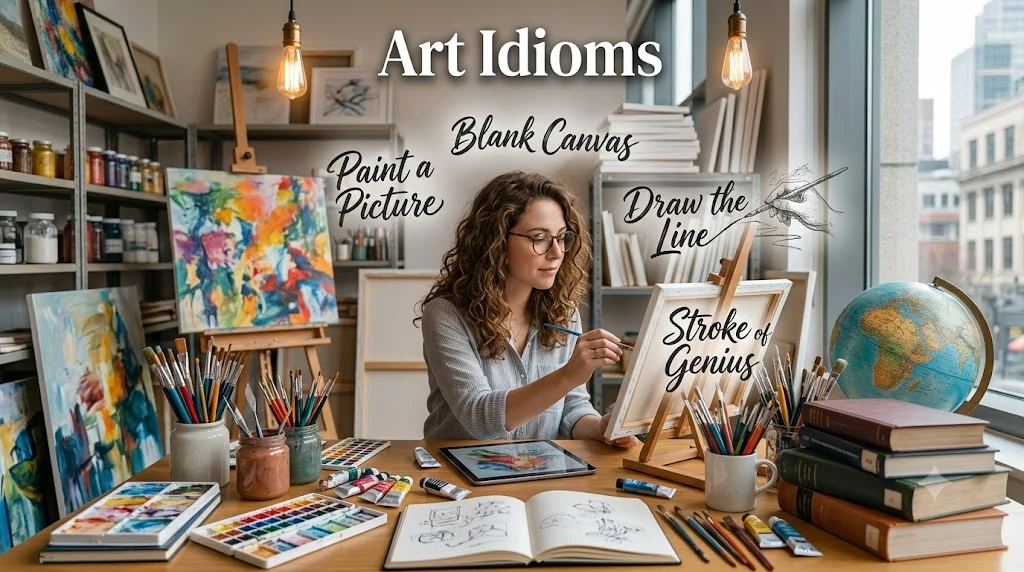
Art idioms are expressions inspired by painting, drawing, sculpture, and creativity. Although they mention art, their meanings are usually figurative rather than literal. Native speakers use them to describe success, mistakes, originality, effort, beauty, and everyday situations in a vivid and memorable way.
Art has always been more than paint, brushes, and beautiful galleries. It also inspires some of the most expressive idioms in the English language. Whether you’re describing someone’s creativity, talking about a fresh beginning, or explaining a difficult situation, art idioms make conversations more colorful and engaging.
Native English speakers use these expressions every day without thinking about paintings or artists. Instead, these idioms communicate emotions, ideas, and experiences in ways that feel vivid and memorable. Writers use them to bring stories to life, teachers include them in lessons, and professionals often use them in presentations and workplace discussions.
If you’re learning English, understanding these expressions will help you sound more natural and confident. You’ll also recognize them more easily in books, movies, podcasts, and everyday conversations.
In this guide, you’ll discover practical art idioms with clear meanings, natural examples, and helpful usage tips so you can use them confidently in both speaking and writing.
Quick Summary
| Art Idiom | Meaning | Common Use |
|---|---|---|
| Draw a Blank | Forget something completely | Memory and conversations |
| Paint a Picture | Describe something vividly | Writing and storytelling |
| Blank Canvas | A fresh start or new opportunity | Personal growth |
| Masterpiece | Something exceptionally good | Praise |
| Stroke of Genius | A brilliant idea | Creativity |
| Draw the Line | Set a limit | Relationships and work |
| Paint Yourself into a Corner | Create your own problem | Decision making |
| Picture Perfect | Completely flawless | Compliments |
| Brush It Off | Ignore something unimportant | Daily conversations |
| Art Imitates Life | Creativity reflects reality | Discussions about art |
Draw a Blank
Meaning
To suddenly forget something or be unable to think of an answer.
When People Use It
People use this idiom during conversations, exams, interviews, or presentations when their mind unexpectedly goes empty.
Alternative Expression
Go blank.
Examples in Communication
Formal Example
During the presentation, I completely drew a blank when asked about the final statistics.
Casual Example
I knew her name yesterday, but today I drew a blank.
Creative Example
Standing beneath the spotlight, every prepared word disappeared as I drew a blank.
Usage Tip: This is one of the most common English idioms and is appropriate in both casual and professional conversations.
Paint a Picture
Meaning
To describe something so clearly that people can easily imagine it.
When People Use It
Often used in storytelling, speeches, presentations, journalism, and creative writing.
Alternative Expression
Describe vividly.
Examples in Communication
Formal Example
The author painted a vivid picture of life during the nineteenth century.
Casual Example
Can you paint a picture of what happened?
Creative Example
Her words painted a picture of golden sunsets stretching across endless fields.
Usage Tip: Excellent for improving descriptive writing.
Blank Canvas
Meaning
A fresh beginning with endless possibilities.
When People Use It
Used when starting a new project, career, relationship, or chapter in life.
Alternative Expression
Fresh start.
Examples in Communication
Formal Example
Graduation offers students a blank canvas for building their future.
Casual Example
Moving to a new city feels like having a blank canvas.
Creative Example
Each sunrise arrives as a blank canvas waiting for your dreams.
Usage Tip: Frequently appears in motivational writing.
Masterpiece
Meaning
Something exceptionally beautiful, impressive, or skillfully created.
When People Use It
People use it to praise outstanding work, food, performances, books, or achievements.
Alternative Expression
Work of excellence.
Examples in Communication
Formal Example
The architect’s latest design is considered a masterpiece.
Casual Example
That birthday cake is a masterpiece!
Creative Example
Years of patience turned the forgotten building into a masterpiece.
Usage Tip: Suitable in both formal and informal settings.
Stroke of Genius
Meaning
A brilliant idea that solves a problem or creates something remarkable.
When People Use It
Common in business meetings, innovation discussions, and everyday conversations.
Alternative Expression
Brilliant idea.
Examples in Communication
Formal Example
Introducing digital tickets proved to be a stroke of genius.
Casual Example
Ordering pizza before everyone arrived was a stroke of genius.
Creative Example
Like lightning across a dark sky, inspiration arrived in a single stroke of genius.
Usage Tip: Often carries an admiring tone.
Draw the Line
Meaning
To establish a limit that you refuse to cross.
When People Use It
Used when discussing personal boundaries, workplace ethics, or acceptable behavior.
Alternative Expression
Set boundaries.
Examples in Communication
Formal Example
The company draws the line at dishonest business practices.
Casual Example
I’ll help you move, but I draw the line at carrying your piano.
Creative Example
Even kindness must sometimes draw the line to protect itself.
Usage Tip: Common in professional and personal discussions.
Paint Yourself into a Corner
Meaning
To create a difficult situation because of your own actions.
When People Use It
Used when poor planning leaves someone with very few options.
Alternative Expression
Trap yourself.
Examples in Communication
Formal Example
By making unrealistic promises, the company painted itself into a corner.
Casual Example
You spent all your money already? You painted yourself into a corner.
Creative Example
Each careless decision became another brushstroke until he had painted himself into a corner.
Usage Tip: Often used when discussing planning or decision-making.
Picture Perfect
Meaning
Completely beautiful, flawless, or ideal.
When People Use It
Common when describing weddings, vacations, homes, or landscapes.
Alternative Expression
Perfect.
Examples in Communication
Formal Example
The event was picture perfect from beginning to end.
Casual Example
Your garden looks picture perfect.
Creative Example
The peaceful lake reflected a picture-perfect autumn morning.
Usage Tip: Frequently appears in travel blogs and photography captions.
Brush It Off
Meaning
To ignore criticism, embarrassment, or a small problem.
When People Use It
Used after making a mistake or receiving negative comments.
Alternative Expression
Ignore it.
Examples in Communication
Formal Example
She brushed off the criticism and focused on improving her work.
Casual Example
Don’t worry about that comment. Just brush it off.
Creative Example
Like dust on an old jacket, he brushed the disappointment off and kept walking.
Usage Tip: Creates a positive and resilient tone.
Art Imitates Life
Meaning
Creative works often reflect real human experiences and society.
When People Use It
Common in discussions about literature, movies, paintings, and culture.
Alternative Expression
Creativity reflects reality.
Examples in Communication
Formal Example
The documentary proves that art imitates life in powerful ways.
Casual Example
That movie feels so real because art imitates life.
Creative Example
Every brushstroke carried a story proving that art always imitates life.
Usage Tip: Frequently used in literature and media discussions.
Put the Finishing Touches On
Meaning
To complete the final small improvements before something is finished.
When People Use It
Used for projects, writing, decorating, presentations, and creative work.
Alternative Expression
Complete the final details.
Examples in Communication
Formal Example
The design team is putting the finishing touches on the new website.
Casual Example
I’m just putting the finishing touches on dinner.
Creative Example
The final golden brushstroke placed the finishing touches on the breathtaking mural.
Usage Tip: A common expression in both business and creative settings.
Create a Masterpiece
Meaning
To produce something outstanding through talent, creativity, or hard work.
When People Use It
People use this idiom when praising exceptional work in art, writing, business, cooking, or any creative project.
Alternative Expression
Produce something remarkable.
Examples in Communication
Formal Example
The design team created a masterpiece that impressed both clients and industry experts.
Casual Example
Wow! You really created a masterpiece with that birthday cake.
Creative Example
With every careful brushstroke, she slowly created a masterpiece that reflected years of passion.
Usage Tip: This expression is suitable for both creative and professional achievements.
Color Outside the Lines
Meaning
To think creatively and break away from traditional methods.
When People Use It
Often used to encourage innovation, imagination, and unique problem-solving.
Alternative Expression
Think outside the box.
Examples in Communication
Formal Example
Successful entrepreneurs often color outside the lines to discover new opportunities.
Casual Example
Don’t be afraid to color outside the lines when decorating your room.
Creative Example
The greatest inventions were born because someone dared to color outside the lines.
Usage Tip: Popular in education, leadership, and motivational writing.
Sketch Out an Idea
Meaning
To explain or plan something briefly before adding details.
When People Use It
Common during brainstorming sessions, meetings, and creative planning.
Alternative Expression
Outline an idea.
Examples in Communication
Formal Example
Before the meeting, she sketched out her proposal for the marketing campaign.
Casual Example
Can you sketch out your weekend plan for us?
Creative Example
He sketched out a dream that eventually became a successful business.
Usage Tip: Frequently used in business communication and project planning.
Paint with a Broad Brush
Meaning
To make general statements that ignore important differences.
When People Use It
Used when someone oversimplifies a situation or stereotypes a group of people.
Alternative Expression
Generalize.
Examples in Communication
Formal Example
The report paints the entire industry with a broad brush instead of examining individual companies.
Casual Example
Don’t paint all teenagers with a broad brush.
Creative Example
History becomes misleading when it’s painted with a broad brush instead of careful detail.
Usage Tip: Often appears in debates, journalism, and academic discussions.
Frame Someone
Meaning
To make an innocent person appear guilty.
When People Use It
Usually appears in crime stories, legal discussions, and mystery novels.
Alternative Expression
Set someone up.
Examples in Communication
Formal Example
The investigation revealed that someone had framed the employee.
Casual Example
There’s no way he did it—I think someone framed him.
Creative Example
The hidden evidence slowly uncovered the truth behind the carefully planned frame-up.
Usage Tip: Although it comes from visual framing, this idiom is now commonly associated with false accusations.
Draw Attention
Meaning
To make people notice something.
When People Use It
Used in speeches, presentations, advertising, writing, and daily conversations.
Alternative Expression
Highlight.
Examples in Communication
Formal Example
The campaign successfully drew attention to environmental issues.
Casual Example
That bright jacket really draws attention.
Creative Example
A single glowing candle drew everyone’s attention across the dark room.
Usage Tip: Appropriate in both formal and informal communication.
Touch Up
Meaning
To make small improvements to something that is nearly finished.
When People Use It
Common in photography, decorating, painting, writing, and editing.
Alternative Expression
Refine.
Examples in Communication
Formal Example
The editor touched up the article before publication.
Casual Example
I just need to touch up my makeup.
Creative Example
The artist spent hours touching up tiny details that most people would never notice.
Usage Tip: Frequently used in photography and graphic design.
Show Your True Colors
Meaning
To reveal your real personality or intentions.
When People Use It
Used after someone behaves differently than expected.
Alternative Expression
Reveal your real self.
Examples in Communication
Formal Example
The difficult situation allowed the manager to show his true colors as a compassionate leader.
Casual Example
He showed his true colors after the argument.
Creative Example
Storms have a way of making every person show their true colors.
Usage Tip: Depending on the context, this idiom can be positive or negative.
Paint the Town Red
Meaning
To go out and celebrate enthusiastically.
When People Use It
Often used after graduations, weddings, promotions, or major achievements.
Alternative Expression
Celebrate wildly.
Examples in Communication
Formal Example
The team planned to paint the town red after winning the championship.
Casual Example
It’s Friday—let’s paint the town red!
Creative Example
The city sparkled with laughter as friends painted the town red until sunrise.
Usage Tip: Creates an energetic and celebratory tone.
In Living Color
Meaning
Very vivid, realistic, or lifelike.
When People Use It
Used when describing memories, movies, television, photography, or storytelling.
Alternative Expression
Vividly.
Examples in Communication
Formal Example
The documentary brings history to life in living color.
Casual Example
I can still remember that vacation in living color.
Creative Example
Her childhood memories returned in living color with every familiar song.
Usage Tip: Common in descriptive and nostalgic writing.
Practical Usage Guidance
How to Use Art Idioms Naturally
Art idioms work best when they fit the situation naturally. Rather than adding them simply to sound more advanced, use them where they genuinely strengthen your message. For example, saying a speaker painted a picture helps readers imagine a vivid presentation, while calling a new opportunity a blank canvas creates an optimistic tone.
In professional writing, choose neutral expressions such as draw attention, put the finishing touches on, or sketch out an idea. In casual conversations, expressions like paint the town red or brush it off sound relaxed and friendly.
Using just one or two idioms in a conversation usually sounds more natural than filling every sentence with figurative language.
Common Mistakes with Art Idioms
Many English learners understand the words but misunderstand the figurative meaning.
One common mistake is taking idioms literally. For example, paint yourself into a corner has nothing to do with painting walls it means creating your own difficult situation.
Another mistake is mixing different idioms together. Learn each expression as a complete phrase instead of translating it word by word.
Finally, pay attention to tone. Some idioms are perfect for casual conversations but may sound inappropriate in formal academic writing.
Idioms vs Literal Expressions
Literal expressions describe exactly what happens.
Literal: The artist painted a portrait.
An idiom uses artistic language to express another idea.
Idiom: She painted a picture of hope through her inspiring speech.
Knowing the difference helps you understand movies, books, interviews, and conversations much more easily.
Tips for Sounding More Fluent
- Learn idioms in complete sentences instead of memorizing definitions.
- Listen to native speakers in podcasts, films, and interviews.
- Practice using one new idiom each day.
- Keep a notebook of useful expressions.
- Use idioms only when they fit the context naturally.
- Read novels and blogs to see how experienced writers use figurative language.
How to Remember Art Idioms Easily
Visual learners often remember art idioms quickly because the imagery is strong. Imagine someone literally painting themselves into a corner or standing before a blank canvas waiting to begin. Those mental pictures make the meanings much easier to recall.
Creating your own example sentences, writing short stories, or using flashcards with illustrations can also improve long-term memory. The more often you see an idiom used in real conversations or books, the more natural it becomes.
FAQs
What are art idioms?
Art idioms are figurative expressions inspired by painting, drawing, creativity, and artistic techniques. Their meanings are symbolic rather than literal.
Why should I learn art idioms?
They make your English more expressive, improve your writing, and help you understand native speakers in everyday conversations.
Are art idioms suitable for formal writing?
Some are. Expressions like draw attention, paint a picture, and put the finishing touches on work well in professional writing, while others are better suited for casual conversations.
What’s the easiest way to remember art idioms?
Practice them in real sentences, imagine the visual meaning, and review them regularly while reading or listening to English content.
How many art idioms should beginners learn first?
Start with commonly used idioms, master their meanings and usage, then gradually expand your vocabulary as you become more confident.
Conclusion
Art idioms bring creativity, color, and personality to the English language. Instead of using plain descriptions, these expressions help you communicate ideas with greater emotion and imagination. Whether you’re writing a blog post, preparing for an English exam, giving a presentation, or simply chatting with friends, knowing these idioms can make your language sound more natural and engaging.
The key to mastering art idioms is consistent practice. Focus on understanding the meaning behind each expression rather than memorizing it word for word. Read books, watch English movies, and notice how native speakers naturally include these phrases in everyday conversations.
As your confidence grows, you’ll find yourself using these expressions without even thinking about them. Over time, they’ll become a natural part of your vocabulary, helping you communicate with clarity, creativity, and confidence.
Discover More Related Articles:
- Idioms for Family | That Make English More Natural In 2026
- Winter Idioms | That Describe Cold Weather In 2026