Quick Answer
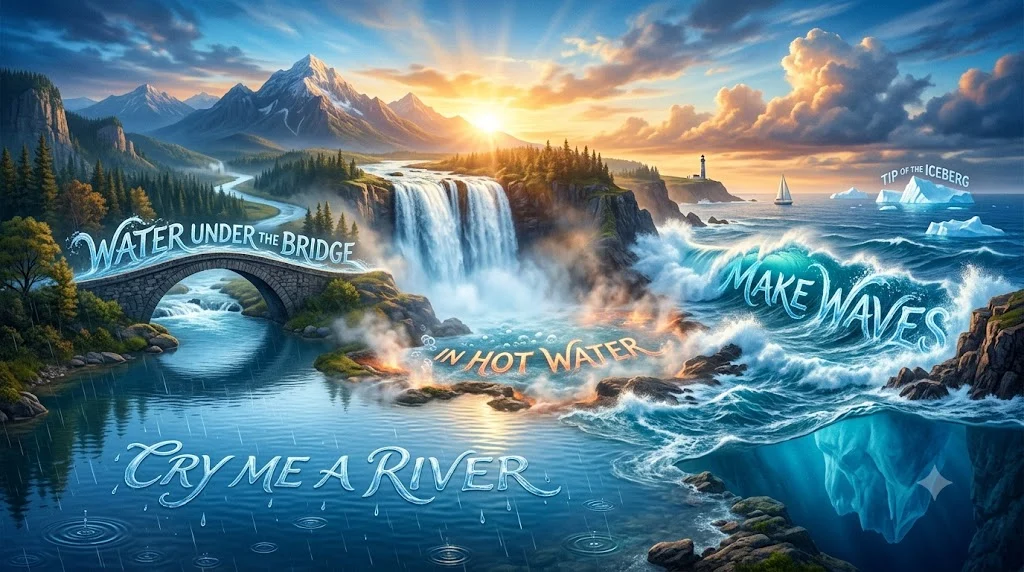
Water idioms are figurative expressions that use water-related imagery to describe emotions, situations, relationships, success, challenges, or human behavior. They make communication more vivid, memorable, and expressive.
Idioms for water are expressions that use water-related words and imagery to communicate ideas beyond their literal meanings. They often describe emotions, challenges, relationships, persistence, confusion, progress, and life experiences in a more colorful and memorable way.
These idioms appear frequently in conversations, literature, workplace discussions, and everyday communication because water itself symbolizes movement, change, strength, and adaptability.
Water is one of the most powerful symbols in language. It can represent calmness, danger, growth, uncertainty, persistence, and transformation. Because of these rich associations, English contains countless water-related idioms that help speakers express complex ideas in simple and memorable ways.
Think about how often people say they’re “in hot water” after making a mistake or that a disagreement is simply “water under the bridge.” These phrases instantly communicate meaning without lengthy explanations.
For students, writers, bloggers, and language learners, understanding idioms for water can dramatically improve both comprehension and expression. They appear in novels, news articles, workplace conversations, movies, and everyday discussions.
Learning these idioms isn’t just about vocabulary. It’s about understanding how native speakers naturally communicate emotions, challenges, and experiences. In this guide, you’ll discover practical meanings, realistic examples, and useful tips for using water idioms confidently and naturally.
Quick Summary
| Idiom | Meaning | Common Tone |
|---|---|---|
| In hot water | In trouble | Informal |
| Test the waters | Explore possibilities | Professional |
| Keep your head above water | Manage difficulties | Encouraging |
| Like water off a duck’s back | Not affected by criticism | Positive |
| Water under the bridge | A past issue that no longer matters | Reflective |
| Pour cold water on | Discourage an idea | Critical |
| Come hell or high water | No matter what happens | Determined |
| Blood is thicker than water | Family loyalty matters | Traditional |
| Make waves | Cause change or disruption | Dynamic |
| Still waters run deep | Quiet people often have depth | Thoughtful |
| Tread water | Make no progress | Neutral |
| Dead in the water | Unable to continue | Negative |
| Keep the waters calm | Maintain peace | Diplomatic |
| Muddy the waters | Create confusion | Critical |
| Sink or swim | Succeed or fail independently | Motivational |
In Hot Water
Meaning
In trouble or facing criticism.
When People Use It
When someone has made a mistake or faces consequences.
Alternative Expression
“In deep trouble”
Examples in Communication
Formal Example:
The company found itself in hot water after violating safety regulations.
Casual Example:
I’m in hot water with my parents for missing curfew.
Creative Example:
One careless decision left him swimming in hot water for weeks.
Test the Waters
Meaning
Explore a situation before making a commitment.
When People Use It
Before launching an idea, project, or decision.
Alternative Expression
“Feel things out”
Examples in Communication
Formal Example:
The organization tested the waters before expanding internationally.
Casual Example:
I’m just testing the waters before applying for the job.
Creative Example:
She dipped her toes into the opportunity, testing the waters carefully.
Keep Your Head Above Water
Meaning
Manage to survive difficulties.
When People Use It
During financial, personal, or professional struggles.
Alternative Expression
“Get by”
Examples in Communication
Formal Example:
Small businesses struggled to keep their heads above water during the recession.
Casual Example:
I’m working two jobs just to keep my head above water.
Creative Example:
Amid crashing waves of responsibility, she somehow kept her head above water.
Like Water Off a Duck’s Back
Meaning
Not affected by criticism or negativity.
When People Use It
When someone ignores insults or complaints.
Alternative Expression
“Let it roll off”
Examples in Communication
Formal Example:
Negative feedback seemed like water off a duck’s back to the experienced leader.
Casual Example:
Comments online are like water off a duck’s back to her.
Creative Example:
The harsh words slid away like water off a duck’s back.
Water Under the Bridge
Meaning
Something that happened in the past and no longer matters.
When People Use It
After resolving conflicts or moving on.
Alternative Expression
“In the past”
Examples in Communication
Formal Example:
The disagreement is now water under the bridge.
Casual Example:
Forget it—it’s water under the bridge.
Creative Example:
Their old arguments became water under the bridge as friendship returned.
Pour Cold Water On
Meaning
Discourage or reduce enthusiasm for something.
When People Use It
When someone criticizes an idea or plan.
Alternative Expression
“Shoot down”
Examples in Communication
Formal Example:
Several experts poured cold water on the proposal.
Casual Example:
Don’t pour cold water on my vacation plans.
Creative Example:
His doubts poured cold water on the team’s excitement.
Come Hell or High Water
Meaning
No matter what obstacles appear.
When People Use It
To show strong determination.
Alternative Expression
“No matter what”
Examples in Communication
Formal Example:
The team vowed to finish the project come hell or high water.
Casual Example:
I’m attending that concert come hell or high water.
Creative Example:
Come hell or high water, she would chase her dreams.
Blood Is Thicker Than Water
Meaning
Family relationships are often stronger than others.
When People Use It
During discussions about loyalty and family support.
Alternative Expression
“Family comes first”
Examples in Communication
Formal Example:
Many cultures value the belief that blood is thicker than water.
Casual Example:
We argue, but blood is thicker than water.
Creative Example:
When trouble arrived, blood proved thicker than water.
Make Waves
Meaning
Cause change, disruption, or attention.
When People Use It
For bold actions or controversial ideas.
Alternative Expression
“Shake things up”
Examples in Communication
Formal Example:
The new CEO intends to make waves in the industry.
Casual Example:
She isn’t afraid to make waves.
Creative Example:
His ideas made waves throughout the organization.
Still Waters Run Deep
Meaning
Quiet people often possess great intelligence or emotion.
When People Use It
To describe thoughtful individuals.
Alternative Expression
“Don’t judge by appearances”
Examples in Communication
Formal Example:
Although reserved, she exemplifies the idea that still waters run deep.
Casual Example:
He doesn’t talk much, but still waters run deep.
Creative Example:
Behind his silence, still waters ran deep with wisdom.
Tread Water
Meaning
Stay active without making progress.
When People Use It
When efforts fail to move forward.
Alternative Expression
“Stand still”
Examples in Communication
Formal Example:
The negotiations have been treading water for months.
Casual Example:
I feel like I’m treading water in my career.
Creative Example:
The project drifted aimlessly, treading water in uncertainty.
Dead in the Water
Meaning
Unable to continue or succeed.
When People Use It
For failed plans or stalled projects.
Alternative Expression
“Going nowhere”
Examples in Communication
Formal Example:
Without funding, the initiative was dead in the water.
Casual Example:
Our road trip is dead in the water without a car.
Creative Example:
The dream sat dead in the water until opportunity arrived.
Muddy the Waters
Meaning
Make a situation confusing.
When People Use It
When unnecessary information creates uncertainty.
Alternative Expression
“Complicate matters”
Examples in Communication
Formal Example:
Conflicting reports muddied the waters during the investigation.
Casual Example:
Don’t muddy the waters with extra details.
Creative Example:
Rumors quickly muddied the waters of truth.
Sink or Swim
Meaning
Succeed or fail through your own efforts.
When People Use It
In challenging situations requiring independence.
Alternative Expression
“Figure it out yourself”
Examples in Communication
Formal Example:
New employees were expected to sink or swim.
Casual Example:
I had to sink or swim during my first week.
Creative Example:
Thrown into uncertainty, she chose to swim rather than sink.
Keep the Waters Calm
Meaning
Maintain peace and avoid conflict.
When People Use It
In leadership, diplomacy, or family situations.
Alternative Expression
“Keep the peace”
Examples in Communication
Formal Example:
The manager worked hard to keep the waters calm.
Casual Example:
Let’s keep the waters calm and talk respectfully.
Creative Example:
Her gentle words kept the waters calm during the storm.
How to Use Idioms Naturally
Water idioms are especially useful because they fit many real-life situations. They can describe relationships, challenges, opportunities, workplace experiences, and emotional reactions.
To sound natural:
- Match the idiom to the situation.
- Pay attention to tone.
- Avoid overusing idioms in a single conversation.
- Learn them through stories and real examples.
- Practice using them in daily writing and speaking.
The best idioms feel effortless, not memorized.
Go with the Flow
Meaning
Adapt easily to changing situations instead of resisting them.
When People Use It
When encouraging flexibility and a relaxed attitude.
Alternative Expression
“Take things as they come”
Examples in Communication
Formal Example:
Successful leaders often go with the flow when circumstances change unexpectedly.
Casual Example:
I don’t have a strict plan for the weekend. I’ll just go with the flow.
Creative Example:
Like a leaf drifting downstream, she decided to go with the flow.
Water Down
Meaning
To weaken, simplify, or reduce the strength of something.
When People Use It
Often used for information, rules, proposals, or products.
Alternative Expression
“Tone down”
Examples in Communication
Formal Example:
The final report was watered down before publication.
Casual Example:
Don’t water down the story—tell me everything.
Creative Example:
Years of compromise had watered down his original vision.
Dip Your Toe in the Water
Meaning
Try something cautiously before fully committing.
When People Use It
When starting a new hobby, project, investment, or experience.
Alternative Expression
“Give it a try”
Examples in Communication
Formal Example:
The company dipped its toe in the water before entering the international market.
Casual Example:
I’m just dipping my toe in the water with online courses.
Creative Example:
Before diving into adventure, she dipped her toe into the water of possibility.
Smooth Waters
Meaning
A period of peace, stability, or lack of problems.
When People Use It
To describe calm situations after difficulties.
Alternative Expression
“Easy times”
Examples in Communication
Formal Example:
The organization enjoyed smooth waters after resolving the dispute.
Casual Example:
Things are finally in smooth waters at work.
Creative Example:
After months of storms, smooth waters returned to their lives.
In Deep Water
Meaning
In a difficult or challenging situation.
When People Use It
When someone faces serious problems.
Alternative Expression
“In trouble”
Examples in Communication
Formal Example:
The company found itself in deep water after the lawsuit.
Casual Example:
I’m in deep water if I don’t finish this project today.
Creative Example:
One wrong step left him in deep water with no clear escape.
A Drop in the Ocean
Meaning
A very small amount compared to what is needed.
When People Use It
When discussing large problems or goals.
Alternative Expression
“A tiny contribution”
Examples in Communication
Formal Example:
The funding was only a drop in the ocean compared to the project’s total cost.
Casual Example:
Ten dollars is a drop in the ocean when saving for a house.
Creative Example:
Her effort felt like a drop in the ocean, yet it still mattered.
Fish Out of Water
Meaning
Someone who feels uncomfortable or out of place.
When People Use It
When entering unfamiliar environments.
Alternative Expression
“Out of place”
Examples in Communication
Formal Example:
The new employee felt like a fish out of water during the first week.
Casual Example:
I felt like a fish out of water at the fancy party.
Creative Example:
Among strangers, he moved like a fish out of water searching for familiar currents.
Keep Watering the Seeds
Meaning
Continue investing effort and patience in growth.
When People Use It
For personal development, goals, relationships, or learning.
Alternative Expression
“Stay consistent”
Examples in Communication
Formal Example:
Success requires patience and a willingness to keep watering the seeds.
Casual Example:
Don’t quit now—just keep watering the seeds.
Creative Example:
Dreams bloom slowly when you keep watering the seeds of possibility.
Water Finds Its Own Level
Meaning
Things naturally settle where they belong over time.
When People Use It
To express trust in natural outcomes.
Alternative Expression
“Things will work themselves out”
Examples in Communication
Formal Example:
The mentor believed that talent and dedication would eventually find recognition because water finds its own level.
Casual Example:
Relax, water finds its own level.
Creative Example:
Like a river seeking the sea, water always finds its own level.
Pour Oil on Troubled Waters
Meaning
To calm a conflict or reduce tension.
When People Use It
During disagreements, arguments, or stressful situations.
Alternative Expression
“Ease tensions”
Examples in Communication
Formal Example:
The mediator successfully poured oil on troubled waters during negotiations.
Casual Example:
She tried to pour oil on troubled waters after the argument.
Creative Example:
His calm voice poured oil on troubled waters and restored peace.
Why Water Idioms Are So Powerful in Writing
Water appears in nearly every culture, story, and human experience. Because people naturally understand rivers, rain, oceans, storms, and waves, water idioms create immediate emotional connections.
Writers often use water idioms to:
- Describe life’s challenges and transitions.
- Create vivid imagery.
- Add emotional depth to storytelling.
- Make communication feel more natural.
- Express complex ideas with simple language.
A phrase like “keep your head above water” instantly communicates struggle and perseverance far more effectively than a lengthy explanation.
Water Idioms vs Literal Water Expressions
Understanding the difference between figurative and literal language is essential.
| Idiom | Figurative Meaning | Literal Meaning |
|---|---|---|
| In hot water | In trouble | Sitting in hot water |
| Make waves | Cause change | Create waves in water |
| Tread water | Make little progress | Stay afloat by moving legs |
| Water under the bridge | Past issue | Water flowing beneath a bridge |
| Fish out of water | Feel uncomfortable | Actual fish outside water |
Recognizing this difference helps readers and language learners avoid confusion and use idioms confidently.
Common Mistakes with Water Idioms
Using Them Literally
Idioms are figurative. “In hot water” means trouble, not being inside hot water.
Mixing Idioms
Combining multiple idioms incorrectly can confuse listeners.
Ignoring Context
Some water idioms work best in casual conversations while others fit professional communication.
Overusing Expressions
Too many idioms can make speech sound unnatural rather than fluent.
How to Remember Water Idioms Easily
Water imagery is naturally memorable. Imagine visual scenes for each expression.
For example:
- A person struggling to keep their head above water.
- Calm water representing peace.
- Muddy water representing confusion.
Creating mental pictures helps idioms stick in long-term memory and improves recall during conversations.
FAQs
What are idioms for water?
Idioms for water are figurative expressions that use water imagery to communicate ideas about life, emotions, challenges, and relationships.
Why are water idioms so common in English?
Water symbolizes movement, change, strength, and emotion, making it a powerful source of figurative language.
Can I use water idioms in professional writing?
Many water idioms work well in professional communication when used appropriately and sparingly.
Which water idiom is most commonly used?
“In hot water” and “water under the bridge” are among the most widely used water idioms in everyday English.
How can I learn water idioms faster?
Practice them in real conversations, create visual associations, and read examples in books, articles, and media.
Conclusion
Idioms for water reveal how deeply language is connected to everyday experiences and natural imagery. These expressions help us describe challenges, opportunities, emotions, relationships, and personal growth in ways that feel vivid and memorable.
Whether you’re trying to keep your head above water during a busy week, testing the waters before a major decision, or treating old disagreements as water under the bridge, these idioms bring color and personality to communication.
The key is not simply memorizing definitions but understanding when and why people use them. Pay attention to context, practice them naturally, and gradually incorporate them into your speaking and writing.
Over time, these water-inspired expressions will become a natural part of your vocabulary, helping you communicate with greater confidence, fluency, and creativity.
Discover More Related Articles:
- Idioms About the Sky | Expressions That Soar Above the Rest In 2026
- Idioms About Storms | Expressions for Life’s Turbulent Moments In 2026