Quick Answer
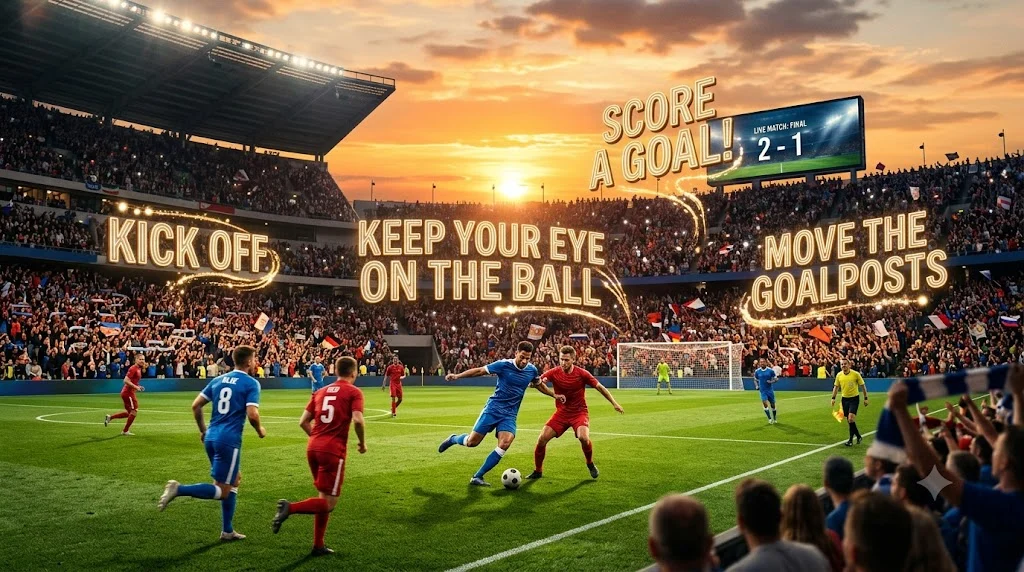
Idioms for soccer are expressions inspired by the game of soccer or commonly used to describe teamwork, competition, success, strategy, and performance. Popular examples include move the goalposts, level playing field, kick off, own goal, and play ball.
Idioms for soccer are figurative expressions connected to soccer terminology, gameplay, or competition. Some originated directly from the sport, while others use soccer-related imagery to describe situations in business, education, relationships, teamwork, and everyday life.
These idioms help speakers communicate ideas more vividly and naturally, making conversations and writing more engaging and expressive.
Soccer is more than just a sport. It’s a global language that inspires teamwork, passion, competition, and determination. Because soccer is so deeply woven into cultures around the world, many expressions from the game have found their way into everyday English.
You might hear someone say a company is “moving the goalposts” during negotiations or praise a colleague for being “on the ball.” These phrases have little to do with an actual soccer match, yet they communicate ideas instantly and effectively.
Learning idioms for soccer can help you sound more fluent, understand native speakers more easily, and add energy to your writing. Whether you’re preparing for school assignments, improving conversational English, writing blog posts, or simply expanding your vocabulary, these expressions can become valuable tools.
The best part is that many soccer idioms are useful far beyond sports. They appear in workplaces, classrooms, business meetings, and everyday conversations. Let’s explore some of the most practical and widely used soccer-inspired idioms.
Quick Summary Table
| Idiom | Meaning | Common Use |
|---|---|---|
| Kick Off | Begin something | Projects, events |
| Move the Goalposts | Change rules unfairly | Work, negotiations |
| Level Playing Field | Fair situation | Business, competition |
| Own Goal | Mistake that harms yourself | Work, life |
| Play Ball | Cooperate | Teamwork |
| Keep Your Eye on the Ball | Stay focused | Goals, work |
| Score a Goal | Achieve success | Career, studies |
| On the Ball | Alert and competent | Professional settings |
| Take a Shot | Try something | Opportunities |
| Full-Court Press | Intense effort | Projects |
| Game Plan | Strategy | Business, life |
| Win by a Mile | Win easily | Competition |
| Team Player | Cooperative person | Workplace |
| Blow the Whistle | Report wrongdoing | Ethics |
| Extra Time | Additional opportunity | Deadlines |
Kick Off
Meaning
To begin something.
When People Use It
Used when starting a project, meeting, event, or activity.
Alternative Expression
Get started
Examples in Communication
Formal Example:
The conference will kick off with a keynote presentation.
Casual Example:
Let’s kick off the weekend with a barbecue.
Creative Example:
The sunrise kicked off another day full of possibilities.
Move the Goalposts
Meaning
To unfairly change requirements or expectations.
When People Use It
Common in workplace discussions and negotiations.
Alternative Expression
Change the rules
Examples in Communication
Formal Example:
The client kept moving the goalposts throughout the project.
Casual Example:
Every time I finish a task, my brother moves the goalposts.
Creative Example:
Success seemed impossible because the finish line kept shifting.
Level Playing Field
Meaning
A fair situation where everyone has equal opportunities.
When People Use It
Often used in business, education, and competition.
Alternative Expression
Equal opportunity
Examples in Communication
Formal Example:
The new policy creates a level playing field for all applicants.
Casual Example:
Everyone should start with the same chances.
Creative Example:
The contest finally became a level playing field after the rule change.
Own Goal
Meaning
An action that accidentally harms yourself.
When People Use It
Used when someone’s mistake creates problems for themselves.
Alternative Expression
Self-inflicted mistake
Examples in Communication
Formal Example:
The company’s response turned into an own goal.
Casual Example:
Posting that comment was a total own goal.
Creative Example:
His angry reaction scored an own goal in the argument.
Play Ball
Meaning
To cooperate or participate willingly.
When People Use It
Used during teamwork or negotiations.
Alternative Expression
Cooperate
Examples in Communication
Formal Example:
Both parties agreed to play ball and reach a solution.
Casual Example:
If you play ball, we can finish quickly.
Creative Example:
The rivals finally decided to play ball for the greater good.
Keep Your Eye on the Ball
Meaning
Stay focused on what matters.
When People Use It
Useful during challenging tasks and long-term goals.
Alternative Expression
Stay focused
Examples in Communication
Formal Example:
Managers must keep their eye on the ball during periods of growth.
Casual Example:
Ignore distractions and keep your eye on the ball.
Creative Example:
Amid the noise, she never took her eye off the ball.
Score a Goal
Meaning
Achieve success or accomplish something important.
When People Use It
Used when celebrating achievements.
Alternative Expression
Succeed
Examples in Communication
Formal Example:
The team scored a goal by securing a major contract.
Casual Example:
I scored a goal when I passed my exam.
Creative Example:
Years of effort finally scored the goal she dreamed about.
On the Ball
Meaning
Alert, capable, and quick to understand.
When People Use It
Common in workplace communication.
Alternative Expression
Sharp
Examples in Communication
Formal Example:
The new employee is remarkably on the ball.
Casual Example:
You’re really on the ball today.
Creative Example:
Her mind stayed on the ball while others hesitated.
Take a Shot
Meaning
Attempt something challenging.
When People Use It
Used when encouraging action.
Alternative Expression
Give it a try
Examples in Communication
Formal Example:
The entrepreneur decided to take a shot at launching a startup.
Casual Example:
Take a shot and see what happens.
Creative Example:
He took a shot at his dream despite the odds.
Game Plan
Meaning
A strategy for achieving a goal.
When People Use It
Common in business, education, and personal development.
Alternative Expression
Strategy
Examples in Communication
Formal Example:
We need a clear game plan before expanding.
Casual Example:
What’s your game plan for the weekend?
Creative Example:
Every great journey starts with a game plan.
Team Player
Meaning
Someone who works well with others.
When People Use It
Frequently used in professional environments.
Alternative Expression
Cooperative person
Examples in Communication
Formal Example:
She is known as an excellent team player.
Casual Example:
Nobody likes a teammate who isn’t a team player.
Creative Example:
His willingness to help made him the heart of the team.
Blow the Whistle
Meaning
Report wrongdoing or misconduct.
When People Use It
Used in ethical or legal situations.
Alternative Expression
Expose wrongdoing
Examples in Communication
Formal Example:
An employee blew the whistle on the fraud.
Casual Example:
Someone finally blew the whistle.
Creative Example:
One brave voice blew the whistle and changed everything.
Extra Time
Meaning
Additional opportunity or time to finish something.
When People Use It
Often used regarding deadlines.
Alternative Expression
Extension
Examples in Communication
Formal Example:
The committee granted extra time for submissions.
Casual Example:
Can I get some extra time?
Creative Example:
Life occasionally offers extra time when we need it most.
Red Card
Meaning
A strong warning or complete rejection.
When People Use It
Used metaphorically for unacceptable behavior.
Alternative Expression
Immediate dismissal
Examples in Communication
Formal Example:
The violation earned the company a metaphorical red card.
Casual Example:
Cheating gets a red card from me.
Creative Example:
Dishonesty received an instant red card from her trust.
Win by a Mile
Meaning
To succeed easily or by a large margin.
When People Use It
Used when one person clearly outperforms others.
Alternative Expression
Win comfortably
Examples in Communication
Formal Example:
Their proposal won by a mile.
Casual Example:
Our team won by a mile.
Creative Example:
The champion raced ahead and won by a mile.
Full-Court Press
Meaning
An intense effort to achieve a goal or solve a problem.
When People Use It
Used when a person or team applies maximum energy and resources to a situation.
Alternative Expression
All-out effort
Examples in Communication
Formal Example:
The company launched a full-court press to increase sales before the holiday season.
Casual Example:
We’re putting on a full-court press to finish the project tonight.
Creative Example:
The rescue team used a full-court press against time and weather.
Get the Ball Rolling
Meaning
To start a process or activity.
When People Use It
Common in meetings, projects, and planning discussions.
Alternative Expression
Set things in motion
Examples in Communication
Formal Example:
The manager scheduled a meeting to get the ball rolling.
Casual Example:
Let’s get the ball rolling before everyone arrives.
Creative Example:
One small idea got the ball rolling toward a remarkable future.
Call the Shots
Meaning
To make important decisions or take control.
When People Use It
Used when discussing leadership or authority.
Alternative Expression
Be in charge
Examples in Communication
Formal Example:
The director calls the shots on all major decisions.
Casual Example:
My older sister usually calls the shots at home.
Creative Example:
From the shadows, she quietly called the shots.
Ball Is in Your Court
Meaning
It is now your turn to make a decision or take action.
When People Use It
Common in negotiations and conversations involving responsibility.
Alternative Expression
Your move
Examples in Communication
Formal Example:
We have submitted our proposal, and now the ball is in your court.
Casual Example:
I’ve done my part—the ball is in your court now.
Creative Example:
The opportunity stood waiting; the ball was finally in his court.
Hold the Line
Meaning
Maintain your position despite pressure.
When People Use It
Used during challenges, negotiations, or difficult situations.
Alternative Expression
Stand firm
Examples in Communication
Formal Example:
The company decided to hold the line on pricing.
Casual Example:
Just hold the line and don’t give up.
Creative Example:
The defenders held the line as the storm approached.
A One-Two Pass
Meaning
Working closely with someone to achieve a result.
When People Use It
Used when teamwork and cooperation are essential.
Alternative Expression
Work hand in hand
Examples in Communication
Formal Example:
The marketing and sales departments used a one-two pass strategy.
Casual Example:
We completed the task with a quick one-two pass.
Creative Example:
Their friendship worked like a perfect one-two pass.
Back of the Net
Meaning
A successful result or achievement.
When People Use It
Popular in British English when celebrating success.
Alternative Expression
Nailed it
Examples in Communication
Formal Example:
Securing the contract was truly back of the net for the company.
Casual Example:
I got the job—back of the net!
Creative Example:
Years of hard work finally landed back of the net.
Keep the Ball Moving
Meaning
Continue making progress without delays.
When People Use It
Used in teamwork, projects, and business discussions.
Alternative Expression
Maintain momentum
Examples in Communication
Formal Example:
Regular communication helps keep the ball moving.
Casual Example:
Let’s keep the ball moving and finish this today.
Creative Example:
Their determination kept the ball moving through every obstacle.
Against the Run of Play
Meaning
Something unexpected that happens contrary to expectations.
When People Use It
Used when outcomes surprise everyone involved.
Alternative Expression
Unexpectedly
Examples in Communication
Formal Example:
Against the run of play, the smaller company won the contract.
Casual Example:
Against the run of play, he passed the test without studying.
Creative Example:
Against the run of play, hope arrived when all seemed lost.
Park the Bus
Meaning
To play extremely defensively or avoid taking risks.
When People Use It
Used in sports, business, and strategic discussions.
Alternative Expression
Play it safe
Examples in Communication
Formal Example:
The organization chose to park the bus rather than invest aggressively.
Casual Example:
Stop parking the bus and take a chance.
Creative Example:
Fear parked the bus between him and his dreams.
Why Soccer Idioms Are So Popular
Soccer is the world’s most widely followed sport, making its language instantly recognizable across cultures. Many of these expressions communicate ideas about teamwork, leadership, focus, risk-taking, and achievement in a way that feels vivid and memorable.
Writers often use soccer idioms to:
- Add energy to articles and blog posts
- Make business communication more engaging
- Create relatable examples
- Improve storytelling
- Connect with readers through familiar imagery
Because they are visual and action-oriented, soccer idioms are often easier to remember than ordinary vocabulary.
Idioms for Soccer by Theme
Teamwork
- Team Player
- Play Ball
- One-Two Pass
- Keep the Ball Moving
Success
- Score a Goal
- Back of the Net
- Win by a Mile
Leadership
- Call the Shots
- Keep Your Eye on the Ball
Strategy
- Game Plan
- Park the Bus
- Full-Court Press
Fairness
- Level Playing Field
- Move the Goalposts
These categories make it easier to learn and remember related expressions together.
How to Use Idioms Naturally
Soccer idioms work best when they fit the situation naturally. Avoid inserting them simply because you know them. Instead, use them when discussing goals, teamwork, competition, performance, or success.
Pay attention to tone. Expressions like own goal and move the goalposts can sound critical, while team player and on the ball are often positive.
Reading sports articles, business news, and professional blogs is an excellent way to see these idioms used in real contexts.
Common Mistakes with Soccer Idioms
Using Them Literally
Most soccer idioms are figurative and rarely refer to actual matches.
Overusing Sports Expressions
Too many sports idioms in one paragraph can sound unnatural.
Ignoring Context
Some idioms work better in professional settings than casual conversations.
Mixing Idioms Incorrectly
Use established expressions rather than combining multiple idioms together.
Tips for Remembering Soccer Idioms
- Connect each idiom to a soccer image.
- Practice writing sentences with new idioms.
- Watch soccer commentary in English.
- Group idioms by theme such as teamwork or success.
- Use them regularly in conversations.
FAQs
What are soccer idioms?
Soccer idioms are figurative expressions inspired by soccer that describe situations involving teamwork, success, competition, strategy, and cooperation.
Are soccer idioms used outside sports?
Yes. Many soccer idioms are commonly used in workplaces, schools, business discussions, and everyday conversations.
Which soccer idiom is most common?
“Kick off,” “move the goalposts,” and “keep your eye on the ball” are among the most frequently used.
Can soccer idioms improve English fluency?
Absolutely. They help learners understand native speakers and make communication more natural and engaging.
Are soccer idioms formal or informal?
Most are suitable for both casual and professional situations, depending on the specific expression and context.
Conclusion
Learning idioms for soccer is a great way to make your English more expressive, confident, and natural. These phrases capture ideas about teamwork, strategy, focus, success, and competition in ways that ordinary vocabulary often cannot.
Whether you’re writing an essay, participating in a meeting, creating content, or simply chatting with friends, soccer idioms can help you communicate with greater clarity and personality. The key is to understand their meaning, recognize the situations where they fit naturally, and practice using them in real conversations.
Over time, these expressions will become part of your active vocabulary, helping you sound more fluent and connected to everyday English. Just like in soccer, consistent practice leads to better results.
Discover More Related Articles:
- Idioms for the Beach | That Are Shore to Impress In 2026
- Idioms for the Ocean | That Flow Naturally in Conversation For 2026