
Quick Answer
Idioms for cleaning are figurative expressions that relate to tidiness, organization, improvement, problem-solving, or removing unwanted things. Expressions like “clean up your act,” “sweep something under the rug,” and “start with a clean slate” help make communication more vivid and natural.
Cleaning is something most of us associate with fresh starts, organization, and a sense of control. Interestingly, English speakers use cleaning-related expressions far beyond household chores. Many idioms connected to cleaning have become powerful ways to talk about honesty, personal improvement, problem-solving, and moving forward.
You’ll hear these expressions in workplace meetings, casual conversations, movies, books, and even social media posts. Someone might be told to “clean up their act” when they need to improve their behavior. A business leader may talk about “clearing the decks” before starting a new project. These phrases add color and personality to communication while conveying ideas quickly and effectively.
For writers, students, bloggers, and English learners, understanding cleaning idioms can make language feel more natural and expressive. Instead of relying on repetitive vocabulary, you can use vivid imagery that instantly connects with readers and listeners.
Let’s explore some of the most useful idioms for cleaning and discover how they work in real-life communication.
Quick Summary Table
| Idiom | Simple Meaning | Common Usage |
|---|---|---|
| Clean up your act | Improve behavior | Personal growth |
| Clean slate | Fresh start | New beginnings |
| Sweep under the rug | Hide a problem | Avoiding issues |
| Spick and span | Very clean | Describing spaces |
| Spring cleaning | Major cleanup or review | Organization |
| Come clean | Tell the truth | Honesty |
| Wipe the slate clean | Remove past mistakes | Forgiveness |
| Clear the decks | Prepare for action | Work situations |
| Dust yourself off | Recover and continue | Resilience |
| House in order | Organized and prepared | Planning |
| Air out | Discuss openly | Relationships |
| Mop up | Finish remaining tasks | Projects |
Clean Up Your Act
Meaning
To improve your behavior or performance.
When People Use It
Used when someone needs to become more responsible, professional, or disciplined.
Alternative Expression
Get your act together
Examples in Communication
Formal Example
The manager advised the employee to clean up his act if he wanted a promotion.
Casual Example
You need to clean up your act before your parents find out.
Creative Example
After years of drifting aimlessly, he finally decided to clean up his act and chase his dreams.
Usage Insight
This idiom is common in both personal and professional settings.
Start with a Clean Slate
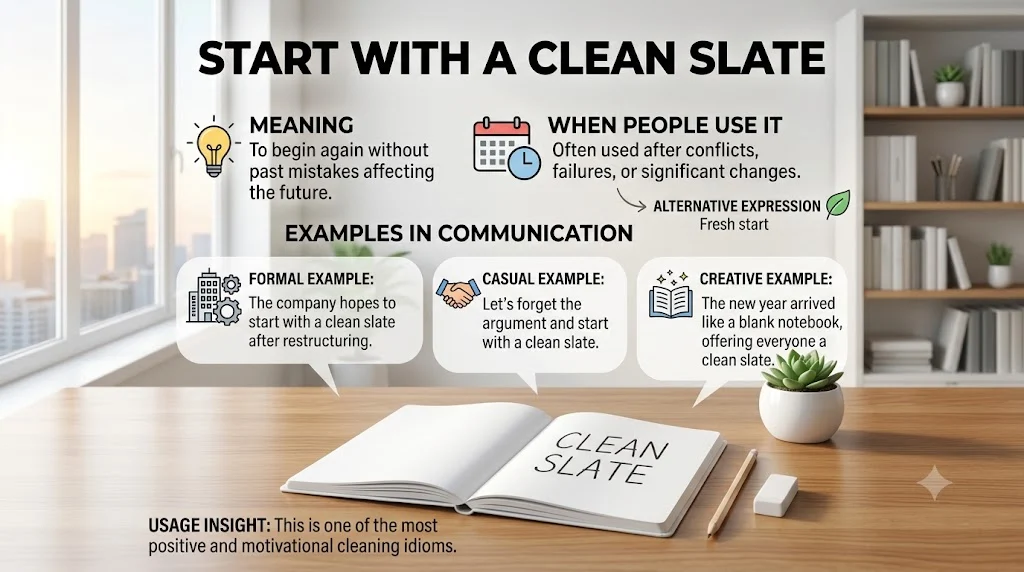
Meaning
To begin again without past mistakes affecting the future.
When People Use It
Often used after conflicts, failures, or significant changes.
Alternative Expression
Fresh start
Examples in Communication
Formal Example
The company hopes to start with a clean slate after restructuring.
Casual Example
Let’s forget the argument and start with a clean slate.
Creative Example
The new year arrived like a blank notebook, offering everyone a clean slate.
Usage Insight
This is one of the most positive and motivational cleaning idioms.
Sweep Something Under the Rug
Meaning
To hide or ignore a problem.
When People Use It
Used when someone avoids dealing with an issue.
Alternative Expression
Cover it up
Examples in Communication
Formal Example
Organizations should not sweep important concerns under the rug.
Casual Example
Stop sweeping the problem under the rug and deal with it.
Creative Example
The cracks in the friendship grew larger every time they swept disagreements under the rug.
Usage Insight
This idiom usually carries a negative tone.
Spick and Span
Meaning
Extremely neat and clean.
When People Use It
Used to describe homes, rooms, offices, or appearance.
Alternative Expression
Spotless
Examples in Communication
Formal Example
The hotel rooms were kept spick and span throughout the season.
Casual Example
Your kitchen looks spick and span.
Creative Example
The little cottage stood spick and span beneath the morning sunlight.
Spring Cleaning

Meaning
A thorough cleaning or review of things.
When People Use It
Can refer to physical cleaning or reorganizing aspects of life.
Alternative Expression
Major cleanup
Examples in Communication
Formal Example
The company conducted a spring cleaning of outdated procedures.
Casual Example
I’m doing some spring cleaning this weekend.
Creative Example
She treated her thoughts like a closet and gave them a much-needed spring cleaning.
Come Clean
Meaning
To tell the truth or confess something.
When People Use It
Used when revealing hidden information.
Alternative Expression
Tell the truth
Examples in Communication
Formal Example
The witness finally came clean during the investigation.
Casual Example
Just come clean and tell me what happened.
Creative Example
The secret sat heavily on his heart until he finally came clean.
Usage Insight
This idiom is highly common in everyday English.
Wipe the Slate Clean
Meaning
To remove past mistakes or debts.
When People Use It
Used in discussions about forgiveness and fresh beginnings.
Alternative Expression
Start over
Examples in Communication
Formal Example
The agreement helped both parties wipe the slate clean.
Casual Example
Let’s wipe the slate clean and move forward.
Creative Example
The apology felt like rain washing old footprints away and wiping the slate clean.
Clear the Decks
Meaning
To remove distractions and prepare for important work.
When People Use It
Common in workplaces and project planning.
Alternative Expression
Get ready
Examples in Communication
Formal Example
The team cleared the decks before launching the new initiative.
Casual Example
I need to clear the decks before the exams.
Creative Example
He cleared the decks of worries and focused on the opportunity ahead.
Dust Yourself Off
Meaning
To recover after failure and continue moving forward.
When People Use It
Used after disappointments or setbacks.
Alternative Expression
Bounce back
Examples in Communication
Formal Example
Successful entrepreneurs learn to dust themselves off after setbacks.
Casual Example
You lost this time. Dust yourself off and try again.
Creative Example
Like a traveler after a long fall, she dusted herself off and continued climbing.
Get Your House in Order
Meaning
To organize your affairs before taking action.
When People Use It
Common in business, finance, and personal planning.
Alternative Expression
Get organized
Examples in Communication
Formal Example
The company must get its house in order before expanding.
Casual Example
I need to get my house in order before starting a new project.
Creative Example
Before chasing new horizons, he knew he had to get his house in order.
Air Out
Meaning
To openly discuss problems or concerns.
When People Use It
Used in relationships, teams, and group discussions.
Alternative Expression
Talk it through
Examples in Communication
Formal Example
The meeting allowed everyone to air out their concerns.
Casual Example
Let’s air out our differences.
Creative Example
The conversation opened the windows of understanding and aired out years of frustration.
Mop Up
Meaning
To finish remaining tasks or deal with leftovers.
When People Use It
Often used after the main work has been completed.
Alternative Expression
Wrap up
Examples in Communication
Formal Example
The team spent the afternoon mopping up minor issues.
Casual Example
I just need to mop up a few tasks.
Creative Example
As sunset arrived, they mopped up the final details of the project.
How to Use Cleaning Idioms Naturally
Match the Situation
Some cleaning idioms describe actual cleanliness, while others describe behavior, honesty, or organization. Understanding context is essential.
Don’t Interpret Them Literally
When someone says “clean up your act,” they are rarely talking about cleaning. They are talking about improving behavior.
Use Them Sparingly
A few well-placed idioms can make writing more engaging. Too many can feel forced or distracting.
Listen for Real-Life Usage
Movies, podcasts, workplace discussions, and books are excellent places to hear cleaning idioms used naturally.
Practice Through Writing
Try incorporating one or two idioms into journal entries, stories, blog posts, or classroom assignments.
Practical Usage Guidance: Using Cleaning Idioms Naturally in Real Life
How to Use Cleaning Idioms Naturally
The easiest way to sound natural with cleaning idioms is to treat them as emotional shortcuts, not decorative phrases. For example, instead of saying “He improved his behavior,” you can say “He cleaned up his act,” which instantly adds personality and tone.
In real conversations, these idioms often appear when people are discussing change, responsibility, or organization. In writing, they help break monotony and make sentences feel more human and expressive.
A helpful habit is to pair the idiom with a real situation:
- After exams → “I finally got my house in order.”
- After apology → “We started with a clean slate.”
Common Mistakes with Cleaning Idioms
One frequent mistake is using them too literally. For example, “come clean” is not about physical cleaning—it means admitting the truth. Another mistake is forcing idioms into every sentence, which makes writing feel unnatural and overdone.
Also, learners sometimes mix idioms incorrectly:
- ❌ “He swept his act under the rug”
- ✔️ “He swept the issue under the rug” + “He cleaned up his act”
Idioms vs Literal Expressions
Literal expressions describe physical actions:
- “She cleaned the room.”
Idioms describe ideas or emotions:
- “She started with a clean slate.”
This difference is important because idioms carry emotional meaning, not physical instructions. Understanding this helps you avoid confusion while reading or listening.
Tips for Sounding More Fluent
If your goal is natural English, don’t memorize long lists. Instead, focus on 5–6 idioms and use them repeatedly in different contexts. Fluency comes from repetition, not quantity.
Try these small habits:
- Use one idiom in your daily journal
- Add idioms in WhatsApp messages or captions
- Watch movies and notice emotional phrases
- Rewrite simple sentences using idioms
Over time, your brain starts selecting idioms automatically when you speak or write.
How to Remember Cleaning Idioms Easily
Memory improves when meaning connects with images. Imagine:
- A slate being wiped clean → fresh start
- Dust being brushed off → recovering from failure
- A messy room becoming organized → getting life in order
Grouping also helps:
- Fresh start idioms: clean slate, wipe the slate clean
- Honesty idioms: come clean
- Organization idioms: get your house in order, clear the decks
This emotional grouping makes recall faster and more natural.
Common Mistakes with Cleaning Idioms
Mixing Literal and Figurative Meanings
Many learners assume cleaning idioms always relate to physical cleaning. Often they describe situations, emotions, or actions instead.
Using Informal Idioms in Formal Documents
Expressions like “clean up your act” may sound too conversational in highly formal reports.
Forgetting the Tone
Some idioms have positive meanings while others imply criticism or avoidance. Context matters.
Translating Word-for-Word
Idioms rarely translate directly across languages, so focus on meaning rather than individual words.
Tips for Remembering Cleaning Idioms
Visualize the Image
Imagine someone sweeping dirt under a rug or wiping a slate clean. The mental picture makes the phrase easier to remember.
Group Similar Idioms
Study idioms related to organization, honesty, fresh starts, and problem-solving together.
Use Real Examples
Create personal sentences using each idiom. Personal connections improve memory.
Read Regularly
Books, blogs, and articles expose you to idioms in authentic contexts.
FAQs
What are cleaning idioms?
Cleaning idioms are figurative expressions related to cleaning, organization, honesty, problem-solving, or fresh starts.
What is the meaning of “clean up your act”?
It means to improve your behavior, habits, or performance.
Is “come clean” a positive idiom?
Generally yes. It refers to telling the truth or confessing honestly.
Can cleaning idioms be used in professional communication?
Many can, especially expressions like “clear the decks” or “get your house in order,” when used appropriately.
How can I learn idioms faster?
Read widely, listen to native speakers, practice writing sentences, and focus on understanding the context rather than memorizing definitions.
Conclusion
Idioms for cleaning do much more than describe tidy rooms and sparkling kitchens. They capture ideas about honesty, responsibility, organization, improvement, resilience, and fresh beginnings. These expressions bring vivid imagery into everyday communication and help speakers and writers express complex ideas with simplicity and style.
Whether you’re learning English, improving your writing, preparing for exams, or creating content for readers, mastering these idioms can make your language feel more natural and engaging. The key is to focus on understanding the context and using them where they genuinely fit.
As you encounter these expressions in conversations, books, and media, you’ll begin to recognize how often they appear. With regular practice, they’ll become a natural part of your vocabulary, helping you communicate with greater confidence and clarity.
Discover More Related Articles:
- Idioms for the Beach | That Are Shore to Impress In 2026
- Idioms for the Ocean | That Flow Naturally in Conversation For 2026