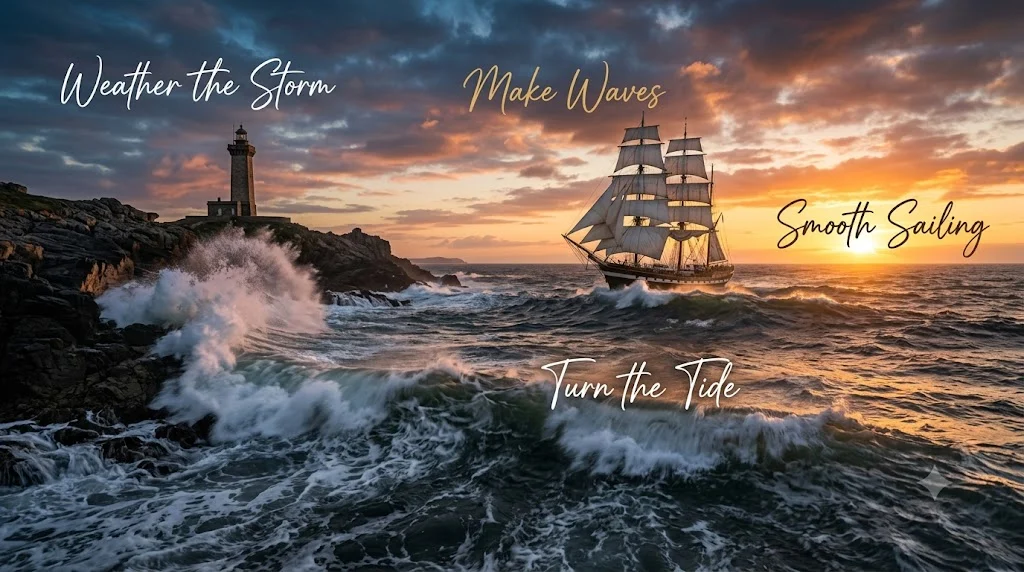
Quick Answer
Idioms for the ocean are figurative expressions inspired by the sea, sailing, waves, tides, storms, and maritime life. These phrases use ocean-related imagery to describe emotions, challenges, opportunities, success, confusion, and life experiences in a vivid and memorable way.
People use ocean idioms in everyday conversations, business discussions, storytelling, creative writing, and motivational communication because they create powerful mental images and make language more engaging.
The ocean has fascinated people for centuries. Its vastness, power, mystery, and unpredictability have inspired countless stories, poems, songs, and expressions. It’s no surprise that many English idioms draw their imagery from the sea.
Whether you’re navigating challenges at work, describing a major life change, or talking about new opportunities, ocean-inspired idioms provide colorful ways to express your thoughts. They often capture feelings and situations more effectively than literal language ever could.
I’ve noticed that many language learners understand these expressions when reading but hesitate to use them naturally in conversation. The secret isn’t memorizing definitions—it’s understanding the situations where they genuinely fit.
In this guide, you’ll discover useful idioms for the ocean, learn their meanings, see how they’re used in real communication, and gain practical tips for incorporating them into your own speaking and writing. By the end, you’ll have a deeper appreciation for how ocean imagery enriches English expression.
Quick Summary Table
| Idiom | Meaning | Common Tone |
|---|---|---|
| All at Sea | Confused or uncertain | Everyday |
| Smooth Sailing | Easy progress without problems | Positive |
| Make Waves | Cause attention or disruption | Dynamic |
| A Drop in the Ocean | A very small amount compared to what is needed | Reflective |
| Sail Close to the Wind | Take risks | Cautious |
| In Deep Water | In trouble or difficulty | Serious |
| Plenty of Fish in the Sea | Many opportunities available | Encouraging |
| Ride the Wave | Benefit from a trend or success | Positive |
| Lost at Sea | Completely confused or directionless | Emotional |
| Turn the Tide | Reverse a difficult situation | Motivational |
| Weather the Storm | Survive difficulties | Resilient |
| Sea Change | A major transformation | Professional |
| On the Rocks | Facing serious problems | Concerned |
| Between the Devil and the Deep Blue Sea | Stuck between two difficult choices | Challenging |
| Keep Afloat | Continue despite challenges | Determined |
All at Sea
Meaning
Feeling confused, uncertain, or unable to understand a situation.
When People Use It
When someone feels lost, overwhelmed, or unsure about what to do next.
Alternative Expression
At a loss
Examples in Communication
Formal Example:
The new employee felt all at sea during the first week of training.
Casual Example:
I’m completely all at sea with this math homework.
Creative Example:
Without her guidance, he drifted through the project all at sea.
Smooth Sailing
Meaning
Progressing easily without major difficulties.
When People Use It
Used when things are going according to plan.
Alternative Expression
Going smoothly
Examples in Communication
Formal Example:
After the initial challenges, the merger was smooth sailing.
Casual Example:
The trip was smooth sailing from start to finish.
Creative Example:
Once the storm passed, life became smooth sailing again.
Make Waves
Meaning
To attract attention or create change.
When People Use It
Often used for people who challenge the status quo.
Alternative Expression
Shake things up
Examples in Communication
Formal Example:
The young entrepreneur made waves in the technology industry.
Casual Example:
She always makes waves wherever she goes.
Creative Example:
His bold ideas made waves across the entire kingdom.
A Drop in the Ocean
Meaning
A very small contribution compared to what is needed.
When People Use It
When efforts seem minor relative to a large challenge.
Alternative Expression
A drop in the bucket
Examples in Communication
Formal Example:
The donation was helpful but only a drop in the ocean.
Casual Example:
Ten dollars feels like a drop in the ocean compared to my expenses.
Creative Example:
Their tiny boat looked like a drop in the ocean beneath the endless sky.
Sail Close to the Wind
Meaning
To take risks or operate near acceptable limits.
When People Use It
Often used when discussing risky behavior.
Alternative Expression
Push the limits
Examples in Communication
Formal Example:
The company was sailing close to the wind with its marketing practices.
Casual Example:
You’re sailing close to the wind by waiting until the last minute.
Creative Example:
The captain sailed close to the wind in pursuit of glory.
In Deep Water
Meaning
Facing serious difficulties or trouble.
When People Use It
When someone is dealing with a complicated problem.
Alternative Expression
In trouble
Examples in Communication
Formal Example:
The organization found itself in deep water after the scandal.
Casual Example:
I’m in deep water if I don’t finish this project today.
Creative Example:
One careless decision left him in deep water.
Plenty of Fish in the Sea
Meaning
Many opportunities or potential alternatives exist.
When People Use It
Often used after disappointments, especially in relationships.
Alternative Expression
Many opportunities remain
Examples in Communication
Formal Example:
The mentor reminded her that there were plenty of fish in the sea professionally.
Casual Example:
Don’t worry about the breakup—there are plenty of fish in the sea.
Creative Example:
She realized the world held plenty of fish in the sea of possibilities.
Ride the Wave
Meaning
To benefit from momentum, popularity, or success.
When People Use It
During periods of growth or favorable trends.
Alternative Expression
Capitalize on success
Examples in Communication
Formal Example:
The company rode the wave of digital innovation.
Casual Example:
He’s riding the wave of his recent success.
Creative Example:
The young artist rode the wave of public admiration.
Lost at Sea
Meaning
Completely confused, directionless, or disconnected.
When People Use It
When someone feels emotionally or mentally adrift.
Alternative Expression
Feeling lost
Examples in Communication
Formal Example:
After graduation, many students feel lost at sea.
Casual Example:
Without my phone, I’m totally lost at sea.
Creative Example:
His dreams drifted like a ship lost at sea.
Turn the Tide
Meaning
To reverse a difficult situation.
When People Use It
When circumstances begin improving after hardship.
Alternative Expression
Change the outcome
Examples in Communication
Formal Example:
New leadership helped turn the tide for the struggling organization.
Casual Example:
One good decision turned the tide completely.
Creative Example:
Hope arrived just in time to turn the tide.
Weather the Storm
Meaning
To survive a difficult period successfully.
When People Use It
During personal, professional, or financial challenges.
Alternative Expression
Persevere
Examples in Communication
Formal Example:
The business weathered the storm and emerged stronger.
Casual Example:
We’ll weather the storm together.
Creative Example:
The old lighthouse weathered every storm the sea delivered.
Sea Change
Meaning
A significant transformation.
When People Use It
In business, education, leadership, or personal development.
Alternative Expression
Major shift
Examples in Communication
Formal Example:
Technology created a sea change in the industry.
Casual Example:
There’s been a sea change in her attitude lately.
Creative Example:
The journey sparked a sea change within his heart.
On the Rocks
Meaning
Facing serious difficulties or instability.
When People Use It
Commonly used for relationships or businesses.
Alternative Expression
In trouble
Examples in Communication
Formal Example:
The partnership appeared to be on the rocks.
Casual Example:
Their friendship has been on the rocks recently.
Creative Example:
The dream stood on the rocks as uncertainty approached.
Between the Devil and the Deep Blue Sea
Meaning
Caught between two difficult choices.
When People Use It
When neither option seems favorable.
Alternative Expression
Between a rock and a hard place
Examples in Communication
Formal Example:
The committee found itself between the devil and the deep blue sea.
Casual Example:
I’m between the devil and the deep blue sea on this decision.
Creative Example:
The captain stood between the devil and the deep blue sea as darkness fell.
Keep Afloat
Meaning
To continue functioning despite difficulties.
When People Use It
During financial, emotional, or professional challenges.
Alternative Expression
Stay operational
Examples in Communication
Formal Example:
The funding helped keep the organization afloat.
Casual Example:
Extra work is helping me keep afloat financially.
Creative Example:
Determination alone kept her dreams afloat.
How to Use Ocean Idioms Naturally
Ocean idioms work best when discussing challenges, opportunities, change, uncertainty, and resilience. They fit naturally into conversations because many life experiences resemble navigating unpredictable waters.
Instead of forcing an idiom into every sentence, choose one that genuinely matches the situation. A well-placed idiom often has more impact than several used together.
Writers frequently use ocean idioms in articles, novels, speeches, and blogs because they create vivid imagery without requiring lengthy explanations.
Common Mistakes with Ocean Idioms
Taking Them Literally
These expressions are figurative. Being “all at sea” doesn’t mean standing in the ocean.
Using the Wrong Context
“Smooth sailing” works for easy situations, while “weather the storm” fits difficult ones.
Overusing Similar Expressions
Using too many sea-related idioms in one paragraph can feel repetitive.
Ignoring Tone
Some idioms sound motivational, while others emphasize struggle or uncertainty.
Sink or Swim
Meaning
To either succeed through your own efforts or fail without assistance.
When People Use It
When someone is placed in a challenging situation where they must prove themselves independently.
Alternative Expression
Learn the hard way
Examples in Communication
Formal Example:
The company adopted a sink-or-swim approach for new recruits.
Casual Example:
When I started my first job, it was basically sink or swim.
Creative Example:
Thrown into the unfamiliar city, she had to sink or swim.
A Sea of Trouble
Meaning
A large amount of difficulty or problems.
When People Use It
When challenges seem endless or overwhelming.
Alternative Expression
A mountain of problems
Examples in Communication
Formal Example:
Without proper planning, the project could face a sea of trouble.
Casual Example:
I’m in a sea of trouble if my parents find out.
Creative Example:
One careless mistake opened the door to a sea of trouble.
Drown in Work
Meaning
To have too much work or responsibility.
When People Use It
When workloads become overwhelming.
Alternative Expression
Buried in work
Examples in Communication
Formal Example:
The accounting team was drowning in work during tax season.
Casual Example:
I can’t come out tonight; I’m drowning in assignments.
Creative Example:
Emails flooded in until he felt he might drown in work.
Test the Waters
Meaning
To try something cautiously before making a full commitment.
When People Use It
Before launching a project, business idea, or personal decision.
Alternative Expression
Try it out
Examples in Communication
Formal Example:
The company tested the waters before introducing the product nationally.
Casual Example:
I’m just testing the waters with online classes.
Creative Example:
She tested the waters of her dream before taking the leap.
Like a Fish Out of Water
Meaning
Feeling uncomfortable or out of place.
When People Use It
When someone is in an unfamiliar environment.
Alternative Expression
Out of place
Examples in Communication
Formal Example:
The new employee felt like a fish out of water during the conference.
Casual Example:
I felt like a fish out of water at that fancy event.
Creative Example:
Among the glittering crowd, he felt like a fish out of water.
Swim Against the Tide
Meaning
To go against popular opinion or common behavior.
When People Use It
When someone chooses an unconventional path.
Alternative Expression
Go against the grain
Examples in Communication
Formal Example:
The researcher swam against the tide by challenging accepted theories.
Casual Example:
I’ve always liked swimming against the tide.
Creative Example:
While others followed the current, she swam against the tide toward her dreams.
There Are Plenty More Fish in the Sea
Meaning
There are many other opportunities available after a disappointment.
When People Use It
Often used after a breakup or missed opportunity.
Alternative Expression
Another chance will come
Examples in Communication
Formal Example:
The mentor reminded him that there were plenty more fish in the sea.
Casual Example:
Forget that rejection—there are plenty more fish in the sea.
Creative Example:
One closed door revealed plenty more fish in the sea.
Tread Water
Meaning
To maintain a situation without making progress.
When People Use It
When people are surviving but not advancing.
Alternative Expression
Stand still
Examples in Communication
Formal Example:
The business spent months treading water before growth returned.
Casual Example:
I feel like I’m just treading water lately.
Creative Example:
For years, he tread water while waiting for his opportunity.
Blow Out of the Water
Meaning
To completely defeat or outperform something.
When People Use It
When one result is dramatically better than another.
Alternative Expression
Outperform completely
Examples in Communication
Formal Example:
The new proposal blew the competition out of the water.
Casual Example:
That movie blew the original out of the water.
Creative Example:
Her performance blew every expectation out of the water.
Dead in the Water
Meaning
Unable to continue or make progress.
When People Use It
When a plan or project has failed.
Alternative Expression
Going nowhere
Examples in Communication
Formal Example:
Without funding, the initiative was dead in the water.
Casual Example:
My vacation plans are dead in the water now.
Creative Example:
Without hope, the expedition seemed dead in the water.
Water Under the Bridge
Meaning
A past problem that no longer matters.
When People Use It
When encouraging people to move on from old disagreements.
Alternative Expression
In the past
Examples in Communication
Formal Example:
The dispute is now water under the bridge.
Casual Example:
Don’t worry about it—it’s water under the bridge.
Creative Example:
The old arguments drifted away like water under the bridge.
Oceans Apart
Meaning
Very different in opinion, personality, or distance.
When People Use It
When emphasizing major differences.
Alternative Expression
Worlds apart
Examples in Communication
Formal Example:
The two proposals were oceans apart in their approach.
Casual Example:
My brother and I are oceans apart politically.
Creative Example:
Though they stood side by side, their dreams were oceans apart.
A Rising Tide Lifts All Boats
Meaning
When overall conditions improve, everyone benefits.
When People Use It
Often used in economics, leadership, and teamwork discussions.
Alternative Expression
Shared success benefits everyone
Examples in Communication
Formal Example:
The mayor argued that economic growth creates a rising tide that lifts all boats.
Casual Example:
When the neighborhood improves, it’s a rising tide that lifts all boats.
Creative Example:
Their generosity proved that a rising tide lifts all boats.
Ocean Idioms in Writing and Storytelling
Ocean idioms are particularly powerful in creative writing because they instantly create vivid imagery. Readers can easily imagine waves, storms, tides, and open seas, making emotional situations feel more memorable.
For bloggers and content creators, phrases like “turn the tide,” “weather the storm,” and “ride the wave” can make articles feel more engaging and relatable. In storytelling, these idioms often symbolize personal growth, uncertainty, resilience, or transformation.
The key is moderation. One carefully chosen ocean idiom can strengthen a sentence far more effectively than several packed together.
Ocean Idioms vs Literal Ocean Expressions
A common challenge for language learners is distinguishing figurative expressions from literal descriptions.
| Idiom | Figurative Meaning | Literal Meaning |
|---|---|---|
| All at Sea | Confused | Being on the ocean |
| Turn the Tide | Reverse a situation | Change of ocean tide |
| Weather the Storm | Survive difficulties | Endure bad weather at sea |
| Ride the Wave | Benefit from success | Surf on a real wave |
| In Deep Water | Facing trouble | Being in deep water |
Understanding this difference helps prevent misunderstandings and improves fluency.
Tips for Remembering Ocean Idioms
- Visualize the ocean scene behind each idiom.
- Group idioms by emotion or situation.
- Create personal examples.
- Read novels and articles that use figurative language.
- Practice one idiom each day in conversation.
The stronger the image in your mind, the easier the idiom becomes to remember.
FAQs
What are ocean idioms?
Ocean idioms are figurative expressions inspired by the sea, waves, tides, storms, and sailing experiences.
Are ocean idioms common in English?
Yes. Many are frequently used in everyday conversation, business communication, and writing.
Can I use ocean idioms in essays?
Yes, especially in creative, descriptive, and reflective writing where figurative language adds impact.
What is the most common ocean idiom?
“Smooth sailing” is one of the most widely used ocean-related idioms in English.
Why do so many English idioms come from the sea?
Because maritime travel played a major role in history, ocean experiences naturally influenced the English language.
Conclusion
Ocean-inspired expressions have a special place in English because they reflect life’s uncertainty, adventure, resilience, and opportunity. From moments when we’re “all at sea” to times when we successfully “weather the storm,” these idioms help us communicate experiences with depth and vivid imagery.
Learning idioms for the ocean can strengthen both your understanding and use of figurative language. They make conversations more engaging, writing more memorable, and storytelling more expressive.
As you continue building your English skills, try incorporating these idioms into everyday situations. The more naturally you use them, the more confident and fluent you’ll sound. Like the ocean itself, language is vast and full of discovery and every new idiom helps you navigate it with greater confidence.
Discover More Related Articles:
- Idioms for Trees | Rooted Expressions That Help Your English Grow In 2026
- Green with Meaning | Speak Smart Essential Green Idioms In 2026