Quick Answer
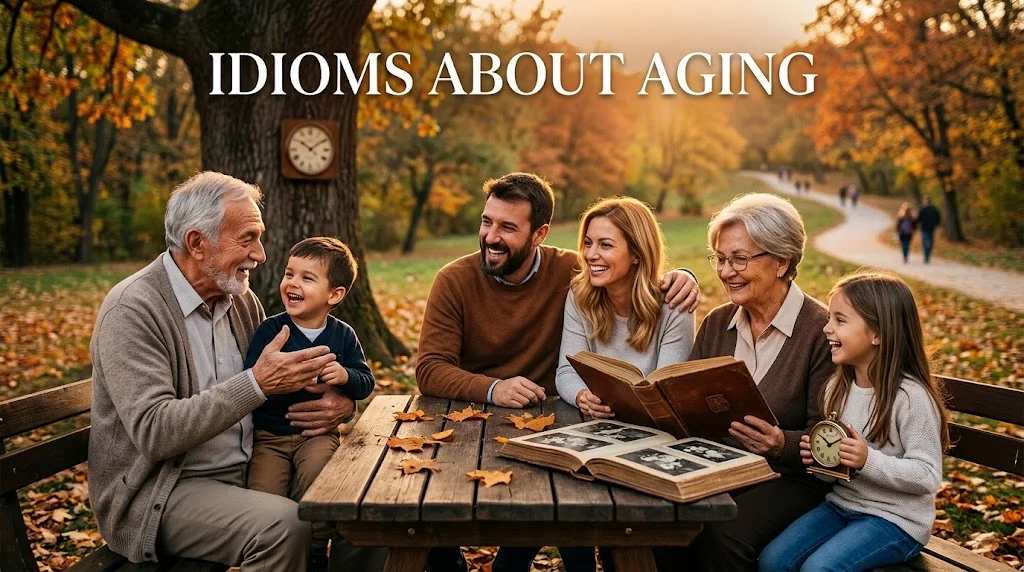
Idioms about aging are expressions or phrases that describe the process of growing older, the effects of age, life experience, wisdom gained over time, or attitudes toward getting older. These idioms often use figurative language rather than literal meanings, making conversations about age more colorful, engaging, and relatable.
Aging is a universal experience, yet people rarely talk about it using plain, literal language. Instead, English speakers often rely on colorful idioms to discuss growing older, maturity, wisdom, retirement, and the passage of time.
These expressions add personality and emotional depth to conversations. Some idioms celebrate the wisdom that comes with age, while others humorously acknowledge the realities of getting older. Whether you’re reading novels, watching films, listening to conversations, or improving your English skills, understanding idioms about aging can help you communicate more naturally.
For writers, students, bloggers, and language learners, these idioms provide valuable tools for storytelling and self-expression. They can make descriptions more vivid, dialogue more realistic, and communication more engaging.
In this guide, you’ll discover practical idioms about aging, their meanings, when people use them, and examples that show how they fit naturally into everyday English.
Quick Summary
| Idiom | Meaning | Common Tone |
|---|---|---|
| Over the hill | No longer young | Informal |
| Getting on in years | Becoming old | Neutral |
| Long in the tooth | Older than expected | Conversational |
| No spring chicken | Not young anymore | Humorous |
| Golden years | Retirement years | Positive |
| Showing one’s age | Revealing old-fashioned habits | Casual |
| Aging like fine wine | Improving with age | Complimentary |
| Past one’s prime | Beyond peak performance | Informal |
| Young at heart | Feeling youthful despite age | Positive |
| Gray around the temples | Showing signs of aging | Neutral |
| Full of years | Very old | Literary |
| In one’s twilight years | Late stage of life | Respectful |
| Old enough to know better | Mature enough to act wisely | Humorous |
| Not getting any younger | Growing older | Conversational |
| Wear one’s years well | Look good for one’s age | Complimentary |
Over the Hill
Meaning
Past one’s peak years or no longer young.
When People Use It
Often used humorously when someone reaches a milestone birthday.
Alternative Expression
Past one’s prime
Examples in Communication
Formal Example:
Some athletes fear being considered over the hill after turning forty.
Casual Example:
I just turned fifty, and my friends keep joking that I’m over the hill.
Creative Example:
He laughed at the birthday cards declaring him over the hill.
Getting on in Years
Meaning
Becoming old or advanced in age.
When People Use It
A polite and respectful way to refer to aging.
Alternative Expression
Advancing in age
Examples in Communication
Formal Example:
The professor is getting on in years but remains intellectually active.
Casual Example:
My grandfather is getting on in years but still enjoys gardening.
Creative Example:
The oak tree seemed to be getting on in years, yet it stood proudly.
Long in the Tooth
Meaning
Older than expected or no longer young.
When People Use It
Often used humorously or lightly.
Alternative Expression
No spring chicken
Examples in Communication
Formal Example:
Although long in the tooth, the actor continues to perform successfully.
Casual Example:
I’m a little long in the tooth for all-night parties.
Creative Example:
The long-in-the-tooth sailor still dreamed of distant oceans.
No Spring Chicken
Meaning
Not young anymore.
When People Use It
Used playfully to acknowledge age.
Alternative Expression
Long in the tooth
Examples in Communication
Formal Example:
The candidate admitted he was no spring chicken but emphasized his experience.
Casual Example:
I’m no spring chicken, but I can still keep up.
Creative Example:
Though no spring chicken, she danced with remarkable energy.
Golden Years
Meaning
The period of retirement and later life.
When People Use It
To describe enjoyable years after a career ends.
Alternative Expression
Retirement years
Examples in Communication
Formal Example:
Many people spend their golden years traveling.
Casual Example:
My grandparents are enjoying their golden years by the sea.
Creative Example:
They welcomed their golden years with adventure and laughter.
Showing Your Age
Meaning
Revealing your age through habits, references, or opinions.
When People Use It
When someone mentions outdated trends or experiences.
Alternative Expression
Dating yourself
Examples in Communication
Formal Example:
His references to old technology were showing his age.
Casual Example:
You’re showing your age if you remember cassette tapes.
Creative Example:
Every nostalgic story was quietly showing her age.
Aging Like Fine Wine
Meaning
Improving with age.
When People Use It
As a compliment about appearance, wisdom, or character.
Alternative Expression
Getting better with age
Examples in Communication
Formal Example:
The author appears to be aging like fine wine.
Casual Example:
You haven’t changed a bit—you’re aging like fine wine.
Creative Example:
Like fine wine, her confidence deepened over time.
Past One’s Prime
Meaning
Beyond the period of greatest success or ability.
When People Use It
Often used regarding careers, sports, or performance.
Alternative Expression
Over the hill
Examples in Communication
Formal Example:
Critics argued the company was past its prime.
Casual Example:
He says he’s past his prime, but he’s still impressive.
Creative Example:
The theater stood proudly despite being past its prime.
Young at Heart
Meaning
Maintaining youthful enthusiasm regardless of age.
When People Use It
To praise someone’s energetic attitude.
Alternative Expression
Forever young
Examples in Communication
Formal Example:
She remains young at heart despite her age.
Casual Example:
My grandfather is young at heart and loves amusement parks.
Creative Example:
Her young-at-heart spirit brightened every room.
Gray Around the Temples
Meaning
Showing visible signs of aging.
When People Use It
To describe physical aging respectfully.
Alternative Expression
Going gray
Examples in Communication
Formal Example:
He was gray around the temples but looked distinguished.
Casual Example:
You’re getting a little gray around the temples.
Creative Example:
The gray around his temples told stories of experience.
Full of Years
Meaning
Very old and experienced.
When People Use It
More common in literary or formal contexts.
Alternative Expression
Advanced in age
Examples in Communication
Formal Example:
She lived a life full of years and wisdom.
Casual Example:
The old storyteller was truly full of years.
Creative Example:
Full of years, he shared tales from another era.
In One’s Twilight Years
Meaning
The later stage of life.
When People Use It
A respectful way to discuss aging.
Alternative Expression
Later years
Examples in Communication
Formal Example:
He dedicated his twilight years to charity work.
Casual Example:
They’re spending their twilight years near the mountains.
Creative Example:
The artist found new inspiration in her twilight years.
Old Enough to Know Better
Meaning
Mature enough to make wiser choices.
When People Use It
Often humorously after a mistake.
Alternative Expression
Should know better
Examples in Communication
Formal Example:
He was old enough to know better than to ignore the warning.
Casual Example:
You’re old enough to know better!
Creative Example:
Old enough to know better, yet adventurous enough to try.
Not Getting Any Younger
Meaning
Growing older as time passes.
When People Use It
To motivate action or acknowledge aging.
Alternative Expression
Time is passing
Examples in Communication
Formal Example:
The entrepreneur recognized he was not getting any younger.
Casual Example:
Let’s take that trip—we’re not getting any younger.
Creative Example:
The clock ticked softly, reminding them they weren’t getting any younger.
Wear One’s Years Well
Meaning
To look healthy and attractive despite aging.
When People Use It
As a compliment.
Alternative Expression
Aging gracefully
Examples in Communication
Formal Example:
She wears her years well and remains remarkably active.
Casual Example:
You really wear your years well.
Creative Example:
She wore her years well, like a treasured masterpiece.
Getting Up There
Meaning
Becoming older, especially in later adulthood.
When People Use It
A gentle and conversational way to acknowledge age.
Alternative Expression
Getting on in years
Examples in Communication
Formal Example:
Although getting up there in age, she remains highly productive.
Casual Example:
Dad is getting up there, but he still hikes every weekend.
Creative Example:
The old lighthouse was getting up there, yet it continued guiding ships home.
Gray-Haired and Wise
Meaning
Having wisdom that comes from age and experience.
When People Use It
To show respect for older individuals.
Alternative Expression
Wise with age
Examples in Communication
Formal Example:
The organization benefited greatly from its gray-haired and wise leadership.
Casual Example:
Ask Grandma—she’s gray-haired and wise.
Creative Example:
The gray-haired and wise storyteller captivated every listener.
A Fine Vintage
Meaning
Someone who has become more admirable with age.
When People Use It
As a compliment, often with humor.
Alternative Expression
Aging like fine wine
Examples in Communication
Formal Example:
The actor remains a fine vintage in the entertainment industry.
Casual Example:
You’re a fine vintage these days!
Creative Example:
Like a treasured vintage, his character deepened over time.
Age Before Beauty
Meaning
A humorous phrase said when allowing an older person to go first.
When People Use It
In friendly and playful interactions.
Alternative Expression
After you
Examples in Communication
Formal Example:
The phrase is generally reserved for informal social settings.
Casual Example:
Go ahead—age before beauty!
Creative Example:
With a grin, she bowed and said, “Age before beauty.”
On the Wrong Side of Forty
Meaning
Older than forty years old.
When People Use It
Humorously when discussing middle age.
Alternative Expression
Middle-aged
Examples in Communication
Formal Example:
Many professionals thrive despite being on the wrong side of forty.
Casual Example:
I’m on the wrong side of forty and still learning new things.
Creative Example:
He crossed to the wrong side of forty with confidence and optimism.
In the Autumn of One’s Life
Meaning
In the later years of life.
When People Use It
Often used in literary or reflective writing.
Alternative Expression
Twilight years
Examples in Communication
Formal Example:
He spent the autumn of his life mentoring young professionals.
Casual Example:
She’s in the autumn of her life and enjoying every moment.
Creative Example:
In the autumn of her life, every memory seemed more colorful.
Aging Gracefully
Meaning
Growing older while maintaining dignity, confidence, and positivity.
When People Use It
To compliment someone’s attitude or appearance.
Alternative Expression
Wear one’s years well
Examples in Communication
Formal Example:
She is widely admired for aging gracefully.
Casual Example:
My aunt is aging gracefully and loving every stage of life.
Creative Example:
She aged gracefully, like a timeless work of art.
Not as Young as You Used to Be
Meaning
No longer having the same energy or physical ability as before.
When People Use It
Usually in a humorous and self-aware way.
Alternative Expression
Feeling one’s age
Examples in Communication
Formal Example:
The athlete admitted he was not as young as he used to be.
Casual Example:
After that hike, I realized I’m not as young as I used to be.
Creative Example:
His knees reminded him he wasn’t as young as he used to be.
Feel One’s Age
Meaning
To become aware of getting older, often due to physical limitations.
When People Use It
After strenuous activities or health-related experiences.
Alternative Expression
Not getting any younger
Examples in Communication
Formal Example:
Following the marathon, he began to feel his age.
Casual Example:
Carrying those boxes made me feel my age.
Creative Example:
The long climb up the hill made her feel every year she had lived.
Wise Beyond One’s Years
Meaning
Having maturity and wisdom greater than expected for one’s age.
When People Use It
To praise younger people who show exceptional judgment.
Alternative Expression
Mature for one’s age
Examples in Communication
Formal Example:
The student demonstrated insight that was wise beyond her years.
Casual Example:
That kid is wise beyond his years.
Creative Example:
Her words were wise beyond her years, carrying unexpected depth.
How to Use Idioms About Aging Naturally
Idioms about aging often carry emotional nuance. Some celebrate wisdom and experience, while others add humor to conversations about growing older.
In professional writing, positive expressions such as “golden years,” “young at heart,” and “aging like fine wine” are usually safer and more respectful than phrases like “over the hill.”
When writing stories or dialogue, aging idioms can help create realistic characters and relatable situations. The key is matching the idiom to the tone and context.
Common Mistakes When Using Aging Idioms
Using Humorous Idioms in Sensitive Situations
Expressions such as “over the hill” may be funny among friends but inappropriate in formal or sensitive conversations.
Taking Idioms Literally
Idioms are figurative. Someone who is “young at heart” isn’t physically young.
Ignoring Tone
Some idioms celebrate aging, while others focus on decline. Choose carefully depending on the message you want to convey.
Overusing Idioms
A few well-chosen idioms sound natural. Too many can overwhelm your writing.
Tips for Remembering Aging Idioms
- Connect each idiom to a real person you know.
- Create short stories using multiple idioms.
- Group idioms into positive, neutral, and humorous categories.
- Practice using them in conversations.
- Watch movies and read novels to see them in context.
Learning idioms through meaningful situations helps them become part of your active vocabulary.
FAQs
What are idioms about aging?
Idioms about aging are figurative expressions used to describe growing older, maturity, wisdom, retirement, and life experience.
Are aging idioms commonly used in everyday English?
Yes. Many are frequently used in conversations, books, movies, and articles.
Which aging idioms are considered positive?
Examples include “young at heart,” “golden years,” “wear one’s years well,” and “aging like fine wine.”
Can I use these idioms in essays and creative writing?
Yes. They can make descriptions more vivid and engaging when used appropriately.
What is the difference between “over the hill” and “young at heart”?
“Over the hill” suggests someone is no longer young, while “young at heart” emphasizes a youthful attitude despite age.
Conclusion
Idioms about aging offer a fascinating glimpse into how English speakers talk about one of life’s most universal experiences. They add warmth, humor, respect, and personality to conversations about growing older.
Whether you’re describing someone’s wisdom, celebrating their energy, discussing retirement, or adding realism to a story, these expressions can help your communication feel richer and more natural.
The best way to master these idioms is through practice. Notice them in books, films, conversations, and articles. Then start using them in your own writing and speech when the context feels right.
Over time, these phrases will become a natural part of your vocabulary, helping you communicate with greater confidence, fluency, and creativity.
Discover More Related Articles:
- Idioms for Yourself | Expressions About Self & Identity In 2026
- Idioms of the World | Cultural Wisdom in Words For 2026