Quick Answer
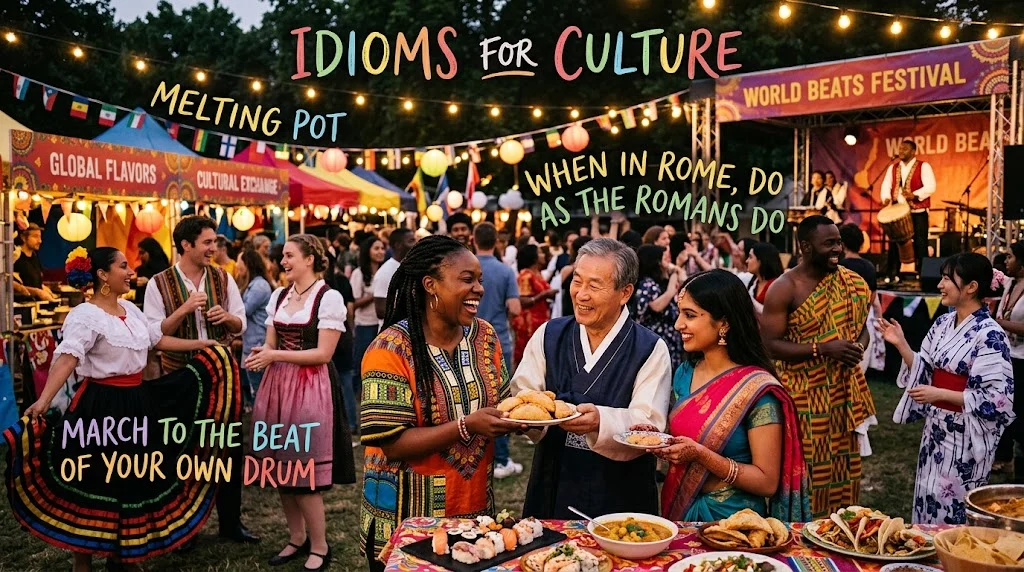
Idioms for culture are expressions that reflect traditions, customs, shared values, and social behaviors. These phrases are often used when discussing diversity, heritage, community, and ways of life. Learning them can make conversations, essays, and storytelling more expressive and culturally aware.
Culture shapes the way people live, celebrate, communicate, and understand the world around them. Whether it’s family traditions, local customs, food, music, or social values, culture influences everyday life in countless ways. Because culture is deeply connected to human experiences, the English language has developed many colorful idioms that reflect these ideas.
You’ll often encounter these expressions in conversations, books, essays, blogs, documentaries, and even workplace discussions about diversity and traditions. Understanding them can help language learners sound more natural while giving writers and students richer ways to discuss communities and cultural experiences.
Some idioms emphasize adapting to new environments, while others celebrate individuality or the passing down of traditions. Learning these phrases isn’t just about expanding vocabulary it also helps develop a deeper appreciation for how language captures shared human experiences.
Below are some useful and widely understood idioms related to culture and traditions.
Quick Summary Table
| Idiom | Simple Meaning | Common Usage |
|---|---|---|
| Melting pot | A mixture of different cultures | Diversity and society |
| Salad bowl | Different cultures maintaining their identities | Multicultural communities |
| A whole new ball game | A completely different situation | Cultural changes |
| When in Rome, do as the Romans do | Adapt to local customs | Traveling and social settings |
| Cut from the same cloth | Sharing similar values or traits | Families and communities |
| Pass down | Transfer traditions to younger generations | Heritage and customs |
| Old habits die hard | Traditions and customs are difficult to change | Social behaviors |
| Go with the flow | Adapt easily to customs or situations | Traveling and cultural exchange |
| Break the mold | Challenge traditional ways | Social change |
| March to the beat of your own drum | Follow your own beliefs or lifestyle | Individual identity |
Melting Pot
Meaning
A place where people from different backgrounds and cultures blend together.
When People Use It
People commonly use this phrase when discussing multicultural societies.
Alternative Expression
Salad bowl
Examples in Communication
Formal Example
The city has long been considered a melting pot of traditions and ethnic communities.
Casual Example
Toronto is a real melting pot of cultures.
Creative Example
Walking through the market felt like stepping into a melting pot where languages, foods, and music danced together.
Usage Insight
This idiom is common in discussions about diversity and immigration.
Salad Bowl
Meaning
A society where different cultures coexist while maintaining their own identities.
When People Use It
Used when emphasizing cultural diversity without complete assimilation.
Alternative Expression
Melting pot
Examples in Communication
Formal Example
Modern societies are increasingly described as cultural salad bowls.
Casual Example
I love how this neighborhood is like a salad bowl of traditions.
Creative Example
The festival transformed the city into a colorful salad bowl filled with stories from around the world.
When in Rome, Do as the Romans Do
Meaning
Adapt to the customs and practices of the place you are visiting.
When People Use It
Frequently used when traveling or experiencing unfamiliar cultures.
Alternative Expression
Go with the flow
Examples in Communication
Formal Example
Visitors should remember that when in Rome, do as the Romans do.
Casual Example
I wasn’t used to eating with chopsticks, but when in Rome, right?
Creative Example
She embraced the village traditions with a smile, believing that when in Rome, do as the Romans do.
Usage Insight
This idiom encourages respect for local customs.
Cut from the Same Cloth
Meaning
People who share similar beliefs, values, or characteristics.
When People Use It
Often used when describing families, friends, or communities.
Alternative Expression
Birds of a feather
Examples in Communication
Formal Example
The two organizations are cut from the same cloth in their approach to education.
Casual Example
My sister and I are definitely cut from the same cloth.
Creative Example
Though separated by oceans, they seemed cut from the same cloth, united by traditions and values.
Pass Down
Meaning
To transfer traditions, customs, or knowledge from one generation to another.
When People Use It
Used when discussing heritage and family practices.
Alternative Expression
Hand down
Examples in Communication
Formal Example
These stories have been passed down for centuries.
Casual Example
Grandma passed down her recipes to us.
Creative Example
The songs echoed through generations, lovingly passed down like treasured gifts.
Old Habits Die Hard
Meaning
Long-standing customs or behaviors are difficult to change.
When People Use It
Common when discussing traditions or social practices.
Alternative Expression
Hard to break
Examples in Communication
Formal Example
Old habits die hard when cultural practices are deeply rooted.
Casual Example
Dad still writes letters because old habits die hard.
Creative Example
Even in a modern world, old habits die hard, carrying echoes of the past.
Go with the Flow
Meaning
Adapt easily to changing circumstances.
When People Use It
Useful when discussing cultural differences or travel experiences.
Alternative Expression
Roll with it
Examples in Communication
Formal Example
Successful international teams often learn to go with the flow.
Casual Example
I just go with the flow when visiting new countries.
Creative Example
He embraced unfamiliar customs and simply went with the flow.
Break the Mold
Meaning
Do something differently from tradition or expectations.
When People Use It
Often used when discussing innovation or changing social norms.
Alternative Expression
Think outside the box
Examples in Communication
Formal Example
The artist broke the mold by combining traditional and modern styles.
Casual Example
She’s always breaking the mold.
Creative Example
Their music broke the mold while still honoring their roots.
March to the Beat of Your Own Drum
Meaning
Live according to your own values and beliefs.
When People Use It
Used to describe independent thinkers.
Alternative Expression
Do your own thing
Examples in Communication
Formal Example
Great innovators often march to the beat of their own drum.
Casual Example
He’s always marched to the beat of his own drum.
Creative Example
In a world of echoes, she chose to march to the beat of her own drum.
A Whole New Ball Game
Meaning
A completely different situation requiring new understanding.
When People Use It
Often used when adjusting to another culture or environment.
Alternative Expression
Different story altogether
Examples in Communication
Formal Example
Working abroad was a whole new ball game.
Casual Example
Moving overseas was a whole new ball game for me.
Creative Example
Learning the customs of another country opened the door to a whole new ball game.
Face of the Community
Meaning
A person or group that represents the identity and values of a culture or society.
When People Use It
People use this expression when referring to influential individuals or organizations that symbolize a community.
Alternative Expression
Standard-bearer
Examples in Communication
Formal Example
The museum has become the face of the community’s cultural heritage.
Casual Example
She’s really the face of our local traditions.
Creative Example
With every dance and every song, the elders remained the face of the community.
Usage Insight
This phrase is common in discussions about heritage, leadership, and representation.
Keep Up with the Times
Meaning
To adapt to changing ideas, trends, or social developments.
When People Use It
Often used when talking about modernizing traditions or embracing new cultural influences.
Alternative Expression
Move with the times
Examples in Communication
Formal Example
Educational institutions must keep up with the times while respecting their traditions.
Casual Example
My grandparents are surprisingly good at keeping up with the times.
Creative Example
The town preserved its history while learning to keep up with the times.
Rooted in Tradition
Meaning
Strongly connected to long-standing customs and values.
When People Use It
Used when describing cultures, communities, or families that honor their heritage.
Alternative Expression
Deeply connected to heritage
Examples in Communication
Formal Example
The ceremony is rooted in tradition and has been practiced for generations.
Casual Example
Our family gatherings are really rooted in tradition.
Creative Example
Though the world changed around them, their celebrations remained rooted in tradition.
Usage Insight
This expression works particularly well in essays and storytelling.
Turn Over a New Leaf
Meaning
To begin a new chapter or adopt new ways.
When People Use It
Used when individuals or societies embrace change.
Alternative Expression
Start fresh
Examples in Communication
Formal Example
The organization turned over a new leaf by adopting more inclusive practices.
Casual Example
I’ve decided to turn over a new leaf this year.
Creative Example
The village turned over a new leaf without forgetting the stories of the past.
A World Apart
Meaning
Completely different in culture, ideas, or lifestyle.
When People Use It
Common when comparing different communities or traditions.
Alternative Expression
Completely different
Examples in Communication
Formal Example
The customs of the two regions are a world apart.
Casual Example
Their lifestyles are a world apart from ours.
Creative Example
Separated by distance and history, the two cities seemed a world apart.
Stick to Your Roots
Meaning
Remain connected to your heritage and background.
When People Use It
People use this phrase when discussing family traditions and cultural identity.
Alternative Expression
Stay true to your heritage
Examples in Communication
Formal Example
Many immigrants encourage their children to stick to their roots.
Casual Example
No matter where I go, I want to stick to my roots.
Creative Example
She traveled the world but never forgot to stick to her roots.
Cross Cultural Boundaries
Meaning
To connect with people from different backgrounds and traditions.
When People Use It
Used when discussing international friendships, art, or communication.
Alternative Expression
Bridge differences
Examples in Communication
Formal Example
Music has the power to cross cultural boundaries.
Casual Example
Food is one of the easiest ways to cross cultural boundaries.
Creative Example
Their stories crossed cultural boundaries and brought strangers together.
Blend In
Meaning
To adapt and become accepted within a group or culture.
When People Use It
Common among travelers, immigrants, and people experiencing new environments.
Alternative Expression
Fit in
Examples in Communication
Formal Example
International students often take time to blend in with local customs.
Casual Example
It took me a while to blend in after moving abroad.
Creative Example
Little by little, she learned the language and began to blend in naturally.
Rich Tapestry
Meaning
A beautiful combination of diverse traditions, histories, and experiences.
When People Use It
Frequently used in writing about multicultural societies and heritage.
Alternative Expression
Cultural mosaic
Examples in Communication
Formal Example
The nation possesses a rich tapestry of languages and traditions.
Casual Example
Our neighborhood is a rich tapestry of cultures.
Creative Example
The streets formed a rich tapestry woven from generations of stories and celebrations.
Usage Insight
This expression creates vivid imagery and works especially well in essays and descriptive writing.
Birds of a Feather Flock Together
Meaning
People with similar interests and values tend to associate with each other.
When People Use It
Used when discussing communities and shared traditions.
Alternative Expression
Cut from the same cloth
Examples in Communication
Formal Example
Communities often form because birds of a feather flock together.
Casual Example
No wonder they’re best friends—birds of a feather flock together.
Creative Example
Artists, musicians, and dreamers gathered together because birds of a feather naturally flock together.
Keep the Tradition Alive
Meaning
Continue preserving customs and heritage.
When People Use It
Used in conversations about family or cultural celebrations.
Alternative Expression
Preserve heritage
Examples in Communication
Formal Example
Communities work hard to keep the tradition alive.
Casual Example
We still celebrate this festival to keep the tradition alive.
Creative Example
The old songs were sung every year to keep the tradition alive.
Practical Usage Guidance
How to Use Idioms Naturally
Idioms work best when they fit naturally into the context. If you’re discussing traditions, diversity, or travel experiences, cultural idioms can make your writing more engaging and authentic.
For example:
- “Living abroad taught me that when in Rome, do as the Romans do.”
- “Our city is truly a melting pot of cultures.”
Match the Tone
Some expressions are suitable for academic essays, while others sound more conversational.
- Formal: Melting pot, pass down.
- Informal: Go with the flow, do your own thing.
Avoid Literal Interpretations
Remember that idioms are figurative. A “melting pot” isn’t an actual pot, and “marching to the beat of your own drum” isn’t always about music.
Learn Through Stories
Books, documentaries, and personal experiences are excellent sources for understanding how these idioms are used naturally.
Common Mistakes with Idioms
- Using idioms word-for-word in inappropriate situations.
- Mixing two expressions together.
- Overusing idioms in formal reports.
- Translating idioms directly from another language.
Natural communication usually requires balance.
FAQs
What are idioms for culture?
Idioms for culture are figurative expressions used to describe traditions, diversity, customs, heritage, and social values.
What is the most common cultural idiom?
“Melting pot” is one of the most widely used idioms when discussing multicultural societies.
Can these idioms be used in essays?
Yes. Expressions like “melting pot” and “pass down” are suitable for essays and educational writing when used naturally.
Why are cultural idioms important?
They help people discuss traditions and diversity in more vivid and meaningful ways.
How can I remember culture-related idioms?
Read stories, watch documentaries, and practice using them in conversations or writing about real-life experiences.
Conclusion
Idioms for culture offer more than colorful language. They reflect traditions, identities, and the ways people connect with one another. Whether you’re writing essays, preparing presentations, improving spoken English, or simply exploring figurative language, these expressions can add warmth and depth to your communication.
As you encounter different cultures and communities, you’ll notice that many of these idioms appear naturally in conversations, books, and media. Practice using them in context rather than memorizing them in isolation.
Over time, these phrases become powerful tools for expressing ideas about diversity, heritage, and shared human experiences. Language and culture have always been closely connected, and learning these idioms is one more way to appreciate both.
Discover More Related Articles:
- Idioms for Yourself | Expressions About Self & Identity In 2026
- Idioms of the World | Cultural Wisdom in Words For 2026