Quick Answer
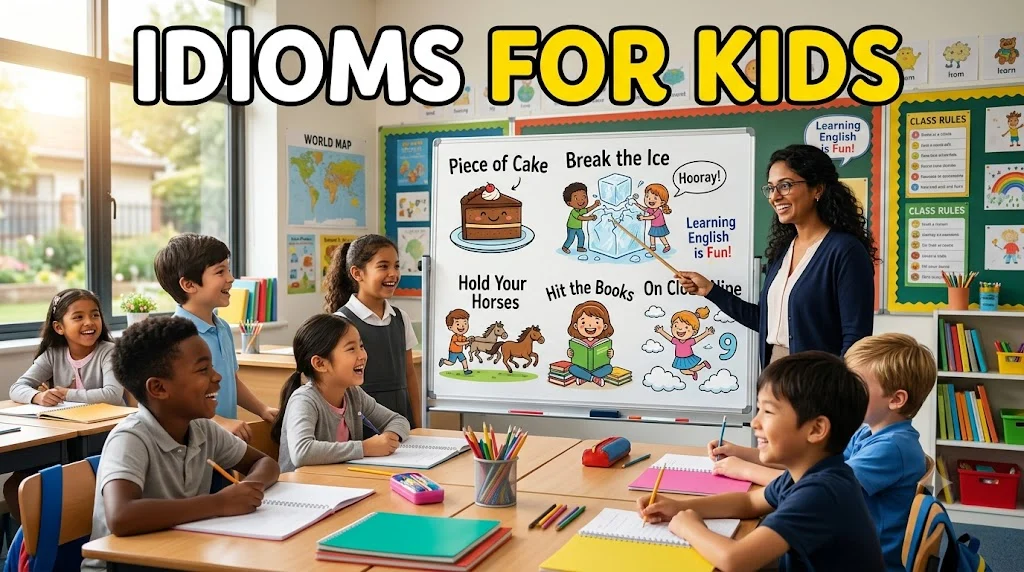
Idioms for kids are fun expressions that have a special meaning different from the actual words. Learning idioms helps children understand stories, speak more naturally, improve writing, and build stronger English vocabulary. Common examples include “piece of cake,” “hold your horses,” and “break the ice.”
Learning English isn’t just about memorizing words it’s about understanding how people naturally communicate. That’s where idioms come in. These colorful expressions make conversations more interesting, stories more exciting, and writing more creative. For children, learning idioms is like discovering hidden meanings behind everyday phrases, turning ordinary language into something memorable and fun.
Many classic storybooks, classroom discussions, cartoons, and family conversations include idioms without children even realizing it. Once kids understand what these expressions really mean, they begin to recognize them everywhere. This not only strengthens vocabulary but also improves reading comprehension, listening skills, and confidence when speaking.
Whether you’re a student preparing for school, a parent helping with homework, a teacher planning engaging lessons, or simply someone who enjoys learning English, these Idioms for Kids will make figurative language much easier to understand. Each idiom below includes a clear meaning, practical situations, and realistic examples so children can confidently use them in everyday communication.
Quick Summary
| Topic | Quick Overview |
|---|---|
| Primary Keyword | Idioms for Kids |
| Best For | Students, parents, teachers, and English learners |
| Difficulty Level | Beginner to Intermediate |
| Number of Idioms | 25 practical idioms |
| Skills Improved | Speaking, reading, writing, vocabulary, storytelling |
| Everyday Uses | School, conversations, essays, books, games |
| Formal or Informal? | Mostly informal, but many work well in writing too |
| Learning Tip | Practice one idiom each day in real conversations |
Piece of Cake
Meaning
Something that is very easy to do.
When People Use It
People say this after completing an easy task or when encouraging someone who feels nervous about doing something simple.
Alternative Expression
Easy as pie
Examples in Communication
Formal Example
The science quiz was a piece of cake because everyone studied well.
Casual Example
“Don’t worry about the puzzle. It’s a piece of cake!”
Creative Example
Emma smiled as she finished the giant jigsaw puzzle. It turned out to be a piece of cake.
Usage Tip
This is one of the most common English idioms for children and works best in casual conversations.
Break the Ice
Meaning
To make people feel comfortable when meeting for the first time.
When People Use It
During introductions, classroom activities, team games, or new friendships.
Alternative Expression
Get the conversation started
Examples in Communication
Formal Example
The teacher played a fun game to break the ice on the first day of school.
Casual Example
Tom told a funny joke to break the ice.
Creative Example
A cheerful smile was enough to break the ice, and soon everyone was laughing together.
Usage Tip
This idiom creates a friendly and welcoming tone.
Hold Your Horses
Meaning
Wait a moment or slow down before acting.
When People Use It
When someone is rushing or becoming impatient.
Alternative Expression
Slow down
Examples in Communication
Formal Example
Please hold your horses until everyone receives the instructions.
Casual Example
“Hold your horses! Dinner isn’t ready yet.”
Creative Example
The excited puppy wanted to run outside, but everyone laughed and said, “Hold your horses!“
Usage Tip
This playful idiom is especially popular among families and teachers.
Hit the Books
Meaning
To begin studying seriously.
When People Use It
Before exams, homework sessions, or important school projects.
Alternative Expression
Start studying
Examples in Communication
Formal Example
The students decided to hit the books before the final examination.
Casual Example
“I have a math test tomorrow, so I need to hit the books.”
Creative Example
As the rain fell outside, Lily curled up with her textbooks and hit the books all evening.
Usage Tip
Although informal, this idiom is commonly used in educational settings.
Under the Weather
Meaning
Feeling slightly sick or unwell.
When People Use It
When someone has a cold, headache, or simply doesn’t feel their best.
Alternative Expression
Feeling unwell
Examples in Communication
Formal Example
Jack stayed home because he was under the weather.
Casual Example
“I’m a little under the weather today.”
Creative Example
The usually energetic soccer player looked quiet because he was feeling under the weather.
Usage Tip
This expression usually refers to mild illness rather than serious health conditions.
The Ball Is in Your Court
Meaning
It is your turn to make a decision or take action.
When People Use It
During teamwork, school projects, or making choices.
Alternative Expression
It’s your turn
Examples in Communication
Formal Example
We have shared our ideas. Now the ball is in your court.
Casual Example
“I’ve finished my part. The ball’s in your court now.”
Creative Example
Everyone waited quietly because the ball was in Mia’s court to choose the winning team.
Usage Tip
This idiom encourages responsibility and decision-making.
Once in a Blue Moon
Meaning
Something that happens very rarely.
When People Use It
Talking about unusual events or rare experiences.
Alternative Expression
Very rarely
Examples in Communication
Formal Example
Our cousins visit us once in a blue moon.
Casual Example
“I only eat ice cream once in a blue moon.”
Creative Example
The old tree bloomed once in a blue moon, making the whole village stop and admire it.
Usage Tip
Children often enjoy this idiom because of its imaginative wording.
Let the Cat Out of the Bag
Meaning
To accidentally reveal a secret.
When People Use It
When someone shares information they were supposed to keep private.
Alternative Expression
Spill the beans
Examples in Communication
Formal Example
Sam accidentally let the cat out of the bag about the surprise party.
Casual Example
“Oops! I let the cat out of the bag.”
Creative Example
One tiny clue was enough to let the cat out of the bag, and everyone guessed the birthday surprise.
Usage Tip
Use this idiom when talking about harmless or exciting secrets, not serious confidential information.
A Blessing in Disguise
Meaning
Something that seems bad at first but turns out to be good later.
When People Use It
When an unexpected event leads to a positive outcome.
Alternative Expression
Everything worked out
Examples in Communication
Formal Example
Missing the first bus became a blessing in disguise because we met our old teacher.
Casual Example
“It looked like bad luck, but it was a blessing in disguise.”
Creative Example
The rainy day canceled the picnic, but it became a blessing in disguise because everyone enjoyed an unforgettable indoor game day.
Usage Tip
This idiom helps children think positively about unexpected situations.
Cost an Arm and a Leg
Meaning
Something is very expensive.
When People Use It
Talking about costly toys, gadgets, vacations, or other expensive items.
Alternative Expression
Very expensive
Examples in Communication
Formal Example
The new gaming computer cost an arm and a leg.
Casual Example
“Those sneakers cost an arm and a leg!“
Creative Example
The shiny bicycle looked amazing, but everyone joked that it cost an arm and a leg.
Usage Tip
This is a figurative expression. It does not mean someone actually loses an arm or a leg.
Hit the Nail on the Head
Meaning
To describe something exactly right or find the correct answer.
When People Use It
When someone makes a perfect guess, gives an accurate explanation, or solves a problem correctly.
Alternative Expression
Exactly right
Examples in Communication
Formal Example
The student’s explanation hit the nail on the head during the class discussion.
Casual Example
“You hit the nail on the head! That’s exactly what I was thinking.”
Creative Example
One clever clue hit the nail on the head, and the mystery was solved instantly.
Usage Tip
This idiom works well in conversations, presentations, and school discussions whenever someone is perfectly accurate.
Keep Your Chin Up
Meaning
Stay positive even when things are difficult.
When People Use It
To encourage someone who feels disappointed, nervous, or discouraged.
Alternative Expression
Don’t give up
Examples in Communication
Formal Example
Even after losing the competition, the coach reminded everyone to keep their chin up.
Casual Example
“You’ll do better next time. Keep your chin up!“
Creative Example
The little bird couldn’t fly very far yet, but its mother smiled and said, “Keep your chin up.“
Usage Tip
This idiom creates a kind and supportive tone.
On Cloud Nine
Meaning
Extremely happy or excited.
When People Use It
After good news, winning a prize, celebrating achievements, or reaching a goal.
Alternative Expression
Over the moon
Examples in Communication
Formal Example
The students were on cloud nine after winning the science fair.
Casual Example
“I’m on cloud nine because I got a puppy!”
Creative Example
After hearing her story would be published, Maya floated through the day on cloud nine.
Usage Tip
Perfect for expressing joyful emotions in both speech and creative writing.
Bite Off More Than You Can Chew
Meaning
To take on more work or responsibility than you can handle.
When People Use It
When someone becomes too busy or accepts too many tasks.
Alternative Expression
Take on too much
Examples in Communication
Formal Example
He bit off more than he could chew by joining five school clubs.
Casual Example
“I think I bit off more than I can chew this week.”
Creative Example
The squirrel tried carrying every acorn at once and quickly realized it had bitten off more than it could chew.
Usage Tip
A helpful idiom for teaching children about balance and planning.
The Early Bird Catches the Worm
Meaning
People who start early often have better opportunities.
When People Use It
Talking about arriving early, studying ahead of time, or preparing before others.
Alternative Expression
Being early pays off
Examples in Communication
Formal Example
The teacher reminded the class that the early bird catches the worm before the exam.
Casual Example
“Let’s leave now. The early bird catches the worm!“
Creative Example
The first little robin found the tastiest breakfast because the early bird catches the worm.
Usage Tip
This idiom encourages responsibility, punctuality, and good habits.
Don’t Judge a Book by Its Cover
Meaning
Don’t decide what someone or something is like based only on appearance.
When People Use It
When encouraging kindness, fairness, and open-minded thinking.
Alternative Expression
Look beyond appearances
Examples in Communication
Formal Example
The story teaches readers not to judge a book by its cover.
Casual Example
“He looks quiet, but don’t judge a book by its cover.”
Creative Example
The old backpack looked worn out, but inside were wonderful adventure journals. Never judge a book by its cover.
Usage Tip
One of the best idioms for teaching empathy and respect.
In Hot Water
Meaning
In trouble because of something you did.
When People Use It
After breaking rules, forgetting homework, or making a mistake.
Alternative Expression
In trouble
Examples in Communication
Formal Example
The student was in hot water after forgetting the class project.
Casual Example
“I’m in hot water because I forgot Mom’s birthday card.”
Creative Example
The mischievous monkey was in hot water after stealing all the bananas from the picnic basket.
Usage Tip
This idiom is informal but very common in everyday English.
Pull Someone’s Leg
Meaning
To joke with someone in a friendly way.
When People Use It
During playful conversations with friends or family.
Alternative Expression
Just kidding
Examples in Communication
Formal Example
His classmates were only pulling his leg about the surprise.
Casual Example
“Relax! I’m just pulling your leg.”
Creative Example
The magician smiled and admitted he had only been pulling everyone’s leg with his funny story.
Usage Tip
Use this idiom only for harmless jokes, not mean teasing.
See Eye to Eye
Meaning
To agree with someone.
When People Use It
During discussions, teamwork, or family conversations.
Alternative Expression
Agree completely
Examples in Communication
Formal Example
The group finally saw eye to eye on the project plan.
Casual Example
“We don’t always see eye to eye, but we’re still good friends.”
Creative Example
After sharing their ideas, the young inventors finally saw eye to eye and built an amazing robot together.
Usage Tip
This idiom is excellent for teaching communication and teamwork.
When Pigs Fly
Meaning
Something will probably never happen.
When People Use It
When talking about impossible or highly unlikely situations.
Alternative Expression
Never going to happen
Examples in Communication
Formal Example
He joked that he would clean his room when pigs fly.
Casual Example
“You’ll see me eat broccoli every day when pigs fly!“
Creative Example
Everyone laughed as tiny wings appeared on the toy pig but only in their imagination, because that would happen when pigs fly.
Usage Tip
Children love this idiom because it creates a funny mental picture.
Every Cloud Has a Silver Lining
Meaning
Even difficult situations usually have something positive to offer.
When People Use It
When helping someone stay hopeful after a disappointment or unexpected problem.
Alternative Expression
Look on the bright side
Examples in Communication
Formal Example
Although the field trip was canceled, the teacher reminded everyone that every cloud has a silver lining.
Casual Example
“I didn’t win the contest, but every cloud has a silver lining.”
Creative Example
The rainy afternoon turned into the perfect time for baking cookies together. Every cloud has a silver lining.
Usage Tip
This idiom encourages optimism and resilience, making it especially valuable for children.
Two Peas in a Pod
Meaning
Two people who are very similar or extremely close friends.
When People Use It
When describing siblings, classmates, or best friends who enjoy the same things.
Alternative Expression
Best buddies
Examples in Communication
Formal Example
The twins are two peas in a pod, sharing many interests.
Casual Example
“Those two are like two peas in a pod.”
Creative Example
Every adventure became more exciting because Noah and Liam were two peas in a pod.
Usage Tip
This friendly idiom often appears in children’s books and everyday conversations.
A Fish Out of Water
Meaning
Feeling uncomfortable because you’re in an unfamiliar situation.
When People Use It
On the first day at a new school, joining a new club, or trying something completely different.
Alternative Expression
Out of place
Examples in Communication
Formal Example
The new student felt like a fish out of water during the first week.
Casual Example
“I felt like a fish out of water at the dance class.”
Creative Example
The little penguin waddled into the jungle and instantly felt like a fish out of water.
Usage Tip
This idiom reminds children that it’s normal to feel nervous in new situations.
Spill the Beans
Meaning
To accidentally reveal a secret.
When People Use It
When someone tells surprising news before they were supposed to.
Alternative Expression
Let the cat out of the bag
Examples in Communication
Formal Example
Someone spilled the beans about the surprise celebration.
Casual Example
“Oops! I spilled the beans.”
Creative Example
The birthday decorations were hidden perfectly until Ben accidentally spilled the beans.
Usage Tip
A playful idiom that’s perfect for everyday conversations.
Actions Speak Louder Than Words
Meaning
What people do is more important than what they say.
When People Use It
Teaching responsibility, honesty, and keeping promises.
Alternative Expression
Show, don’t just tell
Examples in Communication
Formal Example
Volunteering every weekend proved that actions speak louder than words.
Casual Example
“You don’t have to tell me you’ll help—actions speak louder than words.”
Creative Example
The little rabbit quietly shared his lunch every day because actions speak louder than words.
Usage Tip
A wonderful idiom for teaching positive values and good character.
Burn the Midnight Oil
Meaning
To stay awake late working or studying.
When People Use It
Before exams, completing projects, or finishing homework.
Alternative Expression
Stay up late
Examples in Communication
Formal Example
Many students burned the midnight oil before the final presentation.
Casual Example
“I had to burn the midnight oil to finish my art project.”
Creative Example
The young inventor burned the midnight oil, building a robot that amazed everyone the next morning.
Usage Tip
Use this idiom sparingly with children, as it shouldn’t encourage unhealthy sleep habits.
Better Late Than Never
Meaning
It’s better to do something late than not do it at all.
When People Use It
When someone finishes a task after the expected time.
Alternative Expression
At least it got done
Examples in Communication
Formal Example
Although the assignment was submitted a day late, better late than never.
Casual Example
“Sorry I’m late—but better late than never!“
Creative Example
The turtle arrived at the party just before dessert, smiling and saying, “Better late than never.“
Usage Tip
This idiom encourages persistence without making lateness a habit.
Keep an Eye On
Meaning
To watch someone or something carefully.
When People Use It
Looking after younger siblings, pets, or valuable belongings.
Alternative Expression
Watch carefully
Examples in Communication
Formal Example
Please keep an eye on the classroom plants during the holidays.
Casual Example
“Can you keep an eye on my backpack?”
Creative Example
The wise owl promised to keep an eye on the baby birds while their parents searched for food.
Usage Tip
One of the most practical idioms used in everyday family conversations.
Speak of the Devil
Meaning
The person you’re talking about suddenly appears.
When People Use It
During casual conversations when someone unexpectedly arrives.
Alternative Expression
Here they are
Examples in Communication
Formal Example
We were discussing our coach when she walked into the room. Speak of the devil!
Casual Example
“Speak of the devil! We were just talking about you.”
Creative Example
The children mentioned the ice cream truck—and speak of the devil, it turned the corner with cheerful music.
Usage Tip
Despite the wording, this idiom has no connection to anything scary. It’s simply a traditional English expression.
Rain Cats and Dogs
Meaning
To rain very heavily.
When People Use It
Talking about storms or extremely wet weather.
Alternative Expression
Pouring with rain
Examples in Communication
Formal Example
It rained cats and dogs, so the sports event was postponed.
Casual Example
“It’s raining cats and dogs outside!”
Creative Example
The children watched giant raindrops splash against the windows as it rained cats and dogs, making puddles perfect for colorful rain boots.
Usage Tip
This is one of the first weather idioms children usually learn because it’s fun and easy to remember.
Time Flies
Meaning
Time seems to pass very quickly when you’re enjoying yourself or staying busy.
When People Use It
During vacations, birthday parties, holidays, or exciting activities.
Alternative Expression
Time goes by quickly
Examples in Communication
Formal Example
Time flies when students are engaged in enjoyable learning activities.
Casual Example
“Wow, time flies when we’re having fun!”
Creative Example
The afternoon disappeared in a flash as the cousins built forts together time really flies during great adventures.
Usage Tip
This idiom helps children express how quickly enjoyable moments seem to pass.
How to Use Idioms Naturally
Idioms make English more colorful, but using them naturally takes a little practice. Instead of trying to memorize dozens of expressions at once, focus on learning one or two idioms each week. Listen for them in books, movies, cartoons, and everyday conversations, then practice using them in your own sentences.
Children often remember idioms better when they connect them to real experiences. For example, if a test feels easy, saying “It was a piece of cake!” makes the expression meaningful and memorable.
Here are a few simple tips:
- Use idioms where they fit naturally instead of forcing them into every sentence.
- Match the idiom to the situation and emotion.
- Read stories that include figurative language.
- Practice speaking idioms aloud with friends, parents, or teachers.
- Try writing one idiom in a daily journal entry or short story.
Using idioms thoughtfully makes conversations sound smoother and helps writing feel more expressive without becoming complicated.
Common Mistakes with Idioms
Even native English speakers occasionally misuse idioms, so mistakes are a normal part of learning. Understanding a few common errors can help children use these expressions more confidently.
Taking Idioms Literally
One of the biggest mistakes is believing the words mean exactly what they say.
For example:
❌ It’s raining cats and dogs does not mean animals are falling from the sky.
✅ It simply means it’s raining very heavily.
Changing the Words
Idioms usually have fixed wording.
For example:
❌ Piece of pie
✅ Piece of cake
Changing even one word can make the expression sound unusual or incorrect.
Using an Idiom in the Wrong Situation
Some idioms fit only certain situations.
For example, saying “Break the ice” after finishing homework wouldn’t make sense because the idiom is about making people feel comfortable when meeting.
Always think about the situation before using an idiom.
Using Too Many Idioms
Idioms make language interesting, but using several in every sentence can confuse readers and listeners.
A few well-chosen idioms have much more impact than too many.
Idioms vs. Literal Expressions
Understanding the difference between literal language and figurative language is an important step in becoming a confident English speaker.
| Literal Expression | Idiom |
|---|---|
| Open the door. | Break the ice. |
| Study hard. | Hit the books. |
| Wait patiently. | Hold your horses. |
| Agree completely. | See eye to eye. |
| Very easy. | Piece of cake. |
| Feeling sick. | Under the weather. |
Literal expressions mean exactly what the words say.
Idioms have a figurative meaning that you understand from context rather than from the individual words.
Once children recognize this difference, reading stories and understanding conversations becomes much easier.
Tips for Sounding More Fluent
Speaking naturally isn’t about using difficult vocabulary—it’s about choosing the right words at the right time.
Here are some easy ways children can become more confident:
- Learn idioms through storybooks instead of memorizing lists.
- Listen carefully when teachers or family members use expressions.
- Use new idioms during classroom discussions.
- Write creative stories using two or three idioms naturally.
- Watch English cartoons and notice how characters use figurative language.
- Practice with a friend by creating short conversations.
- Review your favorite idioms every weekend.
- Focus on understanding the meaning before trying to use an idiom yourself.
Little by little, these habits make English sound more natural and enjoyable.
How to Remember Idioms Easily
Remembering idioms doesn’t have to be difficult. Children often learn best through imagination, repetition, and fun activities.
Here are a few techniques that really work:
- Draw a funny picture that matches the idiom.
- Make flashcards with the idiom on one side and the meaning on the other.
- Create short stories using new idioms.
- Play guessing games with classmates or family.
- Learn one new idiom every week.
- Say the idiom aloud several times during the day.
- Connect each idiom with a real-life experience.
- Review old idioms regularly so they stay fresh in your memory.
The more often children hear and use idioms, the more naturally they’ll become part of everyday communication.
FAQs
What are idioms for kids?
Idioms for kids are simple figurative expressions whose meanings are different from the literal words. They help children understand natural English, improve vocabulary, and communicate more confidently.
Why should children learn idioms?
Learning idioms improves reading comprehension, listening skills, storytelling, creative writing, and everyday conversations. They also help children understand books, movies, and classroom discussions more easily.
At what age can children start learning idioms?
Most children can begin learning simple idioms between the ages of 7 and 10, although younger learners can also enjoy easy, picture-based idioms with guidance from parents or teachers.
How can parents and teachers teach idioms effectively?
The best approach is to use stories, games, role-playing, picture cards, and real-life examples. Children remember idioms much better when they experience them in context rather than simply memorizing definitions.
How many idioms should kids learn at a time?
It’s usually better to learn one or two idioms each week and practice using them in conversations and writing before moving on to new expressions.
Conclusion
Learning Idioms for Kids is much more than adding colorful expressions to your vocabulary. It’s about understanding how people naturally communicate, tell stories, share emotions, and make conversations more engaging. Every idiom carries a small lesson about language, culture, and creative thinking.
As children become familiar with figurative language, they’ll notice idioms appearing in books, cartoons, classroom discussions, and everyday conversations. What once sounded confusing will gradually become easy to understand, making reading more enjoyable and speaking more confident.
Remember that learning idioms isn’t a race. Practice a few expressions regularly, use them in real conversations, and don’t be afraid to make mistakes along the way. With patience and curiosity, these fun expressions will soon become a natural part of everyday English.
The more children explore and use idioms, the stronger their communication, writing, and storytelling skills will become one expression at a time.
Discover More Related Articles: