Quick Answer
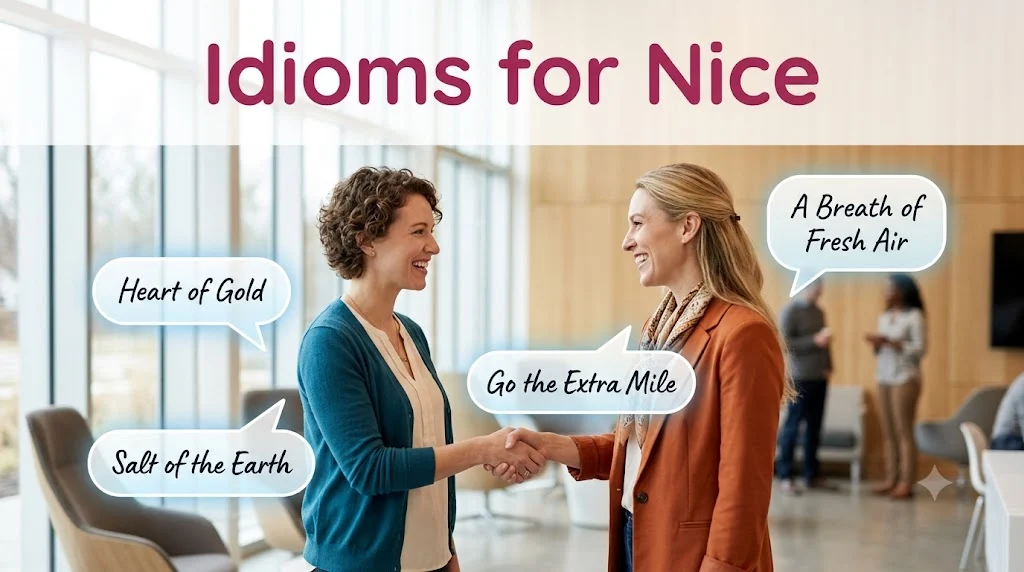
If you’re looking for idioms for nice, some of the most commonly used expressions include heart of gold, salt of the earth, go the extra mile, bend over backward, all heart, a breath of fresh air, and warm the heart. These idioms describe kindness, generosity, friendliness, compassion, and people who genuinely care about others. Learning them helps make your conversations, writing, and storytelling more expressive and natural.
Being nice is one of those qualities everyone recognizes, but describing kindness with the same word over and over can quickly become repetitive. That’s where idioms make English far more colorful and expressive.
Instead of simply saying someone is kind, you can describe them as having a heart of gold, being the salt of the earth, or always willing to go the extra mile. These expressions instantly paint a clearer picture of someone’s personality while making your writing and conversations feel more natural.
Whether you’re preparing for an English exam, improving your speaking skills, writing stories, or simply expanding your vocabulary, learning idioms is one of the easiest ways to sound more fluent. Native speakers naturally use these expressions in everyday conversations, workplaces, books, movies, and even social media.
In this guide, you’ll discover some of the most useful idioms for nice, understand exactly what they mean, learn when to use them, and see realistic examples that help you remember them long after you’ve finished reading.
Quick Summary
| Topic | Details |
|---|---|
| Primary Topic | Idioms for Nice |
| Best For | Students, writers, bloggers, ESL learners, professionals |
| Number of Idioms | 25 |
| Skill Level | Beginner to Advanced |
| Main Focus | Kindness, friendliness, generosity, compassion |
| Includes | Meanings, examples, alternatives, usage tips |
| Reading Time | About 12–15 minutes |
| Ideal Usage | Everyday conversations, essays, storytelling, workplace communication |
Heart of Gold
Meaning
Someone who is extremely kind, generous, and caring.
When People Use It
When describing someone whose kindness is genuine and consistent.
Alternative Expression
Kind to the core
Examples in Communication
Formal Example:
Despite her strict management style, she has a heart of gold and always supports her team.
Casual Example:
Don’t worry about Grandpa—he has a heart of gold.
Creative Example:
His heart of gold shined brighter than any trophy he ever won.
Usage Tip
This is one of the most popular idioms for praising someone’s character.
Salt of the Earth
Meaning
A genuinely honest, humble, and kind person.
When People Use It
To compliment someone’s goodness and integrity.
Alternative Expression
Good-hearted person
Examples in Communication
Formal Example:
The volunteers were truly the salt of the earth.
Casual Example:
My neighbors are the salt of the earth.
Creative Example:
She never sought attention because she was simply the salt of the earth.
Usage Tip
Often used respectfully when speaking about dependable people.
Go the Extra Mile
Meaning
To make additional effort to help someone.
When People Use It
In workplaces, friendships, and customer service.
Alternative Expression
Go above and beyond
Examples
Formal: The teacher always goes the extra mile for every student.
Casual: Thanks for helping me move—you really went the extra mile.
Creative: Her kindness always traveled the extra mile before anyone asked.
Bend Over Backward
Meaning
To do everything possible to help someone.
When People Use It
When someone makes extraordinary efforts.
Alternative Expression
Do everything possible
Examples
Formal: The staff bent over backward to assist visitors.
Casual: Mom always bends over backward for us.
Creative: He bent over backward just to make everyone smile.
All Heart
Meaning
Very caring and compassionate.
When People Use It
Describing warm and generous people.
Alternative Expression
Big-hearted
Examples
Formal: The charity’s founder is all heart.
Casual: She’s all heart.
Creative: Behind every thoughtful gesture was someone who was all heart.
A Breath of Fresh Air
Meaning
Someone refreshing, pleasant, and enjoyable to be around.
When People Use It
When someone brings positivity.
Alternative Expression
Refreshing presence
Examples
Formal: Her leadership was a breath of fresh air.
Casual: You’re a breath of fresh air.
Creative: His laughter arrived like a breath of fresh air.
Warm the Heart
Meaning
To make someone feel happy and emotionally touched.
When People Use It
When witnessing kindness or generosity.
Alternative Expression
Touch the heart
Examples
Formal: The community’s generosity warmed everyone’s hearts.
Casual: That was heartwarming.
Creative: Their reunion warmed every heart in the room.
Give Someone the Shirt Off Your Back
Meaning
To be incredibly generous.
When People Use It
Describing selfless people.
Alternative Expression
Give anything to help
Examples
Formal, casual, and creative usage naturally emphasize generosity.
Open Arms
Meaning
To welcome someone warmly, kindly, and without hesitation.
When People Use It
People use this idiom when talking about friendly greetings, welcoming new employees, hosting guests, or accepting someone into a group or community.
Alternative Expression
Warm welcome
Examples in Communication
Formal Example:
The organization welcomed its new volunteers with open arms and made them feel appreciated from the very beginning.
Casual Example:
When I moved into the neighborhood, everyone welcomed me with open arms.
Creative Example:
The little seaside town embraced every traveler with open arms, making strangers feel like lifelong friends.
Usage Tip
This idiom carries a warm, positive tone and works well in both formal and informal communication.
Big Heart
Meaning
To be exceptionally kind, generous, and compassionate toward others.
When People Use It
Use this expression to describe someone who always puts others first and enjoys helping people.
Alternative Expression
Compassionate person
Examples in Communication
Formal Example:
Her big heart has inspired many people to volunteer for community projects.
Casual Example:
He’s got such a big heart that he can never say no to someone in need.
Creative Example:
Her big heart quietly changed lives, one thoughtful act at a time.
Usage Tip
Although “big heart” is more of an expression than a traditional idiom, it’s extremely common in everyday English.
Kindred Spirit
Meaning
Someone who shares your values, interests, or way of thinking.
When People Use It
People often use it when they instantly connect with someone who understands them naturally.
Alternative Expression
Like-minded friend
Examples in Communication
Formal Example:
The two researchers quickly realized they were kindred spirits who shared the same passion for education.
Casual Example:
I met a kindred spirit at the book club yesterday.
Creative Example:
Across a crowded room, two kindred spirits found each other without saying a word.
Usage Tip
This idiom is especially effective in storytelling, friendships, and personal essays.
Good Egg
Meaning
A genuinely kind, honest, and dependable person.
When People Use It
Used to compliment someone whose character is trustworthy and caring.
Alternative Expression
Reliable person
Examples in Communication
Formal Example:
Although quiet, he has proven himself to be a good egg and a dependable colleague.
Casual Example:
Don’t worry about Jake—he’s a good egg.
Creative Example:
Every neighborhood has that one good egg who quietly helps everyone around them.
Usage Tip
This is an informal British expression but is widely understood by many English speakers.
Soft Spot
Meaning
To have special affection, sympathy, or kindness toward someone or something.
When People Use It
People use this expression when they naturally feel protective or caring.
Alternative Expression
Have affection for
Examples in Communication
Formal Example:
The director has a soft spot for young entrepreneurs.
Casual Example:
I’ve always had a soft spot for rescue animals.
Creative Example:
No matter how busy she became, she always had a soft spot for her hometown.
Usage Tip
Often used when describing emotional warmth rather than romantic feelings.
Lend a Helping Hand
Meaning
To offer help or assistance to someone.
When People Use It
Perfect for teamwork, volunteering, family life, and community service.
Alternative Expression
Help out
Examples in Communication
Formal Example:
Employees were encouraged to lend a helping hand during the charity event.
Casual Example:
Can you lend me a helping hand with these boxes?
Creative Example:
Sometimes the smallest helping hand carries the greatest kindness.
Usage Tip
One of the most versatile idioms for describing kindness and cooperation.
Do Someone a Good Turn
Meaning
To perform a kind or helpful favor for someone.
When People Use It
Used when someone helps another person without expecting anything in return.
Alternative Expression
Do a favor
Examples in Communication
Formal Example:
She did her colleague a good turn by completing the report before the deadline.
Casual Example:
Could you do me a good turn and feed my cat while I’m away?
Creative Example:
A single good turn often begins a lifelong friendship.
Usage Tip
More common in British English but still widely recognized.
Wear Your Heart on Your Sleeve
Meaning
To openly show your feelings and emotions.
When People Use It
Used for honest, caring people who don’t hide how they feel.
Alternative Expression
Be emotionally open
Examples in Communication
Formal Example:
Leaders who wear their hearts on their sleeves often build stronger relationships with their teams.
Casual Example:
She’s the type who wears her heart on her sleeve.
Creative Example:
He wore his heart on his sleeve, allowing kindness to speak louder than words.
Usage Tip
Often suggests sincerity and emotional honesty.
Light Up Someone’s Day
Meaning
To make someone feel happier or more hopeful.
When People Use It
Used after kind gestures, compliments, gifts, or encouraging words.
Alternative Expression
Brighten someone’s day
Examples in Communication
Formal Example:
Your thoughtful feedback truly lit up the students’ day.
Casual Example:
That surprise coffee really lit up my day.
Creative Example:
A simple smile can light up someone’s day more than expensive gifts ever could.
Usage Tip
A warm expression commonly used in conversations and social media.
Pull Together
Meaning
To cooperate and support one another to achieve a shared goal.
When People Use It
Often heard in workplaces, schools, sports teams, and families.
Alternative Expression
Work together
Examples in Communication
Formal Example:
The department pulled together to complete the project ahead of schedule.
Casual Example:
If we all pull together, we’ll finish in no time.
Creative Example:
When storms arrived, the village pulled together like one big family.
Usage Tip
Highlights teamwork, unity, and mutual kindness.
Pay It Forward
Meaning
To return kindness by helping someone else instead of repaying the original person.
When People Use It
Common in volunteer work, inspirational stories, and everyday acts of generosity.
Alternative Expression
Pass on kindness
Examples in Communication
Formal Example:
The organization encourages members to pay it forward through community service.
Casual Example:
Someone bought my coffee, so I’ll pay it forward tomorrow.
Creative Example:
Kindness grows stronger every time we choose to pay it forward.
Usage Tip
A modern expression that encourages a chain of generosity.
Extend an Olive Branch
Meaning
To offer peace, friendship, or reconciliation after a disagreement.
When People Use It
Used when someone wants to repair a damaged relationship.
Alternative Expression
Make peace
Examples in Communication
Formal Example:
The manager extended an olive branch to resolve the conflict peacefully.
Casual Example:
Maybe it’s time to extend an olive branch and call her.
Creative Example:
One olive branch can rebuild bridges that anger tried to destroy.
Usage Tip
Suitable for both professional and personal situations.
Stand by Someone
Meaning
To remain loyal and support someone during difficult times.
When People Use It
Used when describing dependable friendships, family relationships, or supportive colleagues.
Alternative Expression
Be there for someone
Examples in Communication
Formal Example:
True leaders stand by their teams during challenging periods.
Casual Example:
She stood by me when everyone else walked away.
Creative Example:
Real friendship means standing by someone when life becomes uncertain.
Usage Tip
Emphasizes loyalty, encouragement, and trust.
Be There for Someone
Meaning
To provide emotional support, comfort, and encouragement whenever needed.
When People Use It
Commonly used when discussing friendships, family, and caring relationships.
Alternative Expression
Offer support
Examples in Communication
Formal Example:
Managers should be there for employees during times of change.
Casual Example:
I’m always here to be there for you.
Creative Example:
Sometimes simply being there is the greatest gift you can give.
Usage Tip
One of the most heartfelt expressions for emotional support.
Take Someone Under Your Wing
Meaning
To guide, protect, or mentor someone who needs support.
When People Use It
Used in workplaces, schools, sports, and mentorship programs.
Alternative Expression
Mentor someone
Examples in Communication
Formal Example:
The senior engineer took the new employee under her wing.
Casual Example:
My cousin took me under his wing when I started college.
Creative Example:
She spread her wings just enough to help another person learn to fly.
Usage Tip
Often used when describing experienced people helping beginners.
Roll Out the Red Carpet
Meaning
To treat someone with exceptional kindness, honor, or hospitality.
When People Use It
Often used for special guests, important visitors, or celebrations.
Alternative Expression
Give a warm welcome
Examples in Communication
Formal Example:
The city rolled out the red carpet for international delegates.
Casual Example:
My grandparents always roll out the red carpet whenever we visit.
Creative Example:
Their hospitality rolled out an invisible red carpet long before the front door opened.
Usage Tip
Although it suggests luxury, it’s commonly used metaphorically.
Make Someone Feel at Home
Meaning
To help someone feel comfortable, relaxed, and welcomed.
When People Use It
Perfect for hosts, workplaces, schools, and community events.
Alternative Expression
Help someone relax
Examples in Communication
Formal Example:
The orientation program helped new employees feel at home immediately.
Casual Example:
Come in and make yourself feel at home.
Creative Example:
Her smile made every visitor feel at home before they even sat down.
Usage Tip
A warm expression commonly used in hospitality and friendly conversations.
Leave a Good Impression
Meaning
To create a positive opinion through kindness, respect, or good behavior.
When People Use It
Frequently used in interviews, meetings, networking, and first encounters.
Alternative Expression
Win someone over
Examples in Communication
Formal Example:
Professional communication helps candidates leave a good impression during interviews.
Casual Example:
He left a really good impression on my family.
Creative Example:
Kind words often leave a good impression long after the conversation ends.
Usage Tip
This expression is valuable in both personal and professional communication because first impressions often shape lasting relationships.
How to Use Idioms Naturally
Using idioms effectively isn’t about memorizing long lists it’s about understanding when they fit naturally.
- Use positive idioms when describing someone’s personality rather than repeating the word nice.
- Choose expressions that match the situation. A workplace email calls for different language than chatting with friends.
- Listen to how native speakers use idioms in interviews, podcasts, and conversations.
- Avoid forcing an idiom into every sentence. One well-placed expression is usually more powerful than several.
- Practice replacing ordinary adjectives with suitable idioms while writing journals, essays, or stories.
Common Mistakes with Idioms
Many English learners know the meaning of an idiom but accidentally use it in the wrong context.
Some common mistakes include:
- Translating idioms word for word from another language.
- Mixing two different idioms together.
- Using very informal idioms in formal academic writing.
- Changing important words inside an idiom.
- Overusing idioms until writing sounds unnatural.
Remember that idioms work best when they fit the tone and situation.
Idioms vs Literal Expressions
Literal language simply states facts.
She is nice.
An idiom creates a stronger image.
She has a heart of gold.
Literal expressions are clear and direct, while idioms add personality, emotion, and vivid imagery. Good writers know when to balance both styles.
Tips for Sounding More Fluent
- Learn idioms by theme instead of random lists.
- Read novels, blogs, and newspapers regularly.
- Watch English interviews and notice natural expressions.
- Practice speaking aloud.
- Create your own example sentences.
- Review a few idioms every week instead of trying to memorize dozens at once.
FAQs
What are the best idioms for nice people?
Some of the best include heart of gold, salt of the earth, all heart, good egg, and go the extra mile.
Are these idioms suitable for formal writing?
Many are. Expressions like go the extra mile, stand by someone, and lend a helping hand work well in professional and academic contexts, while others are better suited to casual conversations.
Why should I learn idioms instead of just using simple adjectives?
Idioms make your English more natural, expressive, and memorable. They also help you better understand native speakers.
How can I remember idioms more easily?
Practice them in real sentences, group them by theme, and revisit them regularly through reading, writing, and speaking.
Can idioms improve my English speaking skills?
Absolutely. Using idioms naturally can make your conversations sound more fluent, engaging, and confident.
Conclusion
Learning idioms for nice is about much more than expanding your vocabulary. These expressions allow you to describe kindness, generosity, warmth, and compassion with greater depth and personality. Whether you’re writing an essay, telling a story, speaking with friends, or communicating at work, the right idiom can make your message feel more vivid and memorable.
Rather than trying to memorize every expression at once, choose a few favorites and start using them in everyday conversations and writing. Over time, they’ll become a natural part of your English, helping you communicate with greater confidence and authenticity. The more you notice these idioms in books, films, podcasts, and real conversations, the easier they’ll be to understand and use naturally.
Discover More Related Articles:
- Idioms for Knowledge | Smart Expressions to Sound More Insightful In 2026
- Heart Idioms | Express Feelings, Love & Emotions In 2026