Quick Answer
Idioms for joy are expressive phrases people use to describe feelings of delight, excitement, pleasure, and emotional happiness in a vivid and natural way.
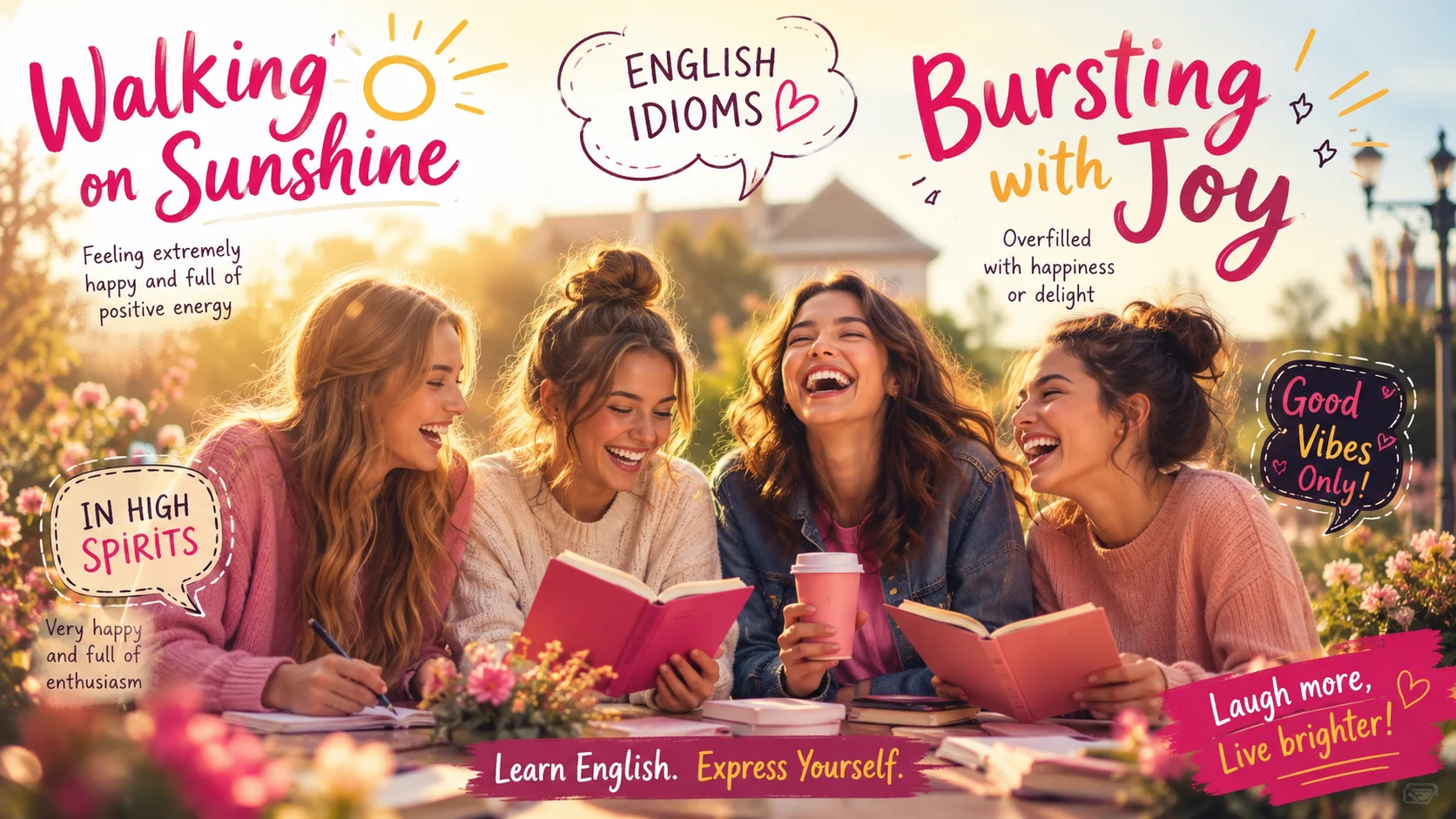
Expressions like “on top of the world,” “bursting with joy,” and “walking on sunshine” make conversations feel warmer, more emotional, and more engaging.
Joy has a way of changing the energy of a conversation. When people are genuinely excited or emotionally uplifted, they rarely settle for plain phrases like “I’m happy.” Instead, they naturally reach for colorful expressions that feel more vivid and human. That’s where idioms for joy become powerful.
These expressions add personality, warmth, and emotional depth to communication. Whether someone is celebrating exam results, sharing exciting news, enjoying a vacation, or simply having a wonderful day, joy idioms help describe those feelings in a memorable way.
You’ll hear them everywhere in movies, novels, classrooms, workplaces, social media captions, and everyday conversations. For English learners, understanding these idioms can dramatically improve listening skills and conversational fluency. For writers and bloggers, they add emotion and rhythm to storytelling without sounding forced.
In this guide, you’ll discover useful idioms for joy along with meanings, realistic examples, and practical tips to help you use them naturally in both speech and writing.
Quick Summary Table
| Idiom | Simple Meaning | Common Usage |
|---|---|---|
| Walking on sunshine | Feeling joyful and carefree | Great mood |
| Bursting with joy | Filled with happiness | Celebrations |
| On top of the world | Feeling extremely happy | Success moments |
| In high spirits | Cheerful and energetic | Positive days |
| Full of beans | Lively and excited | Energetic mood |
| Jumping for joy | Showing excitement openly | Good news |
| Happy camper | Feeling satisfied | Relaxed situations |
| Beaming with joy | Showing visible happiness | Emotional moments |
| Overjoyed | Extremely delighted | Big achievements |
| Smiling from ear to ear | Smiling widely with happiness | Fun experiences |
Walking on Sunshine
Meaning
Feeling extremely joyful, carefree, and optimistic.
When People Use It
People use this idiom when life feels exciting and everything seems to be going well.
Alternative Expression
Walking on air
Examples in Communication
Formal Example
After receiving the promotion, she seemed to be walking on sunshine all week.
Casual Example
I’m basically walking on sunshine after hearing the good news.
Creative Example
With music in her headphones and sunlight on her face, she walked through the city like she was walking on sunshine.
Usage Insight
This idiom creates a bright, uplifting emotional tone and works beautifully in creative writing.
Bursting with Joy
Meaning
Filled with intense happiness and excitement.
When People Use It
Often used during celebrations, reunions, or emotional achievements.
Alternative Expression
Overflowing with happiness
Examples in Communication
Formal Example
The family was bursting with joy during the graduation ceremony.
Casual Example
She was bursting with joy after seeing her best friend again.
Creative Example
The room felt alive with laughter and children bursting with joy beneath the colorful lights.
On Top of the World
Meaning
Feeling incredibly happy, successful, or proud.
When People Use It
Common after achievements or fulfilling experiences.
Alternative Expression
Feeling unbeatable
Examples in Communication
Formal Example
He felt on top of the world after publishing his first novel.
Casual Example
I’m on top of the world today.
Creative Example
Standing beside the ocean at sunrise, she felt completely on top of the world.
In High Spirits
Meaning
Cheerful, lively, and emotionally positive.
When People Use It
Often used to describe someone’s mood during social gatherings or good times.
Alternative Expression
In a cheerful mood
Examples in Communication
Formal Example
Despite the long journey, the travelers remained in high spirits.
Casual Example
Everyone was in high spirits at the party.
Creative Example
The little restaurant buzzed with people in high spirits sharing stories over coffee.
Usage Insight
This idiom sounds slightly more polished and works well in storytelling and descriptive writing.
Full of Beans
Meaning
Very energetic, lively, and excited.
When People Use It
Usually used for energetic children or enthusiastic adults.
Alternative Expression
Full of energy
Examples in Communication
Formal Example
The children arrived at school full of beans after the holiday break.
Casual Example
You’re full of beans this morning.
Creative Example
The puppy raced around the garden full of beans and impossible to catch.
Jumping for Joy
Meaning
Showing happiness in an energetic or physical way.
When People Use It
Used after exciting announcements or surprises.
Alternative Expression
Thrilled beyond words
Examples in Communication
Formal Example
The fans were jumping for joy after the final goal.
Casual Example
I was literally jumping for joy when I got accepted.
Creative Example
The siblings came running down the hallway jumping for joy on Christmas morning.
Happy Camper
Meaning
Someone who feels satisfied, content, and cheerful.
When People Use It
Often used casually in everyday conversation.
Alternative Expression
Perfectly content
Examples in Communication
Formal Example
After solving the issue, the clients were happy campers again.
Casual Example
Give me pizza and movies, and I’m a happy camper.
Creative Example
Wrapped in blankets beside the fire, he looked like the happiest camper in the world.
Beaming with Joy
Meaning
Showing obvious happiness through facial expression.
When People Use It
Usually used when someone’s happiness is clearly visible.
Alternative Expression
Glowing with happiness
Examples in Communication
Formal Example
The bride was beaming with joy throughout the ceremony.
Casual Example
She walked in beaming with joy after hearing the results.
Creative Example
He stood beneath the city lights beaming with joy as friends surrounded him with applause.
Overjoyed
Meaning
Extremely delighted and emotionally happy.
When People Use It
Used for heartfelt moments and major achievements.
Alternative Expression
Absolutely thrilled
Examples in Communication
Formal Example
The community was overjoyed by the positive announcement.
Casual Example
Mom was overjoyed when we surprised her.
Creative Example
She felt overjoyed watching old memories flicker across the screen during the reunion video.
Smiling from Ear to Ear
Meaning
Smiling very widely because of happiness.
When People Use It
Used when someone cannot hide their excitement.
Alternative Expression
Grinning widely
Examples in Communication
Formal Example
The athlete was smiling from ear to ear after the victory.
Casual Example
You’ve been smiling from ear to ear all day.
Creative Example
He stepped off the train smiling from ear to ear with flowers in his hand.
Over the Moon
Meaning
Extremely happy and delighted.
When People Use It
Commonly used for exciting personal news.
Alternative Expression
On cloud nine
Examples in Communication
Formal Example
The team was over the moon after completing the project successfully.
Casual Example
I’m over the moon about the concert tickets.
Creative Example
She sat by the window over the moon as the rain tapped softly against the glass.
Tickled Pink
Meaning
Pleasantly surprised and happy.
When People Use It
Usually used for sweet gestures or compliments.
Alternative Expression
Delighted
Examples in Communication
Formal Example
The professor was tickled pink by the thoughtful feedback.
Casual Example
Dad was tickled pink when we decorated the room for him.
Creative Example
She looked tickled pink after opening the handwritten letter tied with ribbon.
Like a Kid in a Candy Store
Meaning
Feeling intense excitement and delight.
When People Use It
Often used when someone is surrounded by things they love.
Alternative Expression
Wide-eyed with excitement
Examples in Communication
Formal Example
The collectors looked like kids in a candy store at the exhibition.
Casual Example
I felt like a kid in a candy store at the bookstore sale.
Creative Example
He wandered through the music shop like a kid in a candy store touching every guitar with wonder.
Practical Ways to Use Joy Idioms Naturally
Match the Emotional Intensity
Some idioms express calm happiness while others describe explosive excitement.
For example:
- “Happy camper” feels relaxed and casual.
- “Bursting with joy” feels emotional and powerful.
- “Walking on sunshine” feels dreamy and optimistic.
Choosing the right emotional level helps conversations sound more natural.
Use Idioms Sparingly
A few strong idioms create impact. Too many can make writing feel unnatural or exaggerated.
Learn Through Context
Reading novels, blogs, captions, and dialogue-heavy stories helps you understand how idioms fit naturally into real communication.
Practice with Real-Life Situations
Try connecting idioms to your own experiences:
- “I was over the moon after my results.”
- “She was beaming with joy during the celebration.”
This makes learning more memorable.
Common Mistakes with Joy Idioms
Using the Wrong Tone
Some idioms sound informal and playful. They may not fit serious academic or professional situations.
Changing the Idiom Incorrectly
Incorrect:
“She was in the moon.”
Correct:
“She was over the moon.”
Overusing Idioms
Too many idioms in one paragraph can distract readers instead of improving expression.
Taking Idioms Literally
Remember that idioms are figurative. “Walking on sunshine” does not mean physically walking on sunlight.
How to Remember Idioms Easily
Visualize the Phrase
Imagine someone literally jumping for joy or walking on sunshine. Mental imagery improves memory.
Group Similar Idioms Together
Learning happiness-related idioms as a category helps you remember them faster.
Listen to Native English Content
Movies, podcasts, and interviews expose you to natural usage patterns.
Write Small Daily Sentences
Practice one idiom each day in a diary entry, caption, or conversation.
Joy Idioms in Everyday Conversations
Idioms become far more memorable when you notice how naturally they appear in daily communication. People rarely announce happiness in a plain or emotionless way. Instead, they use colorful phrases that instantly make conversations feel more personal and expressive.
For example, a friend might say:
- “I’m over the moon about my new job.”
- “She’s been walking on sunshine all week.”
- “The kids were jumping for joy after the match.”
These expressions sound warmer and more human than simply saying “I’m happy.”
In workplaces, lighter joy idioms can also make communication feel friendly and approachable. During celebrations or team achievements, phrases like “in high spirits” or “on top of the world” often appear naturally in speeches, emails, or conversations.
Writers especially benefit from understanding emotional idioms because they help scenes feel alive. A character who is “beaming with joy” instantly creates a stronger image than a character who is merely “happy.”
The key is noticing how context changes the emotional tone. Some idioms feel playful, some poetic, and others deeply emotional.
Why Joy Idioms Make Writing More Powerful
Good writing is not only about grammar or vocabulary. It is also about emotional connection. Idioms for joy help writers create mood, rhythm, and personality without long explanations.
Compare these two sentences:
- “She was happy after the concert.”
- “She walked home on cloud nine after the concert.”
The second sentence feels more vivid because the idiom paints an emotional picture instead of stating emotion directly.
Joy idioms are especially useful in:
- Storytelling
- Personal blogs
- Social media captions
- Dialogue writing
- School essays
- Creative journaling
They also help readers connect emotionally with experiences. Phrases like “bursting with joy” or “grinning from ear to ear” make scenes feel more realistic because people genuinely speak that way in real life.
However, strong writing uses idioms with balance. One natural idiom can make a paragraph memorable, while too many can overwhelm the reader.
The best approach is to choose expressions that genuinely match the mood and voice of your writing.
FAQs
What are idioms for joy?
Idioms for joy are figurative expressions used to describe happiness, delight, excitement, or emotional positivity in a vivid way.
Why should I learn joy idioms?
They help improve conversational fluency, emotional expression, storytelling, and natural English communication.
Are joy idioms formal or informal?
Most joy idioms are informal or semi-formal, though some work well in storytelling and polished writing.
What is the difference between joy and happiness idioms?
Joy idioms often focus more on emotional excitement, delight, and celebration, while happiness idioms can also describe calm contentment.
How can I use idioms naturally in conversation?
Listen to how native speakers use them, practice with real-life situations, and avoid forcing too many into one conversation.
Conclusion
Idioms for joy make communication feel warmer, richer, and far more expressive than plain vocabulary alone. They capture excitement, celebration, comfort, and emotional connection in ways simple words often cannot. Whether you’re improving spoken English, writing creatively, or trying to sound more natural in conversations, these expressions add personality and depth to language.
The key is not memorizing dozens of idioms at once. Instead, focus on understanding how people actually use them in real situations. Listen carefully, read widely, and gradually practice them in your own voice.
Over time, these phrases begin to feel natural rather than studied. That’s when communication becomes more fluent, engaging, and emotionally authentic.
A well-placed idiom doesn’t just improve a sentence it makes the feeling behind it more memorable.