Quick Answer
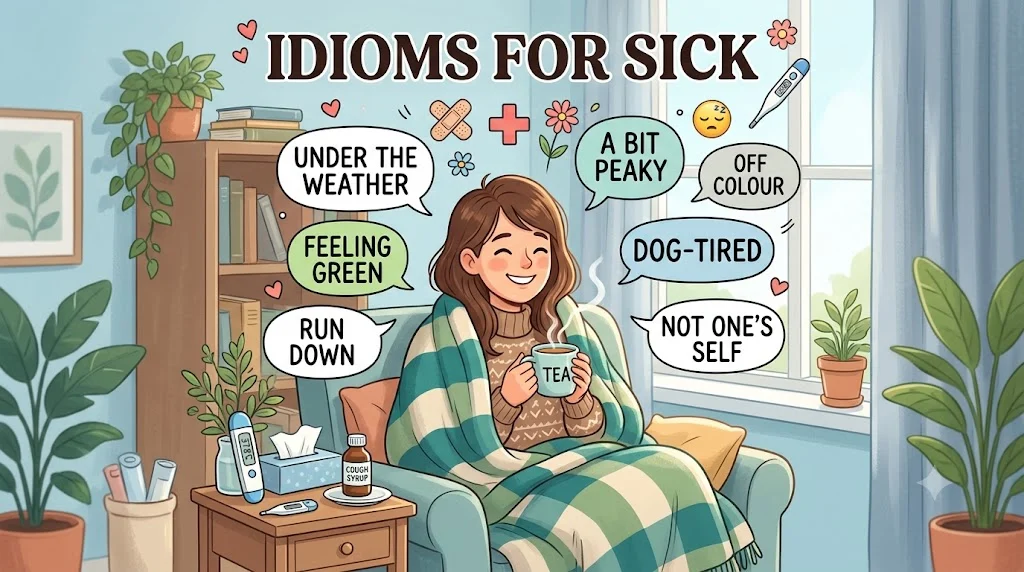
If you’re looking for natural idioms for sick, some of the most common ones include under the weather, feeling green, run down, off color, sick as a dog, on your last legs, and fit as a fiddle (often used as the opposite). These expressions help speakers describe illness in a more colorful and conversational way than simply saying, “I’m sick.”
Have you ever noticed that native English speakers rarely stop at saying, “I’m sick”? Instead, they often say they’re under the weather, run down, or even feeling green. These expressions add personality to everyday conversations and make communication feel more natural.
Learning idioms isn’t simply about memorizing unusual phrases. It’s about understanding how people genuinely communicate in real life. Whether you’re writing a story, chatting with friends, preparing for an English exam, or improving your workplace communication, idioms can help your language sound smoother and more expressive.
The best part is that many idioms for sickness don’t actually mention illness directly. Instead, they paint a picture that listeners immediately understand. Once you become familiar with these expressions, you’ll begin noticing them in movies, books, podcasts, and daily conversations.
In this guide, you’ll discover practical idioms for sick, learn when they’re appropriate, explore realistic examples, and gain confidence using them naturally instead of forcing them into conversation.
Quick Summary
| Topic | Details |
|---|---|
| Primary Keyword | Idioms for Sick |
| Total Idioms | 25 |
| Best For | Students, Writers, Bloggers, ESL Learners |
| Difficulty | Beginner to Intermediate |
| Common Contexts | Everyday conversations, essays, storytelling, workplace communication |
| Formal Usage | Some idioms are suitable in writing; others are best for casual speech |
| Main Learning Goal | Speak and write more naturally in English |
Under the Weather
Meaning
Feeling slightly ill or not in your usual good health.
When People Use It
People commonly use this idiom when they have a mild cold, headache, fatigue, or simply don’t feel their best.
Alternative Expression
Off color
Examples in Communication
Formal Example
Sarah worked from home because she was feeling under the weather.
Casual Example
I’m a little under the weather today, so I’ll stay home.
Creative Example
He smiled through the meeting, but everyone could tell he was a little under the weather.
Usage Tip
This is one of the safest and most common idioms for both professional and casual conversations.
Sick as a Dog
Meaning
To be extremely ill.
When People Use It
Usually used after food poisoning, flu, or a severe illness.
Alternative Expression
Very ill
Examples in Communication
Formal Example
He was sick as a dog after eating contaminated food.
Casual Example
I couldn’t come yesterday—I was sick as a dog.
Creative Example
After the roller coaster ride, Jake felt sick as a dog and couldn’t even look at lunch.
Usage Tip
This expression is informal and works best in conversations with friends and family.
Feeling Green
Meaning
Looking or feeling nauseous.
When People Use It
Often used when someone feels like they might vomit due to illness or motion sickness.
Alternative Expression
Queasy
Examples in Communication
Formal Example
She looked slightly green during the long bus journey.
Casual Example
I’m feeling green after that boat ride.
Creative Example
The spinning carnival ride left everyone feeling green.
Usage Tip
Although common in conversation, it’s less frequent in formal writing.
Off Color
Meaning
Not feeling completely healthy.
When People Use It
People use this expression when someone appears tired, pale, or mildly ill.
Alternative Expression
Under the weather
Examples in Communication
Formal Example
Emma looked a little off color during the afternoon meeting.
Casual Example
You seem off color today. Are you okay?
Creative Example
Even her cheerful smile couldn’t hide that she was feeling off color.
Usage Tip
A gentle and polite way to mention illness without sounding dramatic.
Run Down
Meaning
Feeling exhausted because of stress, overwork, or lack of sleep.
When People Use It
Common among busy professionals, students, and parents.
Alternative Expression
Worn out
Examples in Communication
Formal Example
Months of overtime had left him completely run down.
Casual Example
I’ve been so busy lately that I feel run down.
Creative Example
The endless deadlines slowly left her feeling run down before vacation finally arrived.
Usage Tip
This idiom often refers to exhaustion rather than a specific illness.
Not Feeling Myself
Meaning
Feeling physically or emotionally unwell.
When People Use It
Used when someone can’t clearly explain why they don’t feel normal.
Alternative Expression
Not quite right
Examples in Communication
Formal Example
She wasn’t feeling herself, so she postponed the presentation.
Casual Example
I’m just not feeling myself today.
Creative Example
Even coffee couldn’t make him feel like himself again.
Usage Tip
Very common in modern spoken English.
On Your Last Legs
Meaning
Extremely weak because of illness or exhaustion.
When People Use It
Often used after a long illness or demanding physical effort.
Alternative Expression
Barely standing
Examples in Communication
Formal Example
Following surgery, he was on his last legs for several weeks.
Casual Example
I’m on my last legs after this flu.
Creative Example
The marathon and the fever together left him on his last legs.
Usage Tip
Can also describe machines or objects that are close to breaking.
Come Down With Something
Meaning
To begin becoming sick.
When People Use It
Usually when symptoms first appear.
Alternative Expression
Catch a bug
Examples in Communication
Formal Example
Several employees came down with the seasonal flu.
Casual Example
I think I’m coming down with something.
Creative Example
By evening, she knew she was coming down with more than just a simple cold.
Usage Tip
A very natural expression you’ll hear frequently in everyday English.
Catch a Bug
Meaning
To become ill with a virus or minor infection.
When People Use It
Often used for colds, stomach viruses, or seasonal illnesses.
Alternative Expression
Come down with something
Examples in Communication
Formal Example
Many students caught a bug during the winter term.
Casual Example
Looks like I caught a bug from work.
Creative Example
One sneeze quickly turned into an entire office catching the same bug.
Usage Tip
A friendly, informal way to describe common illnesses.
Burning Up
Meaning
Having a very high fever.
When People Use It
Used when someone’s body temperature is unusually high.
Alternative Expression
Running a fever
Examples in Communication
Formal Example
The child was burning up and needed immediate medical attention.
Casual Example
I’m burning up. Can you check my temperature?
Creative Example
Wrapped in blankets, she still felt like she was burning up.
Usage Tip
Although figurative, it often describes a real fever.
Out of Commission
Meaning
Unable to work or function because of illness or injury.
When People Use It
Common in workplaces and everyday conversations.
Alternative Expression
Laid up
Examples in Communication
Formal Example
The manager was out of commission for a week following surgery.
Casual Example
I’m out of commission today because of the flu.
Creative Example
One nasty cold left the usually energetic coach completely out of commission.
Usage Tip
This idiom can describe both people and equipment.
Laid Up
Meaning
Confined to bed or unable to carry out normal activities because of illness or injury.
When People Use It
Often used when recovery takes several days or weeks.
Alternative Expression
Out of commission
Examples in Communication
Formal Example
She was laid up with pneumonia for nearly two weeks.
Casual Example
I’ve been laid up all weekend with a bad cold.
Creative Example
Being laid up gave him plenty of time to finish the novel he’d been postponing.
At Death’s Door
Meaning
To be extremely sick or close to serious illness.
When People Use It
This idiom is usually used in an exaggerated or dramatic way to describe feeling very unwell. It is more common in storytelling and casual speech than formal writing.
Alternative Expression
Seriously ill
Examples in Communication
Formal Example
The patient appeared to be at death’s door when he was first admitted to the hospital.
Casual Example
I felt like I was at death’s door after that terrible flu.
Creative Example
After three sleepless nights and a stubborn fever, she felt as though she was at death’s door.
Usage Tip
This phrase is often used for emphasis and does not always mean someone is literally near death.
Back on Your Feet
Meaning
To recover from sickness and return to normal activities.
When People Use It
People use this expression when someone is improving after an illness, injury, or difficult period.
Alternative Expression
Feeling better again
Examples in Communication
Formal Example
The recovery program helped him get back on his feet after his illness.
Casual Example
I hope you’re back on your feet soon.
Creative Example
A few days of rest helped her get back on her feet and return to the things she loved.
Usage Tip
This is a positive and encouraging idiom often used when supporting someone.
Fit as a Fiddle
Meaning
To be healthy, energetic, and in excellent condition.
When People Use It
This idiom is usually used as the opposite of being sick. It describes someone who has recovered or is feeling great.
Alternative Expression
In good shape
Examples in Communication
Formal Example
After completing his treatment, he was once again fit as a fiddle.
Casual Example
Don’t worry about me. I’m fit as a fiddle now.
Creative Example
The old farmer was fit as a fiddle despite his busy lifestyle.
Usage Tip
Use this expression when talking about good health, not illness.
Black and Blue
Meaning
Covered with bruises or feeling sore after an injury.
When People Use It
Commonly used after accidents, falls, or physical activities.
Alternative Expression
Bruised and sore
Examples in Communication
Formal Example
The athlete was black and blue after the intense competition.
Casual Example
I fell off my bike and ended up black and blue.
Creative Example
After the long adventure, they returned home tired, dusty, and black and blue.
Usage Tip
This phrase usually relates to physical injury rather than sickness.
Feeling Rough
Meaning
Feeling sick, tired, or generally unwell.
When People Use It
A very common informal expression used in everyday conversations.
Alternative Expression
Feeling awful
Examples in Communication
Formal Example
The employee reported feeling rough and requested a short break.
Casual Example
I feel rough today. I think I need some rest.
Creative Example
The morning arrived slowly, and he woke up feeling rough after a restless night.
Usage Tip
This is natural in speech but less suitable for formal essays.
Worse for Wear
Meaning
Looking or feeling tired, damaged, or affected after a difficult experience.
When People Use It
Used for people after illness, stress, travel, or challenging situations.
Alternative Expression
Worn out
Examples in Communication
Formal Example
After several weeks of recovery, she was still slightly worse for wear.
Casual Example
That long trip left me a little worse for wear.
Creative Example
The storm passed, but the garden looked worse for wear.
Usage Tip
This idiom can describe both people and objects.
Take a Turn for the Worse
Meaning
To become more serious or unhealthy.
When People Use It
Used when someone’s condition suddenly becomes worse.
Alternative Expression
Get worse
Examples in Communication
Formal Example
The patient’s condition took a turn for the worse overnight.
Casual Example
His cold took a turn for the worse yesterday.
Creative Example
What seemed like a simple illness suddenly took a turn for the worse.
Usage Tip
This expression is more serious and is commonly used in medical or emotional situations.
Under the Weather but Getting Better
Meaning
Feeling slightly sick but gradually recovering.
When People Use It
Used to describe improvement while someone is still not completely healthy.
Alternative Expression
On the mend
Examples in Communication
Formal Example
The employee was under the weather but expected to return soon.
Casual Example
I’m still under the weather, but I’m getting better.
Creative Example
After days of rest, she was finally seeing the light at the end of the tunnel.
Usage Tip
This phrase creates a hopeful and positive tone.
On the Mend
Meaning
Recovering from an illness or injury.
When People Use It
Used when someone is improving after being sick.
Alternative Expression
Recovering well
Examples in Communication
Formal Example
The doctor confirmed that the patient was on the mend.
Casual Example
I’m feeling much better now. I’m definitely on the mend.
Creative Example
With patience and care, his health was slowly getting back on track.
Usage Tip
A warm and encouraging expression that works well in conversations.
Feeling Below Par
Meaning
Not feeling as healthy, energetic, or effective as usual.
When People Use It
Used when someone feels slightly weak or not at their best.
Alternative Expression
Not at your best
Examples in Communication
Formal Example
The athlete performed below par because he was recovering from illness.
Casual Example
I’m feeling below par today, so I’ll take it easy.
Creative Example
Even the brightest days felt dull when she was feeling below par.
Usage Tip
This phrase can describe health, performance, or mood.
Wiped Out
Meaning
Extremely tired or exhausted.
When People Use It
Common after illness, intense work, travel, or physical activity.
Alternative Expression
Completely exhausted
Examples in Communication
Formal Example
The illness left him completely wiped out for several days.
Casual Example
I’m wiped out. I need some sleep.
Creative Example
After battling a cold all week, she felt completely wiped out.
Usage Tip
Very common in casual English but avoid it in highly formal writing.
Common Mistakes When Using Idioms for Sick
Using idioms can make your English sound natural, but choosing the wrong expression can create confusion. One common mistake is using dramatic idioms for simple situations. For example, saying someone is “at death’s door” for a small headache sounds exaggerated.
Another mistake is translating idioms word-for-word from your first language. Idioms carry cultural meanings, so their real message is often different from the literal words.
It is also important to match the situation. Expressions like “sick as a dog” and “wiped out” fit casual conversations, while phrases like “take a turn for the worse” are more appropriate in serious discussions.
Learning the emotion behind an idiom is more valuable than memorizing the words alone.
Idioms vs Literal Expressions
Literal expressions directly explain a situation, while idioms add emotion and personality.
For example:
Literal: I am feeling tired because I have been sick.
Idiomatic: I am feeling wiped out after being sick.
The second sentence creates a stronger image and sounds more natural in everyday conversation.
Idioms help writers create more engaging stories and help speakers communicate feelings more effectively.
Tips for Using Idioms Naturally
- Learn idioms through real examples instead of isolated definitions.
- Pay attention to whether an idiom sounds formal or casual.
- Listen to native speakers in conversations, movies, and podcasts.
- Practice using one or two new idioms each week.
- Avoid adding idioms just to sound advanced; natural usage is always better.
- Connect idioms with personal experiences to remember them easily.
How to Remember Idioms Easily
A useful way to remember idioms for sick is to connect each phrase with a mental image.
For example:
- Under the weather → Imagine someone standing under dark clouds.
- Back on your feet → Picture someone becoming active again.
- Run down → Imagine a phone battery losing power.
Stories and visuals make idioms easier to recall because the brain remembers meaning better when emotions and images are attached.
How Idioms Improve Communication
Idioms make conversations warmer and more expressive. Instead of simply saying “I am sick,” saying “I am feeling under the weather” creates a softer and more natural tone.
For professionals, knowing when to use casual or formal expressions improves communication confidence.
The key is balance. Great communication is not about using the most idioms possible; it is about choosing the right expression at the right moment.
FAQs
What are some common idioms for sick in English?
Some common idioms for sick include under the weather, sick as a dog, run down, feeling rough, come down with something, catch a bug, on the mend, and back on your feet. These expressions are frequently used in everyday conversations to describe illness or recovery in a more natural way.
Are idioms for sick suitable for formal writing?
It depends on the idiom. Some expressions, such as under the weather and on the mend, can work well in general writing. However, very casual phrases like sick as a dog or wiped out are usually better for conversations, personal writing, or informal content.
Why should English learners study idioms about sickness?
Idioms help learners understand how native speakers communicate feelings and experiences. Instead of relying only on basic vocabulary like “ill” or “tired,” learners can express themselves in a more fluent and natural way.
What is the difference between saying “I am sick” and using a sick-related idiom?
The sentence “I am sick” gives a direct fact, while an idiom adds emotion and context. For example, saying “I am feeling under the weather” sounds softer and more conversational, while “I am sick” is more straightforward.
How can I practice using idioms for sick correctly?
You can practice by reading examples, listening to native English conversations, writing your own sentences, and noticing how idioms appear in books, movies, and online content.
Conclusion
Language becomes more powerful when we understand not only the words we say but also the feelings behind them. Idioms add color, emotion, and personality to communication, helping us express experiences in a way that feels natural and relatable.
Learning idioms for sick gives students, writers, and language learners a better understanding of how people describe health, recovery, and difficult moments in everyday English. Expressions like under the weather, run down, on the mend, and back on your feet allow you to communicate more smoothly while making your conversations and writing more engaging.
The best way to master idioms is through regular practice. Notice how people use them, connect them with real situations, and slowly include them in your own speaking and writing. With time, these expressions will become a natural part of your vocabulary.
Whether you are improving your English skills, writing creatively, or simply trying to communicate more confidently, understanding idioms for sick can help you express yourself with greater clarity and warmth.
Discover More Related Articles:
- Idioms About Beauty | That Will Brighten Your Vocabulary In 2026
- Idioms About Cake | A Sweet Guide to English Expressions In 2026