Quick Answer
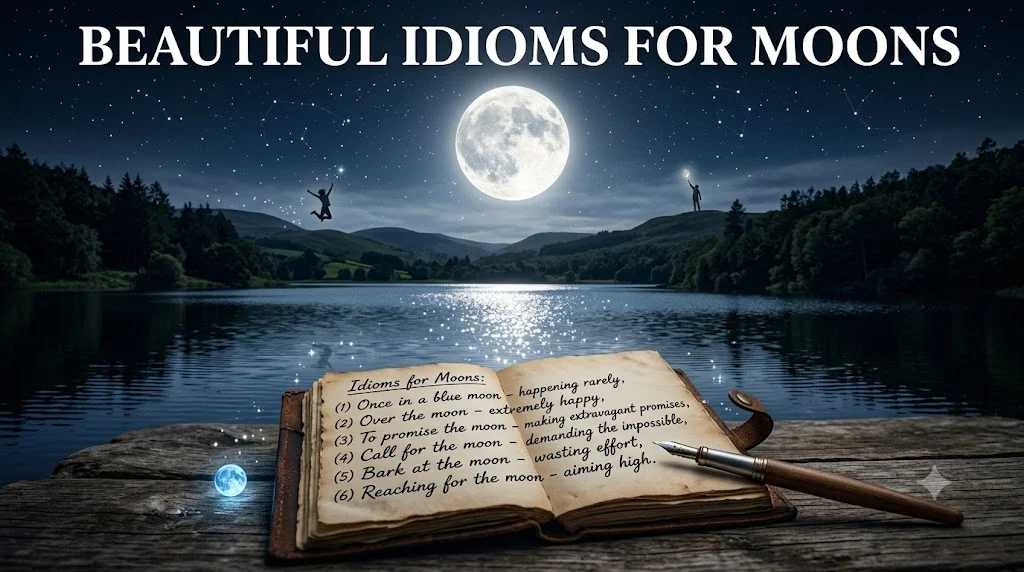
If you’re looking for idioms for moons, it’s helpful to know that there are very few English idioms specifically about the moon. Instead, English uses many well-known expressions that feature the moon to describe dreams, impossibility, romance, change, timing, emotions, success, and unusual behavior.
Popular examples include “Once in a Blue Moon,” “Over the Moon,” “Ask for the Moon,” “Promise the Moon,” and “Many Moons Ago.” Learning these idioms will make your conversations, essays, and creative writing sound far more natural and expressive.
The moon has fascinated people for thousands of years. It has inspired myths, poems, songs, stories, and everyday conversations across countless cultures. Although English doesn’t have hundreds of idioms that are exclusively about the moon, the ones it does have are wonderfully expressive. They capture emotions that are sometimes difficult to explain with ordinary words—joy so great you feel weightless, dreams that seem impossible, memories from long ago, or moments that happen only rarely.
These moon-related idioms appear naturally in conversations, novels, speeches, workplaces, classrooms, and even social media captions. Once you understand their figurative meanings, you’ll start noticing them everywhere. Better yet, you’ll know exactly when to use them yourself.
Whether you’re a student preparing for an English exam, a writer looking for more vivid language, or simply someone who enjoys learning new expressions, these idioms can make your communication more engaging and memorable. Let’s explore the most useful idioms for moons, complete with meanings, real-life examples, and practical tips for using them naturally.
Quick Summary
| Topic | Details |
|---|---|
| Primary Keyword | Idioms for Moons |
| Total Idioms | 25 |
| Best For | Students, writers, bloggers, ESL learners |
| Difficulty | Easy to Intermediate |
| Common Themes | Happiness, rarity, dreams, romance, time, imagination |
| Formal Writing | Some idioms are appropriate |
| Everyday Conversation | Most idioms are commonly used |
| Creative Writing | Excellent for storytelling and descriptive writing |
| Learning Tip | Practice one idiom each day in real conversations |
Moon Idioms That Brighten Your English
Once in a Blue Moon
Meaning
Something that happens very rarely.
When People Use It
People use this idiom when talking about unusual events or things that hardly ever happen.
Alternative Expression
Rare as hen’s teeth
Examples in Communication
Formal Example:
Our entire family gathers together only once in a blue moon.
Casual Example:
He actually cleans his room once in a blue moon.
Creative Example:
Like a blue moon lighting the sky, her surprise visit became an unforgettable memory.
Usage Tip: This is one of the most common English idioms and fits both casual conversations and informal writing.
Over the Moon
Meaning
Extremely happy or delighted.
When People Use It
After receiving wonderful news, achieving a goal, or celebrating success.
Alternative Expression
On cloud nine
Examples in Communication
Formal Example:
The research team was over the moon after receiving the award.
Casual Example:
I’m over the moon that you got the job!
Creative Example:
When the acceptance letter arrived, her heart danced over the moon.
Ask for the Moon
Meaning
To request something unrealistic or impossible.
When People Use It
When expectations are too high.
Alternative Expression
Ask for the impossible.
Examples in Communication
Formal Example:
The client isn’t asking for the moon, only a reasonable deadline.
Casual Example:
I’m not asking for the moon—I just need your help.
Creative Example:
He never asked for the moon; he simply hoped for one honest chance.
Promise the Moon
Meaning
To make unrealistic or exaggerated promises.
When People Use It
Often used when discussing politics, business, or unreliable people.
Alternative Expression
Make empty promises
Examples in Communication
Formal Example:
Successful leaders avoid promising the moon.
Casual Example:
Don’t promise me the moon if you can’t keep your word.
Creative Example:
He promised the moon, but delivered only silence.
Many Moons Ago
Meaning
A very long time ago.
When People Use It
When recalling old memories or childhood experiences.
Alternative Expression
Long ago
Examples in Communication
Formal Example:
Many moons ago, this town was a small farming community.
Casual Example:
We met many moons ago in school.
Creative Example:
Many moons ago, dreams seemed closer than the stars.
Writing Tip: This idiom creates a nostalgic tone and works beautifully in storytelling.
Moonlighting
Meaning
Working a second job in addition to your main one.
When People Use It
When discussing careers, finances, or side income.
Alternative Expression
Working a side job
Examples in Communication
Formal Example:
She has been moonlighting as a freelance editor.
Casual Example:
He’s moonlighting on weekends to earn extra money.
Creative Example:
While the city slept beneath the moon, he quietly built his future.
Shoot for the Moon
Meaning
Aim for very ambitious goals.
When People Use It
When encouraging someone to dream big.
Alternative Expression
Aim high
Examples in Communication
Formal Example:
Young entrepreneurs should always shoot for the moon.
Casual Example:
Go for it! Shoot for the moon.
Creative Example:
Even if you miss the moon, your dreams will still reach the stars.
Bark at the Moon
Meaning
To complain or react without accomplishing anything.
When People Use It
When someone’s efforts are pointless.
Alternative Expression
Fight a losing battle
Examples in Communication
Formal Example:
Complaining without proposing solutions is simply barking at the moon.
Casual Example:
Stop barking at the moon and do something useful.
Creative Example:
His anger echoed like wolves barking at the moon—loud, but powerless.
Reach for the Moon
Meaning
To pursue an extraordinary dream.
When People Use It
When motivating people to believe in themselves.
Alternative Expression
Reach for the stars
Examples in Communication
Formal Example:
Innovation begins when people reach for the moon.
Casual Example:
Don’t be afraid to reach for the moon.
Creative Example:
She reached for the moon, carrying hope in every step.
The Moon Is Made of Green Cheese
Meaning
To believe something obviously false.
When People Use It
Usually in humorous conversations.
Alternative Expression
Believe anything you’re told
Examples in Communication
Formal Example:
Only the most gullible person would believe the moon is made of green cheese.
Casual Example:
Do you think I’m going to believe that? What next—the moon’s made of cheese?
Creative Example:
His story sounded as believable as a moon carved from cheese.
Moonstruck
Meaning
Deeply fascinated, enchanted, or romantically captivated.
When People Use It
When describing love or admiration.
Alternative Expression
Head over heels
Examples in Communication
Formal Example:
The young artist appeared moonstruck by her talent.
Casual Example:
He’s completely moonstruck.
Creative Example:
Every smile left him wonderfully moonstruck beneath the evening sky.
Moon Over Someone
Meaning
To admire someone romantically.
When People Use It
Mostly in informal conversations.
Alternative Expression
Have a crush on someone
Examples in Communication
Formal Example:
She seemed to moon over her college friend for years.
Casual Example:
He’s still mooning over her.
Creative Example:
He spent countless evenings mooning over the girl across the street.
Cry for the Moon
Meaning
To ask for something that is impossible or extremely unlikely to happen.
When People Use It
This idiom is often used when someone has unrealistic expectations or desires.
Alternative Expression
Ask for the impossible
Examples in Communication
Formal Example:
Expecting perfect results without proper planning is simply crying for the moon.
Casual Example:
You’re crying for the moon if you think they’ll finish everything today.
Creative Example:
He cried for the moon, forgetting that even dreams need a path to become reality.
Usage Tip: This idiom is more common in British English and is especially effective in essays and opinion writing.
Moon Around
Meaning
To waste time by wandering or doing very little.
When People Use It
People use this expression when someone is being lazy or avoiding work.
Alternative Expression
Loaf around
Examples in Communication
Formal Example:
Employees are expected to complete their responsibilities rather than moon around.
Casual Example:
Stop mooning around and help me clean the kitchen.
Creative Example:
While everyone chased their dreams, he spent another afternoon mooning around the park.
Moon Over Someone
Meaning
To spend a lot of time thinking romantically about someone.
When People Use It
It describes someone who is obviously in love or deeply attracted to another person.
Alternative Expression
Have a crush on someone
Examples in Communication
Formal Example:
She continued to moon over her former classmate for years.
Casual Example:
He’s still mooning over his high school sweetheart.
Creative Example:
Every sunset found her quietly mooning over the person who never knew her feelings.
The Honeymoon Period
Meaning
A time when everything feels exciting, enjoyable, and free of major problems.
When People Use It
People often use this idiom for new jobs, relationships, friendships, businesses, or projects.
Alternative Expression
The early happy stage
Examples in Communication
Formal Example:
Every organization experiences a honeymoon period before challenges appear.
Casual Example:
They’re still in the honeymoon phase of dating.
Creative Example:
Like the first full moon of spring, their honeymoon period glowed with endless possibilities.
Writing Tip: Although “honeymoon” contains the word moon, the idiom is widely used beyond marriage to describe any exciting beginning.
To the Moon
Meaning
To rise dramatically or reach an extremely high level.
When People Use It
This modern expression is especially popular when discussing success, motivation, sports, or financial markets.
Alternative Expression
Skyrocket
Examples in Communication
Formal Example:
Investor confidence sent the company’s value to the moon.
Casual Example:
This new restaurant is going to the moon!
Creative Example:
Her confidence soared to the moon after hearing the audience applaud.
Moon in Your Eye
Meaning
A humorous expression referring to someone being slightly drunk or seeing things unrealistically.
When People Use It
Usually in light-hearted conversations.
Alternative Expression
Seeing things differently
Examples in Communication
Formal Example:
His unusual conclusions suggested he had the moon in his eye.
Casual Example:
Have you got the moon in your eye?
Creative Example:
He smiled with the moon in his eye, convinced luck would find him before sunrise.
Reach for the Moon
Meaning
To pursue goals that seem difficult but inspiring.
When People Use It
Teachers, coaches, mentors, and parents often use this expression to encourage ambition.
Alternative Expression
Dream big
Examples in Communication
Formal Example:
Educational success begins when students reach for the moon.
Casual Example:
Go ahead—reach for the moon!
Creative Example:
She reached for the moon, knowing every great journey begins with courage.
Shoot the Moon
Meaning
To take a bold risk in hopes of achieving a remarkable outcome.
When People Use It
It can describe daring decisions in business, sports, games, or personal goals.
Alternative Expression
Take a big chance
Examples in Communication
Formal Example:
The company decided to shoot the moon with its international expansion.
Casual Example:
Let’s shoot the moon and apply for the scholarship.
Creative Example:
Sometimes the greatest victories belong to those willing to shoot the moon.
Usage Note: In some card games, shoot the moon has a specific technical meaning, but in everyday English it often refers to taking a bold risk.
The Moon Is Not Made of Green Cheese
Meaning
People are not as foolish or gullible as someone assumes.
When People Use It
Used when rejecting unbelievable claims.
Alternative Expression
I’m not that gullible
Examples in Communication
Formal Example:
Consumers know the moon is not made of green cheese and expect honest advertising.
Casual Example:
Come on—I know the moon isn’t made of green cheese!
Creative Example:
She listened politely, but she knew the moon wasn’t made of green cheese.
Moonshot
Meaning
A highly ambitious goal that requires creativity, innovation, and determination.
When People Use It
Often used in technology, science, business, and leadership.
Alternative Expression
Bold vision
Examples in Communication
Formal Example:
Developing affordable clean energy is considered a moonshot project.
Casual Example:
Starting your own company is a real moonshot.
Creative Example:
Every life-changing invention begins as someone’s moonshot dream.
Aim for the Moon
Meaning
Set high expectations and strive for excellence.
When People Use It
Used in motivational speeches, education, and self-improvement.
Alternative Expression
Aim high
Examples in Communication
Formal Example:
Professionals should aim for the moon while remaining committed to continuous learning.
Casual Example:
Always aim for the moon—you never know what you’ll achieve.
Creative Example:
She aimed for the moon and discovered strengths she never knew she possessed.
By the Light of the Moon
Meaning
To do something under moonlight or in a peaceful nighttime setting. Though partly literal, it is often used poetically.
When People Use It
Common in storytelling, poetry, songs, and descriptive writing.
Alternative Expression
Under the stars
Examples in Communication
Formal Example:
The novel describes travelers walking by the light of the moon.
Casual Example:
We sat outside by the light of the moon.
Creative Example:
By the light of the moon, forgotten hopes quietly found their way home.
Live by the Moon
Meaning
To let natural rhythms, emotions, or intuition guide your actions. This is a poetic expression rather than a fixed traditional idiom.
When People Use It
Often found in creative writing, lifestyle blogs, or reflective conversations.
Alternative Expression
Follow your intuition
Examples in Communication
Formal Example:
Some cultures celebrate traditions that encourage people to live by the moon.
Casual Example:
She likes to live by the moon instead of following strict schedules.
Creative Example:
He lived by the moon, trusting quiet instincts more than noisy opinions.
Usage Note: Unlike classics such as “once in a blue moon” or “over the moon,” this is a poetic expression and is best suited to creative rather than everyday conversational English.
How to Use Moon Idioms Naturally
Learning the meaning of an idiom is only the first step. The real skill comes from knowing when and how to use it. Moon idioms work best when they match the mood of your conversation or writing. Instead of forcing them into every sentence, use them to add personality, emotion, or vivid imagery.
For example, if your friend shares exciting news, saying “You must be over the moon!” sounds much warmer than simply saying “You must be happy.” Likewise, describing a rare event as happening “once in a blue moon” immediately paints a clearer picture than saying “very rarely.”
In essays and professional writing, choose idioms carefully. Expressions like “many moons ago” or “shoot for the moon” can make speeches and personal narratives more engaging, while highly informal idioms may be better suited to conversations or creative storytelling.
A good rule is simple: if the idiom makes your message easier to imagine and more enjoyable to read, it’s probably a good choice.
Common Mistakes with Moon Idioms
Even fluent English speakers occasionally misuse idioms. Here are some common mistakes to avoid.
Using Idioms Literally
Remember that idioms usually have figurative meanings, not literal ones.
❌ She was physically over the moon.
✅ She was over the moon after winning the competition.
Mixing Two Different Idioms
Avoid combining unrelated expressions.
❌ He was once in the moon and over a blue cloud.
✅ He was over the moon.
✅ We meet once in a blue moon.
Using Formal Idioms in Casual Situations
Some expressions sound more natural in speeches or writing than in everyday conversations.
For example:
- Moonshot is common in business and technology.
- Moon in your eye sounds old-fashioned and is rarely used today.
- By the light of the moon works best in poetry or storytelling.
Overusing Idioms
Too many idioms in one paragraph can make your writing feel unnatural.
Instead of writing:
Once in a blue moon I shoot for the moon because I’m over the moon.
Try:
I rarely get opportunities like this, so I’m over the moon about finally achieving my goal.
Natural writing always feels smoother.
Moon Idioms vs. Literal Moon Expressions
One of the easiest ways to improve your English is to recognize whether a phrase is figurative or literal.
| Moon Idiom | Figurative Meaning | Literal Meaning? |
|---|---|---|
| Once in a Blue Moon | Very rarely | ❌ |
| Over the Moon | Extremely happy | ❌ |
| Many Moons Ago | A long time ago | ❌ |
| Ask for the Moon | Request something impossible | ❌ |
| Shoot for the Moon | Aim very high | ❌ |
| By the Light of the Moon | Sometimes poetic, sometimes literal | ✅ |
| Full Moon Tonight | Refers to the actual moon | ✅ |
| Moonlight Walk | Usually literal | ✅ |
Understanding this difference helps you avoid confusion and use expressions naturally.
Tips for Sounding More Fluent with Moon Idioms
Building confidence with idioms doesn’t happen overnight, but a few simple habits can make a big difference.
Learn Idioms in Context
Instead of memorizing definitions, learn complete sentences.
Example:
She was over the moon when she got accepted into university.
You’ll remember the expression much more easily.
Listen to Native Speakers
Movies, TV shows, podcasts, and interviews often include common idioms in realistic situations.
Pay attention to how speakers naturally use expressions like once in a blue moon or over the moon.
Practice Speaking
Challenge yourself to use one new idiom each day.
Examples:
- “I only eat fast food once in a blue moon.”
- “My sister was over the moon after passing her driving test.”
The more you use them, the more natural they’ll become.
Use Idioms in Your Writing
Moon idioms can make your writing more expressive.
They’re especially useful in:
- Personal essays
- Blog posts
- Stories
- Speeches
- Social media captions
- Journals
- Creative writing
Keep an Idiom Notebook
Whenever you discover a useful idiom, write down:
- The idiom
- Its meaning
- One example sentence
- Where you heard it
Reviewing your notes regularly helps move idioms into your active vocabulary.
FAQs
What are the most common idioms for moons?
The most widely used moon idioms include once in a blue moon, over the moon, many moons ago, shoot for the moon, and ask for the moon. These are commonly heard in everyday English and are easy to incorporate into conversations and writing.
Are moon idioms used in everyday English?
Yes. Expressions like over the moon and once in a blue moon are very common in everyday conversations, while others are more often found in books, speeches, or creative writing.
Can I use moon idioms in academic writing?
You can, but only when the tone is appropriate. Personal essays, speeches, reflective writing, and creative assignments often benefit from idioms. In highly formal academic papers, it’s usually better to use clear, literal language.
Why are so many English idioms related to the moon?
For centuries, the moon has symbolized mystery, beauty, change, romance, hope, and imagination. These powerful associations naturally found their way into everyday language, literature, and storytelling.
How can I remember moon idioms more easily?
Practice using one idiom in conversation or writing each day. Reading novels, watching English movies, and creating your own example sentences are excellent ways to remember them naturally.
Conclusion
Moon idioms do much more than decorate our language they help us express emotions, dreams, memories, and ambitions with warmth and imagination. Whether you’re over the moon about good news, remembering something that happened many moons ago, or saying an event occurs once in a blue moon, these expressions make your English sound more vivid and natural.
The key to mastering idioms for moons is not memorizing long lists but understanding how native speakers use them in real situations. Start by learning a few of the most common expressions, practice them in conversations, and gradually add more to your vocabulary. Over time, they’ll become a natural part of your speaking and writing.
Every idiom carries a story, and moon idioms remind us that language can be both practical and beautifully imaginative. Keep exploring new expressions, use them with confidence, and let your communication shine just as brightly as the moon itself.
Discover More Related Articles:
- Idioms for Smart Person| Creative Ways to Describe Intelligent People In 2026
- Art Idioms | Colorful Expressions Every English Learner Should Know In 2026