Quick Answer
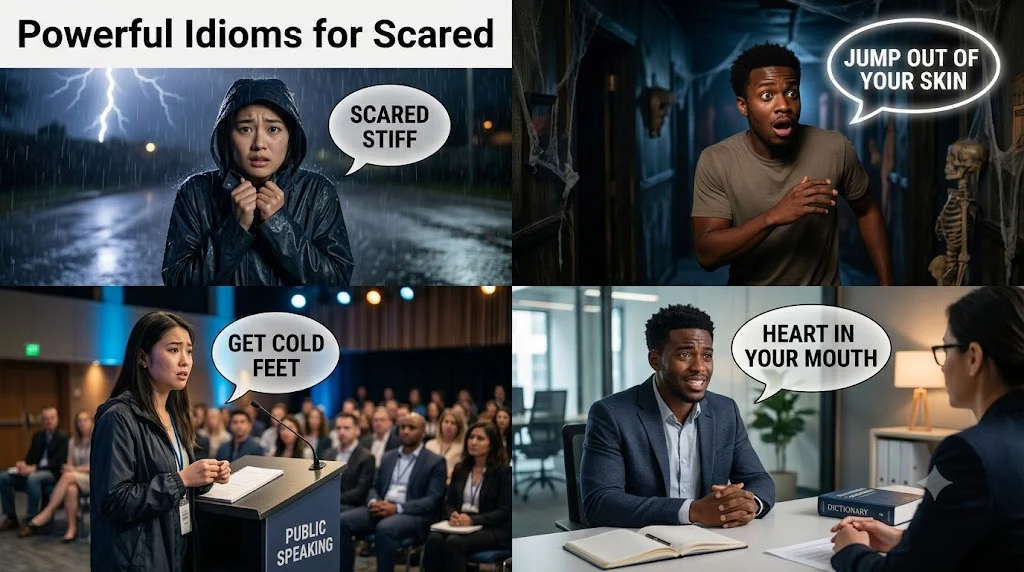
If you’re looking for natural idioms for scared, some of the most common expressions include get cold feet, jump out of your skin, have butterflies in your stomach, shake like a leaf, break into a cold sweat, heart in your mouth, scared stiff, and weak at the knees.
These idioms help you describe different kinds of fear, nervousness, panic, or anxiety in a much more vivid and natural way than simply saying, “I’m scared.”
Fear is one of the most universal human emotions, yet English speakers rarely describe it with the simple phrase “I’m scared.” Instead, they often rely on colorful idioms that instantly paint a clearer picture of what they’re feeling.
Whether someone freezes before giving a presentation, panics during a thunderstorm, or feels nervous before meeting someone important, idioms add emotion, personality, and depth to everyday communication. They’re commonly heard in conversations, novels, movies, classrooms, blogs, and even workplace discussions.
Learning these idioms for scared doesn’t just expand your vocabulary it helps you sound more fluent and expressive. As someone who regularly studies English conversations, you’ll notice native speakers naturally choose figurative expressions because they communicate emotions more vividly than literal descriptions.
In this guide, you’ll discover practical fear-related idioms, understand when to use them, and learn through realistic examples that you can confidently apply in your own speaking and writing.
Quick Summary
| Idiom | Meaning | Best Used When | Tone |
|---|---|---|---|
| Get Cold Feet | Become too frightened to continue | Before a big event | Informal |
| Jump Out of Your Skin | Be startled suddenly | Unexpected surprises | Informal |
| Heart in Your Mouth | Feel intense fear or anxiety | Stressful moments | Neutral |
| Shake Like a Leaf | Tremble because of fear | Extreme nervousness | Neutral |
| Break into a Cold Sweat | Suddenly become frightened or anxious | High-pressure situations | Neutral |
| Scared Stiff | Become extremely frightened | Horror or danger | Informal |
| Weak at the Knees | Feel overwhelmed by fear or emotion | Emotional situations | Informal |
| Have Butterflies in Your Stomach | Feel nervous before something important | Speeches, interviews, exams | Informal |
Get Cold Feet
Meaning
To suddenly become afraid or nervous before doing something important, causing hesitation or a change of mind.
When People Use It
People usually use this idiom before weddings, interviews, exams, business decisions, performances, or any major life event.
Alternative Expression
Lose your nerve
Examples in Communication
Formal Example
Several candidates got cold feet before presenting their final business proposals.
Casual Example
I almost got cold feet before asking her out.
Creative Example
Standing outside the skydiving plane, he got cold feet and stepped back at the last second.
Usage Tip
This idiom almost always refers to fear before an action not fear during it.
Jump Out of Your Skin
Meaning
To become extremely startled because of something sudden.
When People Use It
Perfect for unexpected loud noises, surprise visitors, horror movies, or practical jokes.
Alternative Expression
Get the fright of your life
Examples in Communication
Formal Example
The unexpected alarm caused everyone in the office to jump out of their skin.
Casual Example
You made me jump out of my skin!
Creative Example
The thunder cracked across the sky so loudly that even the dog jumped out of its skin.
Usage Tip
Although it describes fear, it usually refers to surprise, not long-lasting fear.
Heart in Your Mouth
Meaning
To feel extremely anxious, worried, or frightened for a brief moment.
When People Use It
Often used during accidents, close calls, competitions, or suspenseful situations.
Alternative Expression
Hold your breath
Examples in Communication
Formal Example
The rescue team watched with their hearts in their mouths as the climber reached the narrow ledge.
Casual Example
I had my heart in my mouth waiting for my exam results.
Creative Example
As the child disappeared into the crowd, every parent stood with a heart in their mouth until he was found.
Usage Tip
This idiom creates vivid emotional storytelling and works well in essays and narratives.
Shake Like a Leaf
Meaning
To tremble uncontrollably because of fear, nervousness, or cold.
When People Use It
Used when someone is visibly frightened or extremely anxious.
Alternative Expression
Tremble with fear
Examples in Communication
Formal Example
The witness was shaking like a leaf while giving testimony.
Casual Example
I was shaking like a leaf before my driving test.
Creative Example
Lost deep in the forest after sunset, she stood shaking like a leaf beneath the tall trees.
Usage Tip
Native speakers often use this idiom to emphasize physical reactions to fear.
Break into a Cold Sweat
Meaning
To suddenly begin sweating because of fear, anxiety, embarrassment, or stress.
When People Use It
Common in stressful situations, public speaking, emergencies, or receiving unexpected news.
Alternative Expression
Feel panic rising
Examples in Communication
Formal Example
He broke into a cold sweat after realizing the report contained a major error.
Casual Example
I broke into a cold sweat when my teacher called my name.
Creative Example
One strange sound outside the window was enough to make the old housekeeper break into a cold sweat.
Usage Tip
This idiom works equally well for fear and extreme nervousness.
Scared Stiff
Meaning
To become so frightened that you feel unable to move.
When People Use It
Frequently used when describing horror stories, dangerous situations, or terrifying experiences.
Alternative Expression
Frozen with fear
Examples in Communication
Formal Example
The hikers were scared stiff after hearing the growl nearby.
Casual Example
That horror movie scared me stiff.
Creative Example
The abandoned mansion left every visitor scared stiff before they even entered the front door.
Usage Tip
This is one of the strongest idioms for expressing fear.
Weak at the Knees
Meaning
To feel physically weak because of fear, excitement, or strong emotion.
When People Use It
Used when emotions become so powerful that they seem to affect the body.
Alternative Expression
Lose your strength
Examples in Communication
Formal Example
The sudden announcement left several employees weak at the knees.
Casual Example
I was weak at the knees before giving my speech.
Creative Example
As the bridge began to sway, every step made him weaker at the knees.
Usage Tip
Although often linked with romance, this idiom is also widely used for fear.
Have Butterflies in Your Stomach
Meaning
To feel nervous or anxious before something important.
When People Use It
Common before interviews, competitions, presentations, performances, and exams.
Alternative Expression
Feel jittery
Examples in Communication
Formal Example
Most presenters have butterflies in their stomach before speaking to a large audience.
Casual Example
I’ve got butterflies in my stomach before today’s interview.
Creative Example
The young musician smiled despite the butterflies dancing inside her stomach as the curtain slowly opened.
Usage Tip
This idiom usually describes nervous excitement, not overwhelming terror.
On Pins and Needles
Meaning
To feel extremely anxious, tense, or worried while waiting for something to happen.
When People Use It
People often use this idiom when waiting for exam results, medical news, interview feedback, or any uncertain outcome.
Alternative Expression
On edge
Examples in Communication
Formal Example
The entire team was on pins and needles until the final decision was announced.
Casual Example
I’ve been on pins and needles all day waiting for your call.
Creative Example
Every creak of the old house kept the family on pins and needles throughout the stormy night.
Usage Tip
Although it emphasizes anxiety more than fear, it naturally fits situations where nervous anticipation feels overwhelming.
Hair Stood on End
Meaning
To feel so frightened that your hair seems to stand upright.
When People Use It
This idiom is commonly used in ghost stories, horror novels, and descriptions of chilling experiences.
Alternative Expression
Get goosebumps
Examples in Communication
Formal Example
The witness described a scream that made everyone’s hair stand on end.
Casual Example
That scary podcast made my hair stand on end.
Creative Example
As the abandoned swing began moving by itself, her hair stood on end.
Usage Tip
This expression creates vivid imagery and works especially well in storytelling.
Blood Ran Cold
Meaning
To suddenly feel intense fear or horror after seeing or hearing something shocking.
When People Use It
Used when people experience terrifying news, frightening discoveries, or dangerous situations.
Alternative Expression
Be chilled to the bone
Examples in Communication
Formal Example
My blood ran cold when I realized the child had wandered away.
Casual Example
My blood ran cold when someone knocked at the window after midnight.
Creative Example
Reading the final page of the mystery novel made her blood run cold.
Usage Tip
This idiom is stronger than simply saying “I was scared” because it highlights a sudden emotional shock.
Freeze in Your Tracks
Meaning
To stop moving immediately because of fear or surprise.
When People Use It
Often used when someone unexpectedly encounters danger or hears a frightening sound.
Alternative Expression
Stand rooted to the spot
Examples in Communication
Formal Example
The hikers froze in their tracks when they spotted a snake across the trail.
Casual Example
I froze in my tracks when I heard someone call my name.
Creative Example
The mysterious footsteps behind him made him freeze in his tracks without even turning around.
Usage Tip
This idiom vividly describes the body’s instinctive reaction to fear.
Lose Your Nerve
Meaning
To suddenly lose confidence or courage before completing an action.
When People Use It
Common before difficult conversations, competitions, performances, or risky decisions.
Alternative Expression
Get cold feet
Examples in Communication
Formal Example
Several participants lost their nerve before delivering their presentations.
Casual Example
I almost lost my nerve before riding the roller coaster.
Creative Example
She practiced for weeks but lost her nerve when the stage lights came on.
Usage Tip
This idiom focuses on fear that prevents action rather than fear itself.
White as a Ghost
Meaning
To become extremely pale because of fear, shock, or illness.
When People Use It
Often used after frightening experiences or unexpected bad news.
Alternative Expression
Pale as a sheet
Examples in Communication
Formal Example
He turned white as a ghost after hearing the emergency announcement.
Casual Example
You look white as a ghost. What happened?
Creative Example
When the lights suddenly went out, everyone became white as ghosts.
Usage Tip
This idiom describes a visible physical reaction, making descriptions more vivid.
Frightened to Death
Meaning
To become extremely frightened.
When People Use It
Used to exaggerate intense fear in both serious and humorous conversations.
Alternative Expression
Scared stiff
Examples in Communication
Formal Example
The unexpected explosion frightened nearby residents to death.
Casual Example
That prank frightened me to death!
Creative Example
The eerie silence frightened the travelers to death before the old clock finally chimed.
Usage Tip
Despite the wording, this idiom is figurative and doesn’t mean someone actually died.
Goosebumps
Meaning
Small bumps that appear on the skin because of fear, excitement, or strong emotion.
When People Use It
Used when talking about scary movies, emotional speeches, or creepy moments.
Alternative Expression
Hair stood on end
Examples in Communication
Formal Example
The documentary gave many viewers goosebumps.
Casual Example
That sound gave me goosebumps.
Creative Example
A whisper echoed through the empty hallway, covering everyone in goosebumps.
Usage Tip
Goosebumps can also describe excitement or inspiration, so context is important.
Like a Deer in the Headlights
Meaning
To appear frozen, confused, or frightened when faced with a sudden situation.
When People Use It
Often used during interviews, presentations, unexpected questions, or surprising encounters.
Alternative Expression
Freeze in your tracks
Examples in Communication
Formal Example
The new employee looked like a deer in the headlights when asked to speak unexpectedly.
Casual Example
When my teacher called on me, I looked like a deer in the headlights.
Creative Example
Caught in the spotlight, the young actor stood like a deer in the headlights before remembering the first line.
Usage Tip
This idiom is excellent for describing both fear and uncertainty in everyday situations.
Scare the Living Daylights Out of Someone
Meaning
To frighten someone very badly.
When People Use It
Common after surprises, horror movies, haunted attractions, or unexpected events.
Alternative Expression
Give someone a fright
Examples in Communication
Formal Example
The loud emergency alarm scared the living daylights out of the office staff.
Casual Example
You scared the living daylights out of me!
Creative Example
The old attic door slammed shut, scaring the living daylights out of everyone inside.
Usage Tip
This colorful idiom is highly conversational and frequently heard among native English speakers.
Bite Your Nails
Meaning
To feel so worried or frightened that you become extremely anxious, whether or not you literally bite your nails.
When People Use It
This idiom is often used while waiting for important results, watching a close sports match, or anticipating a difficult conversation.
Alternative Expression
Be on pins and needles
Examples in Communication
Formal Example
Investors were biting their nails as the market awaited the company’s financial announcement.
Casual Example
We were all biting our nails during the final minutes of the game.
Creative Example
The family sat in complete silence, biting their nails as the rescue helicopter searched the mountainside.
Usage Tip
Today, this idiom usually refers to anxiety rather than the physical habit of biting nails.
Have Your Heart Skip a Beat
Meaning
To suddenly feel frightened, shocked, or surprised.
When People Use It
People commonly use this expression when something unexpected happens, such as hearing a loud noise, seeing someone suddenly appear, or receiving surprising news.
Alternative Expression
Heart in your mouth
Examples in Communication
Formal Example
The emergency alert made everyone’s heart skip a beat.
Casual Example
You scared me! My heart skipped a beat.
Creative Example
The old floorboard creaked behind her, making her heart skip a beat in the silent house.
Usage Tip
This idiom can also describe excitement or romance, so let the context make the meaning clear.
Break Out in a Cold Sweat
Meaning
To suddenly begin sweating because of fear, panic, or intense anxiety.
When People Use It
Often used when someone faces an unexpected problem, frightening situation, or stressful responsibility.
Alternative Expression
Break into a cold sweat
Examples in Communication
Formal Example
He broke out in a cold sweat when he realized the passport was missing.
Casual Example
I broke out in a cold sweat after hearing that strange noise downstairs.
Creative Example
As the storm grew stronger, the captain broke out in a cold sweat while steering the ship.
Usage Tip
This expression is especially effective in storytelling because it describes a physical reaction to fear.
Feel a Lump in Your Throat
Meaning
To feel unable to speak because of fear, nervousness, sadness, or strong emotion.
When People Use It
This idiom appears in emotional conversations, speeches, family moments, and stressful situations.
Alternative Expression
Be choked up
Examples in Communication
Formal Example
She felt a lump in her throat before addressing the audience.
Casual Example
I had a lump in my throat when the doctor called my name.
Creative Example
Standing alone before the courtroom, he felt a lump in his throat as every eye turned toward him.
Usage Tip
Although it often expresses sadness, it naturally fits moments of fear and anxiety as well.
Be Petrified
Meaning
To be extremely frightened or terrified.
When People Use It
This expression is common in both spoken and written English when describing intense fear.
Alternative Expression
Scared stiff
Examples in Communication
Formal Example
Many children are petrified of severe thunderstorms.
Casual Example
I’m petrified of snakes.
Creative Example
The explorers were petrified as the cave echoed with mysterious sounds from the darkness.
Usage Tip
“Petrified” is slightly stronger than simply saying “scared.”
How to Use Idioms Naturally
Using idioms effectively isn’t about memorizing long lists it’s about understanding when they fit naturally.
For example:
- Before an interview, you might say, “I’ve got butterflies in my stomach.”
- During a scary movie, “That scene made my blood run cold.”
- After hearing a loud bang, “I nearly jumped out of my skin.”
The more you connect idioms with real situations, the more naturally they’ll become part of your vocabulary.
A helpful habit is to replace simple words like scared, nervous, or worried with an idiom whenever the context feels appropriate. Over time, this makes your speaking and writing more expressive and engaging.
Common Mistakes with Fear Idioms
Many English learners understand idioms but use them in the wrong situations. Here are a few common mistakes to avoid:
- Don’t use get cold feet after you’ve already completed the action. It refers to fear before doing something.
- Butterflies in your stomach describe nervous excitement, not overwhelming terror.
- Jump out of your skin usually refers to sudden surprise rather than long-term fear.
- Remember that idioms are figurative. Saying someone is white as a ghost doesn’t mean they literally look like a ghost it simply means they became very pale from fear or shock.
Paying attention to context will help you sound much more natural.
Idioms vs. Literal Expressions
Literal expressions describe emotions directly:
- I was scared.
- She felt nervous.
- He was frightened.
Idioms, on the other hand, paint a vivid picture:
- I was scared stiff.
- She got cold feet.
- My heart was in my mouth.
- We were on pins and needles.
While literal language is clear, idioms make your communication more colorful, memorable, and emotionally engaging.
Tips for Remembering Idioms Easily
Learning idioms becomes much easier when you connect them to real experiences.
Here are a few effective strategies:
- Learn idioms in small groups based on emotions or situations.
- Read novels, blogs, and news stories where idioms appear naturally.
- Watch English movies and TV shows to hear authentic pronunciation and usage.
- Create your own example sentences instead of memorizing dictionary definitions.
- Practice using one new idiom in conversation each day.
- Keep a personal notebook of favorite idioms with meanings and examples.
Consistent exposure and practice are the keys to making idioms part of your everyday English.
FAQs
What are the most common idioms for scared?
Some of the most popular idioms include get cold feet, jump out of your skin, scared stiff, heart in your mouth, shake like a leaf, and on pins and needles.
Are idioms for scared used in everyday English?
Yes. Native English speakers frequently use these idioms in conversations, storytelling, movies, books, and even workplace discussions because they make emotions more vivid and engaging.
Can I use fear idioms in formal writing?
Some idioms, such as heart in your mouth or shake like a leaf, work well in creative or narrative writing. For highly formal or academic writing, literal expressions are often more appropriate unless the style allows figurative language.
What’s the difference between “get cold feet” and “lose your nerve”?
Both describe fear before taking action. However, get cold feet usually refers to becoming hesitant before an important event, while lose your nerve emphasizes a sudden loss of courage.
How can I remember English idioms more easily?
The best way is to learn them in context, create your own example sentences, read regularly, and use them in real conversations. Associating each idiom with a real-life situation makes it much easier to remember.
Conclusion
Fear is a universal emotion, but English offers far more expressive ways to describe it than simply saying “I’m scared.” Learning these idioms for scared allows you to communicate emotions with greater precision, creativity, and confidence.
Whether you’re writing a story, preparing for an English exam, improving your conversational skills, or simply expanding your vocabulary, these idioms add personality and depth to your language. They also help you better understand books, films, podcasts, and everyday conversations where native speakers often rely on figurative expressions instead of literal ones.
Rather than trying to memorize every idiom at once, focus on learning a few that match situations you experience regularly. Use them in conversations, writing exercises, or journal entries until they feel natural. With regular practice, you’ll discover that these expressions become an effortless part of your English.
The next time you feel nervous, startled, or frightened, challenge yourself to use one of these idioms for scared you’ll sound more fluent, confident, and expressive.
Discover More Related Articles:
- Powerful Idioms for Reading | That Make Your English More Expressive In 2026
- Powerful Relationship Idioms | You Can Use Every Day In 2026