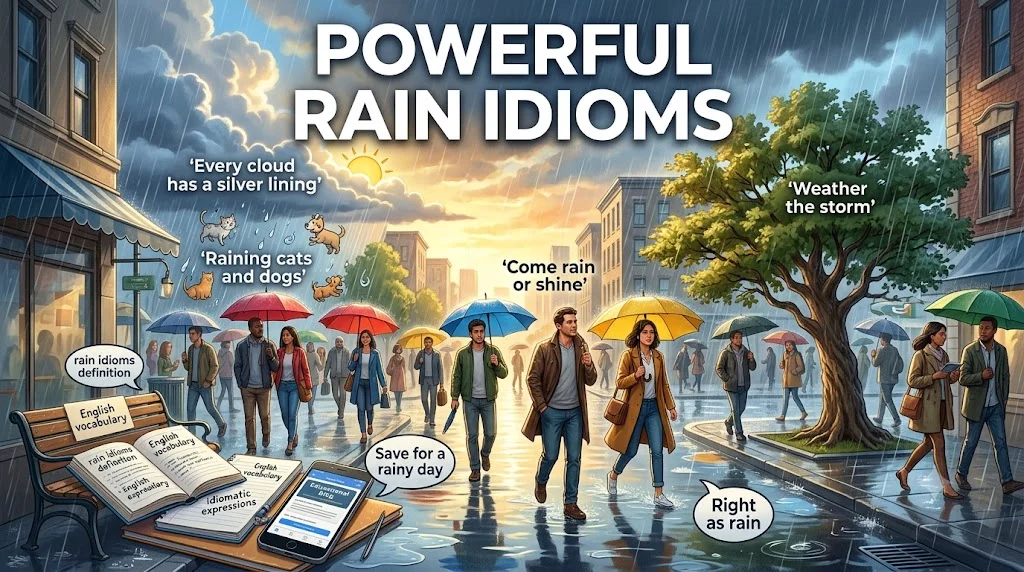
Quick Answer
Rain idioms are figurative expressions that use rain, storms, clouds, or wet weather to describe emotions, situations, opportunities, difficulties, or unexpected events. Rather than talking about the weather itself, these idioms add personality, color, and depth to everyday conversations, essays, storytelling, and professional writing. Learning rain idioms helps you sound more fluent, expressive, and natural in English.
Rain has always inspired stories, poetry, and everyday conversations. Sometimes it represents hope and renewal. Other times, it symbolizes challenges, uncertainty, or unexpected change. That rich symbolism is exactly why rain appears in so many English idioms.
If you’ve ever heard someone say, “I’ll take a rain check,” or “Come rain or shine,” you’ve already encountered rain idioms without realizing it. These expressions don’t describe the weather literally they communicate ideas, emotions, and experiences in a memorable way.
Whether you’re writing an essay, preparing for an English exam, improving your speaking skills, creating blog content, or simply trying to sound more natural in conversations, understanding rain idioms can make your language feel more fluent and expressive.
The best part is that these idioms appear in everyday communication far more often than many learners expect. Once you understand when and how to use them, you’ll begin noticing them in books, movies, news articles, workplace discussions, and casual conversations. Let’s explore some of the most practical and widely used rain idioms that every English learner should know.
Quick Summary
| Idiom | Meaning | Best Used For | Tone |
|---|---|---|---|
| Come Rain or Shine | No matter what happens | Commitment | Positive |
| Save for a Rainy Day | Save money for the future | Finance | Practical |
| It Never Rains but It Pours | Problems arrive together | Difficult situations | Negative |
| Rain on Someone’s Parade | Spoil someone’s happiness | Conversations | Informal |
| Right as Rain | Completely healthy or fine | Health | Friendly |
| Take a Rain Check | Postpone politely | Invitations | Casual |
| Be Under the Weather | Feel slightly sick | Health | Informal |
| Chase Rainbows | Pursue unrealistic dreams | Advice | Thoughtful |
| Storm in a Teacup | Overreaction | Arguments | Informal |
| Every Cloud Has a Silver Lining | Good comes after hardship | Encouragement | Positive |
| Calm Before the Storm | Quiet before trouble | Storytelling | Dramatic |
| Weather the Storm | Survive difficulties | Business & Life | Inspirational |
Come Rain or Shine
Meaning
No matter what difficulties, weather, or circumstances arise.
When People Use It
People use this idiom when expressing commitment, reliability, or determination.
Alternative Expression
No matter what
Examples in Communication
Formal Example
Our customer support team is available come rain or shine to assist clients.
Casual Example
I’ll be at your graduation, come rain or shine.
Creative Example
Their friendship stood strong, come rain or shine, through every season of life.
Usage Tip: This idiom creates a warm, dependable tone and works beautifully in speeches, storytelling, and motivational writing.
Save for a Rainy Day
Meaning
To save money or resources for future emergencies.
When People Use It
When discussing personal finance, budgeting, or preparing for uncertain times.
Alternative Expression
Prepare for hard times
Examples in Communication
Formal Example
Financial experts recommend saving a portion of your income for a rainy day.
Casual Example
I’m putting some money aside for a rainy day.
Creative Example
Every coin she saved became a small umbrella against tomorrow’s storms.
It Never Rains but It Pours
Meaning
Problems or good fortune often happen all at once.
When People Use It
After several unfortunate events occur within a short period.
Alternative Expression
When it rains, it pours
Examples in Communication
Formal Example
After losing two major clients in one week, it truly never rained but poured.
Casual Example
First my phone broke, then my car wouldn’t start it never rains but it pours!
Creative Example
Life opened every dark cloud on the same afternoon.
Rain on Someone’s Parade
Meaning
To spoil someone’s happiness, plans, or excitement.
When People Use It
When someone ruins a celebration or brings negative news at the wrong moment.
Alternative Expression
Burst someone’s bubble
Examples in Communication
Formal Example
I don’t want to rain on your parade, but we should review the budget again.
Casual Example
Sorry to rain on your parade, but the concert has been canceled.
Creative Example
One careless sentence rained on everyone’s celebration.
Right as Rain
Meaning
Feeling completely healthy, normal, or fine.
When People Use It
After someone recovers from illness or stress.
Alternative Expression
Good as new
Examples in Communication
Formal Example
Following the treatment, the patient was right as rain.
Casual Example
Give me one night’s sleep and I’ll be right as rain.
Creative Example
Morning sunlight made every worry disappear, leaving her right as rain.
Take a Rain Check
Meaning
Politely decline an invitation while suggesting another time.
When People Use It
When you’re busy but still interested in meeting later.
Alternative Expression
Maybe another time
Examples in Communication
Formal Example
I appreciate the invitation, but I’ll have to take a rain check.
Casual Example
Can I take a rain check? I’m exhausted today.
Creative Example
The coffee could wait; friendship would simply meet another afternoon.
Usage Tip: This is one of the most common conversational idioms in American English.
Be Under the Weather
Meaning
To feel slightly ill or unwell.
When People Use It
In everyday conversations about health.
Alternative Expression
Feeling sick
Examples in Communication
Formal Example
Several employees were under the weather this week.
Casual Example
I’m feeling a little under the weather today.
Creative Example
His smile hid the quiet drizzle of exhaustion.
Chase Rainbows
Meaning
To pursue unrealistic dreams or impossible goals.
When People Use It
When giving advice or discussing unrealistic expectations.
Alternative Expression
Build castles in the air
Examples in Communication
Formal Example
Businesses should avoid chasing rainbows without proper planning.
Casual Example
Stop chasing rainbows and focus on realistic goals.
Creative Example
She learned that dreams need roots as much as wings.
Storm in a Teacup
Meaning
A small issue that people make seem much bigger than it really is.
When People Use It
Arguments, workplace disagreements, or family misunderstandings.
Alternative Expression
Making a mountain out of a molehill
Examples in Communication
Formal Example
The disagreement turned out to be nothing more than a storm in a teacup.
Casual Example
Relax it was just a storm in a teacup.
Creative Example
Their tiny disagreement echoed louder than thunder.
Every Cloud Has a Silver Lining
Meaning
Every difficult situation contains something positive.
When People Use It
Offering hope after disappointment.
Alternative Expression
Look on the bright side
Examples in Communication
Formal Example
Although the project failed, every cloud has a silver lining because we gained valuable experience.
Casual Example
Don’t worry every cloud has a silver lining.
Creative Example
Behind the darkest clouds waited a sunrise no one expected.
Writing Tip: This idiom works especially well in motivational articles, speeches, and personal stories because it leaves readers with optimism.
Calm Before the Storm
Meaning
A peaceful period that comes just before trouble, stress, or major activity begins.
When People Use It
This idiom is common in storytelling, workplaces, sports, and everyday life when everyone senses that something significant is about to happen.
Alternative Expression
Before everything changes
Examples in Communication
Formal Example
The office was unusually quiet the calm before the storm of the product launch.
Casual Example
The kids are being so quiet. This is definitely the calm before the storm.
Creative Example
The silent sky held its breath before the thunder found its voice.
Usage Tip: This idiom creates suspense and works especially well in stories, blogs, and presentations.
Weather the Storm
Meaning
To successfully survive a difficult situation or period.
When People Use It
People often use this expression when discussing financial struggles, personal challenges, relationships, or business setbacks.
Alternative Expression
Get through difficult times
Examples in Communication
Formal Example
The company managed to weather the storm despite economic uncertainty.
Casual Example
We’ll weather the storm together.
Creative Example
Their courage became an anchor while life tossed waves around them.
As Right as Rain
Meaning
Completely healthy, normal, or functioning well.
When People Use It
Used after recovering from illness, solving a problem, or fixing something.
Alternative Expression
Back to normal
Examples in Communication
Formal Example
After routine maintenance, the equipment was as right as rain.
Casual Example
Don’t worry I feel as right as rain now.
Creative Example
One peaceful weekend restored her energy completely.
Rain Cats and Dogs
Meaning
To rain very heavily.
When People Use It
This classic idiom appears in everyday conversations whenever the weather is extremely wet.
Alternative Expression
Pouring with rain
Examples in Communication
Formal Example
The event was postponed because it was raining cats and dogs.
Casual Example
Take an umbrella it’s raining cats and dogs!
Creative Example
The sky opened like a waterfall, covering every street in silver.
Usage Tip: Although very common, avoid using this idiom in formal weather reports because it is figurative rather than literal.
Into Every Life a Little Rain Must Fall
Meaning
Everyone experiences disappointment or hardship occasionally.
When People Use It
When comforting someone after a setback.
Alternative Expression
Nobody’s life is perfect
Examples in Communication
Formal Example
Temporary setbacks remind us that into every life a little rain must fall.
Casual Example
Don’t be too upset. Everyone has bad days.
Creative Example
Even the brightest gardens need rain before they bloom again.
Rain or Shine
Meaning
Something happens regardless of weather or circumstances.
When People Use It
For schedules, commitments, outdoor events, or dependable habits.
Alternative Expression
No matter what
Examples in Communication
Formal Example
The weekly meeting takes place rain or shine.
Casual Example
We go jogging every Saturday, rain or shine.
Creative Example
Their traditions never waited for perfect skies.
Come in Out of the Rain
Meaning
To join a group, accept help, or become part of something welcoming.
When People Use It
Often used warmly to invite someone who feels left out.
Alternative Expression
Join us
Examples in Communication
Formal Example
New employees are encouraged to come in out of the rain and participate in team activities.
Casual Example
Come in out of the rain and have some coffee with us.
Creative Example
Kindness opened the door long before anyone knocked.
Be Caught in the Rain
Meaning
To be unprepared for an unexpected situation.
When People Use It
Both literally and figuratively for surprises or sudden problems.
Alternative Expression
Be caught off guard
Examples in Communication
Formal Example
The organization was caught in the rain by unexpected policy changes.
Casual Example
I got caught in the rain without an umbrella.
Creative Example
Opportunity arrived before anyone had time to prepare.
After Rain Comes Fair Weather
Meaning
Good times usually follow difficult ones.
When People Use It
To encourage hope after disappointment.
Alternative Expression
Better days are ahead
Examples in Communication
Formal Example
History reminds us that after rain comes fair weather.
Casual Example
Things will get better soon.
Creative Example
Every storm eventually teaches the sky how to smile again.
Rain Down
Meaning
To fall or arrive in large amounts.
When People Use It
Often used with praise, criticism, questions, awards, or opportunities.
Alternative Expression
Pour in
Examples in Communication
Formal Example
Congratulations rained down after the successful presentation.
Casual Example
Messages started raining down after I posted the news.
Creative Example
Love rained down from every corner of the room.
A Rainy Day
Meaning
A future period when money, help, or preparation will be needed.
When People Use It
Usually in discussions about savings, planning, or responsibility.
Alternative Expression
Emergency situation
Examples in Communication
Formal Example
Maintaining an emergency fund prepares families for a rainy day.
Casual Example
I’m saving a little every month for a rainy day.
Creative Example
Small savings quietly built tomorrow’s peace of mind.
Keep the Rain Off
Meaning
To provide basic protection or shelter.
When People Use It
When discussing homes, temporary shelters, or essential protection.
Alternative Expression
Provide shelter
Examples in Communication
Formal Example
The temporary structure was enough to keep the rain off until repairs were completed.
Casual Example
It’s not fancy, but it keeps the rain off.
Creative Example
Sometimes comfort begins with simply finding a roof.
Practical Usage Guidance
How to Use Rain Idioms Naturally
Rain idioms work best when they match the emotional tone of your conversation. Rather than adding them simply because they sound interesting, use them where they genuinely strengthen your message.
For example:
- Use “Come rain or shine” when talking about commitment.
- Use “Weather the storm” when discussing challenges.
- Use “Every cloud has a silver lining” when encouraging someone.
- Use “Take a rain check” when politely postponing plans.
- Use “Rain on someone’s parade” when talking about spoiled excitement.
When used thoughtfully, these expressions make your English sound confident and natural instead of overly formal.
Common Mistakes with Rain Idioms
Many English learners know the meaning of an idiom but use it in the wrong situation. Avoid these common mistakes:
- Don’t interpret idioms literally.
- Don’t mix two different idioms together.
- Avoid using several idioms in one sentence.
- Match the idiom to the correct emotion and context.
- Learn complete phrases instead of individual words.
For instance, saying “It’s raining cats and dogs” during light drizzle sounds unnatural because the idiom specifically describes very heavy rain.
Idioms vs. Literal Expressions
A literal sentence describes exactly what is happening.
Literal: It is raining heavily outside.
An idiomatic sentence expresses an idea creatively.
Idiom: It’s raining cats and dogs.
Similarly:
Literal: We survived a difficult year.
Idiom: We weathered the storm.
Knowing the difference helps you understand books, films, podcasts, and conversations much more easily.
Tips for Sounding More Fluent
Here are a few habits that make idioms feel natural instead of memorized:
- Read novels, blogs, and news articles where idioms appear in context.
- Watch English TV shows and notice how native speakers use them.
- Practice using one new idiom each day in conversation.
- Write short journal entries using recently learned expressions.
- Learn idioms by theme, such as weather, emotions, travel, or success, so they become easier to remember.
Fluency comes from repeated exposure and meaningful practice not from memorizing long lists alone.
FAQs
How can I learn rain idioms faster?
The easiest way to learn rain idioms is by seeing them in context rather than memorizing definitions. Read short stories, watch English videos, and try using one new idiom each day in conversations or writing.
Are rain idioms suitable for formal writing?
Some rain idioms work well in formal writing, while others are better suited for casual conversations. Expressions like “weather the storm” and “every cloud has a silver lining” often appear in speeches, articles, and business writing. Informal idioms such as “it’s raining cats and dogs” are generally better for conversations, blogs, or creative writing.
Why do native English speakers use weather idioms so often?
Weather is something everyone experiences, making it an easy source of vivid comparisons. Rain idioms help speakers express emotions, challenges, hope, and determination in a memorable and engaging way.
Can I use rain idioms in essays and storytelling?
Absolutely. Rain idioms can make essays, narratives, and creative writing more expressive when they fit naturally within the context. Instead of overusing them, choose one or two that strengthen your message or illustrate a particular emotion.
What’s the best way to remember rain idioms?
Group them by meaning instead of alphabetically. For example:
- Challenges: Weather the Storm, Calm Before the Storm
- Optimism: Every Cloud Has a Silver Lining, After Rain Comes Fair Weather
- Planning: Save for a Rainy Day
- Commitment: Come Rain or Shine
- Conversation: Take a Rain Check
Learning them in meaningful groups makes them much easier to recall.
Conclusion
Rain has always been more than just a part of the weather it has become a powerful symbol in the English language. From expressing hope after difficult times to describing commitment, unexpected problems, or personal resilience, rain idioms help us communicate ideas with emotion and clarity.
The real value of these expressions isn’t simply knowing their meanings. It’s understanding when they feel natural. Whether you’re speaking with friends, writing an essay, creating blog content, or preparing for an English exam, using the right idiom at the right moment can make your language sound more confident, engaging, and authentic.
Rather than trying to memorize every idiom at once, focus on learning a few that match situations you regularly encounter. Practice them in conversations, include them in your writing, and notice how native speakers use them in books, films, podcasts, and everyday discussions.
Over time, these expressions will become part of your natural vocabulary, helping you communicate with greater fluency, creativity, and confidence. Like gentle rain nourishing a garden, consistent practice will steadily strengthen your English skills.
Discover More Related Articles:
- Sky Idioms | Beautiful Expressions That Will Elevate Your English In 2026
- Idioms for Personality | That Make Your English Sound Natural In 2026