Quick Answer
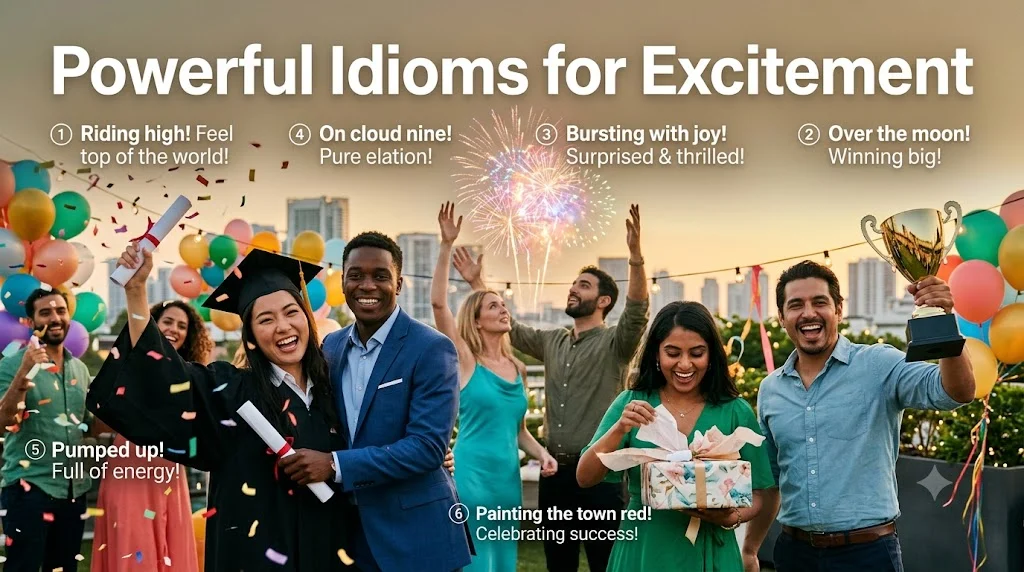
If you want to express excitement in a more natural and engaging way, idioms can instantly make your English sound more fluent. Popular idioms for excitement include on cloud nine, like a kid in a candy store, jumping for joy, over the moon, thrilled to bits, buzzing with excitement, and walking on air.
These expressions are commonly used in everyday conversations, storytelling, speeches, essays, and creative writing to describe happiness, anticipation, and enthusiasm in a vivid and memorable way.
Excitement is one of the easiest emotions to recognize, yet it can be surprisingly difficult to describe without repeating words like happy, excited, or thrilled. That’s where idioms make a real difference. They add personality to your speech, make stories more engaging, and help readers or listeners picture exactly how someone feels.
Whether you’re writing an essay, chatting with friends, creating social media content, or improving your spoken English, learning powerful idioms for excitement can make your communication feel more natural and expressive. Native English speakers regularly use these colorful expressions because they capture emotions in a way that plain language often cannot.
From celebrating a dream job to counting down the days before a vacation, idioms bring energy to everyday conversations. They also make creative writing more vivid by helping readers connect emotionally with a scene or character.
In this guide, you’ll discover some of the most useful idioms for excitement, learn what they really mean, understand when to use them, and see realistic examples that you can confidently apply in your own conversations and writing.
Quick Summary
| Idiom | Meaning | Best Used When | Tone |
|---|---|---|---|
| On Cloud Nine | Extremely happy | Good news or achievements | Informal |
| Over the Moon | Delighted beyond expectation | Success or celebrations | Informal |
| Walking on Air | Feeling wonderfully happy | Personal achievements | Informal |
| Jumping for Joy | Showing great excitement | Celebrating exciting news | Casual |
| Like a Kid in a Candy Store | Very excited by many choices | Shopping, travel, hobbies | Casual |
| Buzzing with Excitement | Full of eager anticipation | Before events or trips | Neutral |
| Thrilled to Bits | Extremely pleased | Receiving good news | Informal |
| Full of Beans | Energetic and excited | Daily conversations | Informal |
🌟 On Cloud Nine
Meaning
To feel extremely happy, delighted, or excited because something wonderful has happened.
When People Use It
People often use this idiom after achieving a major goal, receiving exciting news, or experiencing a memorable moment.
Usage Tip: This is one of the most common informal idioms for expressing intense happiness and excitement.
Alternative Expression
Walking on Air
Examples in Communication
Formal Example
After receiving the scholarship, Maria was on cloud nine for the rest of the week.
Casual Example
I’m still on cloud nine after hearing I got the job!
Creative Example
The final whistle blew, and the entire team was on cloud nine, celebrating beneath a sky full of fireworks.
🌙 Over the Moon
Meaning
To be incredibly pleased, joyful, or excited about something.
When People Use It
This idiom commonly appears when someone receives fantastic news, celebrates a success, or experiences a dream come true.
Usage Tip: Suitable for conversations, blogs, interviews, and personal stories.
Alternative Expression
Thrilled to Bits
Examples in Communication
Formal Example
The company was over the moon after winning the international innovation award.
Casual Example
My sister is over the moon about her new puppy.
Creative Example
She opened the acceptance letter and was instantly over the moon, unable to stop smiling.
✨ Walking on Air
Meaning
To feel so happy and excited that it seems like you’re floating.
When People Use It
People use this expression after achieving personal success, falling in love, or hearing wonderful news.
Usage Tip: This idiom creates a gentle, uplifting emotional tone and works beautifully in storytelling.
Alternative Expression
On Cloud Nine
Examples in Communication
Formal Example
Following the successful presentation, the entire research team was walking on air.
Casual Example
He’s been walking on air ever since he got engaged.
Creative Example
Every step felt lighter as she walked home, walking on air after achieving her lifelong dream.
🎉 Jumping for Joy
Meaning
To show extreme excitement and happiness, sometimes literally.
When People Use It
This idiom is used when someone reacts enthusiastically to great news or an exciting surprise.
Usage Tip: More common in casual conversations and descriptive writing than in formal reports.
Alternative Expression
Bursting with Happiness
Examples in Communication
Formal Example
The children were jumping for joy after hearing the school’s announcement.
Casual Example
I was jumping for joy when my concert tickets finally arrived.
Creative Example
As the countdown reached zero, everyone was jumping for joy, their cheers echoing through the stadium.
🍬 Like a Kid in a Candy Store
Meaning
To feel excited because there are so many enjoyable choices or opportunities.
When People Use It
Perfect for describing shopping, traveling, visiting museums, bookstores, technology stores, or any exciting place filled with options.
Usage Tip: This idiom creates a playful and vivid image that readers instantly understand.
Alternative Expression
Spoiled for Choice
Examples in Communication
Formal Example
The interns looked like kids in a candy store while exploring the innovation lab.
Casual Example
I felt like a kid in a candy store at the book fair.
Creative Example
The photographer wandered through the colorful market like a kid in a candy store, discovering beauty around every corner.
⚡ Buzzing with Excitement
Meaning
To be filled with eager anticipation and enthusiasm.
When People Use It
People often use this expression before important events, vacations, concerts, competitions, or celebrations.
Usage Tip: Although partly literal, it functions as an idiomatic expression in everyday English.
Alternative Expression
Full of Anticipation
Examples in Communication
Formal Example
Employees were buzzing with excitement before the annual product launch.
Casual Example
Everyone’s buzzing with excitement for the weekend trip.
Creative Example
The airport terminal was buzzing with excitement as travelers prepared for new adventures.
🎈 Thrilled to Bits
Meaning
To be extremely pleased, grateful, or excited.
When People Use It
Often used after receiving gifts, invitations, awards, or exciting opportunities.
Usage Tip: This expression is especially common in British English but is widely understood elsewhere.
Alternative Expression
Over the Moon
Examples in Communication
Formal Example
The research team was thrilled to bits after publishing their findings.
Casual Example
I’m thrilled to bits that you’re coming with us!
Creative Example
She hugged the letter tightly, thrilled to bits by the unexpected opportunity.
🌞 Full of Beans
Meaning
To be energetic, lively, and excited.
When People Use It
This idiom usually describes someone who has lots of enthusiasm, energy, and excitement.
Usage Tip: Best used in informal conversations and character descriptions.
Alternative Expression
Full of Energy
Examples in Communication
Formal Example
The new volunteers arrived full of beans, ready to contribute from the very first day.
Casual Example
The kids are full of beans this morning!
Creative Example
The little puppy raced across the garden, full of beans and eager to explore every corner.
🚀 Raring to Go
Meaning
To be full of energy, enthusiasm, and excitement to begin something.
When People Use It
People use this idiom when they are eager to start a new project, trip, competition, or adventure.
Usage Tip: This informal idiom is perfect for describing excitement before taking action.
Alternative Expression
Ready and Waiting
Examples in Communication
Formal Example
The volunteers were raring to go before the community event officially began.
Casual Example
We’ve packed everything I’m raring to go!
Creative Example
As dawn painted the mountains gold, the hikers stood raring to go, eager for the journey ahead.
🔥 Fired Up
Meaning
To feel highly motivated, excited, and emotionally energized.
When People Use It
This expression is often used before sports events, presentations, competitions, or important challenges.
Usage Tip: It carries a strong sense of confidence and determination alongside excitement.
Alternative Expression
Pumped Up
Examples in Communication
Formal Example
The keynote speaker left the audience fired up to embrace innovation.
Casual Example
I’m so fired up for tomorrow’s game!
Creative Example
The inspiring speech had everyone fired up, ready to chase dreams that once seemed impossible.
💪 Pumped Up
Meaning
Feeling extremely excited, confident, and ready for something.
When People Use It
People often use this expression before workouts, sporting events, concerts, or exciting challenges.
Usage Tip: Common in modern spoken English and social media conversations.
Alternative Expression
Fired Up
Examples in Communication
Formal Example
The sales team felt pumped up before presenting the new marketing campaign.
Casual Example
I’m pumped up for the music festival this weekend!
Creative Example
The stadium lights flashed as thousands of fans grew pumped up for the championship match.
🌞 In High Spirits
Meaning
Feeling cheerful, optimistic, and excited.
When People Use It
This idiom is suitable when describing positive moods during celebrations, holidays, or successful occasions.
Usage Tip: It works well in both formal and informal writing.
Alternative Expression
Cheerful and Upbeat
Examples in Communication
Formal Example
Despite the long journey, the delegates remained in high spirits throughout the conference.
Casual Example
Everyone was in high spirits after hearing the good news.
Creative Example
The village gathered in high spirits, filling the evening with laughter, music, and celebration.
🎊 In Seventh Heaven
Meaning
To feel incredibly happy and excited.
When People Use It
Often used after achieving a lifelong dream, receiving wonderful news, or celebrating an important milestone.
Usage Tip: Similar to on cloud nine, but slightly more expressive in storytelling.
Alternative Expression
On Cloud Nine
Examples in Communication
Formal Example
The scientist was in seventh heaven after receiving international recognition.
Casual Example
She’s in seventh heaven since getting accepted into her dream university.
Creative Example
Holding the championship trophy, he stood in seventh heaven, surrounded by applause.
🎁 Be Like Christmas Came Early
Meaning
To feel unexpectedly excited because something wonderful happened sooner than expected.
When People Use It
This expression is commonly used when receiving an unexpected gift, bonus, surprise, or exciting opportunity.
Usage Tip: Best suited for casual conversations and storytelling.
Alternative Expression
A Pleasant Surprise
Examples in Communication
Formal Example
Receiving the promotion ahead of schedule felt like Christmas came early.
Casual Example
Free concert tickets? It’s like Christmas came early!
Creative Example
When the invitation arrived, it felt like Christmas came early, filling the room with instant joy.
🎯 Can’t Wait
Meaning
To feel so excited that waiting feels difficult.
When People Use It
One of the most common everyday expressions before vacations, celebrations, birthdays, weddings, or exciting events.
Usage Tip: Although not a traditional idiom, it functions as a natural idiomatic expression in everyday English.
Alternative Expression
Looking Forward To
Examples in Communication
Formal Example
We can’t wait to welcome our international guests next month.
Casual Example
I can’t wait for the holidays!
Creative Example
She stared at the calendar every morning because she simply couldn’t wait for the adventure to begin.
🌟 Light Up Like a Christmas Tree
Meaning
To suddenly show obvious excitement or happiness.
When People Use It
People use this expression when someone’s face instantly becomes bright with excitement.
Usage Tip: Great for descriptive writing because it creates a vivid visual image.
Alternative Expression
Face Lit Up
Examples in Communication
Formal Example
The students lit up like Christmas trees when the principal announced the educational trip.
Casual Example
His face lit up like a Christmas tree when he saw the new gaming console.
Creative Example
The little girl’s eyes lit up like a Christmas tree as fireworks illuminated the night sky.
✈️ Itchy Feet
Meaning
A strong desire to travel, explore, or begin a new adventure.
When People Use It
Often used by people who become excited about traveling or experiencing something new.
Usage Tip: While it focuses on the desire to move, it often reflects excitement and anticipation.
Alternative Expression
Ready for an Adventure
Examples in Communication
Formal Example
After completing the project, many employees had itchy feet and planned international vacations.
Casual Example
I’ve got itchy feet let’s plan a road trip!
Creative Example
Every spring brought itchy feet, calling him toward distant mountains and unfamiliar roads.
🎪 Like a Dog with Two Tails
Meaning
To be extremely happy and visibly excited.
When People Use It
This British idiom describes someone who simply cannot hide their excitement.
Usage Tip: More common in British English but easily understood by many English speakers.
Alternative Expression
Over the Moon
Examples in Communication
Formal Example
The award recipient looked like a dog with two tails during the ceremony.
Casual Example
He’s like a dog with two tails after buying his first car.
Creative Example
She skipped through the doorway like a dog with two tails, eager to share the exciting news.
⭐ Tickled Pink
Meaning
To feel pleasantly surprised and excited.
When People Use It
Often used after receiving compliments, thoughtful gifts, or unexpected good news.
Usage Tip: This idiom expresses warm, cheerful excitement rather than overwhelming enthusiasm.
Alternative Expression
Delighted
Examples in Communication
Formal Example
The author was tickled pink by the positive response from readers.
Casual Example
Mom was tickled pink when we surprised her on her birthday.
Creative Example
She was tickled pink, smiling from ear to ear as everyone applauded her success.
🎆 Bursting at the Seams
Meaning
To be filled with so much excitement, happiness, or enthusiasm that it’s difficult to contain your emotions.
When People Use It
This idiom is often used when someone is eager to share exciting news or is overflowing with positive energy.
Usage Tip: Although it originally described something physically overfilled, it’s now commonly used figuratively to express strong emotions.
Alternative Expression
Overflowing with Excitement
Examples in Communication
Formal Example
The graduates were bursting at the seams with excitement before the commencement ceremony.
Casual Example
She was bursting at the seams waiting to tell everyone about her engagement.
Creative Example
The little boy was bursting at the seams, barely able to keep his birthday surprise a secret.
🎇 Be on the Edge of Your Seat
Meaning
To feel excited, eager, or intensely interested in what will happen next.
When People Use It
People use this idiom while watching thrilling movies, sporting events, competitions, or waiting for important announcements.
Usage Tip: This expression can describe both excitement and suspense, making it useful in storytelling.
Alternative Expression
Filled with Anticipation
Examples in Communication
Formal Example
The audience was on the edge of their seats throughout the award ceremony.
Casual Example
That football match had me on the edge of my seat!
Creative Example
Every page of the mystery novel kept readers on the edge of their seats, eager to discover the truth.
🎉 Be in for a Treat
Meaning
To be about to experience something enjoyable or exciting.
When People Use It
This idiom is often used to build anticipation before a fun event, surprise, or memorable experience.
Usage Tip: It’s a friendly expression that’s common in conversations, presentations, and blogs.
Alternative Expression
Something Special Awaits
Examples in Communication
Formal Example
Visitors are in for a treat during this year’s cultural festival.
Casual Example
Trust me you’re in for a treat tonight!
Creative Example
As the curtain slowly rose, the audience realized they were in for a treat unlike anything they had seen before.
🎯 How to Use Idioms for Excitement Naturally
Learning idioms is only the first step. The real skill lies in using them naturally and at the right moment. Here are a few practical tips that will help your English sound more fluent and authentic.
✨ Match the Situation
Choose an idiom that fits the level of excitement.
- On cloud nine works well after great achievements.
- Buzzing with excitement is perfect before an event.
- Like a kid in a candy store suits situations with lots of exciting choices.
Using the right idiom makes your message feel genuine rather than exaggerated.
💬 Don’t Overuse Idioms
Idioms add color to your writing, but using too many in one paragraph can make your sentences feel unnatural.
Instead of filling every sentence with expressions, use one or two where they have the biggest impact.
📝 Know Your Audience
Some idioms are best for casual conversations, while others also fit essays, blogs, or presentations.
For example:
- Walking on air works well almost anywhere.
- Full of beans sounds informal.
- Like a dog with two tails is more common in British English.
Understanding your audience helps you choose the most suitable expression.
🎨 Mix Idioms with Plain English
Great communicators don’t rely only on idioms.
Instead of writing:
I was on cloud nine. I was over the moon. I was walking on air.
Try:
I couldn’t stop smiling because I was on cloud nine after hearing the exciting news.
The idiom becomes more powerful when surrounded by natural language.
🌱 Common Mistakes with Idioms
Many English learners make the same mistakes when using idioms. Avoid these habits to sound more fluent.
- Using an idiom literally instead of figuratively.
- Mixing two different idioms together.
- Changing important words inside the idiom.
- Using highly informal idioms in formal business documents.
- Adding too many idioms into a single paragraph.
Remember, idioms work best when they feel natural rather than forced.
📖 Idioms vs Literal Expressions
Literal expressions describe exactly what happened.
I was very excited about the concert.
Idiomatic expressions paint a picture.
I was buzzing with excitement before the concert even started.
Both sentences are correct, but the second one feels more vivid, expressive, and memorable.
💡 Easy Ways to Remember Idioms
Memorizing idioms doesn’t have to be difficult.
- Learn them through real conversations.
- Watch English movies and TV shows.
- Read novels and blogs written by native speakers.
- Keep a personal idiom journal.
- Write one new sentence using each idiom every day.
- Practice speaking them aloud with friends.
- Group similar idioms together by emotion.
The more naturally you encounter idioms, the easier they’ll become part of your everyday vocabulary.
FAQs
What are the most common idioms for excitement?
Some of the most popular idioms include on cloud nine, over the moon, walking on air, jumping for joy, buzzing with excitement, and like a kid in a candy store. These expressions are widely used in everyday English.
Are idioms for excitement suitable for formal writing?
Some are. Idioms such as walking on air or on cloud nine can work in speeches, blogs, and narrative writing. However, highly informal expressions are better suited to conversations and creative storytelling than academic or technical writing.
How can I remember English idioms more easily?
Practice them in context rather than memorizing lists. Reading books, watching English videos, and writing your own example sentences are excellent ways to make idioms stick.
Can I use idioms in essays?
Yes, if the tone allows it. Personal essays, narratives, and creative writing often benefit from well-chosen idioms. In highly formal academic writing, use them sparingly.
Why should I learn idioms for excitement?
Idioms help you express emotions more naturally, make your writing more engaging, and improve your conversational fluency. They also help you better understand native English speakers in everyday situations.
Conclusion
Learning these powerful idioms for excitement is about more than expanding your vocabulary it’s about bringing your communication to life. Whether you’re celebrating an achievement, sharing exciting news, writing a captivating story, or simply chatting with friends, the right idiom can express emotions in a way that plain words often can’t.
The key is to use these expressions naturally and in the right context. Start by choosing a few favorites, practice them in your conversations and writing, and gradually add more to your vocabulary. Over time, they’ll become a natural part of how you express enthusiasm, anticipation, and joy.
Remember, language is most effective when it feels authentic. Rather than trying to use every idiom you learn, focus on the ones that genuinely match your personality and communication style. With regular practice, you’ll not only sound more fluent but also connect more effectively with your readers and listeners.
Discover More Related Articles:
- Powerful Idioms for Anger | Express Your Frustration with Confidence & Clarity In 2026
- Powerful Idioms for Darkness | That Express Fear, Mystery & Sadness In 2026