
Quick Answer
Idioms for wasting time are figurative expressions used to describe spending time unproductively, delaying important tasks, avoiding work, or engaging in activities that serve little useful purpose.
Everyone wastes time occasionally. Sometimes it’s harmless, like scrolling through social media while waiting for a friend. Other times, it can become a habit that delays goals, deadlines, and opportunities.
English has developed dozens of colorful expressions to describe these situations. Instead of repeatedly saying someone is “wasting time,” native speakers often use vivid idioms that instantly communicate procrastination, delay, boredom, or unproductive activity.
These expressions appear everywhere from workplace meetings and classroom discussions to novels, movies, and casual conversations. Understanding them can make your English sound more natural while helping you recognize the subtle meanings behind everyday speech.
For writers and language learners, idioms for wasting time are particularly useful because they add personality and realism to communication. They can make a story more engaging, a conversation more authentic, and an essay more expressive.
Let’s explore some of the most useful idioms for wasting time and learn how to use them naturally.
Quick Summary Table
| Idiom | Meaning | Common Tone |
|---|---|---|
| Kill Time | Spend time while waiting | Casual |
| Twiddle Your Thumbs | Sit idle with nothing to do | Informal |
| Drag Your Feet | Delay taking action | Common |
| Beat Around the Bush | Avoid the main point | Conversational |
| Spin Your Wheels | Make no real progress | Workplace |
| Fool Around | Waste time playing or joking | Casual |
| Goof Off | Avoid work and have fun | Informal |
| Pass the Time | Occupy yourself while waiting | Neutral |
| Procrastinate | Delay important tasks | Everyday |
| Dilly-Dally | Waste time by moving slowly | Playful |
| Burn Daylight | Waste valuable time | Traditional |
| Sit Around | Spend time doing nothing productive | Common |
| Chase Your Tail | Stay busy without results | Workplace |
| Waste Your Breath | Spend effort pointlessly | Conversational |
| Mark Time | Stay inactive without progress | Formal |
Kill Time
Meaning
To spend time doing something while waiting.
When People Use It
When they have free time before an event or appointment.
Alternative Expression
Pass the time
Examples in Communication
Formal Example:
Employees used the lounge area to kill time before the conference began.
Casual Example:
Let’s grab a coffee to kill time before the movie starts.
Creative Example:
She wandered through the bookstore, killing time among a thousand stories.
Twiddle Your Thumbs

Meaning
To sit idly with nothing productive to do.
When People Use It
When someone is waiting or being inactive.
Alternative Expression
Sit around
Examples in Communication
Formal Example:
The team could not afford to twiddle their thumbs during the project delay.
Casual Example:
I was just twiddling my thumbs while waiting for your call.
Creative Example:
The old clock ticked as he sat twiddling his thumbs by the window.
Drag Your Feet
Meaning
To delay action intentionally.
When People Use It
Often used when someone is reluctant to complete a task.
Alternative Expression
Put things off
Examples in Communication
Formal Example:
Management was accused of dragging its feet on the decision.
Casual Example:
Stop dragging your feet and submit the application.
Creative Example:
Opportunity knocked repeatedly while he dragged his feet.
Beat Around the Bush
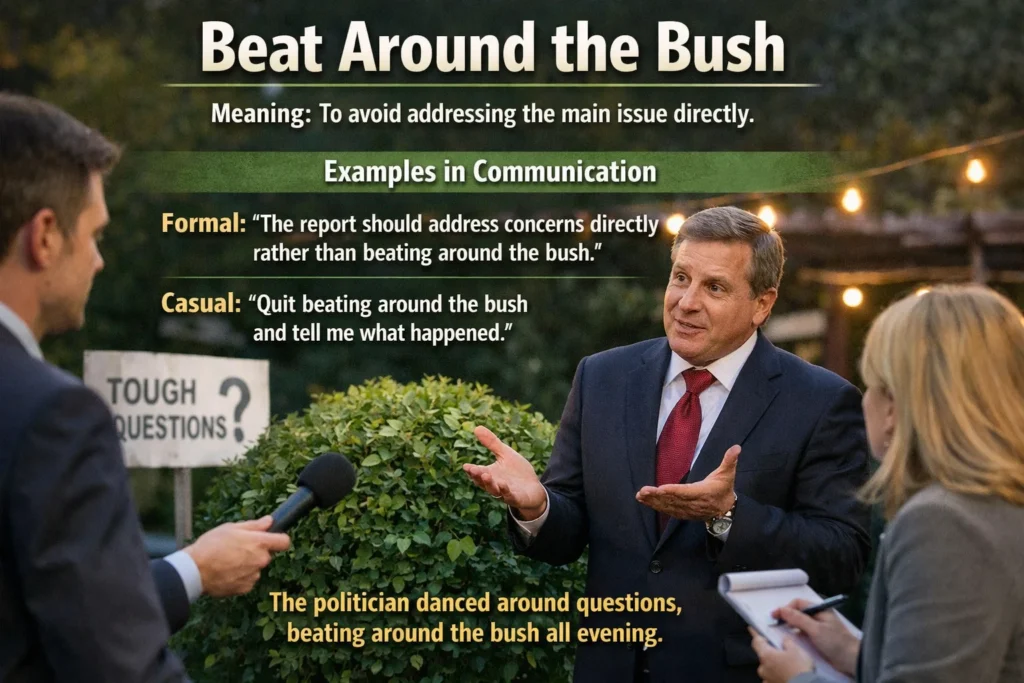
Meaning
To avoid addressing the main issue directly.
When People Use It
In discussions where someone avoids the point.
Alternative Expression
Avoid the issue
Examples in Communication
Formal Example:
The report should address concerns directly rather than beating around the bush.
Casual Example:
Quit beating around the bush and tell me what happened.
Creative Example:
The politician danced around questions, beating around the bush all evening.
Spin Your Wheels
Meaning
To work hard without making progress.
When People Use It
In work, studies, or projects that seem stuck.
Alternative Expression
Get nowhere
Examples in Communication
Formal Example:
Without a clear strategy, the department was simply spinning its wheels.
Casual Example:
I’ve been studying all day and still feel like I’m spinning my wheels.
Creative Example:
Like a car trapped in mud, his efforts spun their wheels endlessly.
Fool Around
Meaning
To waste time playing instead of working.
When People Use It
Usually when someone should be focused.
Alternative Expression
Mess around
Examples in Communication
Formal Example:
Employees were reminded not to fool around during working hours.
Casual Example:
Stop fooling around and finish your homework.
Creative Example:
The boys fooled around in the sunshine while responsibilities waited.
Goof Off
Meaning
To avoid work and spend time having fun.
When People Use It
In school, work, or casual settings.
Alternative Expression
Slack off
Examples in Communication
Formal Example:
The supervisor noticed several workers goofing off during the shift.
Casual Example:
We spent the afternoon goofing off at the park.
Creative Example:
Summer afternoons were made for goofing off under blue skies.
Pass the Time
Meaning
To occupy yourself while waiting.
When People Use It
During delays or waiting periods.
Alternative Expression
Kill time
Examples in Communication
Formal Example:
Passengers used books to pass the time during the delay.
Casual Example:
I watched videos to pass the time.
Creative Example:
She passed the time sketching clouds drifting overhead.
Dilly-Dally
Meaning
To waste time by being slow or indecisive.
When People Use It
When someone takes too long to act.
Alternative Expression
Linger
Examples in Communication
Formal Example:
The company could not afford to dilly-dally during negotiations.
Casual Example:
Stop dilly-dallying or we’ll miss the train.
Creative Example:
The traveler dilly-dallied among market stalls until sunset arrived.
Burn Daylight
Meaning
To waste valuable time.
When People Use It
When urgency is important.
Alternative Expression
Waste time
Examples in Communication
Formal Example:
The team could not continue burning daylight on minor issues.
Casual Example:
Let’s go—we’re burning daylight.
Creative Example:
Every minute spent worrying was daylight quietly burning away.
Sit Around
Meaning
To spend time doing nothing productive.
When People Use It
When people are inactive.
Alternative Expression
Lounge around
Examples in Communication
Formal Example:
The organization could not sit around waiting for change.
Casual Example:
I don’t want to sit around all weekend.
Creative Example:
The cats sat around lazily while the world hurried by.
Chase Your Tail
Meaning
To stay busy without accomplishing much.
When People Use It
In stressful work situations.
Alternative Expression
Spin your wheels
Examples in Communication
Formal Example:
The department spent months chasing its tail due to poor planning.
Casual Example:
I feel like I’m chasing my tail today.
Creative Example:
He chased his tail through endless tasks that led nowhere.
Waste Your Breath
Meaning
To spend effort talking without results.
When People Use It
When advice or discussion is ineffective.
Alternative Expression
Talk to a wall
Examples in Communication
Formal Example:
Negotiators felt they were wasting their breath.
Casual Example:
Don’t waste your breath—he won’t listen.
Creative Example:
Her words drifted away like wind, a breath wasted on silence.
Mark Time
Meaning
To remain inactive without progress.
When People Use It
In business, education, or personal growth discussions.
Alternative Expression
Stand still
Examples in Communication
Formal Example:
The company was marking time while awaiting approval.
Casual Example:
I feel like my career is marking time right now.
Creative Example:
The town seemed to mark time beneath gray winter skies.
Procrastinate
Meaning
To repeatedly delay important tasks that should be completed.
When People Use It
People use this expression when discussing postponed responsibilities, missed deadlines, or avoidance of important work.
Alternative Expression
Put something off
Examples in Communication
Formal Example:
Students who procrastinate often experience unnecessary stress before examinations.
Casual Example:
I keep procrastinating instead of cleaning my room.
Creative Example:
The unfinished manuscript sat quietly on the desk while its author continued to procrastinate.
Slack Off
Meaning
To work less hard than expected or avoid responsibilities.
When People Use It
Often used in workplaces, schools, and sports teams when someone isn’t putting in enough effort.
Alternative Expression
Goof off
Examples in Communication
Formal Example:
Employees were reminded not to slack off during the busy season.
Casual Example:
You’ve been slacking off all afternoon.
Creative Example:
The afternoon sun tempted everyone to slack off and enjoy the breeze.
Put Something Off
Meaning
To delay doing something until a later time.
When People Use It
When discussing postponed tasks, appointments, or decisions.
Alternative Expression
Procrastinate
Examples in Communication
Formal Example:
The committee decided to put off the vote until next week.
Casual Example:
I keep putting off my dentist appointment.
Creative Example:
He put off his dreams so long that the years quietly slipped away.
Lollygag
Meaning
To spend time aimlessly or move very slowly.
When People Use It
Commonly used when someone is wasting time instead of getting moving.
Alternative Expression
Dilly-dally
Examples in Communication
Formal Example:
The guide urged the group not to lollygag during the hike.
Casual Example:
Stop lollygagging—we’re already late.
Creative Example:
Tourists lollygagged through the village streets, enjoying every corner.
Drag One’s Heels
Meaning
To deliberately delay taking action.
When People Use It
Frequently used in business, politics, and workplace discussions.
Alternative Expression
Drag your feet
Examples in Communication
Formal Example:
Officials were accused of dragging their heels on the reform proposal.
Casual Example:
Why are you dragging your heels about signing up?
Creative Example:
Progress waited impatiently while leaders dragged their heels.
While Away the Hours
Meaning
To spend time pleasantly but without accomplishing much.
When People Use It
Often used when enjoying leisurely activities.
Alternative Expression
Pass the time
Examples in Communication
Formal Example:
Guests whiled away the hours in conversation.
Casual Example:
We whiled away the afternoon playing cards.
Creative Example:
They whiled away the hours beneath the shade of an old oak tree.
Mess Around
Meaning
To spend time doing unimportant things rather than focusing on work.
When People Use It
Common among friends, parents, teachers, and coworkers.
Alternative Expression
Fool around
Examples in Communication
Formal Example:
The manager warned staff not to mess around during critical operations.
Casual Example:
Stop messing around and finish your project.
Creative Example:
The children messed around in the garden until sunset painted the sky orange.
Sit on Your Hands
Meaning
To remain inactive when action is needed.
When People Use It
Often used when people fail to take initiative.
Alternative Expression
Do nothing
Examples in Communication
Formal Example:
The organization could not afford to sit on its hands during the crisis.
Casual Example:
Don’t just sit on your hands—help us move these boxes.
Creative Example:
Opportunity knocked loudly, but he sat on his hands and watched it pass.
Kick the Can Down the Road
Meaning
To postpone dealing with a problem rather than solving it.
When People Use It
Common in business, politics, and financial discussions.
Alternative Expression
Delay the inevitable
Examples in Communication
Formal Example:
The proposal merely kicked the can down the road instead of addressing the issue.
Casual Example:
We’re just kicking the can down the road by ignoring the problem.
Creative Example:
Each delay kicked the can farther down a road already crowded with unfinished decisions.
Take Your Sweet Time
Meaning
To do something very slowly without urgency.
When People Use It
Usually said with frustration or mild sarcasm.
Alternative Expression
Move at a snail’s pace
Examples in Communication
Formal Example:
The approval process appeared to be taking its sweet time.
Casual Example:
Take your sweet time—I wasn’t waiting or anything!
Creative Example:
The train took its sweet time winding through the mountains.
Additional Quick Summary Table
| Idiom | Meaning | Best Used For |
|---|---|---|
| Procrastinate | Delay important tasks | Studies, work |
| Slack Off | Avoid effort | School, office |
| Put Something Off | Postpone action | Everyday life |
| Lollygag | Move or act slowly | Casual speech |
| Drag One’s Heels | Delay intentionally | Business discussions |
| While Away the Hours | Spend time leisurely | Storytelling |
| Mess Around | Waste time on trivial things | Informal conversation |
| Sit on Your Hands | Remain inactive | Workplace communication |
| Kick the Can Down the Road | Delay solving problems | Professional contexts |
| Take Your Sweet Time | Act very slowly | Everyday conversation |
How to Use Idioms Naturally
The best way to use idioms is to match them with realistic situations. Expressions such as kill time and pass the time are suitable for everyday conversation, while spin your wheels and chase your tail are especially useful in workplace communication.
Pay attention to tone. Some idioms sound playful, while others carry frustration or criticism.
Using one well-placed idiom often sounds more natural than filling a conversation with several expressions at once.
Common Mistakes with Idioms
Using Them Literally
Idioms are figurative. If someone says they’re “spinning their wheels,” they usually aren’t talking about an actual vehicle.
Choosing the Wrong Tone
Expressions like goof off may sound too casual in professional writing.
Overusing Idioms
Too many idioms can make communication feel unnatural.
Ignoring Context
Each idiom works best in certain situations. Understanding context improves fluency.
Tips for Sounding More Fluent
- Learn idioms through stories and conversations.
- Practice writing sentences using new expressions.
- Watch English movies and listen to podcasts.
- Group idioms by theme for easier memorization.
- Use them naturally instead of forcing them into every conversation.
FAQs
What are idioms for wasting time?
They are figurative expressions that describe delaying tasks, avoiding work, or spending time unproductively.
Which idiom is most commonly used?
“Kill time” is one of the most frequently used idioms in everyday English.
Are these idioms suitable for professional writing?
Some are, such as mark time and spin your wheels, while others are better suited for informal situations.
How can I remember these idioms easily?
Use them in real conversations, create example sentences, and connect them to everyday situations.
Why should I learn idioms for wasting time?
They make your English sound more natural, expressive, and closer to how native speakers communicate.
Conclusion
Learning idioms for wasting time can significantly improve the way you understand and use English. These expressions capture procrastination, delays, boredom, and unproductive habits in ways that are far more vivid than simple vocabulary alone.
Whether you’re writing a story, participating in a conversation, preparing for an exam, or improving workplace communication, these idioms help you express ideas with greater personality and precision.
The most effective approach is to learn them through context. Notice how they appear in conversations, books, films, and articles. Then practice using them in your own speaking and writing.
Over time, these expressions will become a natural part of your vocabulary, helping you communicate with more confidence, fluency, and creativity.
Discover More Related Articles: