Quick Answer
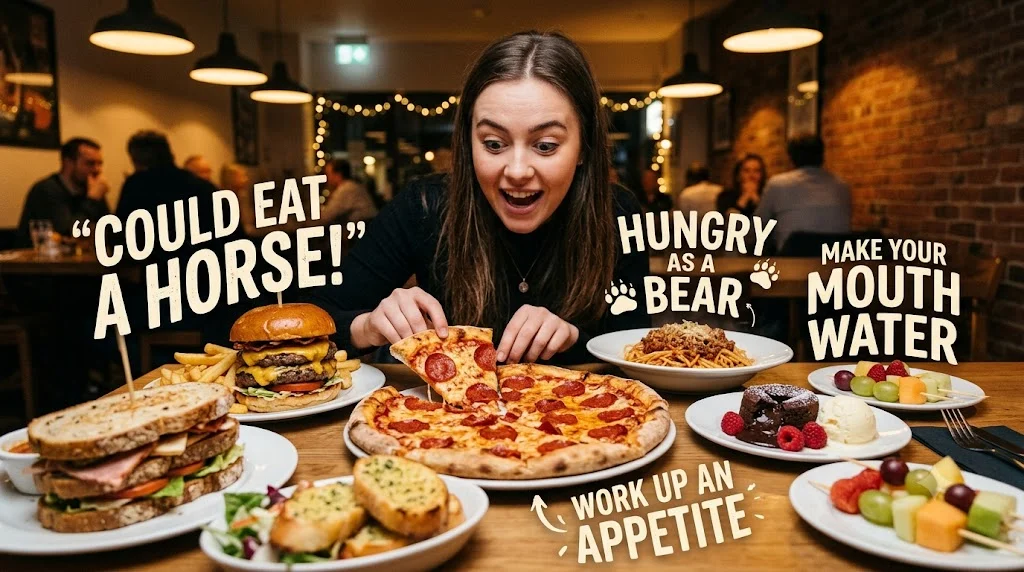
Idioms for hungry are colorful expressions used to describe hunger, a strong appetite, craving food, or the feeling of needing something badly. These idioms make conversations more vivid and engaging. Common examples include “hungry as a bear,” “could eat a horse,” and “make your mouth water.”
Hunger is something everyone experiences, yet English speakers rarely describe it in plain, literal ways. Instead, they often use creative idioms that add personality, humor, and emotion to everyday conversations.
Think about how often you’ve heard someone say they could eat a horse or that a delicious dessert made their mouth water. These expressions instantly create a vivid image and communicate more than simply saying, “I’m hungry.”
For language learners, understanding hunger-related idioms is especially useful because they appear frequently in casual conversations, movies, social media posts, blogs, and everyday interactions. They can help you sound more natural and make your communication more engaging.
Whether you’re writing stories, improving your spoken English, preparing for exams, or simply expanding your vocabulary, these idioms can add flavor to your language. In this guide, you’ll learn some of the most popular idioms for hungry, their meanings, when to use them, and practical examples that show how they work in real life.
Quick Summary Table
| Idiom | Meaning | Common Use |
|---|---|---|
| Could eat a horse | Extremely hungry | Everyday conversations |
| Hungry as a bear | Very hungry | Casual speech |
| Make your mouth water | Look or smell delicious | Food discussions |
| Running on empty | Lacking energy from hunger | Daily life |
| Starving to death | Very hungry (not literal) | Informal conversations |
| Work up an appetite | Become hungry through activity | Sports and exercise |
| Eat like a horse | Eat a large amount | Describing eating habits |
| Bite to eat | Small meal or snack | Social situations |
| Food for thought | Something worth considering | Discussions and writing |
| Have a hollow leg | Eat a lot without seeming full | Informal speech |
| Wolf down | Eat very quickly | Casual conversations |
| Peckish | Slightly hungry | Everyday English |
| Eat someone out of house and home | Consume lots of food | Family humor |
| Eyes bigger than your stomach | Take more food than you can eat | Meals and gatherings |
| Feast your eyes | Enjoy looking at something appealing | Food and visuals |
| Craving something | Strong desire for food | Everyday conversations |
| Fill a hole | Satisfy hunger temporarily | Informal speech |
| Bread and butter | Basic necessity | Daily needs |
| Have a taste for | Enjoy a particular food | Preferences |
| Satisfy your appetite | Meet your hunger needs | Food and dining |
Could Eat a Horse
Meaning
To be extremely hungry.
When People Use It
After a long day, intense exercise, or missing a meal.
Alternative Expression
Hungry as a bear.
Examples in Communication
Formal Example:
After the conference ended, many attendees felt they could eat a horse.
Casual Example:
I skipped lunch and could eat a horse right now.
Creative Example:
After hiking all day, he felt hungry enough to empty an entire buffet.
Hungry as a Bear
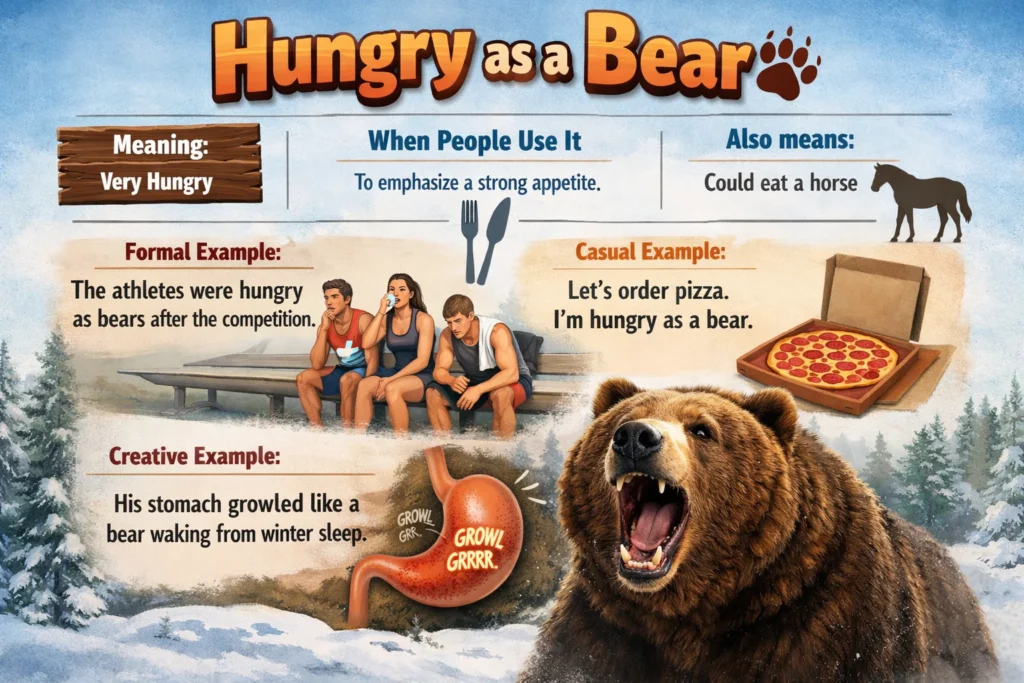
Meaning
Very hungry.
When People Use It
To emphasize a strong appetite.
Alternative Expression
Could eat a horse.
Examples in Communication
Formal Example:
The athletes were hungry as bears after the competition.
Casual Example:
Let’s order pizza. I’m hungry as a bear.
Creative Example:
His stomach growled like a bear waking from winter sleep.
Make Your Mouth Water
Meaning
To look or smell so good that it creates a desire to eat.
When People Use It
When describing delicious food.
Alternative Expression
Look irresistible.
Examples in Communication
Formal Example:
The bakery’s fresh pastries made everyone’s mouth water.
Casual Example:
That burger is making my mouth water.
Creative Example:
The aroma drifted through the room, tempting everyone nearby.
Running on Empty
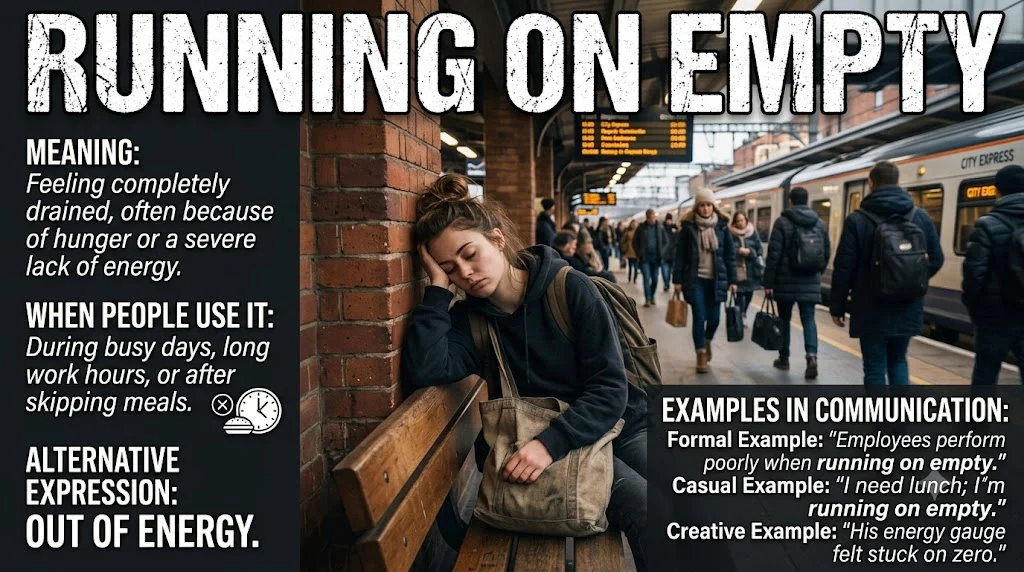
Meaning
Feeling drained, often because of hunger or lack of energy.
When People Use It
During busy days or after skipping meals.
Alternative Expression
Out of energy.
Examples in Communication
Formal Example:
Employees perform poorly when running on empty.
Casual Example:
I need lunch. I’m running on empty.
Creative Example:
His energy gauge felt stuck on zero.
Starving to Death
Meaning
Extremely hungry, though not literally.
When People Use It
In informal conversations.
Alternative Expression
Absolutely starving.
Examples in Communication
Formal Example:
After the journey, the travelers joked they were starving to death.
Casual Example:
Hurry up, I’m starving to death.
Creative Example:
The wait felt endless as hunger took over every thought.
Work Up an Appetite
Meaning
Become hungry after physical activity.
When People Use It
After sports, exercise, or hard work.
Alternative Expression
Build a healthy appetite.
Examples in Communication
Formal Example:
The team worked up an appetite during training.
Casual Example:
That walk really worked up an appetite.
Creative Example:
Hours of activity turned a simple lunch into a feast.
Eat Like a Horse
Meaning
To eat a very large amount of food.
When People Use It
Describing someone’s eating habits.
Alternative Expression
Have a huge appetite.
Examples in Communication
Formal Example:
Teenagers often eat like horses during growth periods.
Casual Example:
My brother eats like a horse.
Creative Example:
His plate seemed to refill as quickly as it emptied.
Bite to Eat
Meaning
A small meal or snack.
When People Use It
Inviting someone to eat.
Alternative Expression
Grab some food.
Examples in Communication
Formal Example:
Let’s stop for a bite to eat before the meeting.
Casual Example:
Want to grab a bite to eat?
Creative Example:
A quick snack became the highlight of the afternoon.
Food for Thought
Meaning
Something worth considering carefully.
When People Use It
Discussions, essays, and professional communication.
Alternative Expression
Something to think about.
Examples in Communication
Formal Example:
The research provides valuable food for thought.
Casual Example:
That’s food for thought.
Creative Example:
The idea lingered long after the conversation ended.
Have a Hollow Leg
Meaning
To eat a lot without seeming to get full.
When People Use It
Humorous conversations.
Alternative Expression
Bottomless appetite.
Examples in Communication
Formal Example:
The young athlete seemed to have a hollow leg.
Casual Example:
How can you eat that much? You must have a hollow leg.
Creative Example:
His appetite seemed limitless.
Wolf Down
Meaning
To eat very quickly.
When People Use It
Describing rushed meals.
Alternative Expression
Gobble up.
Examples in Communication
Formal Example:
Students often wolf down lunch between classes.
Casual Example:
Don’t wolf down your food.
Creative Example:
The meal disappeared before anyone noticed.
Peckish
Meaning
Slightly hungry.
When People Use It
When hunger is mild.
Alternative Expression
A little hungry.
Examples in Communication
Formal Example:
Guests became peckish during the long event.
Casual Example:
I’m feeling a bit peckish.
Creative Example:
A small craving quietly appeared.
Eat Someone Out of House and Home
Meaning
To consume a large amount of food.
When People Use It
Usually jokingly.
Alternative Expression
Eat everything in sight.
Examples in Communication
Formal Example:
The visiting team practically ate us out of house and home.
Casual Example:
Teenagers can eat you out of house and home.
Creative Example:
The refrigerator never stood a chance.
Eyes Bigger Than Your Stomach
Meaning
Taking more food than you can actually eat.
When People Use It
Buffets, parties, and family dinners.
Alternative Expression
Take too much.
Examples in Communication
Formal Example:
Many guests had eyes bigger than their stomachs.
Casual Example:
I ordered too much. My eyes were bigger than my stomach.
Creative Example:
The plate looked ambitious, but reality quickly caught up.
Feast Your Eyes
Meaning
To enjoy looking at something attractive.
When People Use It
Food presentations and visual displays.
Alternative Expression
Take a look.
Examples in Communication
Formal Example:
Guests feasted their eyes on the beautifully arranged dishes.
Casual Example:
Feast your eyes on this cake.
Creative Example:
The dessert looked almost too beautiful to eat.
Craving Something
Meaning
Having a strong desire for a particular food.
When People Use It
Daily conversations about food.
Alternative Expression
Really want.
Examples in Communication
Formal Example:
Many people crave comfort foods during stressful periods.
Casual Example:
I’m craving pizza tonight.
Creative Example:
The thought of chocolate stayed on her mind all day.
Fill a Hole
Meaning
To satisfy hunger temporarily.
When People Use It
When having a quick snack.
Alternative Expression
Hold me over.
Examples in Communication
Formal Example:
A light snack helped fill a hole before dinner.
Casual Example:
I’ll grab a sandwich to fill a hole.
Creative Example:
The snack quieted the stomach for a while.
Bread and Butter
Meaning
A basic necessity or main source of support.
When People Use It
Work, income, and essential needs.
Alternative Expression
Mainstay.
Examples in Communication
Formal Example:
Customer service remains the company’s bread and butter.
Casual Example:
Freelance work is my bread and butter.
Creative Example:
It was the foundation everything else depended on.
Have a Taste for
Meaning
To enjoy or prefer a particular food.
When People Use It
Discussing food preferences.
Alternative Expression
Be fond of.
Examples in Communication
Formal Example:
She has a taste for international cuisine.
Casual Example:
I’ve developed a taste for spicy food.
Creative Example:
New flavors opened a world of possibilities.
Satisfy Your Appetite
Meaning
To fulfill your hunger or desire for food.
When People Use It
Restaurants, dining, and food reviews.
Alternative Expression
Fill up.
Examples in Communication
Formal Example:
The restaurant offers dishes to satisfy every appetite.
Casual Example:
That meal definitely satisfied my appetite.
Creative Example:
The feast ended every craving at once.
Snack Attack
Meaning
A sudden strong urge to eat a snack.
When People Use It
Informal, often humorous situations.
Alternative Expression
Sudden craving.
Examples in Communication
Formal Example:
A mid-afternoon snack attack can reduce concentration.
Casual Example:
I just had a snack attack for chips.
Creative Example:
Without warning, hunger knocked at the door again.
Eat One’s Fill
Meaning
To eat enough until fully satisfied.
When People Use It
Buffets, family meals, celebrations.
Alternative Expression
Eat until full.
Examples in Communication
Formal Example:
Guests were invited to eat their fill at the banquet.
Casual Example:
Go ahead, eat your fill.
Creative Example:
The table overflowed with enough food for everyone to be content.
Devour Something
Meaning
To eat something very quickly and eagerly.
When People Use It
When someone is extremely hungry or excited about food.
Alternative Expression
Gobble up.
Examples in Communication
Formal Example:
The participants devoured their meals after the long event.
Casual Example:
He devoured the pizza in minutes.
Creative Example:
The meal vanished as if hunger had no patience left.
Empty Stomach Feeling
Meaning
The uncomfortable sensation of being hungry.
When People Use It
Morning hunger or missed meals.
Alternative Expression
Hunger pangs.
Examples in Communication
Formal Example:
An empty stomach can affect concentration levels.
Casual Example:
I hate that empty stomach feeling.
Creative Example:
Hunger echoed quietly inside him.
Practical Usage Guidance
How to Use Idioms Naturally
Use hunger idioms in situations where they genuinely match the intensity of your appetite. Saying you’re “starving to death” when you’ve just eaten can sound exaggerated.
Common Mistakes with Idioms
- Taking idioms literally.
- Using formal idioms in casual contexts and vice versa.
- Overusing expressions like “could eat a horse.”
- Mixing multiple food idioms in one sentence.
Idioms vs Literal Expressions
Literal: I am very hungry.
Idiomatic: I could eat a horse.
The idiomatic version is more expressive and conversational.
Tips for Sounding More Fluent
- Listen to how native speakers use food idioms.
- Practice one new idiom every few days.
- Use them in conversations about meals and restaurants.
- Match the idiom to the situation’s intensity.
How to Remember Hunger Idioms Easily
Connect each idiom to a mental image. Imagining someone trying to eat a horse or wolfing down food creates a memorable picture that makes learning easier.
FAQs
What are idioms for hungry?
Idioms for hungry are expressions used to describe hunger, appetite, cravings, or eating habits in a colorful and figurative way.
What is the most common idiom for being hungry?
“Could eat a horse” is one of the most commonly used idioms for extreme hunger.
Can hunger idioms be used in writing?
Yes. They work well in stories, blogs, dialogue, and informal writing where vivid language is appropriate.
Are hunger idioms formal or informal?
Most hunger idioms are informal and conversational, though some, like “food for thought,” are suitable in professional writing.
How can I learn food-related idioms quickly?
Practice them in daily conversations, read articles and books, and connect each idiom with a memorable visual image.
Conclusion
Learning idioms for hungry can make your English more expressive, engaging, and natural. Instead of repeatedly saying you’re hungry, these colorful expressions allow you to communicate appetite, cravings, and eating habits with personality and flair.
From saying you could eat a horse to describing a meal that makes your mouth water, these idioms help bring conversations to life. They also appear regularly in movies, books, social media, and everyday speech, making them valuable additions to your vocabulary.
The best way to master these expressions is through regular use. Try incorporating a few into conversations, writing exercises, or storytelling. Over time, they’ll become a natural part of your communication style.
Like a satisfying meal after a long day, the right idiom can leave a lasting impression and make your language far more memorable.
Discover More Related Articles:
- Idioms for Busy | Natural Ways to Sound Fluent In 2026
- Idioms for Waiting |Timeless Expressions for Patience, Delays & Anticipation