Quick Answer
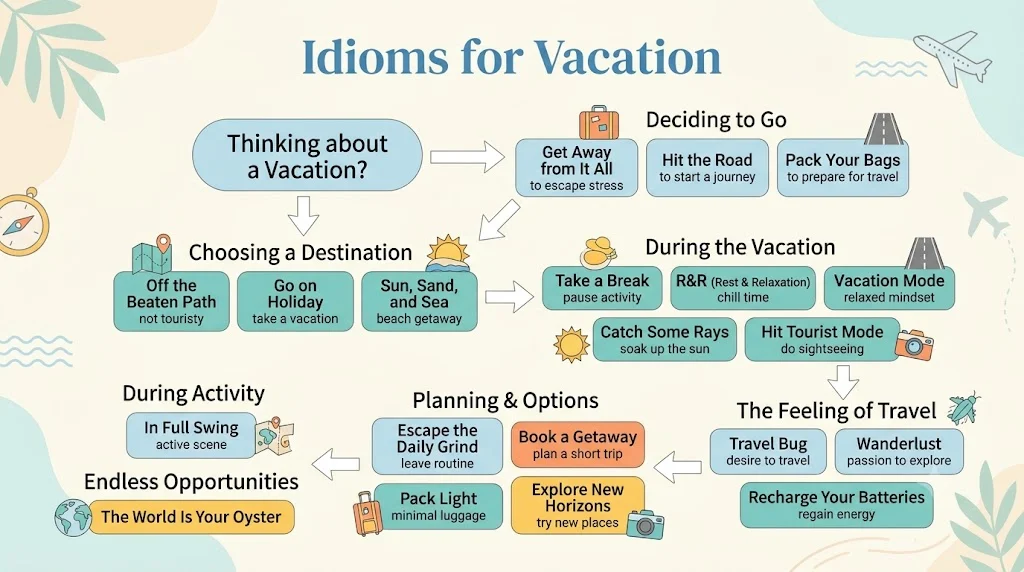
Idioms for vacation are expressive phrases used to describe travel experiences, relaxation, breaks from routine, and adventure. They help make communication more vivid when talking about holidays, trips, and escaping daily life. Common examples include “get away from it all,” “hit the road,” and “take a break.”
Vacations are more than just a break from work or school—they are moments of freedom, exploration, and mental refreshment. When we talk about travel, we often rely on expressive language to describe how it feels to step away from routine life. That’s where idioms for vacation become incredibly useful.
Instead of simply saying “I am going on a trip,” English speakers often say they are hitting the road, getting away from it all, or switching into vacation mode. These phrases add emotion, personality, and clarity to everyday communication.
For students, writers, bloggers, and English learners, understanding vacation-related idioms is especially helpful. They appear in travel blogs, storytelling, social media captions, workplace conversations, and even casual chats. More importantly, they make your language sound natural instead of textbook-like.
In this guide, you’ll explore the most commonly used vacation idioms, learn when to use them, and understand how to apply them confidently in real-life communication. Think of it as packing your language suitcase with expressions that make your English more lively, relatable, and travel-ready.
Quick Summary Table
| Idiom | Meaning | Common Use |
|---|---|---|
| Get away from it all | Escape stress and routine | Relaxation/travel |
| Hit the road | Start a journey | Road trips |
| Pack your bags | Prepare for travel | Vacation planning |
| Off the beaten path | Less crowded places | Adventure travel |
| Take a break | Pause work/stress | Daily life |
| R&R (rest and relaxation) | Rest time | Holidays |
| Vacation mode | Relaxed mindset | Work-life balance |
| Escape the daily grind | Leave routine life | Stress relief |
| Travel bug | Strong desire to travel | Lifestyle |
| Go on holiday | Take a vacation | General travel |
| Sun, sand, and sea | Beach vacation | Coastal trips |
| Fly off somewhere | Travel abroad | Air travel |
| Recharge your batteries | Regain energy | Rest periods |
| Wanderlust | Strong travel desire | Personality trait |
| On the road again | Traveling again | Frequent travel |
| Book a getaway | Plan a trip | Vacation planning |
| Drop everything and leave | Sudden trip | Spontaneous travel |
| Explore new horizons | Try new places | Adventure |
| Chill out time | Relaxation period | Informal rest |
| Tourist mode | Exploring actively | Sightseeing |
Idioms for Vacation
Get Away from It All
Meaning
To escape stress, work, or daily routine.
When People Use It
When someone wants relaxation or a peaceful break.
Alternative Expression
Escape the routine.
Examples in Communication
Formal Example: Many employees take vacations to get away from it all.
Casual Example: I just want to get away from it all this weekend.
Creative Example: She drove into the mountains to get away from it all.
Hit the Road
Meaning
To start a journey or begin traveling.
When People Use It
Road trips or leaving for vacation.
Alternative Expression
Set off.
Examples in Communication
Formal Example: The team hit the road early for the conference.
Casual Example: Let’s hit the road before sunrise!
Creative Example: With music playing, they hit the open road and left worries behind.
Pack Your Bags
Meaning
To prepare for travel.
When People Use It
Before going on vacation.
Alternative Expression
Get ready to leave.
Examples in Communication
Formal Example: Employees were instructed to pack their bags for the business trip.
Casual Example: Pack your bags—we’re going to the beach!
Creative Example: Excitement rose as she packed her bags for a new adventure.
Off the Beaten Path
Meaning
A place not commonly visited by tourists.
When People Use It
Adventure or unique travel experiences.
Alternative Expression
Hidden gem.
Examples in Communication
Formal Example: The tour focused on off-the-beaten-path destinations.
Casual Example: I love exploring off the beaten path places.
Creative Example: They found a quiet village far off the beaten path.
Take a Break
Meaning
To pause work or activity.
When People Use It
During stress or vacation planning.
Alternative Expression
Rest.
Examples in Communication
Formal Example: The committee decided to take a break before continuing discussions.
Casual Example: I need to take a break.
Creative Example: Even the busiest minds must take a break and breathe.
R&R (Rest and Relaxation)
Meaning
Time spent resting and relaxing.
When People Use It
Holidays or recovery time.
Alternative Expression
Chill time.
Examples in Communication
Formal Example: The retreat focused on employee R&R.
Casual Example: I’m heading for some R&R.
Creative Example: Soft waves promised perfect R&R.
Vacation Mode
Meaning
A relaxed mindset during holidays.
When People Use It
When someone is mentally off from work.
Alternative Expression
Relaxed state.
Examples in Communication
Formal Example: Staff were allowed to switch to vacation mode after project completion.
Casual Example: I’m already in vacation mode!
Creative Example: His worries faded as vacation mode took over.
Escape the Daily Grind
Meaning
To leave routine life or work stress.
When People Use It
Talking about needing a break.
Alternative Expression
Break free from routine.
Examples in Communication
Formal Example: Many professionals travel to escape the daily grind.
Casual Example: I need a trip to escape the daily grind.
Creative Example: The city lights blurred behind him as he escaped the daily grind.
Travel Bug
Meaning
Strong desire to travel often.
When People Use It
People who love exploring.
Alternative Expression
Wanderlust.
Examples in Communication
Formal Example: She developed a travel bug after university.
Casual Example: I’ve caught the travel bug again.
Creative Example: The travel bug whispered adventure in her ear.
Go on Holiday
Meaning
To take a vacation.
When People Use It
General travel plans.
Alternative Expression
Take a trip.
Examples in Communication
Formal Example: The family will go on holiday next month.
Casual Example: We’re going on holiday!
Creative Example: The calendar marked the day they would go on holiday.
Sun, Sand, and Sea
Meaning
A beach vacation experience.
When People Use It
Coastal or tropical trips.
Alternative Expression
Beach getaway.
Examples in Communication
Formal Example: The resort offers sun, sand, and sea experiences.
Casual Example: I want sun, sand, and sea!
Creative Example: The ocean promised endless sun, sand, and sea.
Wanderlust
Meaning
Strong desire to travel and explore.
When People Use It
Lifestyle or personality description.
Alternative Expression
Travel passion.
Examples in Communication
Formal Example: Wanderlust drives many young professionals today.
Casual Example: I’ve got serious wanderlust.
Creative Example: Her wanderlust never let her stay in one place.
Explore New Horizons
Meaning
To try new places or experiences.
When People Use It
Adventure or life growth.
Alternative Expression
Discover new paths.
Examples in Communication
Formal Example: The company aims to explore new horizons globally.
Casual Example: Time to explore new horizons!
Creative Example: Every journey opened new horizons of wonder.
Recharge Your Batteries
Meaning
To regain energy and rest.
When People Use It
After stress or work.
Alternative Expression
Refuel energy.
Examples in Communication
Formal Example: Employees need time to recharge their batteries.
Casual Example: I need a vacation to recharge my batteries.
Creative Example: Silence helped him recharge his inner strength.
Hit Tourist Mode
Meaning
To actively explore and visit attractions.
When People Use It
Sightseeing trips.
Alternative Expression
Explore fully.
Examples in Communication
Formal Example: Visitors often enter tourist mode during city tours.
Casual Example: Let’s hit tourist mode today!
Creative Example: Camera in hand, she switched to tourist mode instantly.
Book a Getaway
Meaning
To plan a short vacation.
When People Use It
Travel planning.
Alternative Expression
Reserve a trip.
Examples in Communication
Formal Example: He booked a getaway for the long weekend.
Casual Example: Let’s book a getaway!
Creative Example: A spontaneous getaway awaited them beyond the horizon.
Catch Some Rays
Meaning
To relax under the sun, usually on a beach.
When People Use It
During beach vacations or sunny holidays.
Alternative Expression
Soak up the sun.
Examples in Communication
Formal Example: Tourists often travel south to catch some rays during winter months.
Casual Example: I just want to lie on the beach and catch some rays.
Creative Example: The warm sun invited her to forget everything and just be.
All Roads Lead to Rome
Meaning
Different paths can lead to the same destination.
When People Use It
When planning flexible travel routes or journeys.
Alternative Expression
Many ways to reach the same place.
Examples in Communication
Formal Example: In travel planning, all roads lead to Rome depending on budget and time.
Casual Example: Don’t stress, all roads lead to Rome.
Creative Example: Every winding path promised the same beautiful ending.
In Full Swing
Meaning
A situation that is fully active and lively.
When People Use It
During peak vacation activities or festivals.
Alternative Expression
In progress.
Examples in Communication
Formal Example: The summer tourist season is in full swing.
Casual Example: The party is in full swing!
Creative Example: The beach buzzed with life as vacation dreams came alive.
Pack Light
Meaning
To carry minimal luggage while traveling.
When People Use It
Travel advice and tips.
Alternative Expression
Travel minimally.
Examples in Communication
Formal Example: Travelers are advised to pack light for convenience.
Casual Example: Just pack light—we’re going for two days.
Creative Example: Freedom begins when you pack light and move freely.
The World Is Your Oyster
Meaning
You have endless opportunities to explore and enjoy.
When People Use It
Encouragement for travel and adventure.
Alternative Expression
Endless opportunities.
Examples in Communication
Formal Example: For graduates, the world is your oyster.
Casual Example: Go travel—the world is your oyster!
Creative Example: Every horizon whispered possibility.
Practical Usage Boost Section
How to Sound Natural with Vacation Idioms
One secret to sounding fluent is not overloading your speech. Instead of saying:
“I’m in vacation mode, hitting the road, and catching rays,”
choose one strong idiom that fits the moment.
Natural communication is about balance, not quantity.
Idioms That Work Best in Writing vs Speaking
- Writing (blogs, essays):
Get away from it all, explore new horizons, off the beaten path - Speaking (casual conversation):
Hit the road, pack your bags, vacation mode
Matching tone to situation makes your English sound polished and confident.
Travel Writing Tip
If you’re a blogger or content creator, vacation idioms help create emotional storytelling. Instead of:
“We went to the beach and relaxed,”
you can write:
“We finally got away from it all and spent the day catching some rays by the sea.”
That small change adds personality and reader engagement.
Practical Usage Guidance
How to Use Vacation Idioms Naturally
Use vacation idioms when the situation feels relaxed, conversational, or descriptive. They work best in storytelling, blogs, and casual speech rather than strict formal reports.
Common Mistakes with Idioms
- Using too many idioms in one sentence
- Mixing formal tone with overly casual expressions
- Misunderstanding literal vs figurative meaning
Idioms vs Literal Expressions
Literal: I am going on a trip.
Idiomatic: I’m hitting the road.
Idioms add emotion and imagery.
Tips for Sounding More Fluent
- Learn idioms in real travel contexts
- Practice using 2–3 idioms in daily conversation
- Watch travel vlogs and note expressions
- Use idioms in captions or journaling
How to Remember Them Easily
Connect idioms with real travel memories or imagine a journey when you hear them. Visual association helps long-term retention.
FAQs
What are idioms for vacation?
They are expressions used to describe travel, relaxation, and holiday experiences in a creative way.
Why should I learn vacation idioms?
They make your English sound more natural, expressive, and fluent in real conversations.
Can I use vacation idioms in writing?
Yes, especially in blogs, storytelling, and informal essays.
What is the most common vacation idiom?
“Get away from it all” and “hit the road” are widely used.
How can I remember idioms easily?
By linking them with real travel experiences and visual imagination.
Conclusion
Vacation idioms bring color and life to everyday English. Instead of plain statements, they allow you to express excitement, relaxation, and adventure in a more natural and engaging way. Whether you’re talking about hitting the road, switching into vacation mode, or getting away from it all, these expressions help your communication feel more authentic.
As you practice them, don’t try to memorize everything at once. Pick a few idioms that match your personality and travel style, and slowly build your comfort with them. Over time, they’ll become a natural part of your speech and writing just like planning your next trip becomes second nature.
Language, like travel, grows richer with experience. The more you explore these idioms, the more confidently your English will travel with you.
Discover More Related Articles:
- Idioms About Songs | Musical Expressions That Add Rhythm to Your English In 2026
- Idioms About Age | Timeless Expressions That Add Wisdom to Your English In 2026