
Quick Answer
Idioms for waiting are figurative expressions that describe patience, anticipation, delays, uncertainty, and the passage of time. They help speakers and writers express emotions and situations related to waiting in a more vivid and natural way. Popular examples include “hold your horses,” “sit tight,” “play the waiting game,” and “time will tell.”
Waiting is something everyone experiences. We wait for opportunities, exam results, job offers, vacations, important messages, and life-changing moments. Sometimes waiting feels exciting because something wonderful may be coming. Other times it feels frustrating when delays seem endless.
The English language reflects these emotions through a rich collection of idioms for waiting. Rather than simply saying “I’m waiting,” native speakers often use colorful expressions that capture patience, anticipation, uncertainty, or even impatience. These idioms make conversations more engaging and help writers create stronger imagery and emotional depth.
Whether you’re preparing for school assignments, improving your spoken English, writing stories, or enhancing your professional communication, learning waiting-related idioms can make your language sound more natural and expressive.
In this guide, you’ll discover useful idioms for waiting, learn their meanings, and see practical examples that show exactly how they’re used in real-world communication.
Quick Summary Table
| Idiom | Meaning | Common Use |
|---|---|---|
| Hold your horses | Be patient | Everyday conversations |
| Sit tight | Wait without taking action | Instructions and advice |
| Play the waiting game | Endure a delay patiently | Work and life situations |
| Time will tell | The future will reveal the answer | Predictions |
| Bide your time | Wait for the right opportunity | Strategy and planning |
| Wait in the wings | Be ready for an opportunity | Career and performance |
| On standby | Ready and waiting | Work and travel |
| Mark time | Wait without progress | Delays and frustration |
| In due course | At the appropriate time | Formal communication |
| Keep the home fires burning | Wait faithfully for someone’s return | Relationships |
| At the eleventh hour | At the last possible moment | Deadlines |
| Cool your heels | Wait longer than expected | Appointments |
| Hang fire | Delay action temporarily | Decision-making |
| Hold the fort | Maintain things while waiting | Responsibility |
| Watch the clock | Wait impatiently | Everyday life |
| Waiting in line | Await your turn | Queues and opportunities |
| Around the corner | Expected soon | Anticipation |
| On the horizon | Likely to happen soon | Future events |
| Good things come to those who wait | Patience brings rewards | Encouragement |
| Patience is a virtue | Being patient is valuable | Advice |
Hold Your Horses
Meaning
Slow down and be patient.
When People Use It
When someone is rushing into action too quickly.
Alternative Expression
Take it easy.
Examples in Communication
Formal Example:
Before making a final decision, let’s hold our horses and review all the information.
Casual Example:
Hold your horses! We haven’t even left yet.
Creative Example:
His excitement raced ahead, but reality whispered, “Hold your horses.”
Sit Tight

Meaning
Wait patiently without taking action.
When People Use It
When someone needs to stay where they are and wait.
Alternative Expression
Stay put.
Examples in Communication
Formal Example:
Please sit tight while we process your application.
Casual Example:
Just sit tight. I’ll be back in a minute.
Creative Example:
She sat tight, trusting the storm would eventually pass.
Play the Waiting Game
Meaning
To wait patiently through a long or uncertain delay.
When People Use It
During lengthy processes or uncertain situations.
Alternative Expression
Wait it out.
Examples in Communication
Formal Example:
After submitting the proposal, we must play the waiting game.
Casual Example:
Now we’re just playing the waiting game.
Creative Example:
The days stretched endlessly as they played the waiting game.
Time Will Tell
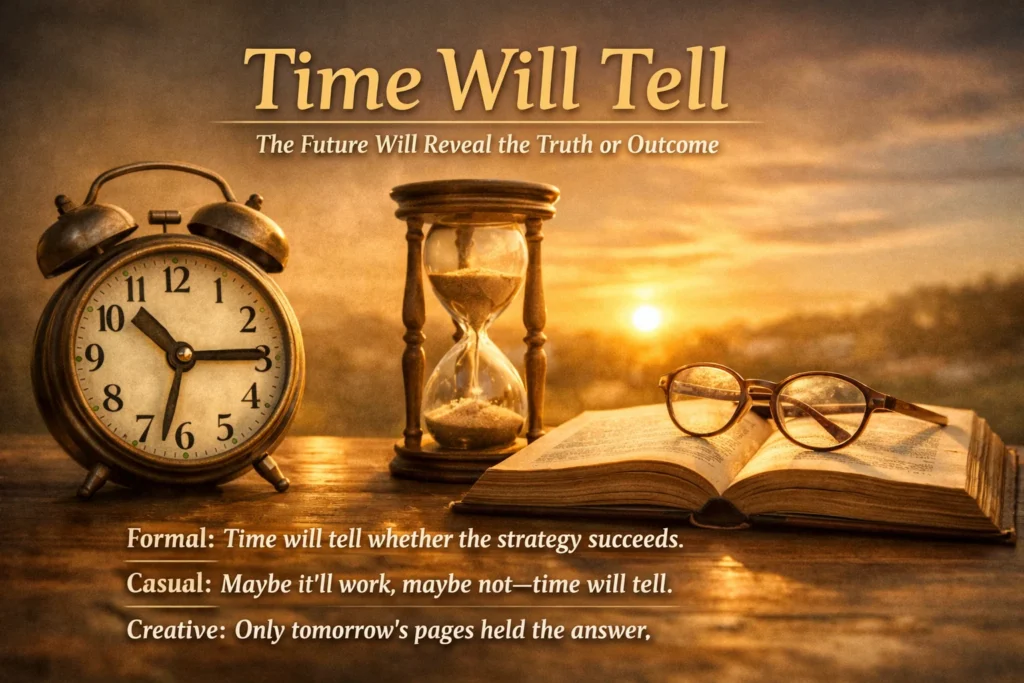
Meaning
The future will reveal the truth or outcome.
When People Use It
When the result is still unknown.
Alternative Expression
We’ll see.
Examples in Communication
Formal Example:
Time will tell whether the strategy succeeds.
Casual Example:
Maybe it’ll work, maybe not—time will tell.
Creative Example:
Only tomorrow’s pages held the answer.
Bide Your Time
Meaning
Wait patiently for the right moment.
When People Use It
Strategic situations and long-term planning.
Alternative Expression
Wait for the right opportunity.
Examples in Communication
Formal Example:
She chose to bide her time before launching the new project.
Casual Example:
Just bide your time. Your chance will come.
Creative Example:
Like a chess player, he quietly bided his time.
Wait in the Wings
Meaning
Be ready to step in when needed.
When People Use It
Career opportunities, performances, and leadership roles.
Alternative Expression
Be on deck.
Examples in Communication
Formal Example:
Several candidates are waiting in the wings for promotion.
Casual Example:
I’ve got a backup plan waiting in the wings.
Creative Example:
Opportunity stood backstage, waiting in the wings.
On Standby
Meaning
Ready and waiting for action.
When People Use It
Work, travel, and emergency situations.
Alternative Expression
Ready to go.
Examples in Communication
Formal Example:
The support team remains on standby.
Casual Example:
I’m on standby if you need help.
Creative Example:
The team stood ready like runners at the starting line.
Mark Time
Meaning
To wait without making progress.
When People Use It
Periods of delay or stagnation.
Alternative Expression
Stay stuck.
Examples in Communication
Formal Example:
The project continued to mark time awaiting approval.
Casual Example:
It feels like I’m just marking time lately.
Creative Example:
The weeks passed, but nothing seemed to move forward.
In Due Course
Meaning
At the appropriate or expected time.
When People Use It
Formal communication and business settings.
Alternative Expression
Eventually.
Examples in Communication
Formal Example:
Applicants will receive a response in due course.
Casual Example:
You’ll hear from them in due course.
Creative Example:
The answer arrived exactly when it was meant to.
Keep the Home Fires Burning
Meaning
Remain faithful and supportive while waiting for someone.
When People Use It
Family relationships and long absences.
Alternative Expression
Hold things together.
Examples in Communication
Formal Example:
Families kept the home fires burning during deployment.
Casual Example:
Don’t worry, we’ll keep the home fires burning.
Creative Example:
Love glowed quietly through the long months apart.
At the Eleventh Hour
Meaning
At the very last possible moment.
When People Use It
Deadlines and urgent situations.
Alternative Expression
Last minute.
Examples in Communication
Formal Example:
The agreement was finalized at the eleventh hour.
Casual Example:
He always finishes homework at the eleventh hour.
Creative Example:
Success arrived with only seconds to spare.
Cool Your Heels
Meaning
Wait longer than expected.
When People Use It
Appointments and delayed meetings.
Alternative Expression
Wait around.
Examples in Communication
Formal Example:
Visitors were forced to cool their heels in the lobby.
Casual Example:
I’ve been cooling my heels for an hour.
Creative Example:
He paced the room, cooling his heels and checking the clock.
Hang Fire
Meaning
Delay taking action for the moment.
When People Use It
Decision-making and planning.
Alternative Expression
Hold off.
Examples in Communication
Formal Example:
Management decided to hang fire until more data became available.
Casual Example:
Let’s hang fire until tomorrow.
Creative Example:
The plan paused at the edge of possibility.
Hold the Fort
Meaning
Take care of things while someone else is away.
When People Use It
Workplaces, homes, and teams.
Alternative Expression
Keep things running.
Examples in Communication
Formal Example:
Please hold the fort while I’m attending the conference.
Casual Example:
Can you hold the fort for an hour?
Creative Example:
She guarded the ship while the captain was away.
Watch the Clock
Meaning
Wait impatiently while checking the time.
When People Use It
Workdays, meetings, and anticipation.
Alternative Expression
Count the minutes.
Examples in Communication
Formal Example:
Employees often watch the clock before a holiday break.
Casual Example:
I’ve been watching the clock all day.
Creative Example:
Every tick seemed louder than the last.
Waiting in Line
Meaning
Awaiting your turn or opportunity.
When People Use It
Queues, promotions, and opportunities.
Alternative Expression
Await your turn.
Examples in Communication
Formal Example:
Many qualified candidates are waiting in line for the position.
Casual Example:
We’re waiting in line for tickets.
Creative Example:
Dreams stood patiently in line beside determination.
Around the Corner
Meaning
Expected to happen very soon.
When People Use It
Exciting future events.
Alternative Expression
Just ahead.
Examples in Communication
Formal Example:
A major announcement is around the corner.
Casual Example:
Summer is around the corner.
Creative Example:
Hope waited just around the corner.
On the Horizon
Meaning
Likely to happen soon.
When People Use It
Future plans and opportunities.
Alternative Expression
Coming soon.
Examples in Communication
Formal Example:
Several new developments are on the horizon.
Casual Example:
Good things are on the horizon.
Creative Example:
The future appeared like sunlight breaking through clouds.
Good Things Come to Those Who Wait
Meaning
Patience is often rewarded.
When People Use It
Encouragement and motivation.
Alternative Expression
Patience pays off.
Examples in Communication
Formal Example:
The project demonstrates that good things come to those who wait.
Casual Example:
Relax—good things come to those who wait.
Creative Example:
The harvest arrived after months of careful tending.
Patience Is a Virtue
Meaning
Being patient is an admirable quality.
When People Use It
Advice and life lessons.
Alternative Expression
Stay patient.
Examples in Communication
Formal Example:
Successful leadership often proves that patience is a virtue.
Casual Example:
Patience is a virtue, you know.
Creative Example:
Patience quietly builds bridges where frustration builds walls.
Wait and See
Meaning
To remain patient until the outcome becomes clear.
When People Use It
When the result is uncertain but will be revealed in time.
Alternative Expression
Let’s see what happens.
Examples in Communication
Formal Example: We will wait and see how the market responds.
Casual Example: I’m not sure if it’ll work—wait and see.
Creative Example: The future stayed silent, asking only patience in return.
Kill Time
Meaning
To do something to make waiting feel shorter.
When People Use It
While waiting for buses, meetings, or appointments.
Alternative Expression
Pass time.
Examples in Communication
Formal Example: Employees often read reports to kill time during delays.
Casual Example: I was just killing time at the station.
Creative Example: Every second stretched, begging for distraction.
Hold Off
Meaning
To delay something intentionally.
When People Use It
When decisions or actions are postponed.
Alternative Expression
Put on hold.
Examples in Communication
Formal Example: The launch will hold off until further notice.
Casual Example: Let’s hold off on that plan.
Creative Example: The moment paused, waiting for clarity.
Twiddle Your Thumbs
Meaning
To do nothing while waiting.
When People Use It
When someone is idle or bored.
Alternative Expression
Do nothing.
Examples in Communication
Formal Example: Staff were left twiddling their thumbs during downtime.
Casual Example: I was just twiddling my thumbs all afternoon.
Creative Example: Time slipped away while hands searched for purpose.
Practical Usage Guidance
How to Use Idioms Naturally
Use waiting idioms when discussing delays, future events, anticipation, or patience. They work best when they match the emotional tone of the situation.
For example, “sit tight” sounds friendly and reassuring, while “in due course” sounds more professional and formal.
Common Mistakes with Idioms
- Using formal idioms in casual conversations unnecessarily.
- Mixing multiple idioms into one sentence.
- Interpreting figurative expressions literally.
- Overusing idioms in academic writing.
Idioms vs Literal Expressions
Literal: Please wait patiently.
Idiomatic: Please sit tight.
The idiomatic version sounds more natural and conversational.
Tips for Sounding More Fluent
- Listen for idioms in movies and podcasts.
- Practice using one new idiom daily.
- Learn the situations where each expression fits best.
- Pay attention to formality levels.
How to Remember Waiting Idioms Easily
Associate each idiom with a real-life situation. Imagine waiting for exam results, a job interview, or an important message. Personal connections make idioms easier to remember and use.
FAQs
What are idioms for waiting?
Idioms for waiting are expressions that describe patience, delays, anticipation, and uncertainty using figurative language.
Which waiting idiom is used most often?
“Hold your horses,” “sit tight,” and “time will tell” are among the most common.
Can waiting idioms be used in professional writing?
Yes. Expressions like “in due course” and “on standby” are frequently used in professional communication.
How do idioms improve communication?
They make language more expressive, memorable, and engaging by creating vivid mental images.
What’s the easiest way to learn waiting idioms?
Use them regularly in conversations and connect them with real situations you experience.
Conclusion
Learning idioms for waiting can help you express patience, anticipation, uncertainty, and persistence with greater clarity and personality. Instead of repeatedly saying that you’re waiting, these expressions allow you to communicate emotions and situations in a way that feels natural and engaging.
Whether you’re describing a long delay, encouraging patience, discussing future opportunities, or writing creatively, waiting-related idioms add color and depth to your language. They are especially useful in conversations, storytelling, essays, and professional communication where nuanced expression matters.
Start by practicing a few favorites such as “hold your horses,” “sit tight,” and “time will tell.” As you become comfortable using them, you’ll notice your English sounding more fluent, confident, and expressive.
After all, language growth like many worthwhile things in life often rewards those who know how to wait.
Discover More Related Articles:
- Idioms for the Beach | That Are Shore to Impress In 2026
- Idioms for the Ocean | That Flow Naturally in Conversation For 2026