Quick Answer
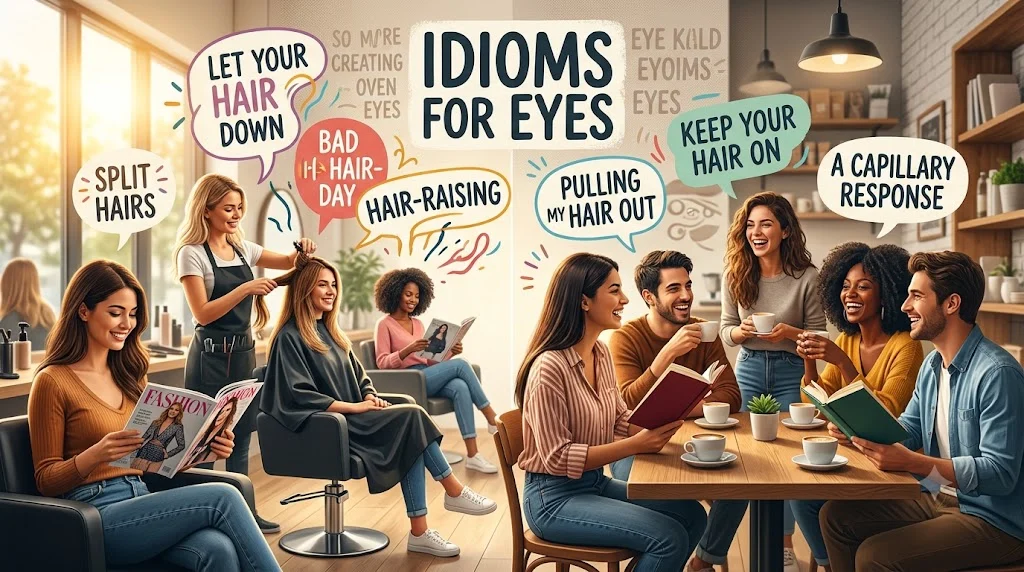
Idioms for hair are figurative expressions that use hair-related imagery to describe emotions, appearance, stress, aging, or behavior. Phrases such as “let your hair down,” “tear your hair out,” and “make someone’s hair stand on end” are commonly used in everyday English to make conversations and writing more vivid and expressive.
Hair has inspired some surprisingly colorful expressions in English. Although these idioms mention hair, most have little to do with hairstyles themselves. Instead, they reflect emotions, stress, fear, perfection, and even personality.
You’ll hear hair idioms everywhere—from movies and novels to workplace conversations and friendly chats. They add humor and imagery that ordinary language often lacks. Saying someone was “extremely frustrated” gets the message across, but saying they were “tearing their hair out” paints a much stronger picture.
For students, writers, and language learners, understanding these expressions can make English feel more natural and expressive. They also help readers connect emotionally with stories and conversations.
In this guide, you’ll discover some of the most useful idioms for hair, learn what they mean, and see how people actually use them in everyday communication.
Quick Summary Table
| Idiom | Simple Meaning | Common Usage |
|---|---|---|
| Let your hair down | Relax and have fun | Parties and vacations |
| Tear your hair out | Become extremely frustrated | Stressful situations |
| Make your hair stand on end | Cause fear or shock | Scary stories |
| Keep your hair on | Stay calm | Arguments or disagreements |
| By a hair | By a very small amount | Close competitions |
| Split hairs | Argue over tiny details | Discussions and debates |
| Get in someone’s hair | Annoy or bother someone | Daily interactions |
| Not a hair out of place | Perfectly neat | Appearance and professionalism |
| Gray hair | Worry or stress | Difficult situations |
| Bad hair day | A day when things go wrong | Casual conversations |
Let Your Hair Down
Meaning
To relax and enjoy yourself without worrying about responsibilities.
When People Use It
People use this expression after work, exams, or stressful periods.
Alternative Expression
Unwind
Examples in Communication
Formal Example
After the conference ended, the employees finally had a chance to let their hair down.
Casual Example
We should let our hair down this weekend and watch movies all night.
Creative Example
As the music filled the room, everyone forgot their worries and let their hair down.
Usage Insight
This idiom creates a cheerful and informal tone.
Tear Your Hair Out
Meaning
To feel extremely frustrated or worried.
When People Use It
Often used during difficult projects or stressful situations.
Alternative Expression
Be at your wit’s end
Examples in Communication
Formal Example
The delays caused the manager to tear his hair out.
Casual Example
I’ve been tearing my hair out trying to fix this computer.
Creative Example
She nearly tore her hair out searching for the missing passport.
Usage Insight
This expression emphasizes intense frustration rather than actual anger.
Make Your Hair Stand on End
Meaning
To cause fear, shock, or horror.
When People Use It
Common when talking about frightening stories or experiences.
Alternative Expression
Send chills down your spine
Examples in Communication
Formal Example
The documentary contained details that made viewers’ hair stand on end.
Casual Example
That ghost story made my hair stand on end.
Creative Example
The strange footsteps in the empty hallway made his hair stand on end.
Keep Your Hair On
Meaning
To remain calm and not become angry.
When People Use It
Used when someone is overreacting or becoming impatient.
Alternative Expression
Calm down
Examples in Communication
Formal Example
He advised everyone to keep their hair on during the crisis.
Casual Example
Keep your hair on—I’m coming!
Creative Example
Even in the middle of chaos, she managed to keep her hair on.
By a Hair
Meaning
By a very small amount.
When People Use It
Used for close contests or narrow escapes.
Alternative Expression
By a whisker
Examples in Communication
Formal Example
The candidate won the election by a hair.
Casual Example
I missed the bus by a hair.
Creative Example
The race was decided by a hair, leaving the crowd breathless.
Split Hairs
Meaning
To argue about tiny and unimportant details.
When People Use It
Common in debates and discussions.
Alternative Expression
Nitpick
Examples in Communication
Formal Example
The lawyers spent hours splitting hairs over wording.
Casual Example
Stop splitting hairs and make a decision.
Creative Example
They spent the afternoon splitting hairs while the real issue remained unsolved.
Usage Insight
This idiom can carry a mildly negative tone.
Get in Someone’s Hair
Meaning
To annoy or bother someone.
When People Use It
Used when a person is interfering too much.
Alternative Expression
Get on someone’s nerves
Examples in Communication
Formal Example
The constant interruptions got in her hair.
Casual Example
My little brother keeps getting in my hair.
Creative Example
The endless phone calls were getting in his hair all day.
Not a Hair Out of Place
Meaning
Perfectly neat and tidy.
When People Use It
Describing someone’s appearance or professionalism.
Alternative Expression
Immaculate
Examples in Communication
Formal Example
Despite the long journey, she arrived with not a hair out of place.
Casual Example
Mom somehow manages to have not a hair out of place.
Creative Example
Even after the storm, he appeared with not a hair out of place.
Gray Hair
Meaning
Something that causes worry or stress.
When People Use It
Talking about challenging situations.
Alternative Expression
Headache
Examples in Communication
Formal Example
Managing the crisis gave him plenty of gray hair.
Casual Example
Teenagers can give parents gray hair.
Creative Example
The unfinished project added a few imaginary gray hairs to his head.
Bad Hair Day
Meaning
A day when things seem to go wrong or you feel unhappy.
When People Use It
Casual conversations about frustrating days.
Alternative Expression
Off day
Examples in Communication
Formal Example
Everyone occasionally experiences a bad hair day.
Casual Example
Today is definitely a bad hair day.
Creative Example
Spilled coffee, missed calls, and forgotten keys turned it into a classic bad hair day.
Pull Your Hair Out
Meaning
To become extremely stressed or frustrated.
When People Use It
During difficult or overwhelming situations.
Alternative Expression
Feel overwhelmed
Examples in Communication
Formal Example
The unexpected errors made the team pull their hair out.
Casual Example
I’m pulling my hair out over this assignment.
Creative Example
He was pulling his hair out trying to organize the event.
Hang by a Hair
Meaning
To be in a dangerous or uncertain situation.
When People Use It
Describing close calls or fragile circumstances.
Alternative Expression
Hang in the balance
Examples in Communication
Formal Example
Their hopes hung by a hair.
Casual Example
The game was hanging by a hair until the last minute.
Creative Example
The old bridge seemed to hang by a hair above the rushing river.
Hair of the Dog
Meaning
A drink taken to relieve the effects of drinking too much alcohol.
When People Use It
Mostly humorous and informal conversations.
Alternative Expression
Morning-after remedy
Examples in Communication
Formal Example
The phrase “hair of the dog” is common in informal English.
Casual Example
He joked about needing hair of the dog after the party.
Creative Example
They laughed over stories and talked about the famous hair of the dog remedy.
Practical Usage Guidance
How to Use Hair Idioms Naturally
Hair idioms are especially useful when describing emotions, stress, neatness, and behavior. Most are informal, making them ideal for conversations, storytelling, and blogs.
Instead of saying:
- “I’m very frustrated.”
You can say:
- “I’m tearing my hair out.”
Instead of:
- “Relax and enjoy yourself.”
Try:
- “Let your hair down.”
These expressions make language more colorful and memorable.
Hair’s Breadth
Meaning
A very tiny amount or an extremely narrow margin.
When People Use It
People use this idiom when describing close calls, narrow escapes, or situations where success or failure was decided by the smallest difference.
Alternative Expression
By a whisker
Examples in Communication
Formal Example
The proposal passed by a hair’s breadth during the final vote.
Casual Example
I avoided dropping my phone by a hair’s breadth.
Creative Example
The soccer ball missed the goal by a hair’s breadth, leaving the crowd gasping.
Usage Insight
This idiom is more common in British English and often appears in writing and storytelling.
Make Someone’s Hair Curl
Meaning
To shock, disgust, or greatly surprise someone.
When People Use It
Used when hearing something unbelievable or disturbing.
Alternative Expression
Leave someone speechless
Examples in Communication
Formal Example
The details of the scandal would make anyone’s hair curl.
Casual Example
Wait until you hear what happened—it’ll make your hair curl.
Creative Example
Grandfather’s tales from the old days could make your hair curl with amazement.
Usage Insight
This expression is somewhat old-fashioned but still appears in books and conversations.
Curl Someone’s Hair
Meaning
To frighten or shock someone.
When People Use It
Often used for dramatic stories and surprising events.
Alternative Expression
Make someone’s blood run cold
Examples in Communication
Formal Example
The witness described events that would curl anyone’s hair.
Casual Example
That movie was enough to curl my hair.
Creative Example
The strange noises coming from the attic curled everyone’s hair.
Wear Your Hair Shirt
Meaning
To deliberately make yourself suffer because of guilt or regret.
When People Use It
Used when someone constantly blames themselves or refuses to move on from mistakes.
Alternative Expression
Punish yourself unnecessarily
Examples in Communication
Formal Example
He continued to wear his hair shirt long after the issue had been resolved.
Casual Example
Stop wearing a hair shirt over something that happened years ago.
Creative Example
She carried old regrets like a hair shirt that weighed down every happy moment.
Usage Insight
This is a relatively uncommon idiom and appears more often in literature and thoughtful discussions.
Keep Your Hair Curled
Meaning
Stay alert and prepared for unexpected events.
When People Use It
Usually used humorously or informally.
Alternative Expression
Stay on your toes
Examples in Communication
Formal Example
Employees were advised to keep their hair curled during the busy season.
Casual Example
Keep your hair curled—anything can happen around here.
Creative Example
Life in the newsroom kept everyone’s hair curled and their minds sharp.
Common Mistakes with Hair Idioms
Taking Them Literally
Hair idioms are figurative. Nobody actually tears their hair out or makes it stand on end intentionally.
Using Informal Idioms in Formal Reports
Expressions like “bad hair day” are better suited to casual settings.
Mixing Similar Idioms
Incorrect:
- “Walking by a hair.”
Correct:
- “Winning by a hair.”
How to Remember Hair Idioms Easily
- Connect the idiom with a mental picture.
- Read novels and dialogue-heavy stories.
- Practice one expression each day.
- Use them in journals and conversations.
Visualizing someone literally “letting their hair down” or “splitting hairs” makes the meanings easier to remember.
FAQs
What are idioms for hair?
Idioms for hair are figurative expressions that use hair-related imagery to describe emotions, behavior, stress, or appearance.
What is the most common hair idiom?
“Let your hair down” is one of the most popular and widely used hair idioms.
Are hair idioms formal or informal?
Most hair idioms are informal and work best in conversations, storytelling, and casual writing.
What does “split hairs” mean?
It means arguing over small, unimportant details.
How can I learn hair idioms faster?
Practice them in daily conversations, read books, and connect each expression with a mental image.
Conclusion
Idioms for hair show how creative and expressive the English language can be. Although these phrases mention hair, they often reveal much more about emotions, stress, personality, and everyday experiences.
Whether you’re writing stories, improving your spoken English, or simply expanding your vocabulary, learning these expressions can help your communication feel more natural and engaging. Start with a few common idioms like “let your hair down” or “tear your hair out,” and gradually add more to your vocabulary.
Over time, these expressions will become second nature, allowing your English to sound richer, warmer, and more fluent.
Discover More Related Articles:
- Idioms About Teeth | Bite Into English Like a Pro In 2026
- Idioms for Heart | That Reveal Human Feelings In 2026