Quick Answer
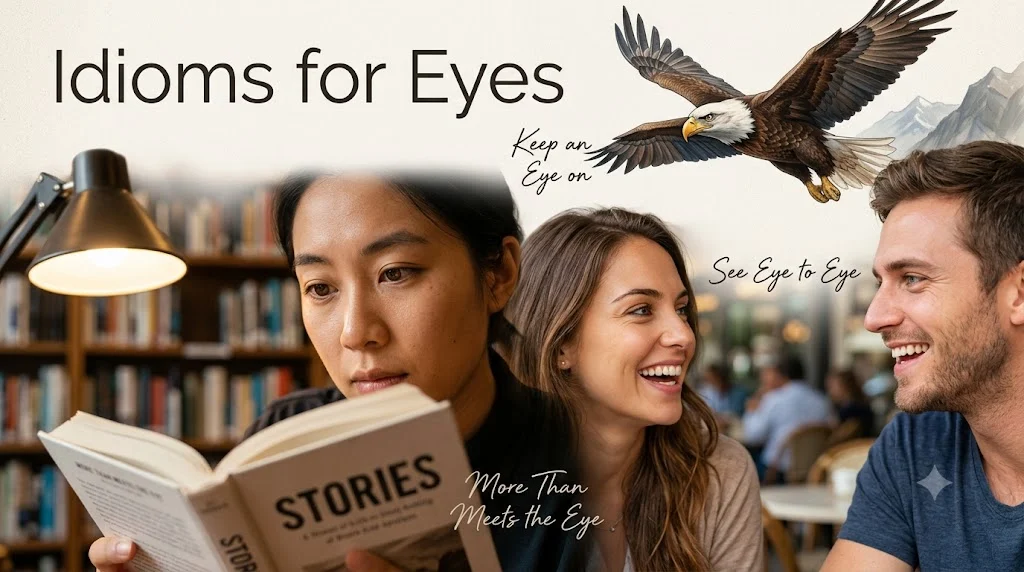
Idioms for eyes are figurative expressions that contain the word eye or eyes and use vision-related imagery to express ideas about attention, observation, agreement, jealousy, emotions, or deception. These expressions are common in everyday English and help speakers communicate thoughts in a more vivid and memorable way.
Eyes do far more than help us see. In English, they also inspire dozens of colorful expressions that reveal emotions, relationships, and ways of understanding the world.
From telling someone to “keep an eye on things” to saying there is “more than meets the eye,” these phrases appear everywhere—in conversations, novels, movies, and even workplace communication.
Learning idioms for eyes can make your English sound more natural and expressive. They are especially useful for students, writers, bloggers, and language learners who want to move beyond literal vocabulary and understand how native speakers really communicate.
Many of these expressions carry emotions such as curiosity, jealousy, agreement, or admiration. Once you begin noticing them, you’ll discover that they appear in everyday speech far more often than you might expect.
Quick Summary Table
| Idiom | Meaning | Common Tone |
|---|---|---|
| Keep an eye on | Watch carefully | Everyday |
| In the blink of an eye | Very quickly | Neutral |
| Turn a blind eye | Ignore something deliberately | Formal and informal |
| Eye-catching | Attractive or noticeable | Positive |
| More than meets the eye | More complicated than it appears | Thoughtful |
| Have eyes in the back of your head | Notice everything | Humorous |
| See eye to eye | Agree with someone | Neutral |
| Cry your eyes out | Cry intensely | Emotional |
| Eagle-eyed | Very observant | Positive |
| Eyes bigger than your stomach | Take more food than you can eat | Casual |
| Bat an eye | Show surprise or concern | Informal |
| Feast your eyes on | Look at something with pleasure | Positive |
| Keep your eyes peeled | Stay alert | Informal |
| Green-eyed monster | Jealousy | Literary |
| Pull the wool over someone’s eyes | Deceive someone | Conversational |
Keep an Eye on
Meaning
To watch something or someone carefully.
When People Use It
When asking someone to monitor or supervise something.
Alternative Expression
Watch over
Examples in Communication
Formal Example:
Please keep an eye on the financial reports while I am away.
Casual Example:
Can you keep an eye on my bag?
Creative Example:
She kept an eye on the horizon, waiting for the first sign of dawn.
In the Blink of an Eye
Meaning
Very quickly or instantly.
When People Use It
To emphasize how fast something happened.
Alternative Expression
In no time
Examples in Communication
Formal Example:
Technology has transformed communication in the blink of an eye.
Casual Example:
The weekend disappeared in the blink of an eye.
Creative Example:
The stars vanished in the blink of an eye as morning arrived.
Turn a Blind Eye
Meaning
To deliberately ignore something.
When People Use It
When someone chooses not to acknowledge wrongdoing or problems.
Alternative Expression
Look the other way
Examples in Communication
Formal Example:
Authorities should not turn a blind eye to corruption.
Casual Example:
My parents turned a blind eye to the mess in my room.
Creative Example:
The kingdom turned a blind eye while injustice spread.
Eye-Catching
Meaning
Attractive and easy to notice.
When People Use It
For designs, clothes, advertisements, or artwork.
Alternative Expression
Striking
Examples in Communication
Formal Example:
The company introduced an eye-catching logo.
Casual Example:
That’s an eye-catching dress.
Creative Example:
The sunset painted the sky with eye-catching shades of gold.
More Than Meets the Eye
Meaning
Something is deeper or more complex than it appears.
When People Use It
When appearances are misleading.
Alternative Expression
Not as simple as it seems
Examples in Communication
Formal Example:
The issue involves more than meets the eye.
Casual Example:
That movie has more than meets the eye.
Creative Example:
Behind the old cottage lay more than meets the eye.
Have Eyes in the Back of Your Head
Meaning
To seem aware of everything happening around you.
When People Use It
Often used humorously about parents or teachers.
Alternative Expression
Notice everything
Examples in Communication
Formal Example:
Good managers often appear to have eyes in the back of their heads.
Casual Example:
Mom must have eyes in the back of her head.
Creative Example:
The captain watched his crew as though he had eyes in the back of his head.
See Eye to Eye
Meaning
To agree completely.
When People Use It
In relationships, friendships, and business discussions.
Alternative Expression
Be in agreement
Examples in Communication
Formal Example:
The partners finally saw eye to eye on the proposal.
Casual Example:
We don’t always see eye to eye.
Creative Example:
Despite years apart, they still saw eye to eye.
Cry Your Eyes Out
Meaning
To cry intensely.
When People Use It
During emotional situations.
Alternative Expression
Sob uncontrollably
Examples in Communication
Formal Example:
She cried her eyes out after hearing the news.
Casual Example:
I cried my eyes out watching that movie.
Creative Example:
He sat alone beneath the rain and cried his eyes out.
Eagle-Eyed
Meaning
Very observant and quick to notice details.
When People Use It
To praise someone’s attentiveness.
Alternative Expression
Sharp-eyed
Examples in Communication
Formal Example:
The editor’s eagle-eyed review caught several errors.
Casual Example:
You’re eagle-eyed—I didn’t even notice that.
Creative Example:
The detective remained eagle-eyed throughout the investigation.
Eyes Bigger Than Your Stomach
Meaning
Taking more food than you can actually eat.
When People Use It
Mostly during meals or buffets.
Alternative Expression
Take too much
Examples in Communication
Formal Example:
Guests often have eyes bigger than their stomachs at banquets.
Casual Example:
I think my eyes were bigger than my stomach.
Creative Example:
The feast tempted everyone into having eyes bigger than their stomachs.
Bat an Eye
Meaning
To show surprise or reaction.
When People Use It
Usually in negative form, meaning someone showed no emotion.
Alternative Expression
React
Examples in Communication
Formal Example:
He didn’t bat an eye when faced with criticism.
Casual Example:
She didn’t even bat an eye.
Creative Example:
The hero faced danger without batting an eye.
Feast Your Eyes on
Meaning
To look at something with great pleasure or admiration.
When People Use It
For beautiful scenery, food, or artwork.
Alternative Expression
Admire
Examples in Communication
Formal Example:
Visitors can feast their eyes on the museum’s collection.
Casual Example:
Feast your eyes on this cake!
Creative Example:
Travelers feasted their eyes on the snow-covered mountains.
Keep Your Eyes Peeled
Meaning
Remain alert and watch carefully.
When People Use It
During searches or when expecting something.
Alternative Expression
Stay alert
Examples in Communication
Formal Example:
Please keep your eyes peeled for updates.
Casual Example:
Keep your eyes peeled for my package.
Creative Example:
The explorers kept their eyes peeled for signs of life.
Green-Eyed Monster
Meaning
Jealousy or envy.
When People Use It
To describe feelings of jealousy.
Alternative Expression
Envy
Examples in Communication
Formal Example:
The green-eyed monster can damage relationships.
Casual Example:
Don’t let the green-eyed monster take over.
Creative Example:
The green-eyed monster quietly entered his heart.
Pull the Wool Over Someone’s Eyes
Meaning
To deceive or trick someone.
When People Use It
When discussing dishonesty or manipulation.
Alternative Expression
Fool someone
Examples in Communication
Formal Example:
The scammer tried to pull the wool over investors’ eyes.
Casual Example:
You can’t pull the wool over my eyes.
Creative Example:
The villain thought he could pull the wool over the kingdom’s eyes.
Apple of One’s Eye
Meaning
A person or thing that someone loves or treasures deeply.
When People Use It
Commonly used for children, loved ones, pets, or cherished possessions.
Alternative Expression
Beloved favorite
Examples in Communication
Formal Example:
His granddaughter is truly the apple of his eye.
Casual Example:
That little puppy is the apple of her eye.
Creative Example:
The old violin remained the apple of the musician’s eye throughout his life.
Eye for an Eye
Meaning
The idea that punishment should match the offense.
When People Use It
Often used when discussing justice, revenge, or morality.
Alternative Expression
Retaliation
Examples in Communication
Formal Example:
Modern legal systems generally reject the principle of an eye for an eye.
Casual Example:
He believes in an eye for an eye approach.
Creative Example:
The kingdom was trapped in endless wars fueled by an eye for an eye mentality.
Caught Someone’s Eye
Meaning
To attract someone’s attention.
When People Use It
When something interesting, beautiful, or unusual stands out.
Alternative Expression
Grab attention
Examples in Communication
Formal Example:
The innovative design caught the attention of investors.
Casual Example:
That jacket caught my eye immediately.
Creative Example:
A single red flower caught her eye among the snowy landscape.
Keep Your Eye on the Ball
Meaning
To stay focused and avoid distractions.
When People Use It
Frequently used in work, sports, and studies.
Alternative Expression
Stay focused
Examples in Communication
Formal Example:
Successful leaders keep their eye on the ball during challenging times.
Casual Example:
You need to keep your eye on the ball if you want to pass the exam.
Creative Example:
Amid the chaos, she kept her eye on the ball and reached her dreams.
Easy on the Eyes
Meaning
Pleasant or attractive to look at.
When People Use It
To describe people, places, or objects that are visually appealing.
Alternative Expression
Good-looking
Examples in Communication
Formal Example:
The redesigned website is easy on the eyes.
Casual Example:
That new car is really easy on the eyes.
Creative Example:
The seaside village was easy on the eyes, especially at sunset.
See Something with Your Own Eyes
Meaning
To witness something personally.
When People Use It
When emphasizing firsthand experience.
Alternative Expression
Witness firsthand
Examples in Communication
Formal Example:
Researchers saw the phenomenon with their own eyes.
Casual Example:
I saw it with my own eyes, so I know it’s true.
Creative Example:
He stood speechless after seeing the northern lights with his own eyes.
Open Someone’s Eyes
Meaning
To help someone realize or understand something.
When People Use It
When new experiences or information change a person’s perspective.
Alternative Expression
Broaden someone’s perspective
Examples in Communication
Formal Example:
Traveling abroad opened her eyes to different cultures.
Casual Example:
That documentary really opened my eyes.
Creative Example:
The journey opened his eyes to the beauty hidden in ordinary moments.
Eyes Like a Hawk
Meaning
Having excellent vision or noticing small details.
When People Use It
To praise someone’s attentiveness.
Alternative Expression
Sharp-eyed
Examples in Communication
Formal Example:
The inspector had eyes like a hawk and spotted every error.
Casual Example:
Dad has eyes like a hawk. Nothing escapes him.
Creative Example:
The hunter watched the forest with eyes like a hawk.
Close Your Eyes to Something
Meaning
To deliberately ignore something unpleasant or wrong.
When People Use It
When people avoid facing reality or responsibility.
Alternative Expression
Ignore intentionally
Examples in Communication
Formal Example:
Society should not close its eyes to poverty.
Casual Example:
You can’t just close your eyes to the problem.
Creative Example:
The villagers could no longer close their eyes to the approaching danger.
With Your Eyes Closed
Meaning
To do something very easily because of experience.
When People Use It
To describe tasks someone knows extremely well.
Alternative Expression
Without difficulty
Examples in Communication
Formal Example:
After twenty years of practice, the surgeon could perform the procedure with his eyes closed.
Casual Example:
I’ve played this game so much that I can do it with my eyes closed.
Creative Example:
She knew the old streets so well she could walk them with her eyes closed.
Practical Usage Guidance
Idioms involving eyes are among the most common expressions in English. Many are suitable for everyday conversations, while some fit essays, storytelling, and professional writing.
To sound natural:
- Learn idioms in context rather than memorizing lists.
- Pay attention to emotional tone.
- Avoid using too many idioms in one sentence.
- Listen to movies and podcasts to hear them used naturally.
- Practice writing short paragraphs using new expressions.
Remember that idioms are figurative. They usually do not describe eyes literally but instead symbolize attention, emotions, understanding, or observation.
Common Mistakes with Eye Idioms
Taking Them Literally
Expressions like “have eyes in the back of your head” are figurative and not meant literally.
Using the Wrong Tone
Some idioms are informal and may sound awkward in academic writing.
Mixing Idioms
Combining two idioms incorrectly can confuse readers.
Overusing Expressions
A few well-placed idioms sound natural, while too many can make writing feel forced.
FAQs
What are idioms for eyes?
Idioms for eyes are figurative expressions related to sight, observation, emotions, agreement, or deception.
Why are eye idioms common in English?
Vision is closely connected to understanding and attention, making eye-related expressions very natural in communication.
Can eye idioms be used in formal writing?
Some, such as “more than meets the eye” and “see eye to eye,” can appear in professional writing, while others are more conversational.
What does “turn a blind eye” mean?
It means deliberately ignoring something, especially a problem or wrongdoing.
How can I remember eye idioms easily?
Connect each idiom with a real-life situation and practice using it in conversations or writing.
Conclusion
Idioms for eyes bring vivid imagery and personality to English. They help speakers express ideas about attention, agreement, emotions, jealousy, and perception in ways that feel natural and memorable.
Whether you’re writing stories, preparing for exams, improving your speaking skills, or simply expanding your vocabulary, these expressions can make your communication more engaging. The key is to learn them gradually and use them in situations where they fit naturally.
With regular practice, these colorful phrases will become part of your everyday English, helping you see the language and the world around you with fresh eyes.
Discover More Related Articles: