Quick Answer
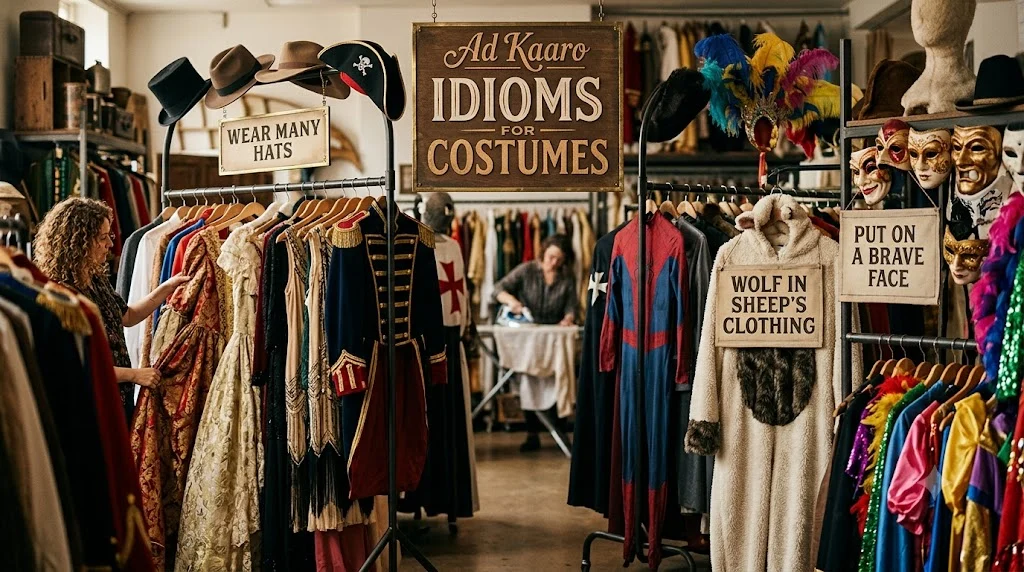
Idioms for costumes are expressions connected to clothing, disguises, appearances, masks, uniforms, and dressing up. These idioms often describe identity, first impressions, hidden intentions, social roles, confidence, and personal transformation. Popular examples include “wolf in sheep’s clothing,” “wear many hats,” “fit like a glove,” and “put on a brave face.”
Costumes do more than change how we look they tell stories, create identities, and help us step into different roles. Whether it’s a Halloween costume, a theatrical outfit, a uniform, or formal attire, clothing has long been linked to how people present themselves to the world.
That connection between appearance and identity has inspired many English idioms. Some expressions focus on disguises and hidden motives, while others describe confidence, responsibility, professionalism, or social behavior. These phrases appear regularly in conversations, books, movies, workplaces, and everyday communication.
Understanding costume-related idioms can make your English more colorful and expressive. They help you explain complex ideas using familiar imagery, making your speech and writing more engaging.
In this guide, you’ll discover useful idioms for costumes, learn what they mean, and see how they work in real-life situations. Whether you’re a student, writer, blogger, or language learner, these expressions can help you communicate with greater creativity and confidence.
Quick Summary Table
| Idiom | Meaning | Common Use |
|---|---|---|
| Wolf in sheep’s clothing | Someone who hides bad intentions | Trust and relationships |
| Wear many hats | Perform multiple roles | Work and responsibilities |
| Fit like a glove | Perfectly suited | Skills and opportunities |
| Put on a brave face | Hide fear or sadness | Difficult situations |
| Roll up your sleeves | Prepare to work hard | Projects and challenges |
| Cloak and dagger | Secretive behavior | Mystery and intrigue |
| Dress for success | Present yourself professionally | Career and business |
| Mask your feelings | Hide emotions | Social interactions |
| In disguise | Hidden identity or purpose | Deception and surprises |
| Change your stripes | Change behavior or character | Personal growth |
| Keep something under wraps | Keep something secret | Confidential information |
| Emperor’s new clothes | Accepting an obvious falsehood | Critical thinking |
| Walk in someone’s shoes | Understand another person’s experience | Empathy |
| Suit yourself | Do as you wish | Decisions |
| Put on airs | Act superior | Social behavior |
| Dress down | Wear casual clothing | Workplace culture |
| Dress up | Wear formal or special clothing | Celebrations |
| Behind the mask | Hidden emotions or truth | Personal relationships |
| Well-heeled | Wealthy and prosperous | Financial discussions |
| Buttoned-up | Organized and reserved | Professional settings |
Wolf in Sheep’s Clothing
Meaning
Someone who appears kind or harmless but has dishonest or harmful intentions.
When People Use It
When discussing trust, deception, or hidden motives.
Alternative Expression
A hidden threat.
Examples in Communication
Formal Example:
The investor turned out to be a wolf in sheep’s clothing.
Casual Example:
Be careful around him; he might be a wolf in sheep’s clothing.
Creative Example:
Behind the friendly smile lurked intentions no one expected.
Wear Many Hats
Meaning
To perform several different roles or responsibilities.
When People Use It
Workplaces, businesses, and busy personal lives.
Alternative Expression
Juggle multiple roles.
Examples in Communication
Formal Example:
Small-business owners often wear many hats.
Casual Example:
As a parent and teacher, I wear many hats every day.
Creative Example:
Her days changed shape with every role she stepped into.
Fit Like a Glove
Meaning
To be perfectly suitable or appropriate.
When People Use It
Jobs, relationships, opportunities, or clothing.
Alternative Expression
Perfect match.
Examples in Communication
Formal Example:
The position fits her skills like a glove.
Casual Example:
That role fits you like a glove.
Creative Example:
The opportunity seemed tailor-made for her dreams.
Put on a Brave Face
Meaning
To hide fear, disappointment, or sadness.
When People Use It
During challenges or emotional situations.
Alternative Expression
Stay strong.
Examples in Communication
Formal Example:
The team put on a brave face despite setbacks.
Casual Example:
I was nervous, but I put on a brave face.
Creative Example:
Behind the smile, a storm quietly raged.
Roll Up Your Sleeves
Meaning
To prepare for hard work.
When People Use It
Projects, tasks, and problem-solving.
Alternative Expression
Get to work.
Examples in Communication
Formal Example:
It’s time to roll up our sleeves and address the issue.
Casual Example:
Let’s roll up our sleeves and finish this.
Creative Example:
The challenge stood tall, but determination stood taller.
Cloak and Dagger
Meaning
Secretive or mysterious activities.
When People Use It
Politics, business negotiations, or mysteries.
Alternative Expression
Behind-the-scenes plotting.
Examples in Communication
Formal Example:
The negotiations involved considerable cloak-and-dagger tactics.
Casual Example:
Why all the cloak-and-dagger behavior?
Creative Example:
The truth moved through shadows and whispers.
Dress for Success
Meaning
To wear clothing that creates a professional or positive impression.
When People Use It
Interviews, presentations, and professional settings.
Alternative Expression
Look professional.
Examples in Communication
Formal Example:
Candidates should dress for success during interviews.
Casual Example:
Dress for success—you never know who you’ll meet.
Creative Example:
Confidence often begins before the first word is spoken.
Mask Your Feelings
Meaning
To hide emotions from others.
When People Use It
Social situations and emotional discussions.
Alternative Expression
Hide emotions.
Examples in Communication
Formal Example:
She skillfully masked her feelings during the meeting.
Casual Example:
I couldn’t mask my excitement.
Creative Example:
The smile concealed a thousand unspoken thoughts.
In Disguise
Meaning
Something hidden beneath a different appearance.
When People Use It
Unexpected opportunities or concealed truths.
Alternative Expression
Not what it seems.
Examples in Communication
Formal Example:
The challenge proved to be an opportunity in disguise.
Casual Example:
That mistake was a blessing in disguise.
Creative Example:
The rough road quietly led to something wonderful.
Change Your Stripes
Meaning
To change one’s behavior or character.
When People Use It
Personal growth and self-improvement.
Alternative Expression
Turn over a new leaf.
Examples in Communication
Formal Example:
The organization worked hard to change its stripes.
Casual Example:
Do you think people can really change their stripes?
Creative Example:
The old habits slowly faded beneath a new identity.
Keep Something Under Wraps
Meaning
To keep something secret.
When People Use It
Surprises, projects, or confidential information.
Alternative Expression
Keep it confidential.
Examples in Communication
Formal Example:
The company kept the announcement under wraps.
Casual Example:
Keep it under wraps until tomorrow.
Creative Example:
The secret waited patiently behind closed curtains.
The Emperor’s New Clothes
Meaning
A situation where people pretend something is impressive when it clearly is not.
When People Use It
Critical thinking and group behavior.
Alternative Expression
Obvious truth ignored.
Examples in Communication
Formal Example:
The project became an emperor’s new clothes scenario.
Casual Example:
Everyone praised it, but it felt like the emperor’s new clothes.
Creative Example:
The crowd applauded while reality stood silently nearby.
Walk in Someone’s Shoes
Meaning
To understand another person’s perspective.
When People Use It
Empathy and relationships.
Alternative Expression
See things from their perspective.
Examples in Communication
Formal Example:
Managers should try to walk in their employees’ shoes.
Casual Example:
Try walking in her shoes before judging.
Creative Example:
Understanding begins where assumptions end.
Suit Yourself
Meaning
Do whatever you prefer.
When People Use It
When allowing someone to make their own decision.
Alternative Expression
Your choice.
Examples in Communication
Formal Example:
The final decision is yours; suit yourself.
Casual Example:
If you don’t want to come, suit yourself.
Creative Example:
The road ahead belonged entirely to him.
Put on Airs
Meaning
To act as though you are more important than others.
When People Use It
Social interactions and personality descriptions.
Alternative Expression
Act superior.
Examples in Communication
Formal Example:
Leaders should avoid putting on airs.
Casual Example:
She started putting on airs after her promotion.
Creative Example:
The confidence looked genuine until it became arrogance.
Dress Down
Meaning
To wear casual clothing instead of formal attire.
When People Use It
Workplaces and casual events.
Alternative Expression
Go casual.
Examples in Communication
Formal Example:
Employees may dress down on Fridays.
Casual Example:
I’m dressing down for the party.
Creative Example:
Comfort replaced formality for the evening.
Dress Up
Meaning
To wear formal or special clothing.
When People Use It
Celebrations, parties, and events.
Alternative Expression
Wear formal attire.
Examples in Communication
Formal Example:
Guests are expected to dress up for the gala.
Casual Example:
Let’s dress up for the wedding.
Creative Example:
The night felt magical from the moment everyone arrived.
Behind the Mask
Meaning
The true personality or emotions hidden from others.
When People Use It
Relationships and personal growth.
Alternative Expression
Hidden truth.
Examples in Communication
Formal Example:
The documentary explored the person behind the mask.
Casual Example:
What’s really going on behind the mask?
Creative Example:
The real story lived beneath the performance.
Well-Heeled
Meaning
Wealthy and financially comfortable.
When People Use It
Describing successful individuals or communities.
Alternative Expression
Affluent.
Examples in Communication
Formal Example:
The event attracted a well-heeled audience.
Casual Example:
They come from a pretty well-heeled family.
Creative Example:
Prosperity seemed woven into every detail.
Buttoned-Up
Meaning
Organized, disciplined, and somewhat reserved.
When People Use It
Professional behavior and workplace culture.
Alternative Expression
Highly organized.
Examples in Communication
Formal Example:
She is known for her buttoned-up management style.
Casual Example:
He’s a bit buttoned-up around new people.
Creative Example:
Every detail seemed perfectly in place.
Practical Usage Guidance
How to Use Costume Idioms Naturally
Costume-related idioms work best when discussing identity, appearance, behavior, or social roles. They often add personality and visual imagery to your communication.
Common Mistakes with Idioms
- Taking figurative expressions literally.
- Using too many idioms in one paragraph.
- Applying informal idioms in highly academic writing.
- Using an idiom without understanding its emotional tone.
Idioms vs Literal Expressions
Literal: She hid her emotions.
Idiomatic: She masked her feelings.
The idiomatic version creates a stronger visual impression.
Tips for Sounding More Fluent
- Listen for idioms in movies and TV shows.
- Practice using one new idiom daily.
- Pay attention to context and tone.
- Focus on understanding the imagery behind the phrase.
How to Remember Costume Idioms Easily
Imagine the costume, mask, hat, glove, or outfit associated with each idiom. Strong visual connections make figurative language easier to remember and use.
FAQs
What are costume idioms?
Costume idioms are expressions inspired by clothing, disguises, masks, uniforms, and appearance that communicate ideas beyond their literal meaning.
Are costume-related idioms common in everyday English?
Yes. Many of them, such as “wear many hats” and “put on a brave face,” are frequently used in daily conversations and professional settings.
Can costume idioms be used in formal writing?
Some can. Expressions like “wear many hats” or “fit like a glove” are often acceptable in professional and business writing.
Which costume idiom is best for describing hidden intentions?
“Wolf in sheep’s clothing” is one of the most common idioms for describing someone who conceals harmful intentions.
How can I learn idioms more effectively?
Learn them in context, practice using them naturally, and connect each expression with a memorable image or real-life situation.
Conclusion
Learning idioms for costumes can add creativity, personality, and depth to your English. These expressions go far beyond clothing and appearance they explore identity, confidence, responsibility, deception, empathy, and personal growth.
Whether you’re writing a story, preparing a presentation, improving your conversational skills, or expanding your vocabulary, costume-related idioms offer vivid ways to express complex ideas. They make language more memorable because they connect abstract concepts with familiar images of masks, clothing, and disguises.
As you practice these idioms, focus on understanding when and why people use them. The more often you encounter them in books, conversations, movies, and articles, the more natural they will feel.
Like a well-chosen costume that helps bring a character to life, the right idiom can bring your communication to life and leave a lasting impression on your audience.
Discover More Related Articles:
- Idioms for Vacation |Express Travel Mood Like a Pro In 2026
- Idioms for Hungry |Flavorful Expressions for Talking About Hunger In 2026